Almaty to Astana: Flights, Trains & Driving
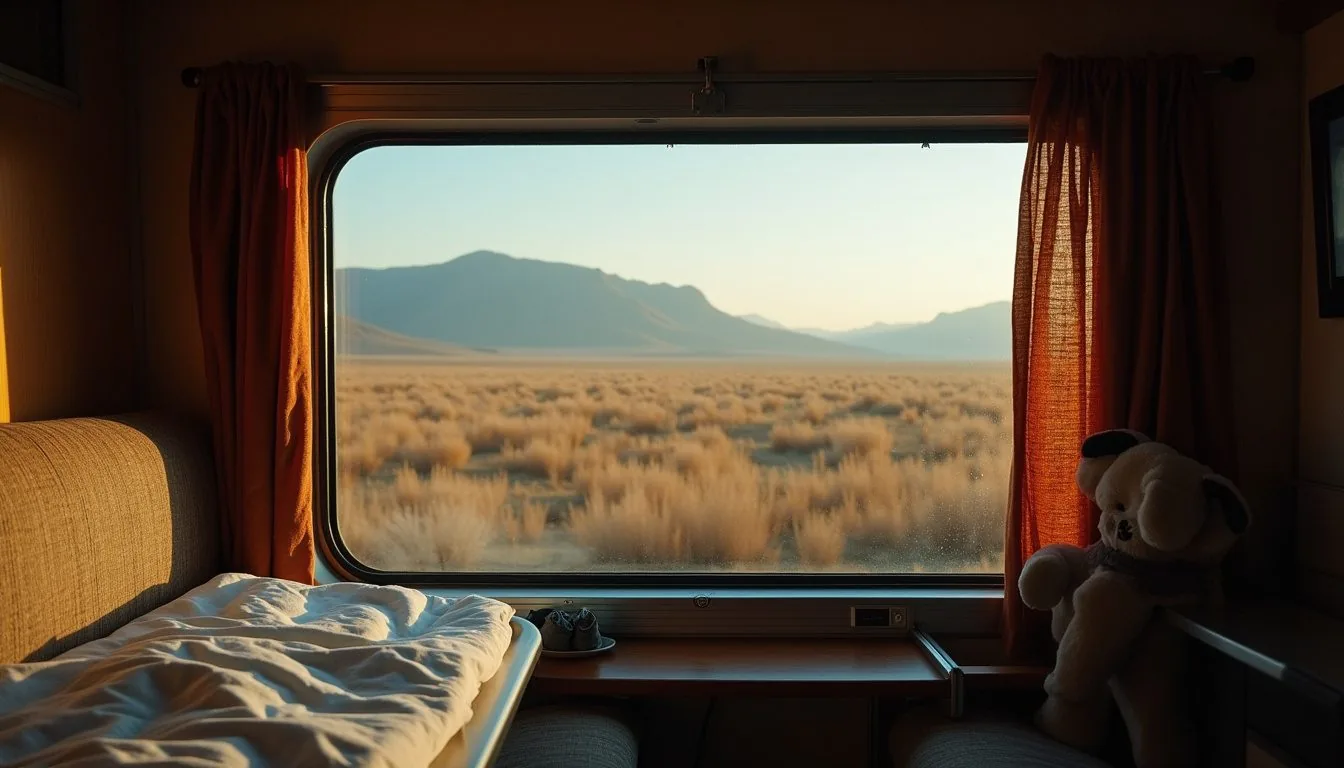
Almaty to Astana is a 1,200 km journey across the Kazakh steppe. The fastest option is a direct flight (1.5 hours, $50–200), the most popular is the overnight Talgo train (14–18 hours, $20–90), and budget travelers can drive the M-39 highway (14 hours) or take a long-distance bus (16–18 hours, $15–30). Most visitors fly one direction and take the train the other.
Kazakhstan’s two major cities sit on opposite ends of the country. Almaty is the cultural and business capital in the southeast, set against the Tian Shan mountains. Astana is the official capital in the northern steppe, a futuristic city built from scratch in the late 1990s. Nearly every visitor to Kazakhstan wants to see both, and the journey between them is one of the most common domestic routes in Central Asia.
This guide compares every transport option with current prices, schedules, and practical booking advice so you can choose what fits your budget, timeline, and travel style.
Comparison Table: All Transport Options
| Option | Duration | Price Range (one-way) | Comfort Level | Best For |
|---|---|---|---|---|
| Flight | 1.5 hours | $50–200 | High | Time-limited travelers |
| Talgo train (overnight) | 14–16 hours | $25–90 | High | Experience seekers, budget-conscious |
| Regular train | 18–22 hours | $15–50 | Medium | Ultra-budget travelers |
| Driving (M-39) | 13–15 hours | $60–80 (fuel) | Medium | Road trip adventurers |
| Bus | 16–18 hours | $15–30 | Low | Last resort |
The price gap between flying and taking the train has narrowed significantly since FlyArystan launched in 2019. On promotional days you can fly for under $50, less than a first-class train ticket. Check both before booking.
Flights From Almaty to Astana
According to the Civil Aviation Committee of Kazakhstan, flying is the fastest and most straightforward way to cover the 1,200 km between the two cities. The Almaty (ALA) to Astana (NQZ) route is the busiest domestic air corridor in Kazakhstan, with 15-20 daily departures combined across all carriers.
Airlines Operating This Route
| Airline | Type | Frequency | Typical Price |
|---|---|---|---|
| Air Astana | Full-service | 8–10 daily | $80–180 |
| FlyArystan | Budget (Air Astana subsidiary) | 5–7 daily | $35–100 |
| SCAT Airlines | Regional carrier | 2–3 daily | $60–140 |
Air Astana is the national carrier with the most departures and the most consistent service. Flights include checked luggage, meals on longer routes, and a loyalty program. For the short Almaty–Astana hop, the experience is standard domestic service.
FlyArystan is where the deals are. As Kazakhstan’s first low-cost carrier, it regularly runs promotional fares between $30–50. The tradeoff: no free checked bag (carry-on only unless you pay extra), no meal, and tighter legroom. For a 1.5-hour flight, none of that matters much.
SCAT Airlines operates a smaller fleet but occasionally undercuts both competitors. Worth checking for specific dates.
Prices by Season
| Season | Months | Typical Range |
|---|---|---|
| Peak | June–August, December–January | $100–200 |
| Shoulder | March–May, September–October | $60–130 |
| Low | November, February | $35–80 |
The cheapest fares appear during November and February when domestic travel demand drops. Holiday weekends around Nauryz (March 21–23) and New Year see the highest prices. Book 3-4 weeks ahead for those periods.
How to Book
- Air Astana (airastana.com): best for direct booking with the national carrier
- FlyArystan (flyarystan.com): budget fares, book direct to avoid fees
- Aviasales (aviasales.kz): Kazakhstan’s flight aggregator, compares all carriers
- Google Flights: good for price tracking and alerts
Tip: FlyArystan sometimes releases flash sales via their mobile app before they appear on aggregators. Download the app if you want the lowest possible fare.
Airport Logistics
Almaty International Airport (ALA) sits 15 km northeast of the city center. A taxi costs 2,000–4,000 KZT ($4–8) and takes 20–35 minutes depending on traffic. The airport was modernized in 2022 and functions smoothly. Allow 1.5–2 hours before departure.
Astana Nursultan Nazarbayev International Airport (NQZ) is 17 km south of the city center. A taxi costs 2,500–4,000 KZT ($5–8) and takes 20–30 minutes. Airport bus #10 runs to the city center for 200 KZT ($0.40).
For more detail on both airports, see our Kazakhstan airports guide.
Train From Almaty to Astana
The overnight train between Almaty and Astana is one of the defining travel experiences in Kazakhstan. You board in the evening, sleep through the steppe, and wake up in a completely different city. It is also how most Kazakhs themselves travel between the two cities.
Talgo High-Speed Train
The Spanish-built Talgo is the flagship service on this route. According to Kazakhstan Temir Zholy (KTZ), the national railway operator, it is faster, smoother, and more modern than the regular trains.
- Duration: 14–16 hours
- Departure: Typically 17:00–22:00 from Almaty-2 station
- Arrival: 07:00–12:00 next day at Astana station
- Frequency: 2–3 daily departures
The Talgo tilts on curves, runs at up to 160 km/h, and has air conditioning that actually works. The cars are cleaner and newer than regular rolling stock.
Regular (Non-Talgo) Trains
Older Soviet-era and newer Kazakh-built trains also run this route. They are slower (18–22 hours) but cheaper, and some travelers prefer the more traditional atmosphere.
- Duration: 18–22 hours
- Departure: Multiple daily, including morning departures
- Frequency: 3–5 daily departures
Sleeper Classes Explained
| Class | Kazakh Name | Description | Price (Talgo) | Price (Regular) |
|---|---|---|---|---|
| Platzkart | Плацкарт | Open dormitory, 54 berths per car. No privacy. | $15–25 | $10–20 |
| Kupe | Купе | 4-berth closed compartment. Lockable door. | $30–55 | $20–40 |
| SV | СВ (Спальный вагон) | 2-berth private compartment. Most comfortable. | $55–90 | $40–70 |
| Lux | Люкс | Private cabin, premium bedding. Talgo only. | $80–120 | N/A |
Recommendation: Book a lower berth in Kupe class on the Talgo. You get a private four-person compartment with a lockable door, clean bedding, and smooth ride, all for $30-55. This is the sweet spot between budget and comfort.
Platzkart is the cheapest option but you sleep in an open car with 53 other passengers. It is safe and very common among locals, but light sleepers will struggle.
What to Expect on Board
Every train car has a provodnitsa (проводница), the car attendant who checks tickets, provides bedding, and keeps order. Bedding is included in Kupe and SV tickets. In Platzkart, it may cost an extra 500–1,000 KZT.
The train has a dining car serving basic meals (lagman, plov, tea) for 1,000–3,000 KZT. Most experienced travelers bring their own food: bread, sausage, cheese, instant noodles, and tea are traditional train provisions. Hot water (кипяток, kipyatok) is always available from the samovar in each car.
Mobile signal drops in and out across the steppe. Download entertainment in advance. The steppe sunrise through the train window, however, needs no Wi-Fi.
How to Book Train Tickets
Online (recommended):
- KTZ official site (bilet.railways.kz): Russian/Kazakh interface, accepts international Visa/Mastercard
- Kaspi.kz app: easiest method if you have a Kazakh phone number
- 12go.asia: English interface, small booking fee, best option for foreign tourists
At the station:
- Almaty-2 (Алматы-2) is the main intercity station. Located on Seyfullin Avenue, accessible by Almaty Metro (Almaty-2 station, Line 1)
- Bring your passport (required for ticket purchase)
- Ticket windows open from 06:00 to 23:00
Booking window: For Nauryz (March), New Year, and summer peak, book 2–3 weeks ahead. Off-peak, 3–7 days is usually sufficient. Tickets open 45 days before departure.
Driving From Almaty to Astana
The drive between Almaty and Astana follows the M-39 highway through the heart of the Kazakh steppe. At roughly 1,250 km, it takes 13-15 hours of actual driving. Realistically, that means a full day with stops, or a comfortable two-day road trip.
The Route
The M-39 runs northwest from Almaty through Karaganda to Astana. The route profile:
- Almaty to Balkhash (620 km, 6-7 hours). The most interesting section. You climb out of the Almaty valley, cross semi-arid steppe, and eventually see Lake Balkhash shimmering on the horizon.
- Balkhash to Karaganda (400 km, 4-5 hours). Flat steppe all the way. Hypnotically empty. Stop for fuel in Balkhash.
- Karaganda to Astana (230 km, 2.5-3 hours). Good road, the final stretch. You can detour into Karaganda city if you want to break the journey.
Road Conditions
According to Kazavtozhol (Kazakhstan’s road authority), the M-39 is a two-lane highway for most of its length, with some four-lane sections near both cities and between Karaganda and Astana. Road quality is generally good. The surface was largely rebuilt in the 2010s and 2020s. Occasional rough patches exist, particularly in the Balkhash–Karaganda section.
Hazards to watch for:
- Long-distance trucks overtaking on the two-lane sections
- Wild horses and camels crossing the road (seriously, especially near Balkhash)
- Wind gusts on open steppe in winter
- Speed cameras (40+ cameras on this route; fines are automatic)
Fuel and Costs
| Expense | Estimated Cost |
|---|---|
| Fuel (1,250 km at 10L/100km, 280 KZT/L) | 35,000 KZT (~$70) |
| Tolls | None on this route |
| Food/coffee stops | 3,000–5,000 KZT (~$6–10) |
| Total one-way | ~$75–85 |
Gas stations appear every 80–150 km along the M-39. Fill up when you can. There is one 180 km gap in the middle section where stations are scarce.
Car Rental
Renting a car in Almaty for a one-way drop in Astana is possible but expensive. Most rental agencies charge a one-way fee of $50–150 on top of the daily rate ($30–60/day). Hertz, Avis, and local agencies like NarCars and Europcar Kazakhstan offer this option.
Alternative: Rent in Almaty, drive to Astana, and fly back (or vice versa). This avoids the one-way surcharge if you return the car to the same city.
Bus From Almaty to Astana
Long-distance buses connect Almaty and Astana daily, but this is the least comfortable option and not recommended for most travelers.
Bus Details
- Duration: 16–18 hours (sometimes longer with stops)
- Price: 5,000–12,000 KZT ($10–25)
- Departure point: Almaty Sayakhat bus station (Саяхат)
- Arrival: Astana Saparzhai bus terminal
- Frequency: 4–6 daily departures, mostly evening
Buses are standard coach-style with reclining seats but no sleeper berths. Air conditioning quality varies. The buses make periodic stops at roadside rest areas (чайхана, chayhana) for food and bathroom breaks.
When to consider the bus: Only if both trains and flights are sold out, or you are on an extremely tight budget and cannot afford even Platzkart class. The $5–10 saving over the cheapest train ticket is not worth 16+ hours in a bus seat.
Which Option to Choose
Your ideal transport depends on three factors: time, budget, and what kind of experience you want.
Choose by Budget
| Budget Level | Best Option | Why |
|---|---|---|
| Ultra-budget ($10–20) | Regular train, Platzkart | Cheapest possible; authentic |
| Budget ($30–55) | Talgo train, Kupe class | Best value overall |
| Mid-range ($60–120) | FlyArystan or Air Astana | Fast, comfortable |
| Flexible | Fly one way, train the other | Best of both worlds |
Choose by Time Available
- 1 day or less: Fly. No contest.
- 2 days: Take the overnight train. You lose no sightseeing time since you travel while sleeping.
- 3+ days: Consider driving the M-39 with a stop in Karaganda and Lake Balkhash. This turns transit into a road trip.
Choose by Travel Style
- First-time visitor: Take the Talgo overnight train at least one direction. The steppe crossing is a formative Kazakhstan experience.
- Returning visitor: Fly if you have done the train before, or drive for something new.
- Photographer: Drive. The Balkhash section and steppe sunsets are extraordinary.
- Family with kids: Fly. The 1.5-hour flight is dramatically easier with children than 14+ hours on a train.
The most common approach among experienced travelers: fly Almaty to Astana, take the overnight train back (or vice versa). You save time in one direction and get the steppe experience in the other.
What to See Along the Route
Whether you are on the train looking out the window or driving the M-39, the Almaty-to-Astana corridor passes through some of Kazakhstan’s most iconic landscapes.
Lake Balkhash
The world’s 12th-largest lake appears 620 km northwest of Almaty. It has a unique feature: the eastern half is saltwater and the western half is freshwater, separated by a narrow strait. From the M-39, you catch glimpses of the lake near the town of Balkhash. If driving, the waterfront makes a good lunch stop.
The Kazakh Steppe
The vast expanse between Balkhash and Karaganda is the Kazakh steppe at its most elemental: flat grassland stretching to every horizon. In spring (April–May), the steppe erupts in wildflowers. In winter, it is a white, wind-scoured plain. In every season, the scale is extraordinary.
Karaganda
Kazakhstan’s fourth-largest city sits 230 km south of Astana. It was built around coal mining and the Soviet Gulag system. The KarLag Museum (Museum of the Victims of Political Repression) is one of the most powerful museums in Central Asia. If driving, Karaganda is the natural overnight stop.
Saryarka Steppe (UNESCO)
The northern section of the route crosses the edge of the Saryarka steppe, according to UNESCO’s World Heritage List a designated World Heritage Site encompassing the Korgalzhyn and Naurzum nature reserves. These wetlands host massive flamingo colonies, one of the northernmost flamingo habitats on Earth.
For more on what to see in both cities, read our Almaty vs Astana comparison.
Practical Tips for the Journey
Money: Both cities use the Kazakhstani tenge (KZT). Cards are accepted almost everywhere in Almaty and Astana, but carry cash for train vendors and roadside stops. See our Kazakhstan currency guide for exchange rate tips.
SIM card: Buy a local SIM (Kcell, Beeline, or Tele2) in Almaty before departing, or set up an eSIM for Kazakhstan before your trip. Mobile signal is patchy on the train through remote steppe sections, but generally available near towns.
Luggage on trains: Each passenger can bring up to 36 kg. There is overhead and under-berth storage in all classes. No luggage fees on trains (unlike budget airlines).
Food for the train: Stock up at a supermarket in Almaty before departure. Essential train provisions: bread, cheese, sausage, tea bags, instant noodles, fruit, and snacks. The samovar provides free hot water in every car.
Visa: Most nationalities get 30 days visa-free in Kazakhstan. Check our flights to Kazakhstan guide for entry requirements and airline options for getting to Kazakhstan in the first place.
Best time to travel: May–June and September offer the best weather for the steppe crossing, with comfortable temperatures, green landscapes, and clear skies. Winter (December–February) trains run on schedule despite cold, but driving is risky due to ice and blizzards.
Frequently Asked Questions
- How far is Almaty from Astana?
- Almaty and Astana are approximately 1,200 km apart (750 miles). By road via the M-39 highway the distance is about 1,250 km. A direct flight covers the distance in 1.5 hours, the Talgo overnight train takes 14-16 hours, and driving takes 13-15 hours without extended stops.
- What is the cheapest way to get from Almaty to Astana?
- The cheapest option is the regular (non-Talgo) train in Platzkart class at $10-20 one-way. However, FlyArystan sometimes runs promotional flights for $30-50, which can be cheaper than a Kupe-class train ticket. Check both train and flight prices before booking.
- How long is the train from Almaty to Astana?
- The Talgo high-speed train takes 14-16 hours. Regular trains take 18-22 hours. Most travelers take the overnight Talgo departing around 17:00-22:00 from Almaty-2 station, arriving in Astana at 07:00-12:00 the next morning.
- Is there a direct flight from Almaty to Astana?
- Yes. Air Astana, FlyArystan, and SCAT Airlines operate 15-20 combined daily direct flights between Almaty (ALA) and Astana (NQZ). Flight time is approximately 1.5 hours. Prices range from $35-200 depending on the airline, season, and how far in advance you book.
- Can you drive from Almaty to Astana?
- Yes. The M-39 highway connects both cities over 1,250 km and takes 13-15 hours of driving. The road is in good condition and passes through Balkhash and Karaganda. Fuel costs approximately $70 one-way. Watch for speed cameras, livestock on the road, and limited gas stations in the middle section.
- Should I fly or take the train from Almaty to Astana?
- If you have limited time, fly (1.5 hours vs 14+ hours). If you want a memorable travel experience, take the overnight Talgo train in Kupe class. You sleep through the Kazakh steppe and save one night of hotel costs. The most popular approach among experienced travelers is to fly one direction and take the train the other way.
More Stories
travel
12 Best Day Trips from Almaty: Complete Guide 2026
Best Almaty day trips — Charyn Canyon, Big Almaty Lake, Kolsai Lakes, Tamgaly petroglyphs, Altyn-Emel. Distances, costs, and transport.
travel
Almaty, Kazakhstan: Complete Travel Guide (2026)
Almaty travel guide — top attractions, neighborhoods, restaurants, hotels, transport, day trips, nightlife, and a 3-day itinerary for visitors.
travel
Astana, Kazakhstan: Complete Travel Guide (2026)
Astana travel guide — top attractions, futuristic architecture, where to stay and eat, weather, transport, and a 2-day itinerary for visitors.