Astana, Kazakhstan: Complete Travel Guide (2026)
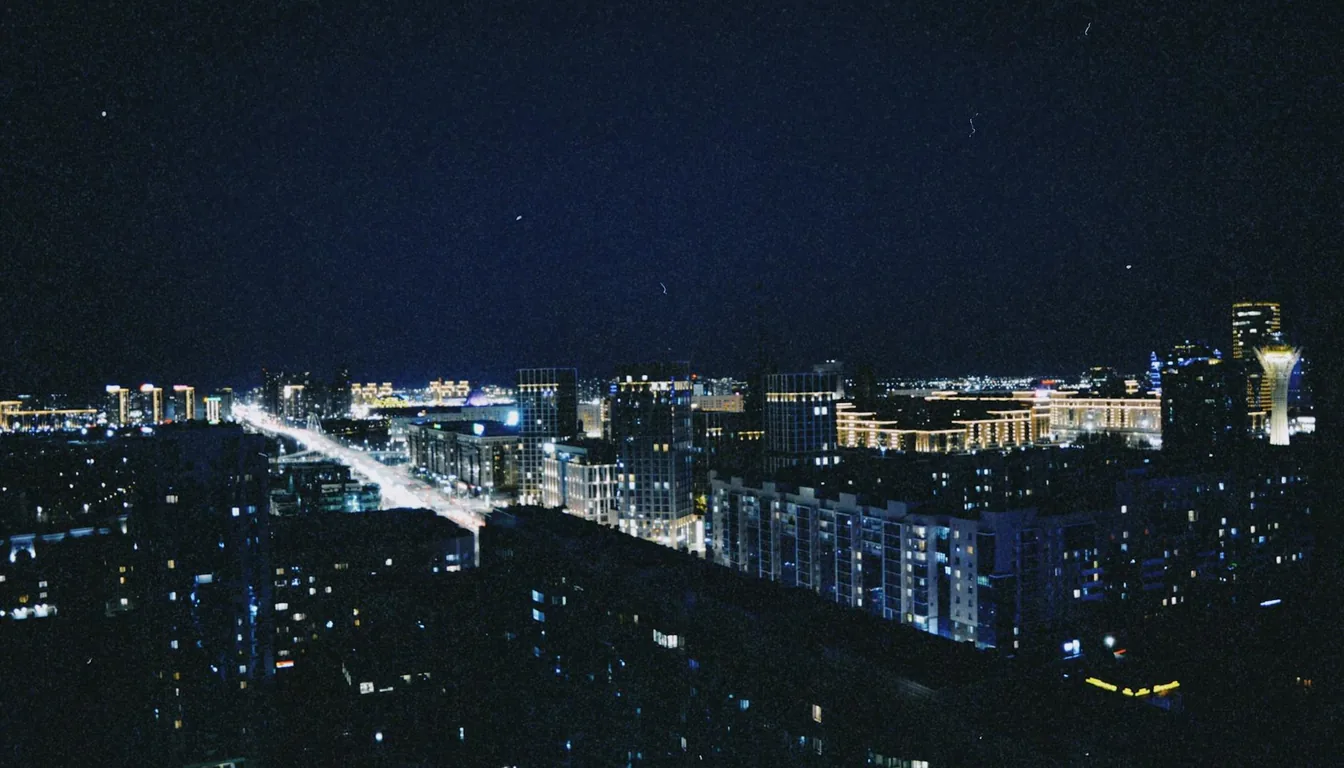
Astana is Kazakhstan’s capital city and one of the youngest purpose-built capitals in the world, constructed from near-scratch on the Central Asian steppe since 1997. The city is defined by futuristic architecture (Baiterek Tower, Khan Shatyr, the Palace of Peace and Reconciliation pyramid, Hazret Sultan Mosque), a population of 1.3 million, and extreme weather ranging from -35°C in winter to +35°C in summer. Most visitors spend 1-2 days exploring the Left Bank’s architectural spectacle before continuing to Almaty for mountains and culture.
Astana confounds expectations. It is simultaneously a post-Soviet administrative center and a 21st-century architectural showcase that looks like it was designed for a science fiction film. In less than three decades, based on Bureau of National Statistics data, a small steppe town of 270,000 people has been transformed into a gleaming capital with Norman Foster buildings, a skyline of glass towers, and boulevards wider than anything in Europe. The city has been renamed four times: Akmola, Astana, Nur-Sultan (2019, after Nazarbayev), and back to Astana again in 2022. The name simply means “capital” in Kazakh, and the city wears its identity with deliberate, state-sponsored grandeur. Love it or find it surreal, there is genuinely nowhere else like it on Earth.
Why Astana Exists
Understanding why Astana was built explains what you are looking at. In 1997, President Nursultan Nazarbayev moved Kazakhstan’s capital from Almaty (a developed, cosmopolitan city in the southeast) to a small town called Akmola on the northern steppe. The official reasons: Almaty sits in an earthquake zone near the Chinese border with no room to expand, Akmola is geographically central, and the north needed economic development to counterbalance Russian demographic influence. The unofficial reason: Nazarbayev wanted a monument to his vision of modern Kazakhstan, built from a blank canvas. He got exactly that.
Billions of dollars in oil revenue funded the construction. International architects (Norman Foster, Kisho Kurokawa, Manfredi Nicoletti) were hired to design landmark buildings. The result is a city that reads as both genuinely impressive and deliberately symbolic: every building communicates something about Kazakhstan’s ambitions.
Top Attractions
Baiterek Tower
The defining symbol of Astana, a 97-meter observation tower representing the mythical Samruk bird’s egg atop the Tree of Life. The height references 1997, when the capital was moved. The golden sphere at the top houses a 360-degree observation deck with views across the entire city and the steppe beyond. Inside the sphere you will find Nazarbayev’s gilded handprint mold (visitors place their hand in it and make a wish) and panoramic windows. The structure looks elegant during the day and spectacular when illuminated at night.
Entry: ~2,000 KZT ($4). Hours: 10 AM - 10 PM daily. Time needed: 30-45 minutes.
Khan Shatyr Entertainment Center
Designed by Foster + Partners, Khan Shatyr is, according to the Guinness World Records, the world’s largest tent-like structure: a 150-meter-tall transparent ETFE canopy covering a shopping mall, indoor beach resort, water park, mini-golf, and monorail. The tent creates a controlled microclimate where you can sunbathe and swim while it is -30°C outside. The structure uses a cable-net system suspended from a central mast, and the ETFE membrane lets in sunlight while retaining heat.
Even if shopping malls are not your thing, the building itself is worth visiting purely as architecture. The indoor beach (Sky Beach Club) uses sand imported from the Maldives and maintains a tropical temperature year-round.
Hours: 10 AM - 10 PM daily. Beach resort: separate admission, ~5,000 KZT ($10).
Hazret Sultan Mosque
According to the Kazakhstan Ministry of Culture, this is the largest mosque in Central Asia, completed in 2012 with capacity for 10,000 worshippers. The exterior features four 77-meter minarets flanking a massive central dome covered in ornamental plasterwork. The interior combines traditional Islamic geometric patterns and calligraphy with modern construction, and natural light floods through the dome into bright, open spaces.
Even non-Muslim visitors should see the interior. The scale is breathtaking. Open to visitors outside prayer times. Women receive head coverings at the entrance. Free entry.
Palace of Peace and Reconciliation
Another Foster + Partners project, according to the firm’s published portfolio, a 77-meter-tall glass and steel pyramid that houses an opera house, a national university, exhibition spaces, and the Congress of World and Traditional Religions (held every three years). The symbolism is deliberate: a pyramid representing harmony, with stained glass windows at the apex designed by British artist Brian Clarke depicting 130 doves for the nationalities living in Kazakhstan.
Guided tours take you through the interior to the stained glass apex, which is spectacular when sunlight passes through. Entry: ~1,500 KZT ($3). Tours available in English.
Nur-Alem (EXPO 2017 Sphere)
Astana hosted the 2017 World Expo under the theme “Future Energy.” The main pavilion, Nur-Alem, is the world’s largest spherical building at 80 meters in diameter and 100 meters tall. It now operates as the Museum of Future Energy, with eight floors of interactive exhibits covering solar, wind, kinetic, and space energy. The building itself is covered in photovoltaic panels and is partially self-powered.
The EXPO site has been converted into a tech hub and convention center, but the sphere remains the main attraction. Entry: ~2,000 KZT ($4). Allow 1.5-2 hours.
National Museum of Kazakhstan
According to the Bureau of National Statistics cultural registry, Kazakhstan’s largest museum at 74,000 square meters across four floors, covering archaeology, ethnography, natural history, and modern statehood. The archaeological collection includes Saka (Scythian) golden artifacts and detailed exhibits on the Kazakh Khanate, the Silk Road, and the Soviet period. The “Golden Man” (Altyn Adam) replica is here, alongside a comprehensive ethnographic section showing nomadic life, yurt construction, and traditional clothing.
Entry: ~1,500 KZT ($3). Location: Left Bank, near Baiterek. Allow 2-3 hours for a thorough visit.
Nurzhol Boulevard
The central axis of modern Astana, a 2-kilometer pedestrian boulevard running from Baiterek Tower to the Khan Shatyr, flanked by government buildings, skyscrapers, fountains, and public art. Walking its length gives the clearest sense of the city’s scale and ambition. Most architectural landmarks are visible from the boulevard. In summer, families gather here in the evenings. In winter, it becomes a wind tunnel, so dress accordingly.
Ak Orda Presidential Palace
The official workplace of the President of Kazakhstan, a blue-domed neoclassical palace at the end of Nurzhol Boulevard. Not open to the public for interior visits, but the exterior and surrounding grounds are worth seeing for the sheer scale. The palace faces Baiterek Tower across the boulevard, creating a deliberate visual axis.
Where to Stay
Luxury ($120-300/night)
- The St. Regis Astana. The city’s top hotel, located on the Left Bank with views of Baiterek. Excellent service, spa, and dining.
- Rixos President Astana. Another premium Left Bank option with a large spa and multiple restaurants.
- Hilton Astana. International standard, well-located for sightseeing, strong business facilities.
Mid-Range ($40-100/night)
- Park Inn by Radisson Astana. Reliable, central, good value. Near Nurzhol Boulevard.
- Best Western Plus Astana. Clean, modern, consistent quality.
- Several Kazakh-run boutique hotels offer character and central locations at $50-80/night.
Budget ($10-30/night)
- Hostels with dorm beds from $8-15 and private rooms from $20-30.
- Apartments on Airbnb and local platforms from $20-40/night.
- Budget hotels and guesthouses near the old city (Right Bank) offer basic rooms from $15-25.
Best area to stay: The Left Bank puts you within walking distance of all major attractions. The Right Bank (old city) is cheaper and has more local character but requires transport to reach the landmarks.
Where to Eat
Traditional Kazakh
- Arnau. Upscale Kazakh and Central Asian cuisine with modern presentation. Beshbarmak, manty, and kazy done elegantly. $20-40/person.
- Tugan Avylym. An ethno-village restaurant complex on the Left Bank with traditional Kazakh dining in yurt-style rooms. Touristy but authentic food. $15-30/person.
- Line Brew. Kazakh-international restaurant and craft brewery. Solid food menu alongside house-brewed beers. $15-25/person.
International
Astana’s restaurant scene is smaller than Almaty’s but has grown significantly. Good Georgian, Turkish, Italian, Japanese, and Korean restaurants are concentrated on the Left Bank and around the Keruen and Khan Shatyr malls. Budget meals: stolovaya canteens serve full meals for $2-5. Fast food chains (international and local) are everywhere.
Cafes
The coffee culture is developing — several third-wave coffee shops have opened on the Left Bank in recent years, though the scene is less mature than Almaty’s. Expect to pay $2-4 for espresso drinks.
Getting to Astana
By Air
Astana Nursultan Nazarbayev International Airport (NQZ) receives direct flights from Istanbul, Dubai, Frankfurt, Moscow, Seoul, Beijing, and regional cities. Air Astana is the primary carrier. FlyArystan offers budget domestic flights. The airport is 17 km south of the city center — Yandex Taxi downtown costs 2,000-3,500 KZT ($4-7). See our flights to Kazakhstan guide.
By Train from Almaty
The overnight sleeper is one of Central Asia’s iconic journeys: 12-14 hours crossing the steppe, departing Almaty-2 station in the evening and arriving at Astana station in the morning. Kupe class (four-berth compartment): $25-55. Platskart (open dormitory): $10-15. Book via KTZ or 12go.asia. Read our detailed Almaty to Astana guide for schedules and tips.
By Domestic Flight
Almaty to Astana: 1.5 hours, $30-100 depending on carrier and timing. FlyArystan is the budget option ($25-50). Air Astana offers full service ($60-150). Multiple daily flights.
Getting Around Astana
Yandex Taxi. Essential, same as everywhere in Kazakhstan. Cross-city rides cost 1,000-3,000 KZT ($2-6). Link your international card before arriving.
LRT (Light Rail Transit). Astana opened a light rail line connecting the airport, Left Bank, and railway station. Clean, modern, and useful for covering the long distances between attractions. Single ride: 90 KZT.
Walking. The Left Bank landmarks are spread over 2-3 km along Nurzhol Boulevard, walkable in summer but brutal in winter. In cold months, taxi between attractions.
Bus: A functional network mapped on 2GIS. Pay by contactless card or cash (150 KZT).
Weather and Best Time to Visit
According to the World Meteorological Organization, Astana has one of the most extreme climates of any capital city in the world. The steppe location means no mountains or forests to moderate temperatures or block wind.
| Month | Avg High | Avg Low | Notes |
|---|---|---|---|
| January | -10°C | -22°C | Coldest month, can reach -40°C |
| April | 14°C | 2°C | Spring thaw, muddy |
| June | 26°C | 14°C | Warm, pleasant, long days |
| July | 29°C | 16°C | Hottest month, can reach 38°C |
| September | 20°C | 8°C | Clear skies, comfortable |
| November | -2°C | -12°C | Winter setting in |
Best time: June to September for comfortable outdoor exploration. July is warmest but can be hot.
Winter visit: December to February brings extreme cold but a uniquely atmospheric city. The futuristic skyline covered in snow and frost, Khan Shatyr’s indoor beach while it is -30°C outside, and the ice sculpture festival create memorable experiences. Just bring serious winter gear.
Avoid: March through April (muddy, gray) and November (cold and bleak before the snow brings visual drama).
Astana vs Almaty: Quick Comparison
Most visitors wonder which city to prioritize. Here is the honest comparison. For a deeper analysis, see our Almaty vs Astana guide.
| Category | Astana | Almaty |
|---|---|---|
| Architecture | Futuristic, purpose-built | Soviet, colonial, modern mix |
| Mountains | None (flat steppe) | Tian Shan 30 min away |
| Winter temperature | -25°C to -40°C | -10°C to -15°C |
| Food scene | Good, growing | Excellent, best in Kazakhstan |
| Nightlife | Limited | Lively, diverse |
| Nature access | Steppe only | Lakes, canyons, peaks |
| Must-see factor | Architectural spectacle | Natural beauty + urban culture |
| Days needed | 1-2 | 3-5 |
Verdict: Almaty is the better overall destination for travelers. Astana is worth 1-2 days specifically for its extraordinary architecture. Most Kazakhstan itineraries include both cities, connected by the overnight train or a quick flight.
2-Day Astana Itinerary
Day 1: Left Bank Landmarks
Morning: Start at Baiterek Tower for 360-degree city views. Walk south along Nurzhol Boulevard past government buildings and fountains. Visit the National Museum of Kazakhstan (allow 2 hours for the Golden Man and Silk Road exhibits). Afternoon: Hazret Sultan Mosque (interior visit, free). Continue to the Palace of Peace and Reconciliation (guided pyramid tour). Late afternoon: Khan Shatyr for shopping, food court dinner, and the architectural experience.
Day 2: EXPO, Old City, and Departure
Morning: Nur-Alem sphere (EXPO 2017 Museum of Future Energy). The interactive exhibits take 1.5-2 hours. Afternoon: Cross to the Right Bank (old city) for a different perspective — the Central Market, Soviet-era streets, and local restaurants offer a contrast to the Left Bank’s grandeur. If time permits, visit the Palace of Independence museum. Evening: Dinner at Arnau or Tugan Avylym for traditional Kazakh cuisine before departure.
Practical Information
| Detail | Info |
|---|---|
| Population | ~1.3 million |
| Elevation | 347m above sea level |
| Time zone | UTC+5 (no daylight saving) |
| Airport code | NQZ |
| Currency | Tenge (KZT) — 1 USD = ~490 KZT |
| Languages | Kazakh, Russian |
| Power | 220V, Type C/F European plugs |
| Emergency | 112 (general), 102 (police), 103 (ambulance) |
For more about Kazakhstan’s cities and planning your trip, see our other guides.
Frequently Asked Questions
- What is Astana known for?
- Astana is known as one of the world's most extraordinary planned capital cities, built from near-scratch on the steppe since 1997. Key landmarks include Baiterek Tower (97m observation tower), Khan Shatyr (world's largest tent structure by Norman Foster), the Palace of Peace pyramid (also by Foster), Hazret Sultan Mosque (Central Asia's largest), the Nur-Alem EXPO sphere, and a futuristic skyline unlike any other capital.
- Is Astana worth visiting?
- Yes, for 1-2 days. Astana is a genuinely unique architectural experience — there is nowhere quite like it on Earth. The combination of futuristic government buildings, Norman Foster structures, and steppe-flat geography creates an otherworldly atmosphere. For longer stays, Almaty offers more variety in food, nature, and nightlife. Most visitors do both cities.
- How cold does Astana get in winter?
- Astana is one of the coldest capital cities in the world. January averages -22°C at night, with temperatures regularly dropping to -35°C and extremes reaching -40°C. However, the city is designed for extreme cold — heated underground walkways, indoor attractions like Khan Shatyr's beach resort, and efficient central heating make it functional year-round. Bring serious winter gear: thermal layers, insulated boots, and a heavy parka.
- Why was the capital moved from Almaty to Astana?
- President Nazarbayev moved the capital in 1997 for strategic reasons: Almaty sits in an earthquake-prone zone near the Chinese border with limited expansion space; Astana is geographically central; the north needed economic development to counterbalance Russian demographic influence; and building a new capital allowed Kazakhstan to project post-Soviet national ambitions through architecture.
- What was Astana previously called?
- The city has been renamed multiple times: Akmolinsk (Russian Empire era), Tselinograd (Soviet era, referencing the Virgin Lands campaign), Akmola (1992), Astana (1998, meaning "capital" in Kazakh), Nur-Sultan (2019, after President Nazarbayev), and back to Astana (2022, after Nazarbayev's political decline). The current name is simply Astana.
- How do I get from Almaty to Astana?
- Three options: domestic flight (1.5 hours, $30-100 on FlyArystan or Air Astana), overnight sleeper train (12-14 hours, $25-55 for Kupe class — a scenic steppe journey), or bus (18+ hours, not recommended). Most visitors fly one way and take the train the other for the experience. Multiple daily flights and train departures are available.
More Stories
travel
12 Best Day Trips from Almaty: Complete Guide 2026
Best Almaty day trips — Charyn Canyon, Big Almaty Lake, Kolsai Lakes, Tamgaly petroglyphs, Altyn-Emel. Distances, costs, and transport.
travel
Almaty, Kazakhstan: Complete Travel Guide (2026)
Almaty travel guide — top attractions, neighborhoods, restaurants, hotels, transport, day trips, nightlife, and a 3-day itinerary for visitors.
travel
Almaty to Astana: Flights, Trains & Driving
Almaty to Astana travel options compared: flights from $50 (1.5 hrs), Talgo trains from $20 (14 hrs), driving & buses. 2026 prices and booking tips.