Famous People from Kazakhstan: Top Icons & Stars

The most famous people from Kazakhstan include boxer Gennady Golovkin (GGG), singer Dimash Kudaibergen, poet Abai Qunanbaiuly, and cosmonaut Tokhtar Aubakirov. Kazakhstan has produced world-class talent across combat sports, music, literature, politics, and science. From Olympic gold medalists and world boxing champions to philosophers who shaped Central Asian intellectual life, Kazakhstanis have gained international recognition far beyond what the country’s population of 20 million might suggest. This guide covers every notable Kazakhstani you should know, organized by field, with brief biographies and key achievements.
Famous Athletes from Kazakhstan
Kazakhstan is a sporting powerhouse, particularly in boxing, wrestling, weightlifting, and cycling. The country has won over 70 Olympic medals since independence in 1991, with combat sports accounting for the majority.
Gennady Golovkin (GGG)
Born: April 8, 1982, Karaganda, Kazakhstan Sport: Boxing (middleweight / super middleweight) Key achievements: Unified middleweight world champion (WBA, WBC, IBF, IBO), 20 consecutive middleweight title defenses, Olympic silver medalist (Athens 2004)
Gennady Gennadyevich Golovkin, universally known as GGG, is arguably the most internationally famous person from Kazakhstan today. Born in the industrial city of Karaganda, he is of mixed heritage. His father was Russian, and his mother was of Korean heritage, part of Kazakhstan’s significant ethnic Korean community deported from the Soviet Far East in 1937. Golovkin has described himself as having Russian, Korean, and Kazakh roots.
GGG dominated the middleweight division for nearly a decade with devastating knockout power and a relentless fighting style. He held the WBA middleweight title from 2010 to 2023 and made 20 consecutive defenses, the second-longest streak in middleweight history. His rivalry with Saul “Canelo” Alvarez produced three of the most-watched boxing fights of the 2010s and 2020s. He is widely regarded as one of the greatest middleweight boxers of all time.
Valentina Shevchenko
Born: March 7, 1988, Frunze, Kirghiz SSR (now Bishkek, Kyrgyzstan) Background: Born in Kyrgyzstan, has trained across Central Asia including Kazakhstan Sport: Mixed martial arts (UFC flyweight) Key achievements: UFC Women’s Flyweight Champion (2019–2023), 7 consecutive title defenses, multiple Muay Thai world championships
Valentina Shevchenko is one of the most dominant fighters in UFC history. While born in Bishkek, she has deep ties to Kazakhstan: she trained in Almaty and represented Kazakhstan in Muay Thai competitions before transitioning to MMA. She held the UFC Women’s Flyweight Championship for over four years, defending it seven consecutive times with devastating striking and technical skill. Her nickname “Bullet” reflects her precision and speed.
Serik Sapiyev
Born: August 10, 1986, Zhezkazgan, Kazakhstan Sport: Boxing (welterweight) Key achievements: Olympic gold (London 2012), Val Barker Trophy winner (best boxer of the 2012 Olympics), 2007 World Amateur Boxing Champion
Sapiyev is considered the greatest amateur boxer in Kazakhstani history. At the 2012 London Olympics, he won the welterweight gold medal and was awarded the prestigious Val Barker Trophy, given to the best overall boxer at the Games. He dominated amateur welterweight boxing for nearly a decade before retiring.
Ilya Ilyin
Born: May 24, 1988, Kyzylorda, Kazakhstan Sport: Weightlifting (94 kg category) Key achievements: Two-time Olympic gold medalist (Beijing 2008, London 2012), both later stripped due to doping violations
Ilya Ilyin was the dominant weightlifter of his era, winning back-to-back Olympic golds with performances that set world records. However, both medals were stripped in 2016 after re-testing of samples revealed banned substances. Despite the controversy, Ilyin remains a household name in Kazakhstan, and his story reflects the broader doping problems that plagued post-Soviet weightlifting programs.
Alexander Vinokourov
Born: September 16, 1973, Petropavl, Kazakhstan Sport: Road cycling Key achievements: Olympic gold (London 2012, road race), Tour de France stage wins, Liege-Bastogne-Liege winner
Vinokourov put Kazakhstan on the world cycling map. His aggressive racing style made him a fan favorite in European professional cycling. After winning Olympic gold in 2012 at age 38, he became general manager of Astana Pro Team, the Kazakhstani cycling team that developed Tour de France champions Vincenzo Nibali and Fabio Aru. His career was also marked by a doping suspension in 2007 after testing positive for EPO during the Tour de France.
Other Notable Kazakhstani Athletes
- Beibut Shumenov (b. 1983), former WBA Light Heavyweight and Cruiserweight champion
- Yeldos Smetov (b. 1992), Olympic gold medalist in judo (Tokyo 2020), World Judo Champion
- Dmitriy Balandin (b. 1995), Olympic gold medalist in swimming (Rio 2016, 200m breaststroke), Kazakhstan’s first Olympic swimming gold
- Elizabet Tursynbaeva (b. 2000), first female figure skater to land a quadruple jump in competition (2019 World Championships)
Famous Musicians and Entertainers
The culture of Kazakhstan has a deep musical tradition stretching back centuries, and modern Kazakhstani musicians have gained worldwide audiences.
Dimash Kudaibergen
Born: May 24, 1994, Aktobe, Kazakhstan Known for: Opera-crossover vocalist with a 6-octave range, international concert performer
Dimash Kudaibergen is Kazakhstan’s most internationally famous living entertainer. His 2017 performance of “S.O.S. d’un Terrien en Detresse” on the Chinese TV competition Singer generated over 200 million views and launched a global career. His vocal range (from bass to a C#7 whistle register) is extraordinary and has been analyzed by vocal coaches worldwide.
Dimash graduated from the Kazakh National Academy of Arts and combines classical training with pop, folk, and operatic styles. He has performed at the United Nations, at major arenas across Asia and Europe, and commands a devoted international fanbase known as “Dears.” His popularity extends across China, South Korea, Russia, Latin America, and the United States. He is known for keeping his personal life private.
Jah Khalib
Born: July 4, 1993, Almaty, Kazakhstan Known for: R&B and hip-hop in Russian, hundreds of millions of streams across platforms
Jah Khalib (real name Bakhtiyor Mamedov) is one of Kazakhstan’s most commercially successful contemporary musicians. His blend of R&B melodicism and hip-hop production in the Russian language has made him a star across the entire CIS region. Tracks like “Medina” and “Leila” have hundreds of millions of plays on Spotify and YouTube. He represents the new generation of Kazakhstani artists who create in Russian for a pan-post-Soviet audience.
Historical Figures and Philosophers
Kazakhstan’s history spans millennia, and several historical figures are revered as foundational to Kazakh identity.
Abai Qunanbaiuly (1845–1904)
Significance: Father of modern Kazakh literature, poet, philosopher, composer
Abai (full name Ibrahim Qunanbaiuly) is the central figure of Kazakh intellectual and literary culture. Born into a noble family in what is now Semey region, he was educated in Islamic schools but became an avid reader of Russian literature, translating Pushkin, Lermontov, and Krylov into Kazakh for the first time.
His philosophical writings known as “Qara Sozder” (Black Words / Words of Edification) and his lyric poetry established the foundation of modern Kazakh literary language. He argued passionately for education, reason, and modernization without loss of Kazakh identity, themes that remain powerful today. Abai appears on the 1,000-tenge banknote, his birthday (August 10) is a national holiday, and statues of him stand in every major Kazakhstani city. The city of Semipalatinsk was officially renamed Semey partly in his honor.
Al-Farabi (872–950)
Born: Farab, present-day Otrar, southern Kazakhstan Significance: One of the greatest philosophers of the Islamic Golden Age
Abu Nasr al-Farabi, known in the medieval West as “Alpharabius” and in the Islamic world as “The Second Teacher” (after Aristotle), was born in what is now southern Kazakhstan. He wrote extensively on philosophy, logic, music theory, mathematics, and political science. His works on Aristotelian logic and Platonic political philosophy were foundational to both Islamic and European medieval thought.
Al-Farabi’s treatise on the classification of sciences organized all known fields of knowledge and influenced scholars for centuries. Kazakhstan’s largest university, Al-Farabi Kazakh National University in Almaty, is named after him. Whether he is “Kazakh” in the modern sense is debated (he lived 1,000 years before the Kazakh nation as such existed), but he was born on Kazakh soil and is claimed as a national intellectual hero.
Ablai Khan (1711–1781)
Significance: Most celebrated Kazakh khan, unified the three zhuz (tribal federations)
Ablai Khan is one of the greatest figures in Kazakh history. He navigated the existential crisis of the 18th century, when Dzungar invasions devastated the Kazakh steppe in what is called “Aktaban Shubryndy” (the Great Disaster of the 1720s), by playing the Russian and Chinese empires against each other while uniting the three Kazakh zhuz (hordes) under a single leadership. His political and military skill preserved Kazakh independence during the most dangerous period in the nation’s history.
Mukhtar Auezov (1897–1961)
Significance: Kazakhstan’s greatest novelist, author of the epic “Abai” tetralogy
Mukhtar Auezov wrote the four-volume epic novel about Abai Qunanbaiuly that is considered the defining work of Kazakh literature. “The Path of Abai” was translated into dozens of languages and won the Lenin Prize in 1959. Auezov was also a playwright and scholar of Kazakh folk literature whose academic work preserved oral traditions that might otherwise have been lost.
Scientists and Explorers
Tokhtar Aubakirov
Born: July 27, 1946, Karaganda region, Kazakhstan Significance: First ethnic Kazakh in space
Tokhtar Aubakirov flew to the Mir space station on October 2, 1991, just weeks before the collapse of the Soviet Union, making him the first Kazakh cosmonaut. He was also a distinguished test pilot who held the record for the first carrier-based landing of a MiG-29 on the Soviet aircraft carrier Tbilisi. After independence, he served in Kazakhstan’s parliament and as an advisor on space and aviation policy. Appropriately, the Baikonur Cosmodrome (the world’s first and largest operational space launch facility) is located in Kazakhstan.
Shokan Valikhanov (1835–1865)
Significance: Pioneering ethnographer, geographer, and intelligence officer
Shokan Valikhanov was a remarkable figure: a Kazakh aristocrat educated in the Russian military system in Omsk, where he befriended the exiled writer Fyodor Dostoevsky. He conducted intelligence missions for the Russian Empire into Chinese Xinjiang disguised as a merchant, gathering invaluable geographic and ethnographic data on Central Asia. His scholarly works on Kazakh customs, the Kyrgyz epic Manas, and the geography of Eastern Turkestan remain valuable primary sources. He died at just 29.
Kanysh Satpayev (1899–1964)
Significance: Founder of Kazakhstan’s geological science, first president of the Kazakh Academy of Sciences
Kanysh Satpayev discovered and mapped the enormous Zhezkazgan copper deposit (one of the largest in the world) and became the founding president of the Academy of Sciences of the Kazakh SSR. His geological surveys were critical to Kazakhstan’s industrial development and established the scientific study of Kazakhstan’s vast mineral wealth. He appears on the 500-tenge banknote.
Politicians and Leaders
Nursultan Nazarbayev
Born: July 6, 1940, Chemolgan, Almaty region Role: First President of Kazakhstan (1991–2019)
Nursultan Nazarbayev led Kazakhstan from Soviet republic to independent nation, ruling for 28 years. His achievements include the peaceful transfer of the Soviet-era nuclear arsenal (making Kazakhstan the first country to voluntarily give up nuclear weapons), building the new capital Astana from scratch, and positioning Kazakhstan as a diplomatically neutral bridge between Russia and China.
His legacy is deeply contested. Kazakhstan experienced significant economic modernization under his rule, driven by oil and gas revenues, but his government was also marked by authoritarian control, restricted press freedom, and corruption. His political influence declined sharply after the January 2022 protests (known as “Bloody January”), during which his successor Kassym-Jomart Tokayev moved to distance the government from the Nazarbayev era.
Kassym-Jomart Tokayev
Born: May 17, 1953, Almaty Role: President of Kazakhstan (2019–present)
Tokayev succeeded Nazarbayev and initially was seen as a caretaker president. However, after the January 2022 crisis, he consolidated power independently by removing Nazarbayev allies from key positions and initiating political reforms including a transition from “super-presidential” to a more balanced governmental system. A trained diplomat (former UN Under-Secretary-General), he speaks Kazakh, Russian, English, French, and Chinese.
Olzhas Suleimenov
Born: May 18, 1936, Almaty Significance: Poet, diplomat, and leader of the anti-nuclear movement
Suleimenov led the Nevada-Semipalatinsk Movement in 1989, a mass anti-nuclear campaign that gathered over 2 million signatures to close the Soviet nuclear test site at Semipalatinsk, where 456 nuclear tests were conducted between 1949 and 1989. His 1975 book “Az-i-Ya” argued for pre-Slavic Turkic influences in Russian medieval literature and was banned by Soviet authorities. He later served as Kazakhstan’s ambassador to Italy and as a UNESCO representative.
Film, Culture, and the Borat Controversy
Kazakhstan’s cultural profile internationally was shaped in an unexpected way by the 2006 comedy film Borat: Cultural Learnings of America for Make Benefit Glorious Nation of Kazakhstan.
Important context: Sacha Baron Cohen, who created and plays the character Borat, is a British comedian, not Kazakhstani. The film and character are satire of Western ignorance about Central Asia, not a genuine portrayal of Kazakhstan. The fictional “Kazakhstan” in the film bears no resemblance to the actual country.
Kazakhstan’s government initially condemned the film but later took a more pragmatic approach, recognizing that the resulting international curiosity actually boosted tourism. Kazakhstan’s tourism board even launched a campaign using the Borat catchphrase “Very nice!” in 2020. Despite the initial offense, many Kazakhstanis have come to view Borat with humor, and the film did more to put Kazakhstan on the global map than any government-funded campaign.
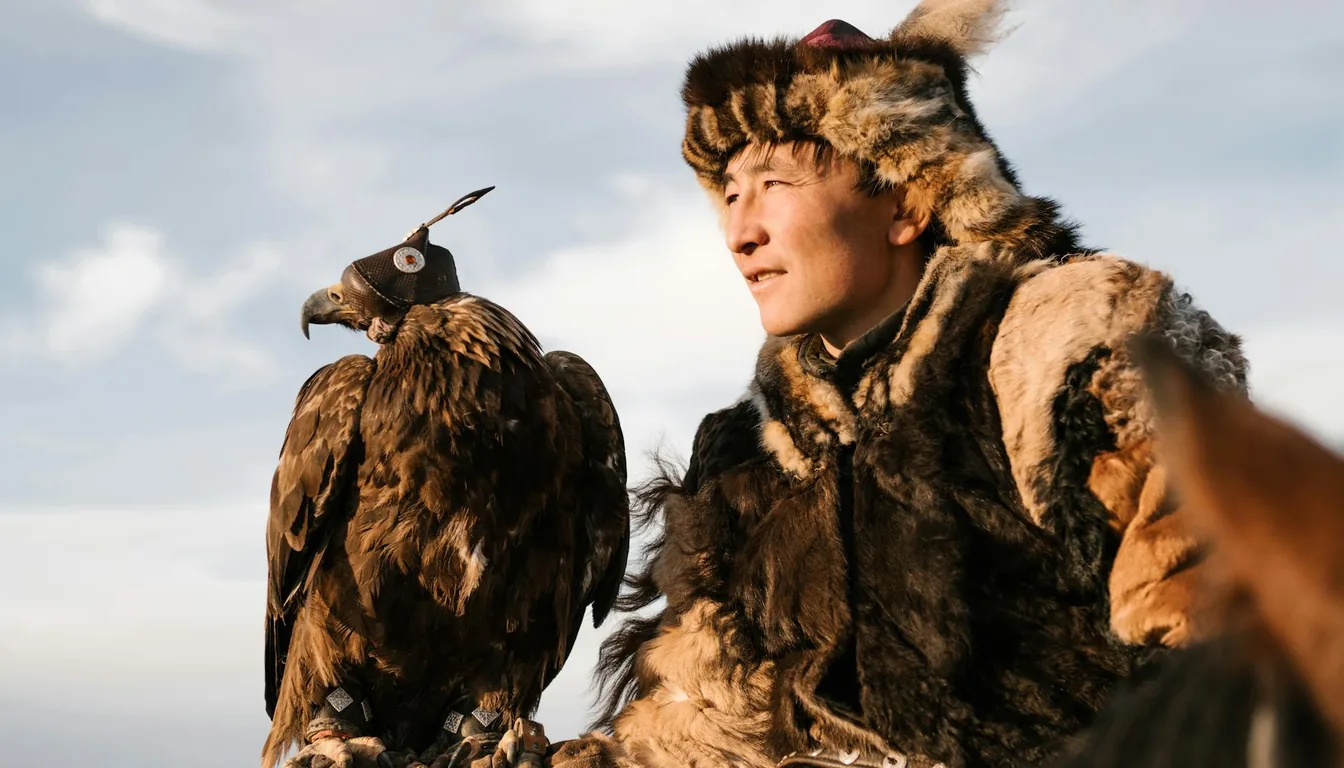
For those curious about the real Kazakhstan, a modern and diverse country with striking landscapes and lively cities, consider things to do in Almaty or the ancient tradition of eagle hunting.
Summary Table: Famous People from Kazakhstan
| Name | Field | Key Achievement |
|---|---|---|
| Gennady Golovkin (GGG) | Boxing | Unified middleweight world champion, 20 consecutive title defenses |
| Dimash Kudaibergen | Music | International vocal phenomenon, 6-octave range |
| Abai Qunanbaiuly | Literature | Father of modern Kazakh literature (1845–1904) |
| Al-Farabi | Philosophy | ”The Second Teacher” of the Islamic Golden Age (872–950) |
| Tokhtar Aubakirov | Space | First Kazakh cosmonaut (1991) |
| Ablai Khan | History | United the three Kazakh zhuz against Dzungar invasion (18th c.) |
| Nursultan Nazarbayev | Politics | First President of independent Kazakhstan (1991–2019) |
| Valentina Shevchenko | MMA | UFC Women’s Flyweight Champion, 7 title defenses |
| Serik Sapiyev | Boxing | Olympic gold + Val Barker Trophy (London 2012) |
| Ilya Ilyin | Weightlifting | Two Olympic golds (later stripped for doping) |
| Alexander Vinokourov | Cycling | Olympic gold (2012), founder of Astana Pro Team |
| Kanysh Satpayev | Science | Founder of Kazakh geological science, discovered Zhezkazgan copper |
| Mukhtar Auezov | Literature | Author of the epic novel “Abai,” Lenin Prize winner |
| Kassym-Jomart Tokayev | Politics | Current President, post-2022 reform agenda |
| Olzhas Suleimenov | Poetry/Activism | Led anti-nuclear movement, closed Semipalatinsk test site |
| Shokan Valikhanov | Exploration | Pioneering ethnographer and geographer (died at 29) |
Frequently Asked Questions
- Who is the most famous person from Kazakhstan?
- The most famous person from Kazakhstan internationally is boxer Gennady Golovkin (GGG), the unified middleweight world champion from Karaganda. In entertainment, singer Dimash Kudaibergen has the largest global fanbase. Historically, poet Abai Qunanbaiuly (1845–1904) is the most revered cultural figure in Kazakhstan.
- Is Borat from Kazakhstan?
- No. Borat is a fictional character created by British comedian Sacha Baron Cohen. The film is a satire of Western ignorance, not a portrayal of real Kazakhstan. The actual country bears no resemblance to the film. Kazakhstan initially protested but later embraced the publicity — even using "Very nice!" in official tourism campaigns.
- Is Gennady Golovkin (GGG) from Kazakhstan?
- Yes. Gennady Golovkin was born on April 8, 1982 in Karaganda, Kazakhstan. He is of mixed Russian and Korean (Koryo-saram) heritage, with Kazakh roots. He competed for Kazakhstan at the 2004 Athens Olympics (winning silver) before becoming a professional world champion and one of the greatest middleweight boxers in history.
- Is Dimash Kudaibergen from Kazakhstan?
- Yes. Dimash Kudaibergen was born on May 24, 1994 in Aktobe, Kazakhstan. He studied at the Kazakh National Academy of Arts in Almaty. His international fame exploded after his 2017 appearance on the Chinese TV show Singer, and he is now Kazakhstan's most recognized contemporary entertainer worldwide.
- Who was the first Kazakh in space?
- Tokhtar Aubakirov became the first ethnic Kazakh in space on October 2, 1991, flying to the Mir space station just weeks before the Soviet Union collapsed. He was also a distinguished test pilot. The Baikonur Cosmodrome — the world's first and largest space launch facility — is located in Kazakhstan.
- What is Kazakhstan famous for in sports?
- Kazakhstan is a boxing powerhouse — Gennady Golovkin (GGG), Serik Sapiyev, and Beibut Shumenov are world-class champions. The country has won 70+ Olympic medals since 1991, primarily in boxing, wrestling, weightlifting, and judo. Kazakhstan also has a major professional cycling team (Astana Qazaqstan) and produced the first female figure skater to land a quadruple jump (Elizabet Tursynbaeva).
More Stories
culture
Eagle Hunting in Kazakhstan: Berkutchi Tradition
Eagle hunting in Kazakhstan is a 4,000-year-old UNESCO tradition with only 250 berkutchi left. How it works, where to watch, and how to book a tour.

culture
Kazakh Language Basics: 40+ Essential Phrases
Kazakh language basics for travelers — 40+ essential phrases for greetings, food, directions, emergencies, pronunciation, and when to use Kazakh vs Russian.
culture
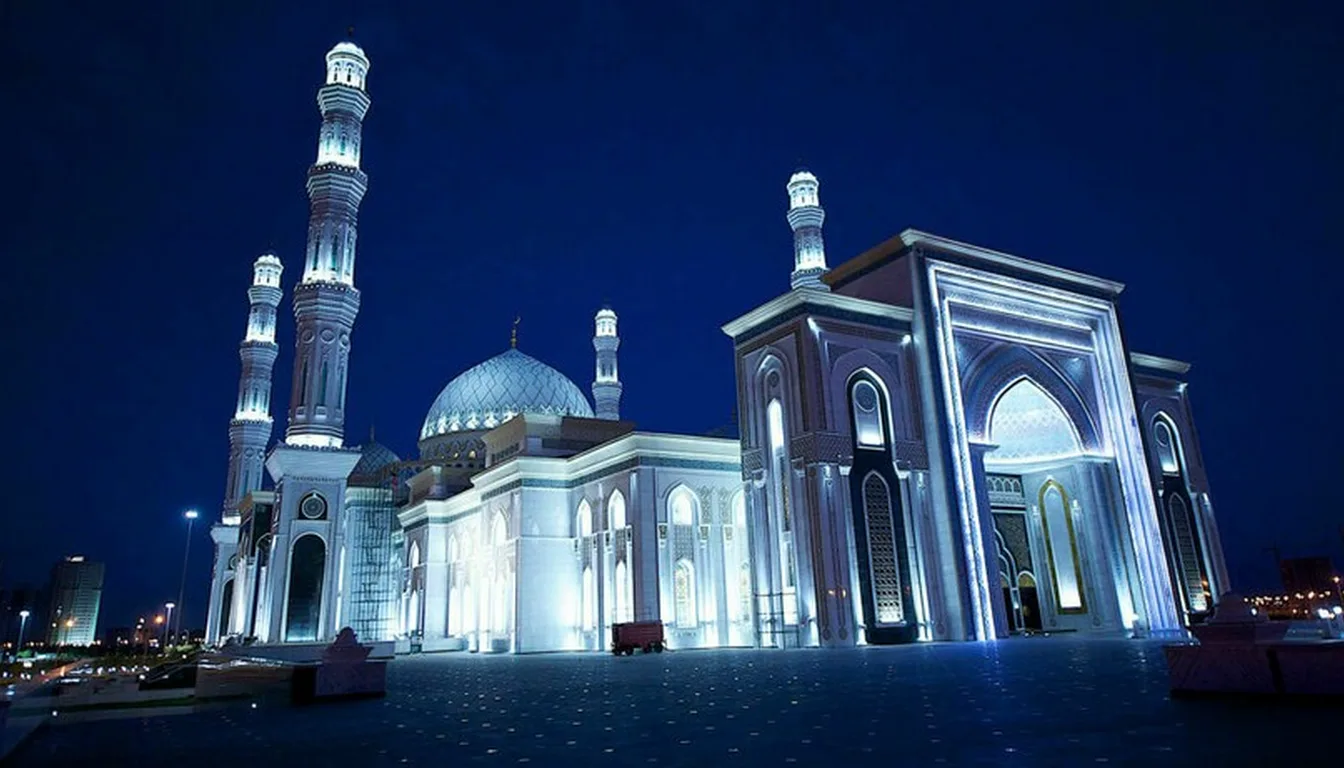
Kazakhstan Religion: Islam, Christianity & More
Kazakhstan religion: 70% Muslim, 17% Orthodox Christian, officially secular. How Islam shapes daily life, sacred sites, and what visitors need to know.