Kazakhstan Mountains: Tian Shan, Khan Tengri & Hiking Guide
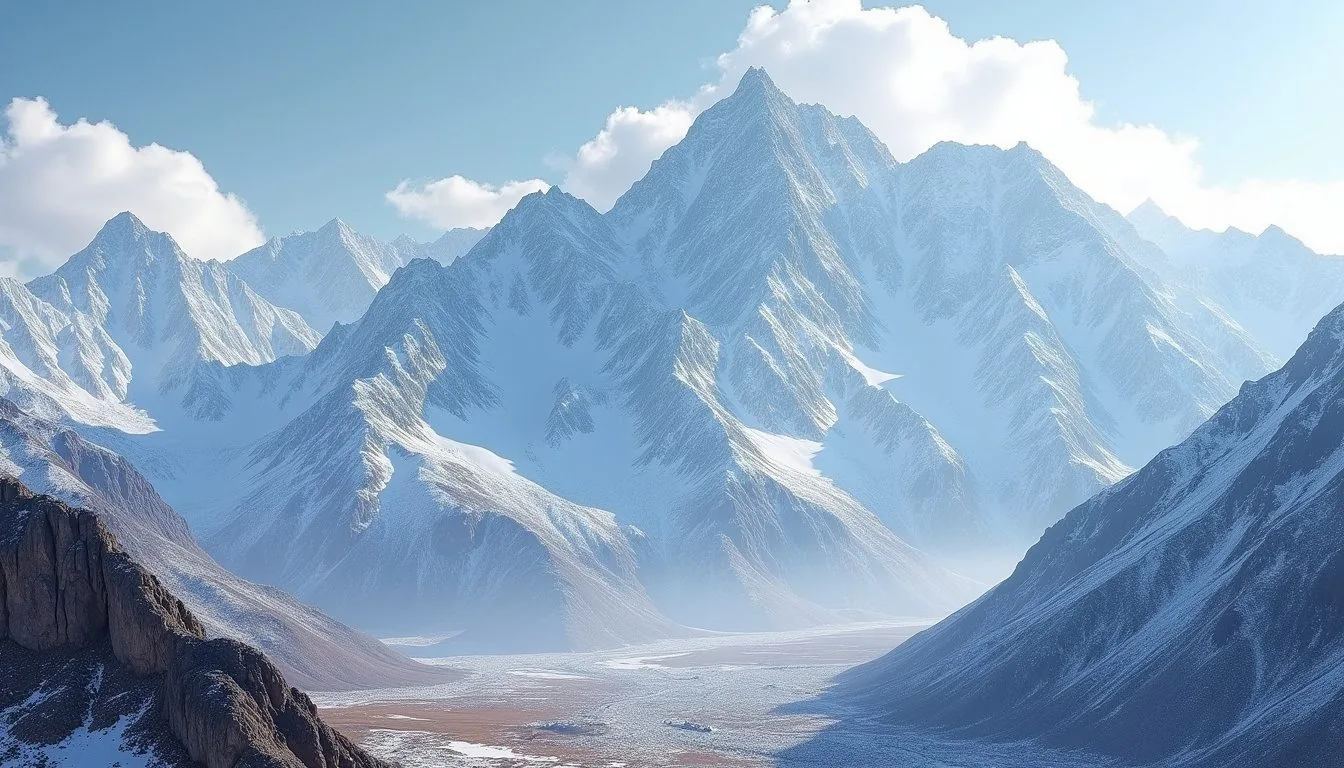
Kazakhstan has some of the most dramatic mountain landscapes in Central Asia. Despite its reputation as a flat steppe country, southeastern Kazakhstan is dominated by the massive ranges of the Tian Shan and Altai mountains — with peaks that exceed 7,000 meters and valleys that contain some of the most accessible alpine hiking in the region.
The mountains of Kazakhstan are overwhelmingly concentrated in the southeast and east of the country, forming natural borders with Kyrgyzstan and China. From Almaty, the country’s largest city, you can drive 30 minutes and be in serious mountain terrain.
Kazakhstan’s Main Mountain Ranges
Tian Shan (Celestial Mountains)
The Tian Shan range is the dominant mountain system of Central Asia, stretching over 2,500 km across Kazakhstan, Kyrgyzstan, China, and Tajikistan. In Kazakhstan, the Tian Shan covers a significant portion of the southeastern corner of the country.
The highest point of the Tian Shan system — and the highest mountain in Kazakhstan — is Khan Tengri at 6,995 meters (7,010m if you measure the ice cap). Khan Tengri means “Lord of the Spirits” or “Khan of the Heavens” in Kazakh.
Key Tian Shan sub-ranges and areas in Kazakhstan:
- Zailiysky Alatau — directly behind Almaty, rising to 4,979m (Talgar Peak). This is the most accessible mountain area in Kazakhstan.
- Kungey Alatau — south of Almaty, along the border with Kyrgyzstan
- Trans-Ili Alatau — a broader term for the mountains north of Lake Issyk-Kul
- Central Tian Shan — the remote, high-altitude region near the China border where Khan Tengri stands
Altai Mountains
The Altai range covers the extreme east and northeast of Kazakhstan, forming the border with Russia and China in the East Kazakhstan region. These are older, more weathered mountains than the Tian Shan — greener, with thick forests, rivers, and a different ecological character.
The highest point in the Kazakh Altai is Mount Belukha at 4,506 meters. Belukha is shared with Russia (it sits on the border) and is considered sacred by local peoples including the Kazakhs, Russians, and indigenous Altaic peoples.
The Altai is less visited than the Tian Shan but offers:
- True wilderness hiking with few tourists
- The East Kazakhstan nature reserves
- Whitewater rivers for rafting
- Diverse wildlife including snow leopards, ibex, maral deer, and golden eagles
Dzungarian Alatau
The Dzungarian Alatau (Jetisu Alatau) forms Kazakhstan’s border with China in the Almaty region to the northeast of the city. Its highest point is 3,637m. It is less dramatic than the main Tian Shan but contains significant biodiversity — this region is considered one of the most biodiverse in Central Asia.
The famous Dzungarian Gate (Dzungarian Gates) — a natural wind corridor between mountains — creates unique microclimates and has been an important historical passage for migrating peoples, including Mongol invasions.
Khan Tengri: Kazakhstan’s Crown Jewel
Khan Tengri (Хан Тәңірі) at 6,995m is one of the most beautiful and technically demanding peaks in Central Asia. It is one of only two mountains in the former Soviet Union over 7,000 meters (the other is Peak Pobeda/Jengish Chokusu at 7,439m on the Kyrgyzstan-China border).
Why Khan Tengri Is Special
- Pyramid shape — Khan Tengri has an almost perfect pyramidal form when viewed from certain angles, making it one of the most photogenic peaks in Asia
- Marble summit — The peak is composed of red and orange marble that glows dramatically at sunset — earning it the nickname “Bloody Mountain” (Кан Тоо)
- Technical difficulty — Rated 5B (Russian classification) / TD+ (French), it requires serious mountaineering skills
- Remote location — Located in the Tian Shan range on the Kazakhstan-Kyrgyzstan border, accessible only by helicopter or long trek
- Seasonal challenge — The peak is best attempted in July–August; conditions deteriorate rapidly after mid-August
Climbing Khan Tengri
Base camp: South base camp (3,900m) is reached by helicopter from Almaty (2–3 hour flight) or Bishkek. There is no road access.
Route: The standard route is the West Ridge. Total ascent from base camp: approximately 3,100 vertical meters.
Duration: 3–4 weeks total expedition time from base camp, including acclimatization.
Season: July 1 – August 20 approximately. Earlier is dangerous due to instability; later means deteriorating weather.
Cost: A guided expedition to Khan Tengri costs approximately $4,000–$7,000 USD including helicopter transport, permits, and guide services.
Permit: Kazakhstan requires mountaineering permits. The process is managed through government agencies and guide companies like Kan Tengri and Pilgrim Tours.
Fatality rate: Khan Tengri has a significant fatality rate due to sudden weather changes, avalanche risk, and altitude. It is not a mountain for inexperienced climbers.
Mountains Near Almaty: The Best Accessible Hiking
Almaty is one of the few cities in the world where world-class mountain hiking is a 30–60 minute drive from the city center. The Zailiysky Alatau range rises directly behind the city to over 4,000 meters.
Big Almaty Lake (Bolshoye Almatinskoe Ozero)
Elevation: 2,511m Distance from Almaty: 28 km (40-60 min drive) Difficulty: Easy to moderate (drive-to, short hike possible)
Big Almaty Lake is Kazakhstan’s most famous mountain destination. The glacially-fed lake has striking turquoise water and is surrounded by peaks of the Zailiysky Alatau. The color varies from deep blue to bright turquoise depending on the season and light.
The lake feeds Almaty’s water supply, so swimming is prohibited. But the viewpoint above the lake (another 30-min hike up) offers panoramic views of the range.
Access: Drive or taxi up Big Almaty gorge road (requires permits on weekends in summer — buy at the checkpoint). There is no public transport.
Medeu and Shymbulak
Medeu: Ice skating rink at 1,691m elevation — one of the highest in the world. Open year-round. Shymbulak: Ski resort at 2,200–3,200m, 25 km from Almaty. A gondola goes from Medeu to Shymbulak. Skiing: December–March. Summer hiking: June–September.
From Shymbulak’s upper station (3,200m), trails lead into the Zailiysky Alatau backcountry. This is the most accessible entry point for serious mountain hiking near Almaty.
Chimbulak Pass Trek
Elevation gain: 1,200m from Shymbulak (3,200m start) Duration: 5–8 hours round trip Difficulty: Moderate-strenuous
One of the classic day hikes above Shymbulak. The trail passes through alpine meadows and eventually reaches a pass with views of the Talgar massif and the glaciers of the Zailiysky Alatau.
Talgar Pass and Turgenskoye Gorge
For multi-day trekking, the trail system connecting Almaty gorges allows 3–7 day routes. The Turgenskoye Gorge east of Almaty has stunning waterfalls including the Turgen Waterfall (30m) and access to the Turgen Plateau at 2,800m.
Kok Zhailau Plateau
A high-altitude plateau at ~2,100m above Almaty, beloved by locals for summer picnics and hiking. Can be reached on foot from the city in 3–4 hours, or by 4WD vehicle.
Kazakhstan Mountains: Wildlife and Ecology
The mountain ranges of Kazakhstan contain remarkable biodiversity, particularly the Tian Shan. Species found here include:
Large mammals:
- Snow leopard (irbis) — Kazakhstan has an estimated 180–200 snow leopards, primarily in the Tian Shan
- Siberian ibex (mountain goat) — common in rocky terrain above 2,000m
- Argali (Marco Polo sheep) — the world’s largest wild sheep, found in remote high-altitude areas
- Brown bear — Altai region primarily
- Wolf, fox, lynx — widespread
Birds:
- Golden eagle — the national bird of Kazakhstan, still used for traditional hunting (berkutchi)
- Bearded vulture (lammergeier) — one of the largest birds in Central Asia
- Himalayan snowcock — high alpine bird above treeline
- Various vultures, falcons, and hawks
Flora: The Tian Shan was the origin point of several species that are now global food crops — the wild ancestors of the apple (Malus sieversii), the walnut, and the apricot all come from the Tian Shan.
Best Time to Visit Kazakhstan Mountains
| Season | Mountain Conditions | What’s Possible |
|---|---|---|
| June–August | Best conditions — snow mostly melted on lower routes, stable weather | All hiking, trekking, mountaineering; Big Almaty Lake accessible |
| September | Excellent visibility, fall colors, cooler — still great | Hiking through mid-September; first snow possible above 3,500m from late Sep |
| October–May | Snow covers most trails above 2,000m | Skiing at Shymbulak (Dec–Mar); lower gorge walks |
| July–Aug | Peak season for Khan Tengri and high mountaineering | Khan Tengri expeditions only |
The optimal window for most visitors is June through September, with July and August offering the most reliable conditions at altitude.
How to Get to Kazakhstan’s Mountains
From Almaty:
- Big Almaty Lake: 40-60 min drive, taxi ~$15–20 one way
- Shymbulak/Medeu: 30–40 min drive, cable car from Medeu, taxi ~$10–15
- Turgenskoye Gorge: 1.5 hours drive east of Almaty
- Khan Tengri: helicopter from Almaty (2–3 hours)
From Astana: The mountains are far from Astana (2,000km+ to the Tian Shan). Fly to Almaty first.
From outside Kazakhstan: Fly into Almaty International Airport (ALA). Direct flights from Frankfurt, Istanbul, Dubai, Moscow, Beijing, and many other hubs.
Frequently Asked Questions
- Does Kazakhstan have mountains?
- Yes. The southeastern corner of Kazakhstan is dominated by the Tian Shan and Altai mountain ranges. The highest peak is Khan Tengri at 6,995 meters. Almaty, Kazakhstan's largest city, sits directly at the foot of the Zailiysky Alatau mountains, making mountain hiking a 30-minute drive from the city center.
- What is the highest mountain in Kazakhstan?
- Khan Tengri (Хан Тәңірі) at 6,995 meters (or 7,010m including the ice cap) is the highest peak in Kazakhstan. It sits on the border with Kyrgyzstan in the Central Tian Shan range and is one of the most challenging and beautiful peaks in Central Asia.
- Can you hike near Almaty?
- Yes — Almaty has some of the best accessible mountain hiking of any major city in the world. The Zailiysky Alatau mountains rise directly behind the city to over 4,000m. Big Almaty Lake (2,511m), Shymbulak ski resort, and multiple gorges all offer hiking within 30–60 minutes of the city center.
- What mountain range is Kazakhstan in?
- The southeastern part of Kazakhstan is in the Tian Shan ("Celestial Mountains") range, which extends into Kyrgyzstan and China. The eastern part of Kazakhstan lies in the Altai Mountains. Most of Kazakhstan (the north, center, and west) is flat steppe and desert.
- What is Big Almaty Lake?
- Big Almaty Lake (Bolshoye Almatinskoe Ozero) is a glacially-fed alpine lake at 2,511m elevation, located 28 km from central Almaty. It is famous for its turquoise-colored water and mountain backdrop. It feeds the city's water supply, so swimming is prohibited. It is the most popular mountain day trip from Almaty.
- Is it possible to climb Khan Tengri without experience?
- No. Khan Tengri (6,995m) is a serious technical climb requiring advanced mountaineering skills, high-altitude experience, and proper equipment. It is rated TD+ (French classification). A guided expedition takes 3–4 weeks and costs $4,000–$7,000. Inexperienced climbers should start with easier Kazakh peaks below 4,000m near Almaty.
More Stories
travel
Kazakhstan Nature: Steppes, Mountains, Deserts & National Parks
Kazakhstan's nature spans steppe, mountains, desert, and lakes. Guide to national parks, Charyn Canyon, Altyn Emel, saiga antelopes, and snow leopards.
travel
Almaty vs Astana: Which City Should You Visit in Kazakhstan?
Almaty vs Astana compared — climate, cost, attractions, nightlife, mountains, and architecture. Which Kazakhstan city is right for your trip?
travel
Best Time to Visit Almaty: Month-by-Month Guide
When to visit Almaty — complete month-by-month breakdown covering weather, crowds, mountain conditions, festivals, and practical travel tips for every season.