Silk Road in Kazakhstan: Ancient Cities, Routes, and History
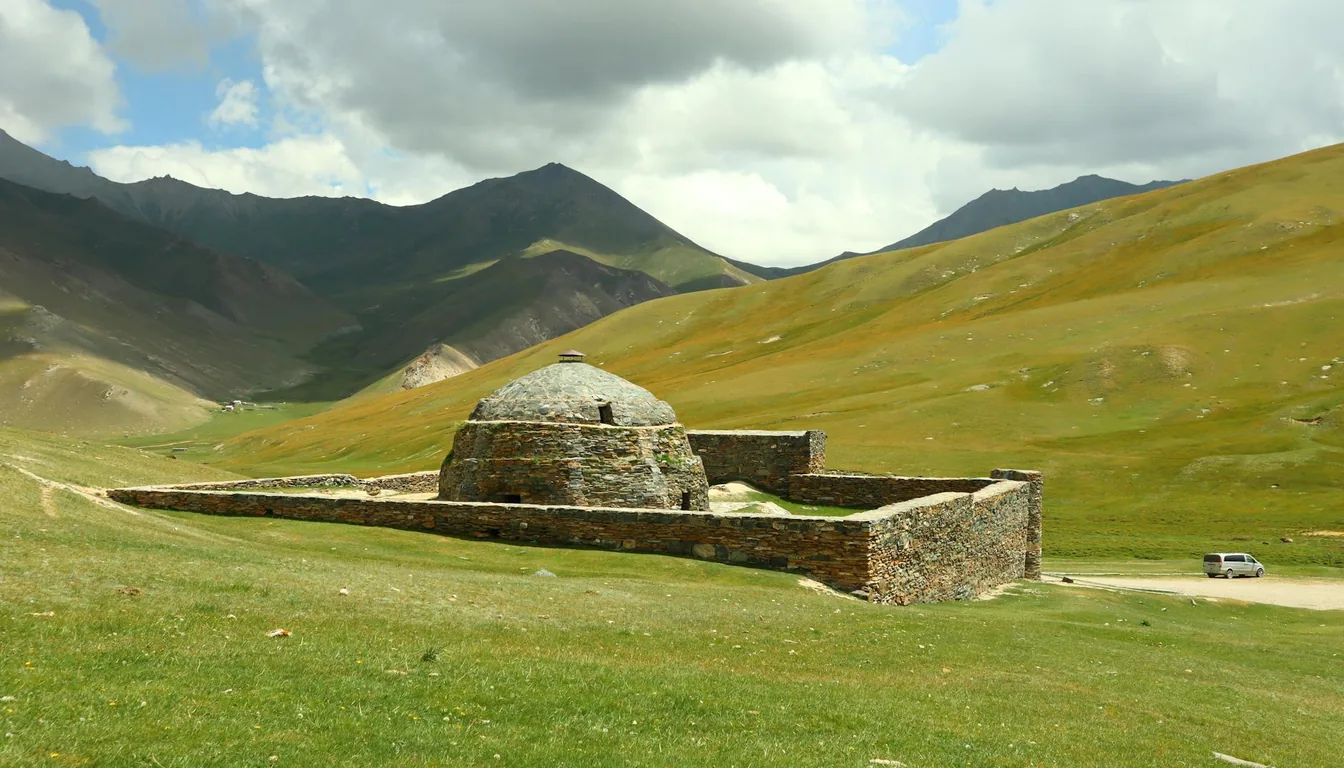
The Silk Road passed through what is now Kazakhstan for over 1,500 years, connecting China to the Mediterranean through a network of trade routes that crossed the Kazakh steppe, Tian Shan mountain passes, and oasis cities. Kazakhstan sat at the geographic center of these routes, making it one of the most important transit zones for goods, ideas, and cultures moving between East and West.
What Was the Silk Road?
The Silk Road was not a single road but a network of overland and maritime trade routes that connected East Asia to Europe and the Middle East from roughly the 2nd century BCE to the 15th century CE. The name comes from the Chinese silk that was one of the most valued commodities traded along the route, though merchants also carried spices, metals, glass, paper, gunpowder, and religious ideas.
The German geographer Ferdinand von Richthofen coined the term “Silk Road” (Seidenstrasse) in 1877, but the trade networks themselves were ancient.
Why Was Kazakhstan Important to the Silk Road?
Kazakhstan’s geography made it unavoidable for overland trade between China and the West. Three main factors explain its importance:
-
Geographic position: Kazakhstan sits between China, Russia, the Middle East, and Europe. Any east-west overland route through Central Asia had to cross Kazakh territory.
-
Mountain passes: The Tian Shan and Altai mountain ranges contain passes that were the only practical routes for caravans traveling between the Tarim Basin (western China) and the Kazakh steppe.
-
Oasis cities: Settlements along rivers and at the edge of deserts provided water, food, and markets for traders. These became prosperous trading cities.
For a broader overview of the country’s history, see our Kazakh Khanate guide, which covers the political formation that eventually controlled much of this territory.
Major Silk Road Cities in Kazakhstan
Turkistan
Turkistan is the most important surviving Silk Road city in Kazakhstan. Located in southern Kazakhstan, it was a major trading post and religious center. The city’s centerpiece is the Mausoleum of Khoja Ahmed Yasawi, a 14th-century masterpiece of Timurid architecture and a UNESCO World Heritage Site.
Khoja Ahmed Yasawi was a Sufi mystic whose teachings shaped Islam across Central Asia. His mausoleum, commissioned by Timur (Tamerlane), remains the most important pilgrimage site in Kazakhstan. The surrounding Silk Road complex has been extensively restored and is now a major tourist destination.
Otrar (Farab)
Otrar was one of the largest and most strategically important cities on the Silk Road through Kazakhstan. At its peak (10th-12th centuries), it had an estimated population of 20,000-40,000 and was a center of trade, scholarship, and agriculture.
Otrar is historically significant for two reasons:
- It was the birthplace of Al-Farabi (870-950 CE), one of the most important philosophers of the Islamic Golden Age
- The Mongol invasion of Otrar in 1219 by Genghis Khan marked the beginning of the Mongol conquest of Central Asia
Today Otrar is an archaeological site about 15 km from Turkistan. Excavations have revealed city walls, a citadel, irrigation systems, and artifacts spanning centuries of habitation.
Taraz
Taraz, in southern Kazakhstan near the Kyrgyz border, is one of the oldest continuously inhabited cities in Central Asia, with a history stretching back over 2,000 years. During the Silk Road era, it was a prosperous market city known for its textiles and metalwork.
The city contains several historical monuments including the Aisha-Bibi Mausoleum (12th century), one of the most ornate medieval structures in Kazakhstan. Taraz was historically known as “the city of merchants.”
Almaty Region
The Almaty region was the southeastern entry point for Silk Road routes coming through the Tian Shan mountain passes from China. The area around modern Almaty (historically known as Almatu) was a transit zone where goods from China entered the Kazakh steppe.
Archaeological sites in the region include Scythian and Saka burial mounds (kurgans), some containing gold artifacts that reflect the wealth generated by trade. The famous Golden Man (Altyn Adam) found near Almaty is a Saka warrior buried with over 4,000 gold pieces. For more on what to see in the area, check our guide to things to do in Almaty.
Sauran
Sauran was a fortified city near Turkistan that served as a major stop on the Silk Road from the 6th to 18th centuries. Its distinctive double walls and towers are still partially visible. The city controlled access to water and trade routes in the lower Syr Darya region.
Silk Road Routes Through Kazakhstan
| Route | Path | Key Stops in Kazakhstan |
|---|---|---|
| Northern Route | From China through Dzungarian Gate, across steppe to Volga | Almaty region, Taraz, northern steppe |
| Southern Route | From China through Tian Shan passes to Fergana Valley | Almaty region, Shymkent, connection to Uzbekistan |
| Syr Darya Route | Along the Syr Darya river through southern Kazakhstan | Otrar, Turkistan, Sauran, Taraz |
| Steppe Route | Across the central steppe connecting major cities | Linked northern and southern routes |
These were not fixed highways but shifting networks of paths that changed with political conditions, seasonal weather, and the rise and fall of oasis cities.
What Was Traded on the Silk Road Through Kazakhstan?
| Direction | Goods Moving West | Goods Moving East |
|---|---|---|
| From China | Silk, porcelain, paper, tea, gunpowder | — |
| From Central Asia | Horses, wool, leather, meat, minerals | — |
| From the Middle East | — | Glass, textiles, metalwork, coins |
| From Europe | — | Gold, silver, furs, amber |
Kazakhstan’s own contributions to Silk Road trade included horses (highly valued by Chinese armies), wool, leather goods, and later agricultural products from irrigated oasis cities.
The Silk Road and Kazakh Culture
The Silk Road did not just move goods — it moved ideas, religions, technologies, and art forms. Its impact on what became Kazakh culture includes:
- Islam: Spread to the Kazakh steppe partly through Silk Road contacts, particularly through Sufi teachers like Khoja Ahmed Yasawi
- Writing systems: Multiple scripts (Turkic runic, Arabic, later Cyrillic and Latin) entered the region through trade contacts
- Architecture: Timurid and Persian building techniques visible in Turkistan’s monuments
- Food: Plov, tea culture, and spice use entered Kazakh cuisine through Silk Road trade. See our guide to Kazakhstan food for more.
- Music and crafts: Textile patterns and musical instruments show influences from Chinese, Persian, and Turkic traditions
Can You Visit Silk Road Sites in Kazakhstan Today?
Yes. The main accessible sites are:
-
Turkistan — The Mausoleum of Khoja Ahmed Yasawi and restored Silk Road complex. Well-developed tourist infrastructure. Reachable by train from Almaty or Shymkent.
-
Otrar archaeological site — About 15 km from Turkistan. Open-air ruins. Best visited with a guide.
-
Taraz — Aisha-Bibi Mausoleum and historical center. Reachable by road from Shymkent or by domestic flight.
-
Almaty region — Golden Man exhibit at the Central State Museum. Scythian burial sites in the surrounding region.
-
Sauran — Accessible from Turkistan by car. Partially restored walls and fortifications.
For a complete list of destinations, see our guide to places to visit in Kazakhstan.
The Silk Road’s Legacy in Modern Kazakhstan
Kazakhstan actively uses its Silk Road heritage in national identity and international positioning:
- The country’s Latin-script transition and naming debates connect to the Qazaqstan vs Kazakhstan discussion about reclaiming pre-Soviet identity
- The Belt and Road Initiative (China’s modern infrastructure program) explicitly references the Silk Road and passes through Kazakhstan
- Tourism development around Turkistan and other Silk Road sites is a government priority
- The EXPO 2017 theme in Astana (“Future Energy”) positioned Kazakhstan as a modern crossroads, echoing its historical role
Understanding the Silk Road is essential context for understanding why Kazakhstan matters geopolitically today — it has always been at the center of Eurasian connectivity.
Frequently Asked Questions
- Did the Silk Road go through Kazakhstan?
- Yes. Multiple Silk Road routes crossed what is now Kazakhstan, making it one of the most important transit zones between China and the West. Major Silk Road cities in Kazakhstan include Turkistan, Otrar, Taraz, and Sauran.
- What is the most important Silk Road site in Kazakhstan?
- Turkistan, home to the Mausoleum of Khoja Ahmed Yasawi (a UNESCO World Heritage Site), is the most important and best-preserved Silk Road site in Kazakhstan. The surrounding Silk Road complex has been extensively restored.
- Can you visit Silk Road sites in Kazakhstan?
- Yes. Turkistan is the most accessible site, reachable by train from Almaty or Shymkent. The Otrar archaeological site is nearby. Taraz and Almaty region also have Silk Road-era monuments and museums.
- What was traded on the Silk Road through Kazakhstan?
- Goods moving west included Chinese silk, porcelain, tea, and paper. Goods moving east included glass, metalwork, gold, and silver. Kazakhstan itself contributed horses, wool, and leather to the trade network.
- When did the Silk Road pass through Kazakhstan?
- Silk Road trade routes through Kazakhstan were active from roughly the 2nd century BCE to the 15th century CE, spanning over 1,500 years of continuous use.
More Stories
facts
Is Kazakhstan in Russia? No — Here's Why People Get Confused
Kazakhstan is not Russia. It's been an independent country since 1991. Full explanation of geography, Soviet history, and its current relationship with Russia.
facts
Stan Countries: All 7 Nations Ending in -Stan Explained
Complete guide to all 7 stan countries — Kazakhstan, Uzbekistan, Tajikistan, Turkmenistan, Kyrgyzstan, Afghanistan, Pakistan with capitals and key facts.
facts
Kazakhstan History Timeline: From Steppe Empires to Independence
Explore Kazakhstan's history timeline from ancient nomads and the Silk Road to the Kazakh Khanate, Soviet rule, and modern independence.