Stan Countries: All 7 Nations Ending in -Stan Explained
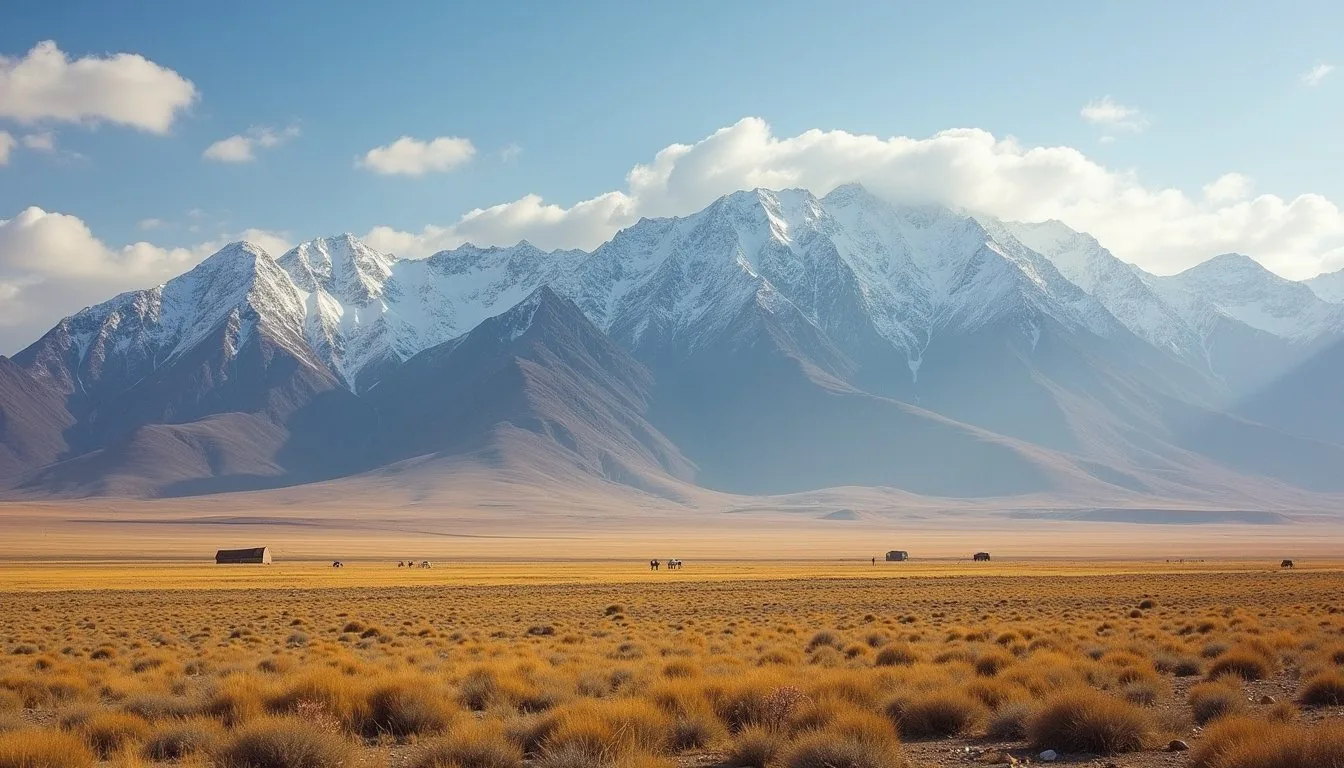
There are 7 countries whose names end in “-stan.” Six are in Central Asia, and one — Pakistan — is in South Asia. All of them were historically part of regions where Turkic, Persian, or related languages shaped the names of places. The “-stan” suffix comes from the Persian word for “land” or “place of,” making these literally named as “lands of” their people.
Here is the complete list of all stan countries, plus what makes each one worth knowing.
The 7 Stan Countries: Quick Reference
| Country | Capital | Population | Area (km²) | Official Language |
|---|---|---|---|---|
| Kazakhstan | Astana | 19.8 million | 2,724,900 | Kazakh, Russian |
| Uzbekistan | Tashkent | 36.6 million | 448,978 | Uzbek |
| Pakistan | Islamabad | 231 million | 881,913 | Urdu, English |
| Afghanistan | Kabul | 41 million | 652,230 | Dari, Pashto |
| Turkmenistan | Ashgabat | 6.2 million | 488,100 | Turkmen |
| Tajikistan | Dushanbe | 10.5 million | 143,100 | Tajik |
| Kyrgyzstan | Bishkek | 7.1 million | 199,951 | Kyrgyz, Russian |
Population figures: 2024 estimates
What Does “-Stan” Mean?
The suffix -stan (ستان) comes from the Persian/Farsi word meaning “land,” “place,” or “country.” It derives from the Old Iranian root stāna, meaning “place where one stands.”
So the literal translations are:
- Kazakhstan = Land of the Kazakhs
- Uzbekistan = Land of the Uzbeks
- Pakistan = Land of the Pure (from Urdu/Persian pāk = pure)
- Afghanistan = Land of the Afghans
- Turkmenistan = Land of the Turkmens
- Tajikistan = Land of the Tajiks
- Kyrgyzstan = Land of the Kyrgyz
The “-stan” suffix is also found in regional names within countries: Hindustan (the Indian subcontinent), Balochistan, Kurdistan, Dagestan, Tatarstan, and dozens of others.
Kazakhstan: The Largest Stan Country
Capital: Astana Population: 19.8 million Area: 2,724,900 km² (9th largest country in the world) Independence: December 16, 1991 (from the Soviet Union)
Kazakhstan is by far the largest of the stan countries, covering an area larger than Western Europe. It is landlocked and borders Russia to the north, China to the east, Kyrgyzstan and Uzbekistan to the south, and Turkmenistan and the Caspian Sea to the southwest.
Despite its size, Kazakhstan has a relatively small population — about 7 people per square kilometer on average. Most people live in the southeast (Almaty region) or in the new capital Astana.
Kazakhstan is the wealthiest of the Central Asian stan countries, driven by oil, gas, and mineral exports. The economy has been growing steadily since the 1990s, and the country now has a rapidly expanding middle class, modern cities, and significant foreign investment.
Key facts:
- Largest landlocked country in the world
- Home to the Baikonur Cosmodrome, where the Soviet and Russian space programs launched
- The Kazakh steppe covers 804,000 km² — one of the largest grassland ecosystems on Earth
- Officially secular with a majority Muslim population
For more on Kazakhstan, see our complete guide to what Kazakhstan is famous for.
Uzbekistan: Most Populous Central Asian Stan
Capital: Tashkent Population: 36.6 million Area: 448,978 km² Independence: September 1, 1991
Uzbekistan is the most populous country in Central Asia and the historical heart of the Silk Road. Cities like Samarkand, Bukhara, and Khiva were major centers of Islamic scholarship and architecture during the medieval period.
Today Uzbekistan is best known for its spectacular Islamic architecture — the blue-tiled domes of Registan Square in Samarkand are among the most iconic images in all of Asia.
Key facts:
- One of only two doubly landlocked countries in the world (surrounded entirely by landlocked countries)
- Home to the Aral Sea, which has largely dried up due to Soviet-era irrigation projects
- Cotton was the dominant Soviet-era export; the country still produces significant quantities
- The Uzbek plov (pilaf) is a national institution — Tashkent claims the best version
Pakistan: The Most Populous Stan Country
Capital: Islamabad Population: 231 million Area: 881,913 km² Independence: August 14, 1947 (from British India)
Pakistan is the most populated of all the stan countries by a massive margin, with over 230 million people. It is also the only South Asian stan country and the only one that is not in Central Asia.
The name Pakistan was coined in 1933 by Choudhry Rahmat Ali — it is an acronym of the regions Punjab, Afghania, Kashmir, Sindh, and Balochistan, and also means “Land of the Pure” in Urdu.
Key facts:
- Has a nuclear arsenal and is one of nine nuclear-armed states
- K2 (8,611m), the second highest mountain in the world, is in Pakistan
- Extremely linguistically diverse — over 70 languages spoken
- One of the world’s youngest nations demographically, with 64% under the age of 30
Afghanistan: The Troubled Stan Country
Capital: Kabul Population: 41 million Area: 652,230 km² Independence: August 19, 1919 (from British influence)
Afghanistan has been a crossroads of civilizations for thousands of years — Alexander the Great passed through, the Silk Road ran through it, and it absorbed Persian, Mongol, Mughal, and British influences before Soviet invasion in 1979 and subsequent decades of conflict.
The country shares borders with Iran, Pakistan, Uzbekistan, Tajikistan, Turkmenistan, and China. Its mountainous terrain (the Hindu Kush range dominates much of the country) has historically made it difficult to control.
Key facts:
- The word “Afghan” referred to Pashtun people historically; today it refers to all Afghan citizens
- Kandahar and Herat were major Silk Road trading cities
- The country has vast untapped mineral resources, potentially worth over $1 trillion
- Currently under Taliban rule following the 2021 US withdrawal
Turkmenistan: The Hermit Stan Country
Capital: Ashgabat Population: 6.2 million Area: 488,100 km² Independence: October 27, 1991
Turkmenistan is Central Asia’s most isolated country. For most of the post-Soviet period it has been governed by authoritarian leaders who have tightly controlled access to the country — visas are difficult to obtain and tourism is heavily restricted.
The country is approximately 80% desert (primarily the Karakum Desert). It has the fourth-largest natural gas reserves in the world.
What it’s famous for:
- Darvaza Gas Crater (“Door to Hell”) — a burning natural gas crater that has been on fire since 1971 (or 1980s depending on sources)
- Ashgabat is known for its bizarre white marble architecture — a UNESCO record holder for the most white marble buildings in a city
- The Akhal-Teke horse, one of the world’s oldest and most distinctive horse breeds, originated here
Tajikistan: The Mountain Stan Country
Capital: Dushanbe Population: 10.5 million Area: 143,100 km² Independence: September 9, 1991
Tajikistan is the smallest of the Central Asian stan countries by area but has the most mountainous terrain. Over 90% of the country is covered by mountains — the Pamir Mountains dominate the east and include some of the highest peaks in the world outside the Himalayas/Karakoram.
Tajiks are an Iranian people, linguistically and culturally distinct from the Turkic-speaking nations around them. Tajik language is closely related to Farsi (Persian).
Key facts:
- The Pamir Mountains are sometimes called the “Roof of the World”
- Peak Ismoil Somoni (7,495m) is the highest point in the former Soviet Union
- Tajikistan went through a brutal civil war 1992–1997 following independence
- One of the poorest countries in the former Soviet Union; remittances from workers abroad are a major part of the economy
Kyrgyzstan: The Nomadic Stan Country
Capital: Bishkek Population: 7.1 million Area: 199,951 km² Independence: August 31, 1991
Kyrgyzstan is one of the most mountainous countries in the world — over 65% of the country sits above 2,000 meters elevation. The Tian Shan (“Celestial Mountains”) run through the country.
The Kyrgyz people have a particularly strong nomadic heritage. The national epic, the Manas, is one of the longest oral epics in world literature — over 20 times the length of Homer’s Iliad.
Key facts:
- Issyk-Kul, the world’s second-largest alpine lake, is in Kyrgyzstan
- The yurt is central to Kyrgyz national identity — it appears on the national flag
- Kyrgyzstan is one of Central Asia’s more politically open countries, having seen multiple peaceful political transitions
- Eagle hunting (berkutchi) is a traditional Kyrgyz practice still practiced today
Are There Any Other Stan Countries?
Technically, no — but there are several “-stan” regions within existing countries:
- Balochistan (province of Pakistan and region of Iran)
- Hindustan (historical term for the Indian subcontinent)
- Dagestan (republic within Russia)
- Tatarstan (republic within Russia)
- Bashkortostan (republic within Russia)
- Kurdistan (a region spanning Turkey, Iran, Iraq, and Syria — not a recognized country)
- Rajasthan (state in India — “land of kings”)
- Sistan (region of Iran and Afghanistan)
Some people count Iran as an informal “stan” country since the name literally means “land of the Aryans” (from Old Iranian airya = Aryan + stāna = land). But Iran’s name doesn’t use the -stan suffix explicitly.
Stan Countries: Then vs. Now
All six Central Asian stan countries (Kazakhstan, Uzbekistan, Tajikistan, Turkmenistan, Kyrgyzstan, and Kyrgyzstan) became independent countries on the same occasion: the dissolution of the Soviet Union in 1991. Before that, they were Soviet republics. Before Soviet rule, they had been absorbed into the Russian Empire in the 19th century.
Their pre-Soviet history includes:
- Timurid Empire (Uzbekistan, Tajikistan, parts of Kazakhstan)
- Mongol Empire (all of Central Asia)
- Kazakh Khanate (Kazakhstan, parts of Kyrgyzstan)
- Persian Empires (Tajikistan, Turkmenistan)
The borders drawn by Soviet authorities in the 1920s–1930s did not always match ethnic or historical realities — which is why the Fergana Valley (split between Uzbekistan, Tajikistan, and Kyrgyzstan) remains a source of tension today.
Visiting the Stan Countries: A Quick Comparison
| Country | Tourism Level | Visa for Americans | Best Time to Visit | Safety |
|---|---|---|---|---|
| Kazakhstan | Growing | 30 days visa-free | May–Sep | Very safe |
| Uzbekistan | Popular | 30 days visa-free | Mar–May, Sep–Nov | Safe |
| Kyrgyzstan | Niche/adventure | 30 days visa-free | Jun–Sep | Generally safe |
| Tajikistan | Niche | Visa required | Jun–Sep | Mostly safe |
| Turkmenistan | Extremely rare | Visa required (hard to get) | Mar–May, Sep–Nov | Safe but restricted |
| Afghanistan | Not recommended | — | — | Not safe |
| Pakistan | Niche/growing | Visa on arrival available | Oct–Mar | Varies by region |
Visa information current as of 2024; verify before travel.
Frequently Asked Questions
- How many stan countries are there?
- There are 7 countries whose names end in -stan: Kazakhstan, Uzbekistan, Pakistan, Afghanistan, Turkmenistan, Tajikistan, and Kyrgyzstan. Six are in Central Asia and one (Pakistan) is in South Asia.
- What does -stan mean?
- The suffix -stan comes from the Persian word meaning "land" or "place of." It derives from the Old Iranian root stāna, meaning "place where one stands." So Kazakhstan means "Land of the Kazakhs," Uzbekistan means "Land of the Uzbeks," and Pakistan means "Land of the Pure."
- Which is the largest stan country?
- Kazakhstan is by far the largest stan country, covering 2,724,900 km² — about 6 times the size of the second-largest stan country (Afghanistan at 652,230 km²). Kazakhstan is the 9th largest country in the world and the largest landlocked country.
- Which is the most populated stan country?
- Pakistan is the most populated stan country with over 231 million people. Among the Central Asian stan countries, Uzbekistan is the most populous with about 36.6 million people.
- Were all the stan countries once part of the Soviet Union?
- All six Central Asian stan countries (Kazakhstan, Uzbekistan, Turkmenistan, Tajikistan, Kyrgyzstan, and Kyrgyzstan) were Soviet republics and became independent when the USSR dissolved in 1991. Pakistan and Afghanistan were never part of the Soviet Union.
- Which stan country is safest to visit?
- Kazakhstan is considered the safest and most accessible stan country for tourists. It offers 30-day visa-free access for citizens of many countries, has modern infrastructure in Almaty and Astana, and has very low crime rates. Uzbekistan is also a popular and safe destination.
More Stories
facts
Is Kazakhstan in Russia? No — Here's Why People Get Confused
Kazakhstan is not Russia. It's been an independent country since 1991. Full explanation of geography, Soviet history, and its current relationship with Russia.
facts
Kazakhstan History Timeline: From Steppe Empires to Independence
Explore Kazakhstan's history timeline from ancient nomads and the Silk Road to the Kazakh Khanate, Soviet rule, and modern independence.

facts
What Is Kazakhstan Famous For? 15 Things That Define the Country
What is Kazakhstan famous for? From the world's first spaceport and nomadic culture to horse meat cuisine and vast steppes — 15 defining features explained.