Kazakhstan Time Zone: UTC+5 & World Differences

Kazakhstan uses a single time zone, UTC+5 (since March 2024, when the country abolished its previous dual time zone system). The entire country, from Almaty in the southeast to Aktau on the Caspian coast, now follows the same clock. Kazakhstan does not observe Daylight Saving Time (abolished in 2005), so the UTC+5 offset remains constant year-round. Whether you are planning a business call or booking flights to Kazakhstan, you only need to remember one offset: UTC+5, all year, everywhere in the country.
Kazakhstan Time Zone Quick Facts
| Detail | Information |
|---|---|
| Time zone | UTC+5 (nationwide) |
| Abbreviation | AQTT (Aqtobe Time, used as standard designation) |
| DST observed? | No (abolished in 2005) |
| Unified since | March 1, 2024 |
| Previous system | UTC+5 (west) and UTC+6 (east) |
| IANA identifiers | Asia/Almaty, Asia/Aqtau, Asia/Aqtobe, Asia/Atyrau, Asia/Oral, Asia/Qostanay, Asia/Qyzylorda (per the IANA Time Zone Database) |
| Government decree | Decree No. 121 (February 2024) |
Kazakhstan is a vast country (the ninth largest in the world), stretching across 2,700 km from west to east. To understand where Kazakhstan is on the map, it sits between Russia, China, and Central Asia, spanning an area larger than Western Europe. Despite this enormous size, the entire nation now shares a single time zone.
The 2024 Time Zone Unification: What Changed
On March 1, 2024, Kazakhstan unified its time zones under a single UTC+5 standard. This was one of the most significant administrative changes in the country’s recent history, affecting daily life for millions of people in the eastern regions.
Before March 2024: The Dual Time Zone System
For decades, Kazakhstan operated with two time zones:
| Zone | UTC Offset | Regions |
|---|---|---|
| Western Kazakhstan | UTC+5 | Aktobe, Atyrau, West Kazakhstan, Mangystau, Kyzylorda |
| Eastern Kazakhstan | UTC+6 | Almaty, Astana, Karaganda, Pavlodar, Shymkent, East Kazakhstan, North Kazakhstan |
This meant that when it was 12:00 noon in Astana, it was 11:00 in Aktau, a one-hour difference within the same country.
Why Kazakhstan Unified to UTC+5
Based on the official explanatory note accompanying Government Decree No. 121, the Kazakh government cited several reasons for the unification:
- Administrative simplification. Government offices, banks, and transportation networks no longer need to account for internal time differences.
- Health considerations. The government referenced research suggesting that the UTC+6 zone pushed sunset and sunrise too late, disrupting circadian rhythms in eastern regions.
- Economic efficiency. Businesses operating across the country faced scheduling complications with internal time zone differences.
- Transportation clarity. The Almaty-to-Astana train and flight schedules no longer show departures and arrivals in different time zones.
According to the official Kazakh government gazette, the change was established by Government Decree No. 121 signed in February 2024. Despite some public debate, particularly in Almaty and the eastern regions where clocks moved back one hour, the decision was implemented as planned on March 1, 2024.
Impact on Eastern Kazakhstan
For residents of Almaty, Astana, Shymkent, Karaganda, and other eastern cities, the change meant:
- Sunrise and sunset shifted one hour earlier on the clock. In December, Almaty now sees sunrise around 7:30 AM and sunset around 4:30 PM (UTC+5), compared to the previous 8:30 AM / 5:30 PM (UTC+6)
- Business hours remained the same in local clock terms but shifted one hour earlier in absolute (UTC) terms
- International time differences changed. Almaty is now only 2 hours ahead of Moscow instead of the previous 3
Time Difference: Kazakhstan vs. Major World Cities
Since Kazakhstan uses UTC+5 year-round with no DST, the time difference with countries that observe Daylight Saving Time shifts by one hour during their summer months. The tables below show both scenarios.
Standard Time Differences (Winter in Northern Hemisphere)
| City | Their UTC Offset | Difference from Kazakhstan | When it is 12:00 noon in Kazakhstan |
|---|---|---|---|
| New York, USA | UTC−5 | −10 hours | 02:00 (2 AM) in New York |
| Los Angeles, USA | UTC−8 | −13 hours | 23:00 (11 PM, previous day) |
| London, UK | UTC+0 | −5 hours | 07:00 in London |
| Paris / Berlin | UTC+1 | −4 hours | 08:00 in Paris |
| Istanbul, Turkey | UTC+3 | −2 hours | 10:00 in Istanbul |
| Moscow, Russia | UTC+3 | −2 hours | 10:00 in Moscow |
| Dubai, UAE | UTC+4 | −1 hour | 11:00 in Dubai |
| Delhi, India | UTC+5:30 | +30 minutes | 12:30 in Delhi |
| Beijing, China | UTC+8 | +3 hours | 15:00 in Beijing |
| Tokyo, Japan | UTC+9 | +4 hours | 16:00 in Tokyo |
| Sydney, Australia | UTC+11 | +6 hours | 18:00 in Sydney |
Summer Time Differences (DST in Northern Hemisphere)
When Europe and North America switch to Daylight Saving Time (typically March–October), the difference narrows by one hour:
| City | Their Summer UTC Offset | Difference from Kazakhstan | When it is 12:00 noon in Kazakhstan |
|---|---|---|---|
| New York (EDT) | UTC−4 | −9 hours | 03:00 (3 AM) in New York |
| Los Angeles (PDT) | UTC−7 | −12 hours | 00:00 (midnight) in LA |
| London (BST) | UTC+1 | −4 hours | 08:00 in London |
| Paris / Berlin (CEST) | UTC+2 | −3 hours | 09:00 in Paris |
| Sydney (AEST) | UTC+10 | +5 hours | 17:00 in Sydney |
Moscow, Dubai, Beijing, Tokyo, and Delhi do not observe DST, so their differences from Kazakhstan remain constant year-round.
No Daylight Saving Time in Kazakhstan
According to the IANA Time Zone Database records, Kazakhstan abolished Daylight Saving Time in 2005, joining a growing list of countries that have opted out of seasonal clock changes. Since then, clocks in Kazakhstan do not change in spring or autumn.
Why This Matters for International Communication
Because Kazakhstan’s clock never changes but many partner countries’ clocks do, the effective time difference shifts twice a year:
- When the UK switches to BST (last Sunday of March): the UK–Kazakhstan gap narrows from 5 hours to 4 hours
- When the US switches to EDT (second Sunday of March): the US East Coast–Kazakhstan gap narrows from 10 hours to 9 hours
- In November (when US “falls back”) and October (when UK reverts to GMT): the gaps widen again
Mark these transition dates on your calendar if you regularly communicate with contacts in Kazakhstan. Your meeting time will shift by one hour even though Kazakhstan’s clocks did not move.
Business Hours in Kazakhstan
Understanding business hours is essential for travelers and anyone conducting business with Kazakh companies:
| Sector | Typical Hours (Local Time, UTC+5) |
|---|---|
| Government offices | 9:00 AM – 6:00 PM, Mon–Fri |
| Banks | 9:00 AM – 5:00 PM, Mon–Fri (some branches open Sat morning) |
| Shopping malls | 10:00 AM – 10:00 PM, daily |
| Restaurants | 11:00 AM – 11:00 PM (many stay open later on weekends) |
| Bazaars / markets | 8:00 AM – 5:00 PM (vary by season; winter hours shorter) |
| Supermarkets | 8:00 AM – 10:00 PM, daily |
| Museums | 10:00 AM – 6:00 PM, Tue–Sun (most closed Monday) |
The standard workweek in Kazakhstan is Monday through Friday, with a 40-hour work week mandated by the Labour Code. Friday afternoons tend to be quieter in government offices. Most business meetings are scheduled between 10:00 AM and 4:00 PM local time.
Best Windows for International Calls
If you need to schedule calls between Kazakhstan and other time zones, these windows tend to work best:
- Kazakhstan ↔ UK/Europe: 11:00–16:00 Kazakhstan time (06:00–11:00 GMT / 07:00–12:00 CET)
- Kazakhstan ↔ US East Coast: 18:00–21:00 Kazakhstan time (08:00–11:00 EST / 09:00–12:00 EDT)
- Kazakhstan ↔ Dubai: Nearly overlapping business hours; any time 10:00-17:00 Kazakhstan works
- Kazakhstan ↔ Beijing/Singapore: 10:00–14:00 Kazakhstan time (13:00–17:00 CST)
Flight Arrival Times and Time Zones
When booking flights to Kazakhstan, understanding UTC+5 helps you calculate arrival times accurately:
| Route | Approx. Flight Time | Time Zone Change | Example |
|---|---|---|---|
| London → Almaty | ~7 hours | +5 hours | Depart 09:00 London → arrive ~21:00 Almaty |
| Dubai → Almaty | ~3.5 hours | +1 hour | Depart 10:00 Dubai → arrive ~14:30 Almaty |
| Moscow → Almaty | ~4.5 hours | +2 hours | Depart 08:00 Moscow → arrive ~14:30 Almaty |
| Istanbul → Almaty | ~5.5 hours | +2 hours | Depart 07:00 Istanbul → arrive ~14:30 Almaty |
| Beijing → Almaty | ~5 hours | −3 hours | Depart 14:00 Beijing → arrive ~16:00 Almaty |
| Seoul → Almaty | ~6.5 hours | −4 hours | Depart 10:00 Seoul → arrive ~12:30 Almaty |
| New York → Almaty | ~14 hours (via hub) | +10 hours | Varies by connection city |
All Kazakhstani airports display local time (UTC+5). The Almaty-to-Astana domestic route no longer involves any time zone change since the 2024 unification.
Historical Timeline of Kazakhstan’s Time Zones
Kazakhstan’s relationship with time zones has shifted multiple times since independence:
| Year | Change |
|---|---|
| Pre-1991 | Soviet era. Kazakhstan followed Moscow Time +3 hours (effectively UTC+6) |
| 1991 | Independence. Kazakhstan retained the Soviet-era UTC+6 for most of the country |
| 1999 | DST adjustment. Several oblasts shifted between UTC+4, +5, and +6 experimentally |
| 2004 | Western regions (Aktobe, Atyrau, Mangystau, West Kazakhstan, Kyzylorda) moved from UTC+6 to UTC+5, creating the dual time zone system |
| 2005 | Daylight Saving Time abolished nationwide |
| 2022 | Kyzylorda Oblast moved from UTC+5 to UTC+6 |
| 2024 | Entire country unified under UTC+5 via Government Decree No. 121 (March 1, 2024) |
The 2024 change was the most dramatic. It moved the clock back by one hour for roughly 80% of the population (everyone who had been on UTC+6). It aligned the country more closely with solar noon in Astana and reduced the internal time discrepancy to zero.
Practical Tips for Travelers
Automatic Time Updates
According to the IANA Time Zone Database maintainers, modern smartphones automatically update to UTC+5 when you land in Kazakhstan (as long as “automatic time zone” is enabled). After the 2024 change, some older devices and world clock apps briefly displayed incorrect times. This has since been corrected via software updates. Make sure your phone’s OS is up to date before traveling.
Google Calendar and Scheduling Tools
When scheduling events in Kazakhstan, select the time zone “Almaty (UTC+5)” or “Aqtobe (UTC+5)” in Google Calendar. Both now point to the same offset. If you see an old entry showing “Almaty UTC+6,” it predates the 2024 change and may need manual correction.
Jet Lag Considerations
Depending on where you are arriving from, jet lag in Kazakhstan varies:
- From Western Europe (+5 hours ahead): Moderate jet lag. You will feel sleepy in the early evening. Adjust by staying active until at least 10 PM local time for the first two nights.
- From US East Coast (+10 hours ahead): Significant jet lag. Consider arriving a day early before important meetings. Melatonin and morning sunlight exposure help reset your circadian rhythm.
- From Dubai (+1 hour ahead): Minimal to no jet lag. This is one reason Dubai is the most popular transit hub for Kazakhstan flights.
- From Beijing/Shanghai (−3 hours behind): Mild jet lag. You may wake up earlier than usual for a day or two.
- From Moscow (+2 hours ahead): Almost no jet lag. The Moscow–Almaty corridor is Kazakhstan’s busiest international route.
Internal Travel Within Kazakhstan
Since the 2024 unification, traveling within Kazakhstan no longer requires adjusting your watch. Whether you fly from Almaty to Aktau, take the train from Astana to Shymkent, or drive across the country, the time is the same everywhere. This is a significant improvement over the previous system, where the Almaty-to-Astana route stayed in one zone but flights to western cities required a one-hour adjustment.
Kazakhstan Time vs. Neighboring Countries
Kazakhstan shares borders with five countries. Here is how UTC+5 compares:
| Country | Time Zone(s) | Difference from Kazakhstan |
|---|---|---|
| Russia (bordering regions) | UTC+4 to UTC+6 | −1 to +1 hour |
| China | UTC+8 | +3 hours ahead |
| Kyrgyzstan | UTC+6 | +1 hour ahead |
| Uzbekistan | UTC+5 | Same time |
| Turkmenistan | UTC+5 | Same time |
This means Kazakhstan now shares the exact same time as Uzbekistan and Turkmenistan, which is convenient for cross-border trade and the growing number of Central Asian multi-country tours. Kyrgyzstan (UTC+6) is one hour ahead, so keep this in mind if you are combining a Kazakhstan trip with a visit to Bishkek or Issyk-Kul.
Frequently Asked Questions
- What time zone is Kazakhstan in?
- Kazakhstan uses a single time zone: UTC+5, applied nationwide since March 1, 2024. Previously, the country had two time zones (UTC+5 in the west and UTC+6 in the east). Kazakhstan does not observe Daylight Saving Time, so UTC+5 is constant year-round.
- What time zone is Almaty, Kazakhstan?
- Almaty is in the UTC+5 time zone. Before March 2024, Almaty used UTC+6, but the entire country was unified under UTC+5 by government decree. The time in Almaty is 5 hours ahead of London (GMT), 10 hours ahead of New York (EST), and 3 hours behind Beijing.
- Does Kazakhstan observe Daylight Saving Time?
- No. Kazakhstan abolished Daylight Saving Time in 2005. Clocks do not change in spring or autumn. The UTC+5 offset is constant throughout the year. This means the time difference between Kazakhstan and countries that do observe DST (like the UK, EU, and US) changes by one hour when those countries adjust their clocks.
- What is the time difference between Kazakhstan and New York?
- Kazakhstan (UTC+5) is 10 hours ahead of New York during US Eastern Standard Time (winter) and 9 hours ahead during Eastern Daylight Time (summer). When it is noon in Kazakhstan, it is 2:00 AM in New York (EST) or 3:00 AM (EDT).
- Why did Kazakhstan change its time zone in 2024?
- The Kazakh government unified the country under UTC+5 on March 1, 2024, citing health benefits (better alignment with natural daylight cycles), administrative simplification, and economic efficiency. The decision was formalized by Government Decree No. 121 in February 2024.
- Is Kazakhstan time the same as Moscow time?
- No. Kazakhstan (UTC+5) is 2 hours ahead of Moscow (UTC+3). When it is noon in Moscow, it is 2:00 PM in Kazakhstan. Before the 2024 time zone change, eastern Kazakhstan (UTC+6) was 3 hours ahead of Moscow.
More Stories

facts
Is Kazakhstan in Europe or Asia? The Definitive Answer
Is Kazakhstan in Europe? No — it's in Central Asia. A tiny western sliver crosses into Europe geographically, but 95%+ of the country is in Asia.

facts
Interesting Facts About Kazakhstan: 25+ Surprising Truths
Interesting facts about Kazakhstan — the largest landlocked nation, Baikonur space launches, origin of the apple, and 25+ surprising truths.
facts
Countries Ending in Stan: All 7 Explained
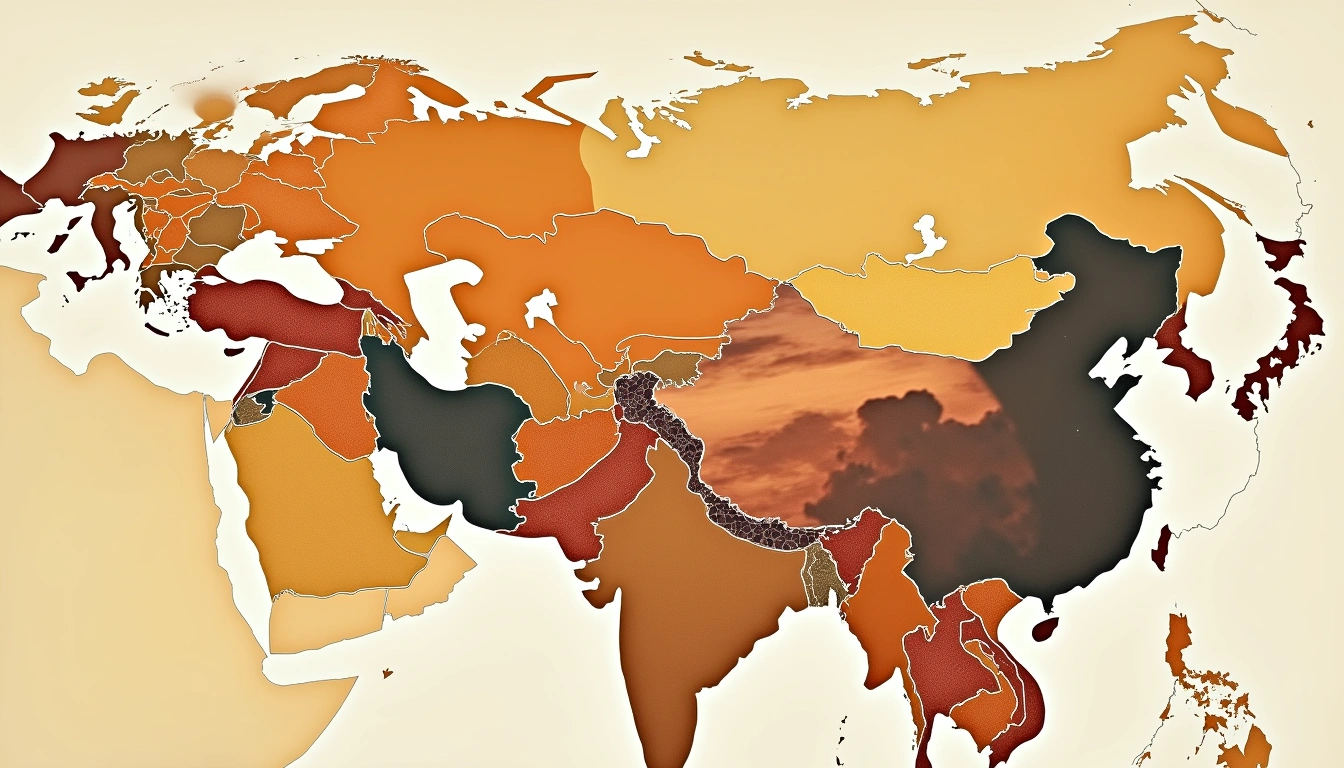
Countries ending in stan: all 7 nations explained — Kazakhstan to Pakistan. Population, GDP, area, maps and a detailed side-by-side comparison table.