The Kazakh Khanate: Rise, Glory & Fall (1465-1847)
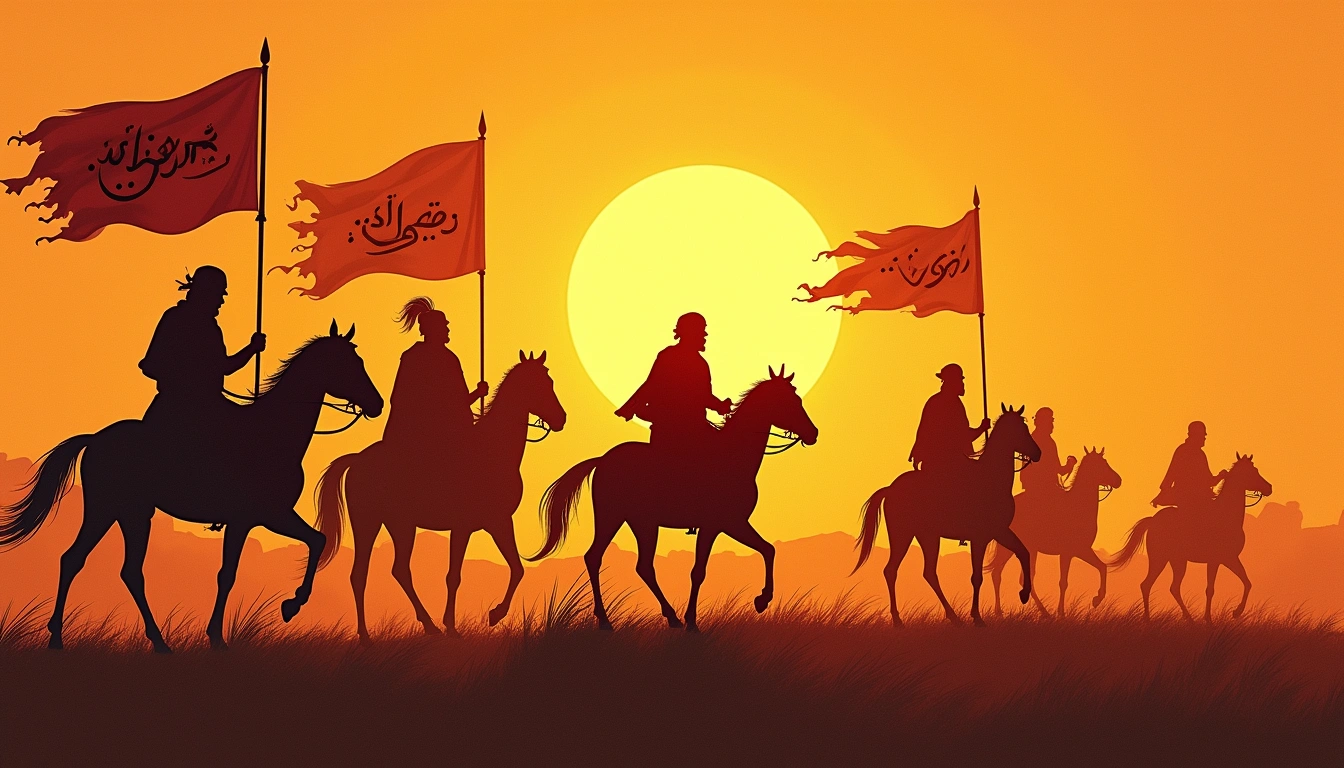
The Kazakh Khanate was a successor state of the Golden Horde that existed from approximately 1465 to 1847, making it one of the longest-lasting political entities in Central Asian history. According to UNESCO’s Silk Roads Programme and the Institute of History and Ethnology of Kazakhstan, it was founded by sultans Janibek and Kerey (Giray), who led a breakaway group of Uzbek nomads from the Abulkhair Khanate to the Zhetysu (Semirechye) region. At its peak under Kasym Khan (ruled 1511-1521), the Kazakh Khanate controlled territory from the Ural River in the west to the Altai Mountains in the east, governed an estimated one million people, and fielded one of the most powerful cavalry forces in Central Asia. The Khanate’s political structure, based on the three-juz system and a blend of Chinggisid dynastic authority with steppe customary law, directly shaped the ethnic, territorial, and political identity of modern Kazakhstan.
The Kazakh Khanate matters because it is the foundational political entity of the Kazakh people. Modern Kazakhstan’s borders, ethnic identity, tribal structure, and national mythology all trace directly to the Khanate period. When Kazakhstan became independent in 1991, its leaders consciously drew on Khanate-era symbols, laws, and traditions to build national identity. The 550th anniversary of the Kazakh Khanate, celebrated nationally in 2015, became one of the most significant cultural events in independent Kazakhstan’s history. Understanding the Khanate is essential for understanding why Kazakhstan exists as a nation, how its people see themselves, and what distinguishes Kazakh identity from neighboring Uzbek, Kyrgyz, and Russian identities.
Origins: The Breakaway From Abulkhair Khan
The Kazakh Khanate did not emerge from nothing. Its founding was a political split within an existing state, the Uzbek Khanate ruled by Abulkhair Khan (ruled 1428-1468). The backstory is critical.
After the disintegration of the Mongol Empire and its successor, the Golden Horde, in the 14th and 15th centuries, the steppe territories of modern Kazakhstan and Central Asia fragmented into competing khanates. Abulkhair Khan, a descendant of Genghis Khan’s eldest son Jochi, consolidated power over a large nomadic confederation sometimes called the “Uzbek Khanate” or “Nomadic Uzbek state.” His territory covered much of modern Kazakhstan and parts of western Siberia.
However, Abulkhair’s rule was contested. He suffered a devastating defeat by the Oirat (Western Mongol) confederation in 1457 near Sygnak, which weakened his authority. Two prominent Chinggisid sultans, Janibek and Kerey (also spelled Giray), who were descendants of Urus Khan (another line of Jochid Chinggisids), grew dissatisfied with Abulkhair’s leadership. Around 1459-1465, they led a large group of followers, perhaps 200,000 people according to the 16th-century historian Muhammad Haidar Dughlat, away from Abulkhair’s domain.
They migrated southeast to the Zhetysu (Seven Rivers) region, the fertile lands between Lake Balkhash and the Tian Shan mountains. The Chagatai khan Yesen Buqa II, who ruled the Moghulistan khanate, granted them refuge and pastureland, likely motivated by wanting a buffer against Abulkhair. This migration, the founding act of the Kazakh Khanate, is traditionally dated to 1465, though historians debate exact years ranging from 1459 to 1470.
The people who followed Janibek and Kerey became known as “Qazaq” (Kazakh), a Turkic word meaning “free person” or “one who wanders independently.” The name was initially a political label, meaning those who broke away, rather than an ethnic designation. Over time, as the Khanate consolidated, “Kazakh” became the ethnic identity it remains today.
The Three Juz: Kazakhstan’s Tribal Structure
One of the most distinctive features of the Kazakh Khanate, and one that persists in modern Kazakhstan, is the three-juz (horde) system. This is essential context for understanding Kazakh society.
The Kazakh people organized themselves into three major tribal confederations:
| Juz | Territory | Key Tribes | Modern Regions |
|---|---|---|---|
| Uly Juz (Elder/Great Horde) | Southeastern Kazakhstan, Zhetysu | Dulat, Alban, Suan, Kangly, Shapyrashty, Ysty, Oshaqty | Almaty, Zhambyl, Taldykorgan |
| Orta Juz (Middle Horde) | Central and eastern Kazakhstan | Argyn, Naiman, Kerey, Qongyrat, Kypshak, Uak | Astana, Karaganda, Semey, Pavlodar |
| Kishi Juz (Junior/Little Horde) | Western Kazakhstan | Alimuly, Baiuly, Zhetiru | Aktau, Atyrau, Aktobe, Kostanay |
The juz system was not merely administrative. Each juz had its own pasture territories, migration routes, and internal leadership hierarchy. The khan was theoretically the supreme leader of all three juz, but in practice, each juz maintained significant autonomy under its own sultans and biys (tribal judges/leaders). This decentralized structure gave the Khanate resilience, as no single military defeat could destroy the entire polity, but also made unified action difficult, a tension that would eventually contribute to the Khanate’s fall.
The juz system persists in modern Kazakhstan as a social and identity marker. Kazakhs today know their juz, tribe (ru), and clan affiliations, and these connections influence social networks, marriage patterns, and even politics, though the system’s power has diminished significantly in urban areas. For a broader look at how these traditions shape contemporary life, see our guide to Kazakh traditions.
The Golden Age: Kasym Khan (1511-1521)
The Kazakh Khanate reached its peak power and territorial extent under Kasym Khan, considered the greatest of the Kazakh khans. According to historical sources compiled by the Institute of Oriental Studies in Almaty, Kasym Khan’s achievements transformed the Khanate from a regional polity into a major Central Asian power.
Military Expansion
Kasym inherited a growing khanate from his predecessor Burunduk Khan. Through a combination of military campaigns and diplomacy, he expanded Kazakh territory to its maximum extent:
- West: Kazakh control extended to the Ural (Zhaiyq) River and the borders of the Nogai Horde
- South: The Khanate controlled the Syr Darya river cities, including Turkestan, Sygnak, Sauran, and Otrar, the critical trade cities of the Silk Road
- East: Kazakh pastures reached the Altai mountain foothills and bordered the Oirat (Dzungar) territories
- North: Influence extended into the forest-steppe zone of modern northern Kazakhstan and western Siberia
At its height, the Khanate governed an estimated 1 million people and could mobilize a cavalry force of 200,000-300,000 warriors. These numbers, drawn from contemporary Mughal, Persian, and Russian sources, made the Kazakh Khanate one of the most formidable military forces in 16th-century Central Asia.
The Qasym Khannyn Qasqa Zholy
Kasym Khan is credited with codifying the first comprehensive Kazakh legal code, known as the “Qasym Khannyn Qasqa Zholy” (The Bright Path of Kasym Khan). This was an oral legal framework, as Kazakh nomadic society did not use written law, that covered:
- Property law: Rules governing livestock ownership, pasture rights, and inheritance
- Criminal law: Punishments for theft, murder, and other crimes
- Family law: Marriage customs, bride-price (kalym), divorce rights
- Military law: Obligations for military service, division of war spoils
- International law: Rules for treating envoys, conducting trade, and resolving inter-tribal disputes
The code blended Chinggisid yasa (Mongol imperial law) traditions with older Turkic customary law (adat). It established the principle that the khan’s authority was not absolute but bounded by law and tribal consensus. Biys (tribal judges) played a crucial role as interpreters and enforcers of the law. This tradition of balancing central authority with tribal autonomy remained a defining feature of Kazakh governance throughout the Khanate period and influenced the formation of modern Kazakh political culture.
Diplomatic Recognition
Under Kasym Khan, the Kazakh Khanate gained diplomatic recognition from neighboring powers. The Mughal Empire, the Timurid successor states of Central Asia, the Safavid Empire of Iran, and Muscovite Russia all acknowledged the Kazakh Khanate as a significant political entity. The Baburnama, the memoirs of the Mughal founder Babur, mentions Kasym Khan by name as a powerful ruler. Russian sources from the 16th century begin using the term “Kazakh Horde” to describe the polity, indicating that Moscow was aware of and concerned about Kazakh power on its southeastern frontier.
Key Khans After Kasym
The Khanate’s history after Kasym Khan was marked by periods of unity and fragmentation. Several khans stand out.
Haqnazar Khan (1538-1580)
After a period of civil wars following Kasym’s death, Haqnazar Khan reunified the Kazakh territories. He fought on three fronts simultaneously: against the Uzbek Shaybanids in the south, the Oirats in the east, and the Nogai Horde in the west. Haqnazar recovered the Syr Darya cities and established diplomatic relations with the expanding Russian state under Ivan the Terrible. His reign demonstrated the Khanate’s resilience after periods of internal conflict.
Yesim Khan (1598-1628)
Yesim Khan is remembered for two major contributions. First, he recaptured the city of Tashkent from the Uzbek Shaybanids in 1598, extending Kazakh control over one of Central Asia’s most important urban centers (though Kazakh control of Tashkent was intermittent). Second, he codified an updated legal code called “Yesim Khannyn Eski Zholy” (The Ancient Path of Yesim Khan), which updated Kasym Khan’s legal framework for changed circumstances. During his reign, the role of biys was further strengthened relative to the khan, reflecting a trend toward greater tribal autonomy.
Tauke Khan (1680-1715)
Tauke Khan presided over the last period of united Kazakh strength before the Dzungar crisis. He authored the most famous Kazakh legal code, “Zheti Zhargy” (Seven Codes), with the assistance of three renowned biys: Tole Bi (representing the Elder Juz), Kazybek Bi (Middle Juz), and Aiteke Bi (Junior Juz). The Zheti Zhargy covered seven areas of law and represented the most sophisticated development of Kazakh customary law. These three biys are celebrated as national heroes in modern Kazakhstan, with statues, street names, and institutions bearing their names in cities across the country.
Tauke Khan also convened the last great all-Kazakh assembly (kurultai) at Ordabasy near modern Shymkent, where all three juz gathered to coordinate a unified response to the growing Dzungar (Oirat) threat from the east. This site remains a national symbol. For details on visiting Shymkent and the surrounding historical sites, see our Shymkent guide.
The Dzungar Wars: Existential Crisis
The most traumatic chapter in Kazakh Khanate history was the series of wars with the Dzungar (Oirat/Western Mongol) Khanate in the late 17th and early 18th centuries. This conflict nearly destroyed the Kazakh people and fundamentally altered the Khanate’s trajectory.
Background
The Dzungar Khanate, based in what is now northwestern China (Xinjiang) and Mongolia, was a powerful Buddhist Mongol state that aggressively expanded westward into Kazakh territories. The Dzungars had superior military technology, including firearms acquired from Russian and Chinese sources, and disciplined cavalry tactics.
The Great Disaster: Aqtaban Shubryndy (1723-1727)
The period from 1723 to 1727 is known in Kazakh historical memory as “Aqtaban Shubryndy” (“The Great Retreat” or “Barefoot Flight”). In 1723, a massive Dzungar invasion, reportedly involving 70,000-100,000 warriors, swept across Kazakh territory. The attack came during a severe winter, catching the Kazakh population in their winter camps.
The results were catastrophic:
- Approximately one-third of the Kazakh population was killed or enslaved
- The Khanate lost control of Zhetysu (the Elder Juz homeland) and the Syr Darya cities
- Hundreds of thousands of Kazakhs fled westward, creating a refugee crisis
- Major cities including Turkestan, Tashkent, and Sairam fell to Dzungar control
- Social order collapsed as tribes were scattered and clan structures disrupted
According to Kazakh historical tradition, this was the worst disaster in the nation’s history, comparable in collective memory to events like the Irish Famine or the Armenian Genocide for those peoples. The phrase “Aqtaban Shubryndy” remains a byword for catastrophe in the Kazakh language.
The Counterattack: Anirakhai (1729-1730)
The Kazakh recovery began with a remarkable mobilization. The three juz, despite their fragmentation, managed to unite under the military leadership of several prominent figures, most notably Abilkhayir Khan (Junior Juz), Abulmambet Khan (Elder Juz), and the military commander Bogenbai Batyr.
The decisive Battle of Anirakhai (also called Anyrakay) in 1729-1730 was fought near the Balkhash region and resulted in a major Kazakh victory. Combined Kazakh forces, estimated at 50,000-60,000 warriors, defeated a Dzungar army and began recovering lost territories. Subsequent battles at Bulanti (1726) and Almatau continued the rollback.
However, the Dzungar threat was ultimately ended not by Kazakh victory but by the Qing Chinese destruction of the Dzungar Khanate in the 1750s. The Qing conquest of Dzungaria (the Dzungar Genocide of 1755-1758, in which the Qing killed an estimated 80% of the Dzungar population) eliminated the Kazakh Khanate’s eastern enemy but replaced it with an even more powerful neighbor: the Qing Empire. For a broader timeline of these events, see our Kazakhstan history timeline.
Russian Expansion and the Fall of the Khanate
The Dzungar crisis created the conditions for Russian imperial expansion into the Kazakh steppe, which ultimately ended the Khanate’s independence.
First Russian Overtures (1730s)
In 1731, facing continued Dzungar pressure, Abilkhayir Khan of the Junior Juz requested Russian protection. He sent an embassy to St. Petersburg, and Empress Anna Ioannovna issued a decree accepting the Junior Juz “under Russian protection.” This event is deeply contested in Kazakh historiography. Russian sources present it as a voluntary alliance; Kazakh nationalist historians argue that Abilkhayir did not have the authority to commit his people to Russian vassalage and that the agreement was coerced by desperate circumstances.
The Middle Juz under Abulmambet Khan and Ablai Khan accepted a form of Russian protectorate in the 1740s. The Elder Juz, furthest from Russia and closest to the Qing sphere, maintained more autonomy but eventually came under Russian influence in the early 19th century.
Gradual Absorption (1780s-1840s)
Russian absorption of the Khanate was gradual rather than sudden:
| Period | Event | Impact |
|---|---|---|
| 1731 | Junior Juz accepts Russian protection | Beginning of formal Russian authority |
| 1740s | Middle Juz accepts protectorate | Russian influence extends to central steppe |
| 1822 | ”Regulations on Siberian Kirgiz” | Russia abolishes khan’s authority in Middle Juz |
| 1824 | Junior Juz khan’s authority abolished | Direct Russian administration in western Kazakhstan |
| 1847 | Kenesary Khan defeated and killed | Last independent Kazakh khan falls |
| 1860s-1880s | Russian conquest of Elder Juz territory | Complete Russian control over all Kazakh lands |
Kenesary Khan: The Last Resistance (1837-1847)
Kenesary Khan (Kenesary Kasymov), a descendant of Ablai Khan, led the last major armed resistance against Russian colonization from 1837 to 1847. He managed to briefly reunite elements of all three juz and fought a guerrilla war against Russian military expeditions, Uzbek khanates, and Kyrgyz forces simultaneously. His movement is celebrated in modern Kazakhstan as a national liberation struggle.
Kenesary was defeated and killed in 1847 during an expedition against the Kyrgyz in the Alatau mountains. His death is traditionally marked as the end of the Kazakh Khanate as an independent political entity, though pockets of resistance and autonomy persisted for decades afterward. Monuments to Kenesary stand in both Astana and Almaty, and he features prominently in Kazakhstan’s national historical narrative.
Legacy in Modern Kazakhstan
The Kazakh Khanate’s legacy is everywhere in contemporary Kazakhstan, woven into the nation’s identity, symbols, and politics.
National Symbols
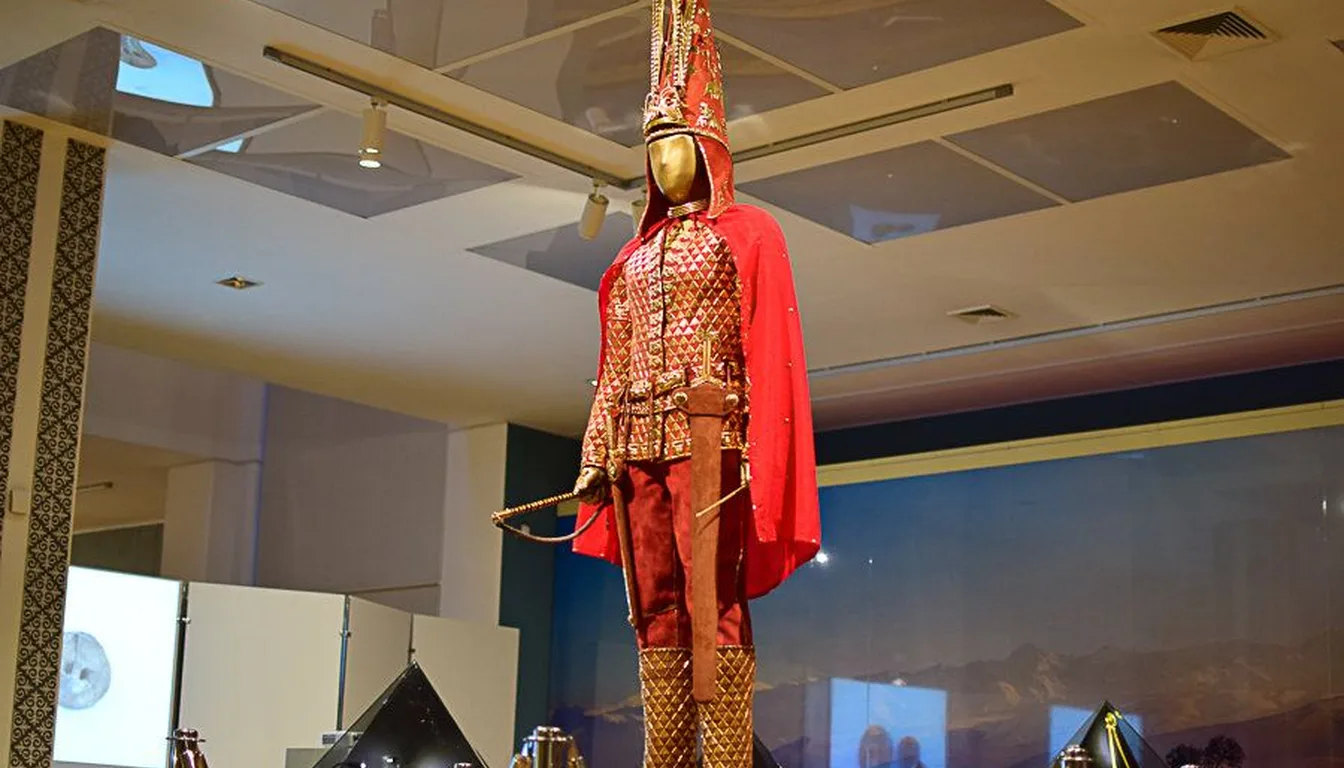
- The Golden Man (Altyn Adam): The Golden Man of Issyk, a Scythian-era burial artifact, was adopted as a national symbol partly because it represents continuity of steppe civilization pre-dating and continuing through the Khanate period
- National currency: The Kazakhstani tenge features portraits of historical figures from the Khanate era on several denominations
- City names: Turkestan, the spiritual capital of the Kazakh Khanate, has been elevated to regional capital status and received massive state investment in historical restoration
- Monuments: Statues of Kerey, Janibek, Kasym Khan, Ablai Khan, and the three biys (Tole, Kazybek, Aiteke) are found in every major city
The 550th Anniversary (2015)
In 2015, Kazakhstan celebrated the 550th anniversary of the Kazakh Khanate with year-long events including academic conferences, cultural festivals, monument unveilings, documentary films, and the publication of multi-volume historical research. President Nazarbayev explicitly connected the Khanate to modern statehood, declaring that Kazakhstan’s independence in 1991 was a continuation of the sovereignty first established by Janibek and Kerey in 1465.
Turkestan: The Spiritual Capital
The city of Turkestan, home to the Mausoleum of Khoja Ahmed Yasawi (a UNESCO World Heritage Site), served as the political and spiritual capital of the Kazakh Khanate. The Kazakh khans were crowned and buried in Turkestan, and the city’s significance as a pilgrimage center predates the Khanate by centuries. Modern Kazakhstan has invested heavily in Turkestan’s restoration, including a new airport, hotels, and museum complexes. The city is accessible via the Silk Road route from Shymkent.
Juz Identity Today
The three-juz system remains a living part of Kazakh social identity. While urbanization and Soviet-era social engineering weakened tribal structures, knowledge of one’s juz, tribe, and clan remains culturally important. Kazakh genealogical tradition (shezhire) requires every Kazakh to know their ancestry back seven generations. This genealogical consciousness connects modern Kazakhs directly to the Khanate period and the tribal structures that preceded it. Understanding this system helps visitors make sense of Kazakhstan’s people and their sense of historical continuity.
Key Historical Sites of the Kazakh Khanate
Visitors interested in the Khanate period can visit several significant sites across Kazakhstan.
| Site | Location | Significance | Access |
|---|---|---|---|
| Khoja Ahmed Yasawi Mausoleum | Turkestan | Spiritual capital, UNESCO World Heritage | Train/flight from Almaty or Shymkent |
| Ordabasy Memorial | Near Shymkent | Site of last all-Kazakh kurultai (assembly) | Day trip from Shymkent |
| Otrar ruins | Otyrar, South Kazakhstan | Major Silk Road city controlled by Khanate | Day trip from Turkestan |
| Sygnak ruins | Kyzylorda region | Early capital of the Kazakh Khanate | Difficult access, 4WD required |
| National Museum | Astana | Extensive Khanate-era exhibits | Central Astana |
| Kenesary Khan Monument | Astana | Monument to the last Kazakh khan | Central Astana |
| Ulytau | Karaganda region | Sacred mountain, site of Khanate-era assemblies | Remote, guided tour recommended |
For planning a trip that covers these and other historical sites, see our Kazakhstan 7-day itinerary and places to visit.
Timeline of the Kazakh Khanate
| Year | Event |
|---|---|
| 1428-1468 | Abulkhair Khan rules the Uzbek Khanate |
| ~1459-1465 | Janibek and Kerey lead breakaway migration to Zhetysu |
| 1465 | Traditional founding date of the Kazakh Khanate |
| 1511-1521 | Kasym Khan’s Golden Age; Khanate at maximum extent |
| 1538-1580 | Haqnazar Khan reunifies Kazakh territories |
| 1598-1628 | Yesim Khan captures Tashkent; codifies legal reforms |
| 1680-1715 | Tauke Khan; Zheti Zhargy legal code; three biys |
| 1723-1727 | Aqtaban Shubryndy: Dzungar invasion devastates Kazakhs |
| 1729-1730 | Battle of Anirakhai: Kazakhs defeat Dzungar forces |
| 1731 | Junior Juz accepts Russian protection |
| 1740s | Middle Juz accepts Russian protectorate |
| 1755-1758 | Qing China destroys Dzungar Khanate |
| 1822-1824 | Russia abolishes khan authority in Middle and Junior Juz |
| 1837-1847 | Kenesary Khan’s resistance movement |
| 1847 | Kenesary killed; end of independent Khanate |
| 2015 | Kazakhstan celebrates 550th anniversary of Khanate |
Frequently Asked Questions
- When was the Kazakh Khanate founded?
- The Kazakh Khanate was traditionally founded in 1465, when sultans Janibek and Kerey led a breakaway group from the Abulkhair (Uzbek) Khanate to the Zhetysu region of southeastern Kazakhstan. Some historians date the founding between 1459 and 1470, but 1465 is the officially recognized date used by Kazakhstan for the 550th anniversary celebrations in 2015.
- Who founded the Kazakh Khanate?
- The Kazakh Khanate was co-founded by sultans Janibek and Kerey (Giray), both descendants of Urus Khan and members of the Chinggisid (Genghis Khan descendant) dynasty. They led a large group of followers away from the Abulkhair Khanate due to dissatisfaction with Abulkhair Khan leadership, particularly after his military defeat by the Oirats in 1457.
- What are the three Kazakh juz (hordes)?
- The three juz are the Elder Juz (Uly Juz) in southeastern Kazakhstan, the Middle Juz (Orta Juz) in central and eastern Kazakhstan, and the Junior Juz (Kishi Juz) in western Kazakhstan. Each juz is a confederation of tribes with its own territory, leaders, and migration routes. The system dates to the Khanate period and remains a part of Kazakh social identity today.
- Why did the Kazakh Khanate fall?
- The Kazakh Khanate fell due to a combination of the devastating Dzungar invasions (1723-1727), which weakened the Khanate militarily, and gradual Russian imperial expansion from the 1730s onward. The Junior Juz accepted Russian protection in 1731, and Russia progressively abolished khan authority between 1822 and 1847. Kenesary Khan last resistance ended with his death in 1847.
- What was Aqtaban Shubryndy?
- Aqtaban Shubryndy (The Great Retreat or Barefoot Flight) refers to the period from 1723 to 1727 when a massive Dzungar (Western Mongol) invasion devastated the Kazakh Khanate. Approximately one-third of the Kazakh population was killed or enslaved, and hundreds of thousands fled westward. It is considered the worst disaster in Kazakh national history.
- Can you visit Kazakh Khanate historical sites?
- Yes, several important sites are accessible. The Khoja Ahmed Yasawi Mausoleum in Turkestan (UNESCO World Heritage Site) was the spiritual capital where khans were crowned. The Ordabasy Memorial near Shymkent marks the site of the last all-Kazakh assembly. The National Museum in Astana has extensive Khanate-era exhibits. Otrar ruins near Turkestan are also visitable.
More Stories
history
Golden Man of Kazakhstan: History & Where to See
The Golden Man of Kazakhstan — Saka warrior in golden armor from the Issyk kurgan. Discovery story, significance, museums, and how to visit the site.
history
Kazakhstan History Timeline: Ancient Nomads to Modern Nation
Complete Kazakhstan history timeline — Saka warriors, Kazakh Khanate, Russian colonization, Soviet famine, nuclear tests, independence, and 2022 protests.
nature
Kazakhstan Hiking: 12 Best Trails With Difficulty and Costs
Best hiking trails in Kazakhstan from easy day walks to multi-day treks. Trail details, difficulty ratings, costs, gear lists, and when to go for each region.