Shymkent Travel Guide: City Sights, Food & Day Trips
Reported from the ground: Tugelbay Konabayev is a Kazakh native (born in Aktobe) who has lived 7 years in Almaty and 4 in Astana. About the author.
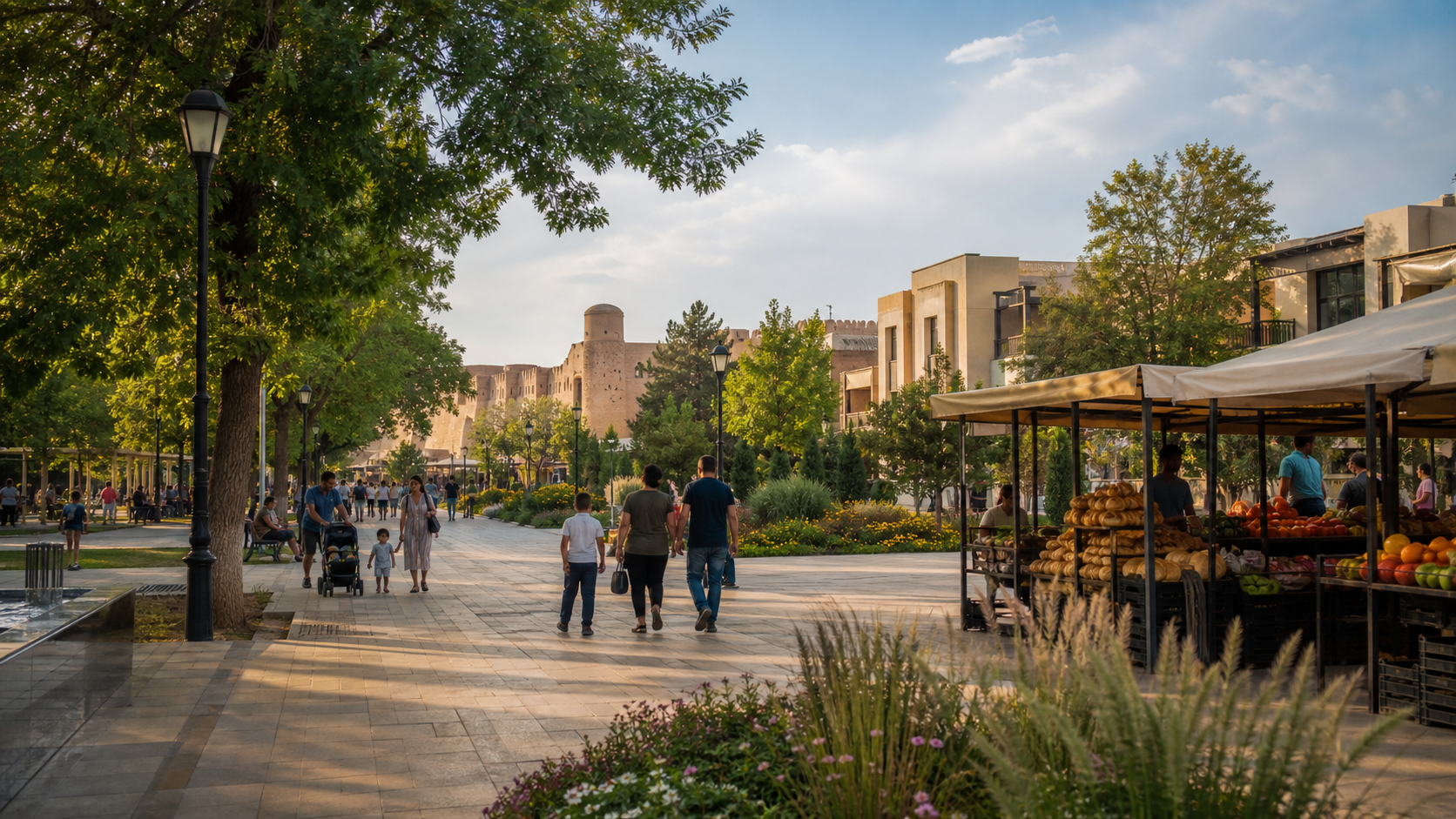
In this article15 sections
Shymkent is worth two city days if you want an urban southern-Kazakhstan stop built around an archaeological citadel, museums, parks, food, and the historic Sayram area. Add a third day for Turkestan only after checking current transport and monument access. Do not choose Shymkent because an article calls it Kazakhstan’s “most authentic” city; choose it because this mix matches your trip.
The city works best in clusters rather than a checklist of isolated landmarks. One day can join the Shymqala citadel complex with a market and central walk. A second can focus on parks, the Koshkar-Ata river area, or Sayram’s sacred sites. Turkestan is a separate excursion, not a quick add-on between city stops.
Is Shymkent worth visiting?
Choose Shymkent for city history, parks, southern food, and access to Sayram or Turkestan; skip it if your limited itinerary is mainly about mountains or capital-city architecture. Almaty remains the stronger base for high-mountain day trips, while Astana serves a different architecture and national-institutions itinerary.
The useful distinction is not “real Kazakhstan” versus “tourist Kazakhstan.” Shymkent, Almaty, and Astana are all lived cities with different histories, climates, languages, and urban forms. Ranking one as the country’s soul reduces those differences to a stereotype.
Shymkent’s own development plan describes the city as a historical and cultural centre of southern Kazakhstan and identifies the settlement and citadel as its historical core. The municipal plan on GOV.KZ supports that planning boundary; it does not support a national authenticity ranking.
Use Shymkent when at least two of these are priorities:
- an urban archaeological site and local museums;
- green public spaces rather than a landmark-only schedule;
- a broad restaurant and market-food search;
- sacred and historical sites in modern Sayram;
- a separate full-day visit to the UNESCO mausoleum in Turkestan;
- a slower southern-city contrast within a longer Kazakhstan route.
How many days do you need in Shymkent?
Two nights are the practical minimum for the city; three nights create room for Sayram or Turkestan without compressing every stop. Arrival and departure times matter more than a universal night count.
| Time available | Sensible scope | What to leave out |
|---|---|---|
| Half day | One central cluster: citadel or park, plus one meal | Sayram, Turkestan, zoo and cross-city park hopping |
| One full day | Citadel, one museum, a market or restaurant, then an evening park | Any long regional excursion |
| Two full days | Central history day plus parks and Sayram | A rushed Turkestan return unless transport fits comfortably |
| Three full days | Two city days plus a dedicated Turkestan day | Unverified reserve access or a cross-border detour |
Do not treat a late arrival as a sightseeing day. A flight, train, hotel check-in, meal, heat, and cross-city transfer can consume the usable daylight. Keep the first evening flexible and build the next morning around the exact opening status of your priority museum.
What should you see on a first city day?
Start with the Shymqala citadel area, add one museum, then finish with a market, pedestrian street, river walk, or park chosen from the live map. This gives historical context without turning the day into repeated taxi transfers.
The Visit Shymkent cultural and historical directory currently groups the citadel with the Shymqala complex, the local-history museum, the museum of political-repression victims, the Erlik Museum, the D. A. Kunaev museum, the Kyluet ethnomuseum, an art gallery, and the Sayram museum.
That list is a discovery tool, not proof that every venue opens daily. Before leaving your hotel:
- Select one anchor museum and open its current detail page.
- Check the date, opening hours, ticket process, last entry, language support, and photography rules.
- Confirm the walking or taxi time from the citadel rather than assuming every listed institution is adjacent.
- Pick a second indoor option only if the weather or first venue changes.
- Keep the late afternoon for a park or food stop that does not depend on a timed ticket.
A market visit needs the same restraint. Prices, stall mix, hygiene, crowding, and bargaining customs vary by product and seller. Ask the total price before accepting food or service, count change calmly, and walk away if the terms are unclear. The old advice to begin every negotiation at 50 percent had no reliable basis and has been removed.
What is the Shymqala citadel?
Shymqala is the city’s archaeological-history anchor, but “2,200 years old” should be read as the local institutional interpretation of excavation evidence, not a precise birthday for the modern city. Visit Shymkent’s cultural page says excavations in 2003 and 2004 established a 2,200-year history and describes the citadel as the defensive castle of the settlement.
The GOV.KZ city plan independently identifies the settlement and citadel as Shymkent’s historical centre. Together, these local primary sources justify visiting the site and explaining its archaeological role. They do not justify claiming that Shymkent is older than every other city by an exact number of years.
At the site, separate three layers in your notes and photographs:
- the archaeological evidence and exposed remains;
- reconstructed or interpreted elements used to make the site legible;
- the modern museum presentation and visitor infrastructure.
Ask staff which walls or objects are original, conserved, reconstructed, or illustrative. Current exhibits, tickets, guided tours, and access can change, so use the live Visit Shymkent listing rather than an old blog’s opening schedule.
Which Shymkent parks make a useful second cluster?
Choose one large green-space cluster instead of trying to collect every park name. The Visit Shymkent parks directory lists Abay Park, the Dendropark, Zhaylau Kol, Victory Park, the zoo, Nauryz Park, Central Park, Independence Park, Arbat, the Koshkar-Ata river, Kazyna Ethnopark, and several smaller parks and squares.
These options serve different days:
| Visitor need | Shortlist from the official directory | Live check to make |
|---|---|---|
| Easy central evening | Arbat, Central Park, Independence Park | Lighting, events, route back and current crowd level |
| Longer green walk | Dendropark | Entry point, hours, shade, water and return transport |
| Family facilities | Zoo or Zhaylau Kol area | Ticket, ride or exhibit operation and age rules |
| Local religious or river context | Koshkar-Ata river area | Respectful behaviour and any site-specific rules |
| Memorial or civic landscape | Abay Park, Victory Park | Exact monuments and route within the park |
The portal describes the Dendropark as founded in 1979 to test trees and shrubs from different geographic regions in southern conditions. That makes it a deliberate collection, not simply an untended city forest. Allow time for the actual entrance, scale, weather, and return ride.
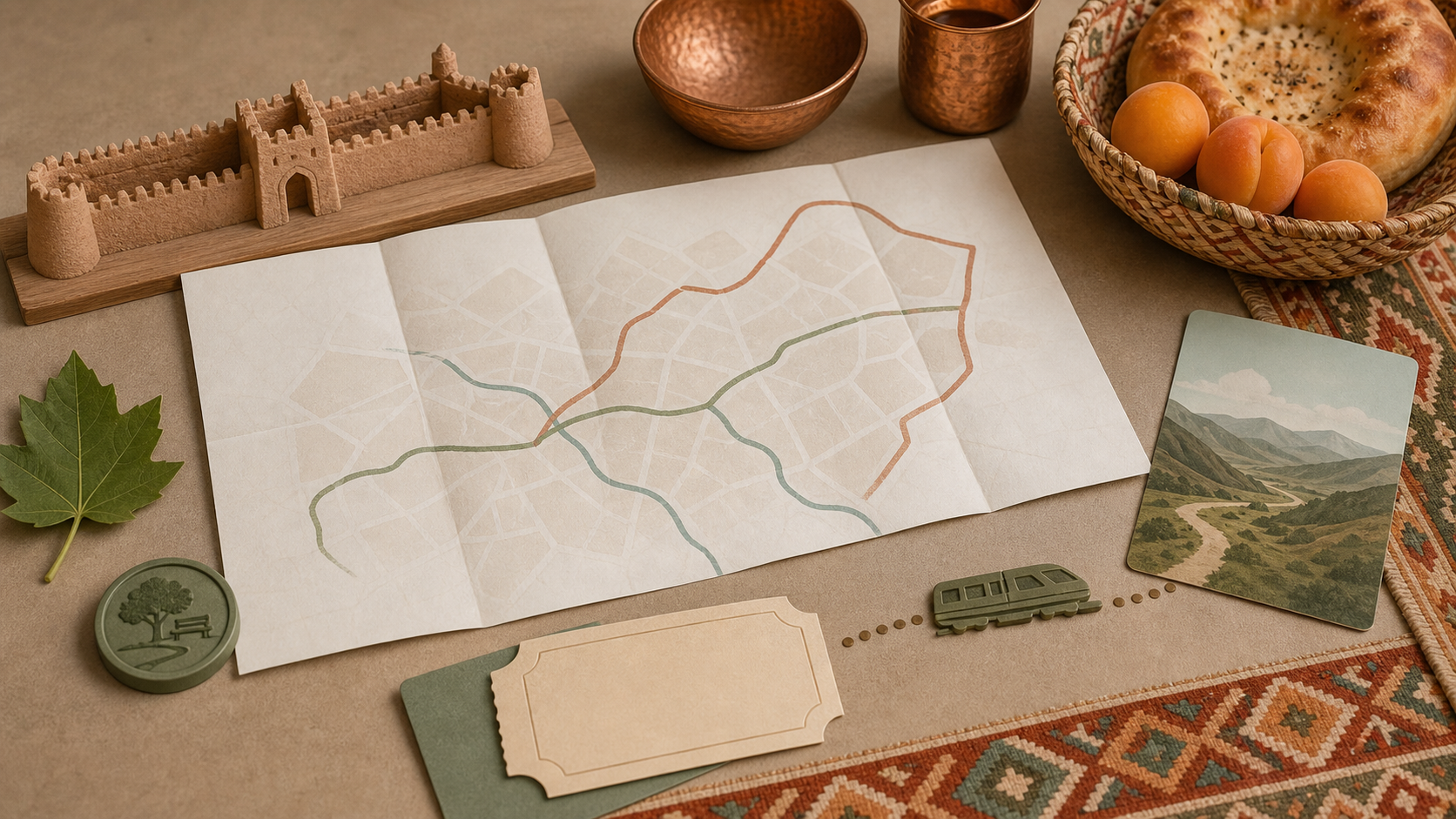
A conceptual way to separate a city-history cluster, food and parks from a longer rail excursion. It is not a real Shymkent map, timetable, ticket, or reconstruction of the citadel.
What should you eat in Shymkent?
Use Shymkent to compare southern Kazakh and wider Central Asian dishes, but choose a current venue instead of trusting a national “best food” ranking. The Visit Shymkent restaurant directory lists many restaurants and publishes venue-level cuisine, address, hours, contact, and average-check information.
Those fields are useful for discovery and volatile by nature. Reconfirm them with the restaurant on the day. A directory listing is not an independent quality award, and an “average check” is not a guaranteed final bill.
| Dish or meal style | What to confirm before ordering |
|---|---|
| Samsa | Meat or vegetable filling, oven batch time, serving temperature |
| Plov | Serving time, meat, portion size and whether it is available all day |
| Lagman | Soup or fried style, spice level and noodle preparation |
| Shashlik | Meat, weight or skewer count, garnish and final price |
| Tandyr bread | Baking time and whether it is sold by piece or as part of a meal |
| Tea-house breakfast | Included bread, dairy, sweets, refill terms and total price |
Our Kazakhstan food guide explains the dishes in national context. In Shymkent, build one low-risk food loop: a bakery or market snack, one sit-down lunch, then an evening venue selected from current hours and recent operating information.
Dietary needs require direct questions. “No meat” may still include meat broth or animal fat; “halal” should be confirmed with the venue if certification matters to you. Ask about nuts, dairy, eggs, wheat, sesame, and shared preparation rather than assuming a familiar dish has a fixed recipe.
Where should you stay?
Stay near the cluster you will use first, not near a vague claim that all of Shymkent is walkable. Central accommodation can simplify the citadel, museums, Arbat, meals, and evening parks. A property near an arrival terminal may reduce transfer friction but add repeated rides to sights.
Before booking, place the hotel and three priorities on a current map. Compare:
- cancellable terms and payment currency;
- verified air conditioning for warm-weather dates;
- lift access if stairs matter;
- quiet-room request and window orientation;
- breakfast hours relative to a day trip;
- staffed late arrival and baggage storage;
- realistic drive time to the railway station or airport at your departure hour.
The Visit Shymkent contact page is the live route for the visitor centre if you need local clarification. Its phone, messenger, email, address, and office availability can change, so this guide links the page instead of copying those details.
How do you get to and around Shymkent?
Choose between air and rail from the live schedule, then use a current map and licensed app or hotel-arranged transfer inside the city. The old guide froze flight prices, train durations, taxi fares, airport drive times, routes, passenger totals, and terminal dates that can all change independently.
For arrival planning, record:
- The operator and exact terminal or station printed on your ticket.
- Scheduled arrival plus a delay buffer.
- Hotel check-in or staffed-arrival deadline.
- A primary transfer and one backup.
- Payment method, luggage capacity, and final quoted fare.
For city days, compare walking only after checking the actual route. A short straight-line distance can hide a large road, heat exposure, missing pavement, or an inconvenient entrance. Use app-based pickup pins that you can identify safely; do not accept a moving vehicle merely because its driver calls your destination.
Public transport can be useful, but route numbers and payment rules belong to current city information. Ask the visitor centre or accommodation to confirm the correct direction and stop on the date of travel. The broader Kazakhstan travel tips guide covers national transport and payment preparation.
Is Sayram a separate trip?
Treat Sayram as a focused half-day or day within modern Shymkent, especially if sacred architecture and regional history interest you. Do not squeeze it between the citadel and a long-distance departure.
The Visit Shymkent sacred-sites directory lists the Ibrahim Ata, Karashash Ana, Abdel Aziz Baba, Khoja Salih, Koshkar-Ata, and Mirali Baba mausoleums, the Khizir tower, and the Martobe settlement. Its cultural directory also lists the Sayram museum.
These are religious, memorial, archaeological, or community places, not a themed attraction circuit. Before visiting:
- choose two or three sites with a coherent route;
- check whether interiors are open and whether a local guide is available;
- dress and behave respectfully;
- ask before photographing worshippers, caretakers, graves, or interiors;
- carry footwear or covering options if the site requests them;
- avoid repeating legends as established biography unless the source labels them clearly.
The portal itself distinguishes historical description from legend in several entries. Keep that distinction when explaining the sites to children or publishing photographs later.
Can you visit Turkestan from Shymkent?
Yes, Turkestan can work as a dedicated day, but the trip should be built around a live return connection and the mausoleum’s current visitor rules. Do not rely on an old “under two hours” rail claim or a fixed fare.
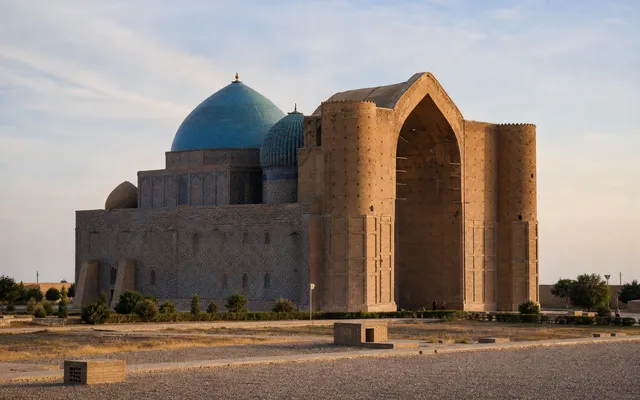
The UNESCO World Heritage record says the Mausoleum of Khoja Ahmed Yasawi was built in Yasi, now Turkestan, from 1389 to 1405 on Timur’s order. UNESCO describes it as a major, well-preserved Timurid construction whose unfinished elements document building methods of the period.
UNESCO’s property is the mausoleum itself within the former citadel and archaeological area; the record also describes a protected buffer zone. A modern tourism complex, hotel, shopping street, or nearby building should not automatically be called part of the World Heritage property.
Plan the day in this order:
- Find a current outbound and return train, bus, or driver option.
- Check the reserve-museum’s current ticket, entry, closure, dress, and photography rules.
- Allow time for the archaeological setting, not only the main facade.
- Set a firm departure threshold that protects the return connection.
- Keep a backup Shymkent day if transport or access changes.
Our Kazakhstan UNESCO sites dataset explains the national list, while the Silk Road guide provides wider route context.
What about Aksu-Zhabagly?
Do not treat Aksu-Zhabagly as a guaranteed casual day trip from Shymkent. The reserve website used by the old article could not be retained through a valid current HTTPS capture in this audit, and its Firecrawl captures did not return a usable body.
That evidence gap is important because a strict nature reserve can have controlled routes, guide or permit requirements, seasonal closures, weather constraints, and limited transport. The previous exact area, plant count, wildlife promise, driver price, and April-May bloom guarantee have therefore been removed.
Consider the reserve only after an authorized local contact confirms current access, guide requirements, meeting point, route, physical difficulty, weather, equipment, cancellation terms, and return plan. If those details cannot be verified, keep the extra day for Shymkent or Turkestan.
When is the best time to visit Shymkent?
Choose dates from the activities and current forecast, not from a guaranteed seasonal slogan. Outdoor-heavy plans need tolerable daytime conditions; museums, restaurants, and shorter park walks offer more flexibility.
Use a forecast-based decision:
| Forecast or condition | Adaptation |
|---|---|
| Sustained daytime heat | Start outdoors early, take an indoor midday break, resume later |
| Strong sun | Carry water, sun protection, and choose shaded park segments |
| Rain or wind | Prioritize citadel interpretation, museums, food, and shorter transfers |
| Cold morning or evening | Layer clothing and confirm that outdoor park facilities operate |
| Holiday or major event | Recheck transport, closures, crowds, and accommodation terms |
Spring and autumn may offer easier walking on some dates, but neither label guarantees mild weather, flowers, or open reserve routes. Summer is not automatically unusable if you plan around the forecast, and winter is not automatically empty if your priority is indoor history and food.
See the national best-time guide for broad climate planning, then make the Shymkent decision from the current local forecast.
What practical habits matter in Shymkent?
The useful habits are the same ones that make any unfamiliar city easier: current maps, clear prices, respectful site behaviour, heat planning, and a backup route. Avoid turning regional differences into claims that residents are more or less modern, Kazakh, Russian, religious, or hospitable than people elsewhere.
- Use Kazakh language basics for greetings, but expect individual language preferences to vary.
- Read the Kazakhstan money guide and carry more than one payment method without assuming every market stall is cash-only.
- Ask before photographing people, religious interiors, market sellers, or children.
- Confirm a fare or app booking before entering a vehicle.
- Check opening status again on the morning of a priority museum or excursion.
- Save accommodation details offline and share a longer day-trip plan with someone you trust.
- Keep medication, water, sun protection, and weather layers appropriate to the day.
A practical two-day Shymkent itinerary
Use day one for the historical centre and day two for a green-space or Sayram cluster. This sequence can absorb a closure without breaking the whole visit.
Day 1: city history and food
- Morning: Shymqala citadel and its interpretation.
- Late morning: one museum confirmed open that day.
- Lunch: a venue chosen from current hours and dietary needs.
- Afternoon: market or central pedestrian walk with no fixed purchase target.
- Evening: Arbat, Central Park, Independence Park, or another live-checked central option.
Day 2: parks or Sayram
- Option A: Dendropark plus one family or civic park, with transport and shade planned.
- Option B: two or three Sayram sacred sites plus the museum, with respectful dress and photography boundaries.
- Evening: flexible meal near the hotel and preparation for departure or Turkestan.
If you add Turkestan, make it day three. Do not combine it with an airport or long-distance rail departure unless the live schedule leaves a generous buffer.
Sources
This guide uses the Visit Shymkent cultural directory, parks directory, restaurant directory, sacred-sites directory, and contact page for local discovery and live checks.
The government procurement registry identifies Visit Shymkent as a municipal tourism information centre. The GOV.KZ city plan establishes the citadel as the historical core, and UNESCO supplies the separate Turkestan property boundary and Timurid history. Prices, opening hours, transport schedules, taxi fares, border procedures, and reserve access are intentionally delegated to live sources.
Frequently Asked Questions
Is Shymkent worth visiting?
Shymkent is worth visiting if you want an urban southern-Kazakhstan stop built around the Shymqala citadel, museums, parks, food, Sayram, or a separate Turkestan excursion. It is less suitable if a short first trip is focused mainly on Almaty's mountains or Astana's national architecture.
How many days do you need in Shymkent?
Allow two full city days for the historical centre plus a parks or Sayram cluster. Add a third day for Turkestan. A half day is enough only for one compact cluster, and an arrival evening should not be counted as a full sightseeing day.
What should you see first in Shymkent?
Start with the Shymqala citadel and one currently open museum, then add a market, restaurant, pedestrian street, river area, or central park. Confirm opening hours, tickets, language support, and the exact entrance on the day.
What food should you try in Shymkent?
Samsa, plov, lagman, shashlik, tandyr bread, and a tea-house meal are useful options to compare. No reliable source establishes one citywide best venue, so choose from current operating information and confirm ingredients, serving time, portion, and total price.
Can you visit Turkestan from Shymkent?
Turkestan can work as a dedicated day if a live outbound and return connection leaves enough time for the Mausoleum of Khoja Ahmed Yasawi and its archaeological setting. Check current tickets, closures, dress and photography rules rather than relying on an old train duration or fare.
Is Aksu-Zhabagly an easy Shymkent day trip?
Do not assume so. Current reserve access could not be verified through a usable official body in this audit. Confirm authorized access, guide or permit requirements, route, weather, transport, physical difficulty, cancellation terms, and return timing before treating it as a bookable trip.
Last reviewed: August 22, 2026. Local place lists were checked against Visit Shymkent; Turkestan heritage claims were checked against UNESCO. Opening hours, prices, routes, transport, events, weather, and reserve access require a current check.
Google Preferred Sources
See more Kazakhstan stories in Google
Add About Kazakhstan as a preferred source to find more of our fresh, relevant stories in Google Search.
More Stories
travel
Cities in Kazakhstan: 90 Cities and Major City Guide
Cities in Kazakhstan ranked by size and travel value: Almaty, Astana, Shymkent, Karaganda and more, with May 2026 stat.gov.kz population data.
travel
Karaganda, Kazakhstan: City Guide & Dolinka Planning
Plan a thoughtful Karaganda visit around the modern city, industrial history, live logistics and a separate respectful trip to the Karlag museum.
travel
Kostanay, Kazakhstan: City Guide & Naurzum Planning
Plan Kostanay around the Tobol, active local museums and live logistics, while treating Naurzum Nature Reserve as a separate confirmed journey.
travel
Turkistan, Kazakhstan: Mausoleum & Otrar Travel Guide
Plan a Turkistan heritage stay around the Yasawi Mausoleum, with current entry checks, respectful etiquette, transport, hotels, and a separate Otrar trip.
Plan the Next Step
travel
Kazakhstan Tourist Attractions: Choose the Right First-Trip Route
Compare Kazakhstan tourist attractions by base and logistics: Almaty nature, Turkestan heritage, Mangystau, Astana, Baikonur, and more.
food
Beshbarmak Recipe: How Kazakh Et Is Served
A source-checked guide to Kazakh et, widely called beshbarmak: what is on the platter, a practical home recipe, regional differences, and guest etiquette.
culture
Women in Kazakhstan: Rights, Work and Daily Life in 2026
Source-checked guide to women in Kazakhstan: current legal rights, dated work and wage data, marriage statistics, safety, and respectful language.
travel
Things to Do in Kazakhstan: 13 Places Worth Your Time
Choose the best things to do in Kazakhstan by trip length: Almaty, Charyn, Kolsai, Astana, Turkestan, Tamgaly, Altyn-Emel, food, and Nauryz.
travel
12 Best Day Trips from Almaty: Complete Guide 2026
Best Almaty day trips — Charyn Canyon, Big Almaty Lake, Kolsai Lakes, Tamgaly petroglyphs, Altyn-Emel. Distances, costs, and how to get there.
travel
eSIM Kazakhstan: Setup, Coverage & Local SIM Guide
Choose and set up an eSIM for Kazakhstan, understand local operator registration, coverage limits, IMEI rules, and what to do after landing.

Travel Writer & Local Expert · Almaty, Kazakhstan
Tugelbay Konabayev is a Kazakhstan-based travel writer who has lived in Almaty for 7+ years and Astana for 4+ years. He grew up in Aktobe, Kazakhstan and has covered Kazakh travel, food, culture, and visa policy with first-hand reporting since 2023.