Kazakhstan UNESCO World Heritage Sites 2026: Data & List
Reported from the ground: Tugelbay Konabayev is a Kazakh native (born in Aktobe) who has lived 7 years in Almaty and 4 in Astana. About the author.
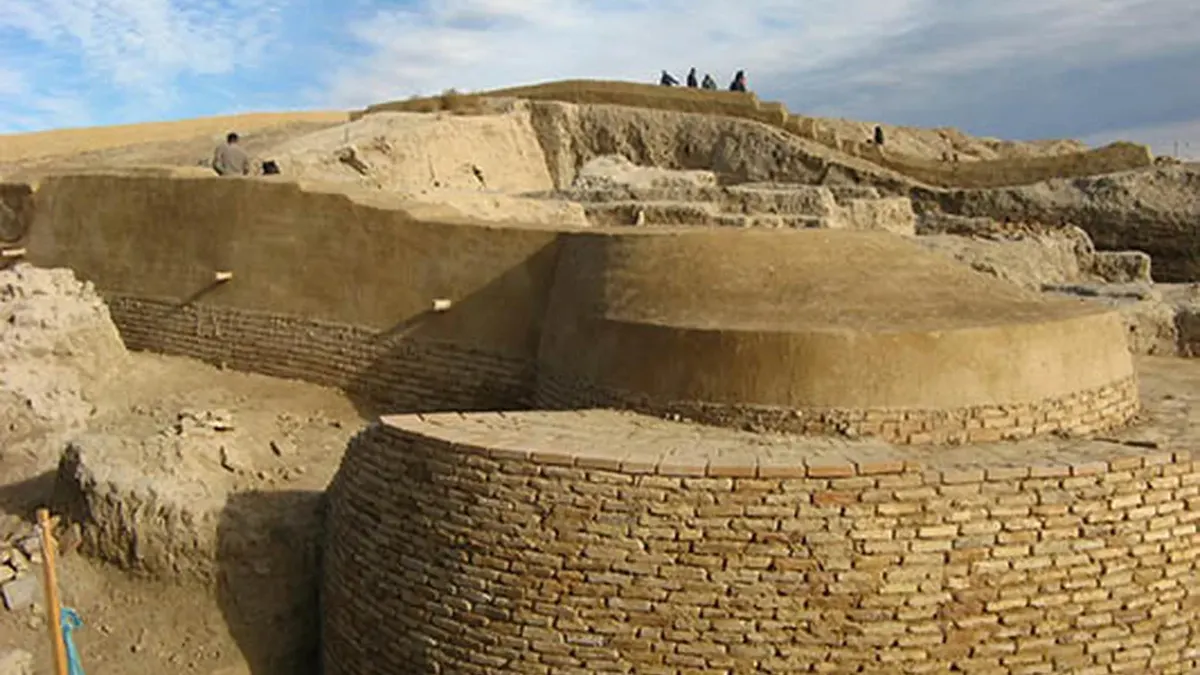
In this article9 sections
Kazakhstan has 6 UNESCO World Heritage Sites as of 2026: 3 cultural (Mausoleum of Khoja Ahmed Yasawi, Tamgaly Petroglyphs, Silk Roads Chang’an-Tianshan Corridor) and 3 natural (Saryarka Steppe, Western Tien-Shan, Cold Winter Deserts of Turan). All are inscribed under UNESCO criteria reflecting outstanding universal value. Kazakhstan also maintains 14+ sites on the UNESCO Tentative List under active consideration. Below is the complete MFA-and-UNESCO-verified dataset with downloadable CSV.
Quick Facts
- Kazakhstan has 6 inscribed UNESCO World Heritage Sites (as of April 2026)
- Breakdown: 3 cultural + 3 natural + 0 mixed
- 3 are transnational (shared with neighbouring countries)
- First inscription: 2003 (Mausoleum of Khoja Ahmed Yasawi)
- Most recent inscription: 2023 (Cold Winter Deserts of Turan)
- Tentative List: 14+ sites under active consideration
- Most accessible to tourists: Yasawi Mausoleum (Turkestan, 165 km north of Shymkent)
- Largest natural site: Saryarka - Steppe and Lakes of Northern Kazakhstan (~450,000 ha core zone)
- Source: UNESCO World Heritage Centre official register
Primary sources:
UNESCO World Heritage Centre Kazakhstan listings
and
Wikipedia List of World Heritage Sites in Kazakhstan
. All inscriptions verified against UNESCO official register, April 2026.
Headline Numbers
| Category | Count |
|---|---|
| Inscribed sites total | 6 |
| Cultural sites | 3 |
| Natural sites | 3 |
| Mixed sites | 0 |
| Transnational sites | 3 (Silk Roads, Western Tien-Shan, Cold Winter Deserts of Turan) |
| First inscription year | 2003 (Yasawi Mausoleum) |
| Most recent inscription | 2023 (Cold Winter Deserts of Turan) |
| Tentative list sites | 14+ |
Source: UNESCO World Heritage Centre, verified April 2026.
All 6 Inscribed Sites (Full Detail)
1. Mausoleum of Khoja Ahmed Yasawi (2003)
| Field | Value |
|---|---|
| Type | Cultural |
| Year inscribed | 2003 |
| UNESCO criteria | (i), (iii), (iv) |
| Location | Turkestan, Turkestan Region |
| Coordinates | 43.2972° N, 68.2733° E |
| Area | ~55 hectares (core zone) |
The Mausoleum of Khoja Ahmed Yasawi is a Timurid-era mausoleum built starting 1389 by order of Tamerlane (Timur) over the tomb of the 12th-century Sufi master Khoja Ahmed Yasawi. The construction was halted in 1405 with Timur’s death and remains partially unfinished. It is one of the largest and best-preserved Timurid architectural monuments in Central Asia and a major pilgrimage site.
Visit notes: Located in Turkestan, 165 km north of Shymkent. Open daily, modest dress required. Entry fee minimal. Major restoration completed 2018-2020 funded by UNESCO/Türkiye partnership.
2. Petroglyphs within the Archaeological Landscape of Tamgaly (2004)
| Field | Value |
|---|---|
| Type | Cultural |
| Year inscribed | 2004 |
| UNESCO criteria | (iii) |
| Location | Almaty Region, ~170 km NW of Almaty city |
| Coordinates | 43.7869° N, 75.5328° E |
| Area | 900 hectares |
The Tamgaly site contains around 5,000 petroglyphs across 48 complexes spanning from the Bronze Age (~14th century BCE) through the Iron Age and into the medieval period. The rock art depicts solar deities, hunting scenes, ceremonies, animals, and human figures. Tamgaly remains one of the largest concentrated petroglyph sites in Central Asia.
Visit notes: 170 km from Almaty, accessible by tour or self-drive (4WD recommended). Day-trip operators in Almaty offer full-day guided visits at 25,000-50,000 KZT.
3. Saryarka - Steppe and Lakes of Northern Kazakhstan (2008)
| Field | Value |
|---|---|
| Type | Natural |
| Year inscribed | 2008 |
| UNESCO criteria | (ix) |
| Location | Akmola Region (Korgalzhyn) and Kostanay Region (Naurzum) |
| Area | 450,344 hectares (combined) |
Saryarka comprises the Korgalzhyn and Naurzum nature reserves, protecting the world’s largest remaining steppe-and-lake ecosystem. Critical wetlands for migratory birds along the Central Asian flyway, including the largest population of the endangered Pallid Harrier and an important Tengiz lake habitat for Greater Flamingos at the northernmost limit of their range.
Visit notes: Korgalzhyn is 130 km from Astana. Naurzum is in Kostanay Region. Both require 4WD access and ranger-guided tours during sensitive seasons.
4. Silk Roads: the Routes Network of Chang’an-Tianshan Corridor (2014)
| Field | Value |
|---|---|
| Type | Cultural |
| Year inscribed | 2014 |
| UNESCO criteria | (ii), (iii), (v), (vi) |
| Location | Multiple sites across Almaty, Jambyl, Turkestan Regions |
| Area | 42,668 hectares (transnational total) |
| Transnational with | China, Kyrgyzstan |
This serial transnational inscription covers 33 component sites total along the Chang’an-Tianshan Silk Road corridor. Kazakhstan contributes 8 component sites including Talgar, Karamergen, Kayalyk, Aktobe, Akyrtas, Kulan, Ornek, and Costobe (Tarmola). Inscription marks Kazakhstan’s role as a key node in the medieval Silk Road network, particularly during the Karakhanid (10th-12th centuries) and earlier periods.
Visit notes: Most accessible component is Akyrtas, near Taraz. Some sites are archaeological ruins requiring guide.
5. Western Tien-Shan (2016)
| Field | Value |
|---|---|
| Type | Natural |
| Year inscribed | 2016 |
| UNESCO criteria | (x) |
| Location | Turkestan and Jambyl Regions |
| Area | 528,177 hectares (transnational total) |
| Transnational with | Uzbekistan, Kyrgyzstan |
Mountain ecosystem of the Western Tien-Shan range with exceptional biodiversity including endemic and threatened species. Kazakhstan’s contribution includes parts of the Aksu-Zhabagly, Karatau, and Sayram-Ugam protected areas. The site protects unique forest ecosystems, alpine meadows, and ancient genetic centers for fruit and nut tree species (including wild apple - relevant to Almaty’s name “Father of Apples”).
Visit notes: Aksu-Zhabagly is the most accessible Kazakh component, requiring permits and ranger guides.
6. The Cold Winter Deserts of Turan (2023)
| Field | Value |
|---|---|
| Type | Natural |
| Year inscribed | 2023 |
| UNESCO criteria | (ix) |
| Location | Multiple desert regions |
| Area | 2,569,130 hectares (transnational total) |
| Transnational with | Turkmenistan, Uzbekistan |
Most recently inscribed Kazakhstan UNESCO site (2023). Protects the cold winter desert ecosystem of Turan, covering large stretches of southern and western Kazakhstan. The Kazakhstan portion includes parts of Aktau-Buzachi, Ustyurt, and Barsa-Kelmes nature reserves.
Visit notes: Most components are remote and require permits. Significant overlap with the Mangystau region recommended for the desert experience.
UNESCO Tentative List (Active Nominations)
Kazakhstan has a deep future UNESCO pipeline beyond the six inscribed sites. Kazakhstan has 14+ sites on the UNESCO Tentative List that may eventually be inscribed.
| Site | Type | Year Added |
|---|---|---|
| Petroglyphs of Arpaözen | Cultural | 1998 |
| Madeniet ossuary | Cultural | 1998 |
| Aulie-Tau | Cultural | 1998 |
| Beket-Ata Underground Mosque | Cultural | 2002 |
| Burabay (Borovoye) Resort Zone | Mixed | 2002 |
| Charyn Canyon | Natural | 2002 |
| Kapchagay-Topar Lake | Mixed | 2002 |
| Otrar Oasis | Cultural | 2008 |
| Talhir (Talgar) | Cultural | 2010 |
| Sauran Ancient City | Cultural | 2014 |
| Underground Mosques of Mangystau | Cultural | 2018 |
| Architectural Resilience: Anti-seismic Heritage of Almaty | Cultural | 2025 |
| Cultural Landscape of Ulytau | Cultural | 2021 |
| Abylaikit Monastery | Cultural | 2021 |
In April 2025, Kazakhstan’s tourism authorities announced plans to nominate 11 additional UNESCO monuments as part of the National Tourism Development Plan, prioritizing sites with both heritage and tourism potential.
Geographic Distribution
| Region | Inscribed sites | Tentative sites |
|---|---|---|
| Turkestan Region | 1 (Yasawi Mausoleum) | 2-3 (Otrar, Sauran) |
| Almaty Region | 1 (Tamgaly) | 3+ (Talgar, Charyn, Kapchagay) |
| Akmola Region | 1 (Saryarka - Korgalzhyn) | 1 (Burabay) |
| Kostanay Region | 1 (Saryarka - Naurzum) | - |
| Jambyl Region | Silk Road components | - |
| Mangystau Region | Cold Winter Deserts (partial) | 1 (Underground Mosques) |
| East Kazakhstan | - | 1 (Abylaikit) |
| Ulytau Region | - | 1 (Cultural Landscape) |
| Multiple | Western Tien-Shan, Silk Road, Turan Deserts | - |
Downloadable Dataset
📥 Download kazakhstan-unesco-sites-2026.csv (1 KB)
Schema (columns):
| Column | Type | Description |
|---|---|---|
name | string | Official English name |
name_ru | string | Russian name |
year_inscribed | int | Year of UNESCO inscription |
type | enum | cultural / natural / mixed |
criteria | string | UNESCO criteria letters |
region | string | Kazakhstan region |
area_ha | int | Site area in hectares |
latitude, longitude | float | Center coordinates (WGS84) |
description | string | One-line summary |
License: Open access for journalistic, academic, tourism and commercial use with attribution: “Source: about-kazakhstan.com (compiled from UNESCO World Heritage Centre, verified April 2026).”
For Travelers: Visiting UNESCO Sites in Kazakhstan
The easiest Kazakhstan UNESCO trip is Turkistan first, then Tamgaly or Silk Roads routes if you have more time. A pragmatic ranking for visitors deciding which sites to prioritize:
| Site | Accessibility | Time needed | Best season |
|---|---|---|---|
| Yasawi Mausoleum (Turkestan) | Easy: 165 km north of Shymkent, paved road | 1 day | Apr-Oct |
| Tamgaly Petroglyphs | Moderate: 170 km from Almaty, gravel road | 1 day | Apr-Oct |
| Korgalzhyn (Saryarka) | Moderate: 130 km from Astana, requires permit | 1-2 days | May-Sept |
| Naurzum (Saryarka) | Hard: remote in Kostanay Region | 2-3 days | May-Sept |
| Aksu-Zhabagly (Western Tien-Shan) | Hard: requires permit + guide | 2-4 days | May-Sept |
| Akyrtas (Silk Road) | Easy: near Taraz | Half day | Year-round |
| Cold Winter Deserts (Mangystau) | Hard: requires guided expedition | 4-7 days | Apr-May, Sept-Oct |
What I actually recommend: for a first-time visitor with one week, do Yasawi Mausoleum + Tamgaly + Akyrtas. Three UNESCO sites, all reachable from Almaty/Shymkent base, no specialist gear required.
Methodology and Verification
This dataset was compiled from primary UNESCO sources:
- UNESCO World Heritage Centre - Kazakhstan country page
- UNESCO Tentative Lists for Kazakhstan
- Cross-referenced against Wikipedia List of World Heritage Sites in Kazakhstan
- Recent additions cross-checked against Astana Times coverage of UNESCO nominations (April 2025)
- Coordinates verified per UNESCO official inscription documents
Update commitment: Reviewed annually after the UNESCO World Heritage Committee summer session (June-July). Tentative list changes captured as published.
Related guides
For planning context, use Kazakhstan tourist attractions, Silk Road Kazakhstan, and Baikonur Cosmodrome.
Frequently Asked Questions
How many UNESCO World Heritage Sites are in Kazakhstan?
Kazakhstan has 6 UNESCO World Heritage Sites as of 2026: 3 cultural sites (Mausoleum of Khoja Ahmed Yasawi 2003, Tamgaly Petroglyphs 2004, Silk Roads Chang'an-Tianshan Corridor 2014) and 3 natural sites (Saryarka Steppe 2008, Western Tien-Shan 2016, Cold Winter Deserts of Turan 2023). Three of the natural and cultural sites are transnational, shared with neighboring countries.
What are the 3 cultural UNESCO sites in Kazakhstan?
The 3 cultural UNESCO sites in Kazakhstan are: 1) Mausoleum of Khoja Ahmed Yasawi in Turkestan (Timurid-era 14th century, inscribed 2003), 2) Petroglyphs within the Archaeological Landscape of Tamgaly in Almaty Region (Bronze Age rock art, inscribed 2004), and 3) Silk Roads: Routes Network of Chang'an-Tianshan Corridor (transnational with China and Kyrgyzstan, 8 Kazakhstan component sites, inscribed 2014).
What is the most recent UNESCO site added in Kazakhstan?
The most recent UNESCO World Heritage Site in Kazakhstan is the Cold Winter Deserts of Turan, inscribed in 2023. It is a transnational natural site shared with Turkmenistan and Uzbekistan, protecting the unique cold desert ecosystem covering 2.5+ million hectares total. Kazakhstan's contribution includes parts of Aktau-Buzachi, Ustyurt, and Barsa-Kelmes nature reserves.
Where is the Mausoleum of Khoja Ahmed Yasawi?
The Mausoleum of Khoja Ahmed Yasawi is located in Turkestan city, Turkestan Region of southern Kazakhstan, approximately 165 km north of Shymkent. Coordinates: 43.2972° N, 68.2733° E. The Timurid-era mausoleum was built starting 1389 by order of Tamerlane (Timur) and remains partially unfinished. It is open daily for visitors and pilgrims; modest dress required.
Are Almaty's apple orchards protected by UNESCO?
Indirectly yes, through the Western Tien-Shan inscription (2016). The Western Tien-Shan UNESCO site protects ecosystems containing wild apple species (Malus sieversii) considered the genetic ancestor of all cultivated apples worldwide. This connects to Almaty's name etymology as 'Father of Apples' and the city's historical apple-growing heritage.
Where can I download Kazakhstan UNESCO sites data as CSV?
A complete CSV dataset of Kazakhstan UNESCO World Heritage Sites with coordinates, criteria, area, and inscription year is available at about-kazakhstan.com/datasets/kazakhstan-unesco-sites-2026.csv. Open access with attribution. Compiled from UNESCO World Heritage Centre, verified April 2026.
Last verified: 27 April 2026. Primary source: UNESCO World Heritage Centre. Annual refresh after the World Heritage Committee summer session.
Google Preferred Sources
See more Kazakhstan stories in Google
Add About Kazakhstan as a preferred source to find more of our fresh, relevant stories in Google Search.
More Stories
facts
Kazakhstan Visa-Free Countries 2026: MFA Policy Data
Kazakhstan visa-free countries 2026 from the MFA table: Russia 90 days, Western countries 30 days, 87 ordinary-passport rows, CSV dataset.
facts
Kazakhstan Time Now: UTC+5 Time Zone & Date Converter
Check the current time in Kazakhstan and convert an Almaty or Astana date to London, New York, Dubai and more. UTC+5 nationwide, with no seasonal clock change.

facts
Astana Hub: 0% Tax for IT Companies in Kazakhstan (2026)
Astana Hub: 0% corporate tax, 0% VAT for IT companies until 2029. Registration, requirements, 1,700+ members, comparison with Dubai and Estonia.
facts
10 Interesting Facts About Kazakhstan (2026)
Ten sourced facts about Kazakhstan for 2026: vast scale, Baikonur, wild apples, saiga, uranium, UNESCO heritage, population and a new Constitution.
Plan the Next Step
travel
Kazakhstan Tourist Attractions: Choose the Right First-Trip Route
Compare Kazakhstan tourist attractions by base and logistics: Almaty nature, Turkestan heritage, Mangystau, Astana, Baikonur, and more.
food
Beshbarmak Recipe: How Kazakh Et Is Served
A source-checked guide to Kazakh et, widely called beshbarmak: what is on the platter, a practical home recipe, regional differences, and guest etiquette.
culture
Women in Kazakhstan: Rights, Work and Daily Life in 2026
Source-checked guide to women in Kazakhstan: current legal rights, dated work and wage data, marriage statistics, safety, and respectful language.
facts
Kazakhstan Economy in 2026: GDP, Trade, Oil and Growth
Kazakhstan's economy in 2026: 2025 GDP, sector shares, oil and uranium exports, trade partners, inflation, agriculture and the IMF outlook.
facts
Silk Road Kazakhstan: Cities, Routes & Sites
Explore Kazakhstan Silk Road sites: Turkistan, Otyrar, Sauran, Taraz, UNESCO distinctions, route planning, and responsible visits.
food
Popular Food in Kazakhstan: 15 Foods and Drinks to Try
Popular food in Kazakhstan explained: 15 Kazakh dishes and drinks, what each contains, how meals are served, and what to ask before ordering.

Travel Writer & Local Expert · Almaty, Kazakhstan
Tugelbay Konabayev is a Kazakhstan-based travel writer who has lived in Almaty for 7+ years and Astana for 4+ years. He grew up in Aktobe, Kazakhstan and has covered Kazakh travel, food, culture, and visa policy with first-hand reporting since 2023.