First Kazakhstan trip? Get the 53-page offline planner for $9.99.
Food

Popular Food in Kazakhstan: Kazakh Cuisine Guide

31 min read By Tugelbay Konabayev

Reported from the ground: Tugelbay Konabayev is a Kazakh native (born in Aktobe) who has lived 7 years in Almaty and 4 in Astana. About the author .

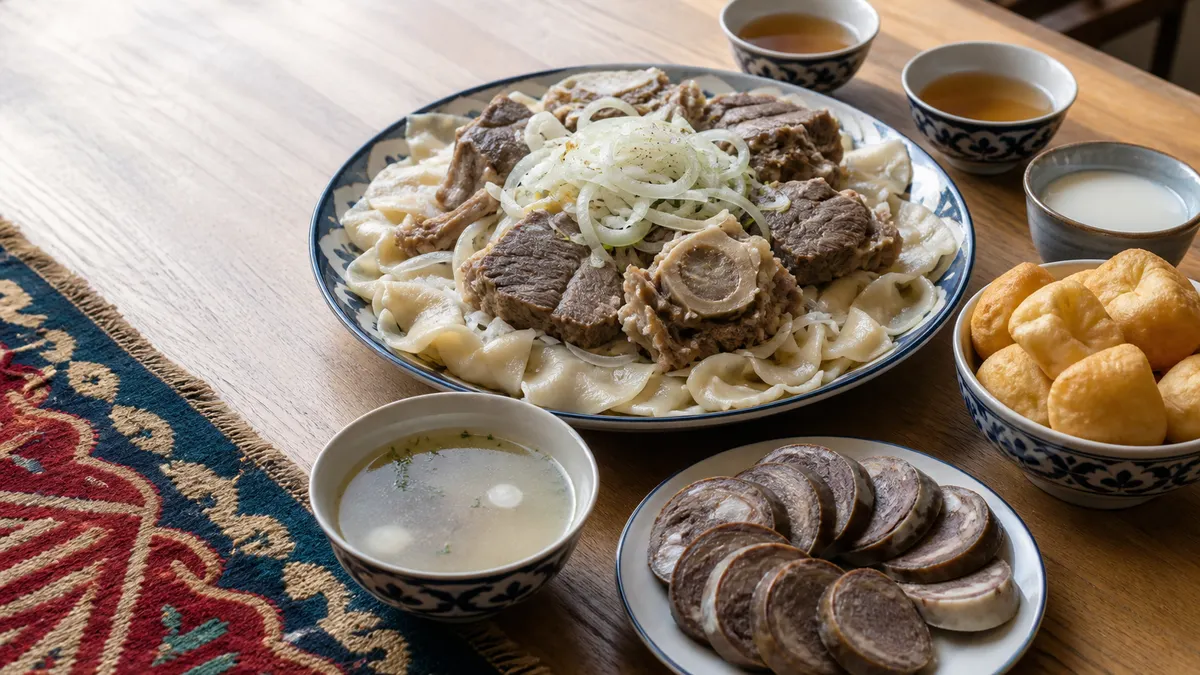
Beshbarmak, traditional Kazakh national dish with meat and noodles

Kazakh cuisine is a progression, not random dishes: fermented dairy and soft cheeses at the tea table, fried dough and filled pastries as constant companions, then the meat centerpiece that defines the meal. Beshbarmak (hand-made noodles topped with boiled meat) is the national ritual, served after the dastarkhan (starter spread) builds appetite. According to UNESCO's Intangible Cultural Heritage documentation, Kazakh cuisine grew from centuries of nomadic tradition where meat, dairy, bread, and broth formed the foundation of survival on the vast steppe. For centuries, nomads did not have dairy refrigeration: they fermented. They did not waste flour: they fried it. They built entire meals around the animals they herded.

This hub rebuilds Kazakh cuisine as a menu structure: the dairy and fermented world (kumis, kurt, shubat, irimshik), the dough world (baursaki, shelpek, samsa, tandyr nan, manty), the meat centerpiece, street foods, bazaar culture, and tea ritual. For the four dishes consolidated here from satellite pages (kumis, kurt, baursaki, manty), the subsections recover their full sourced detail and cultural context.

The Kazakh Menu Progression: How a Meal Unfolds

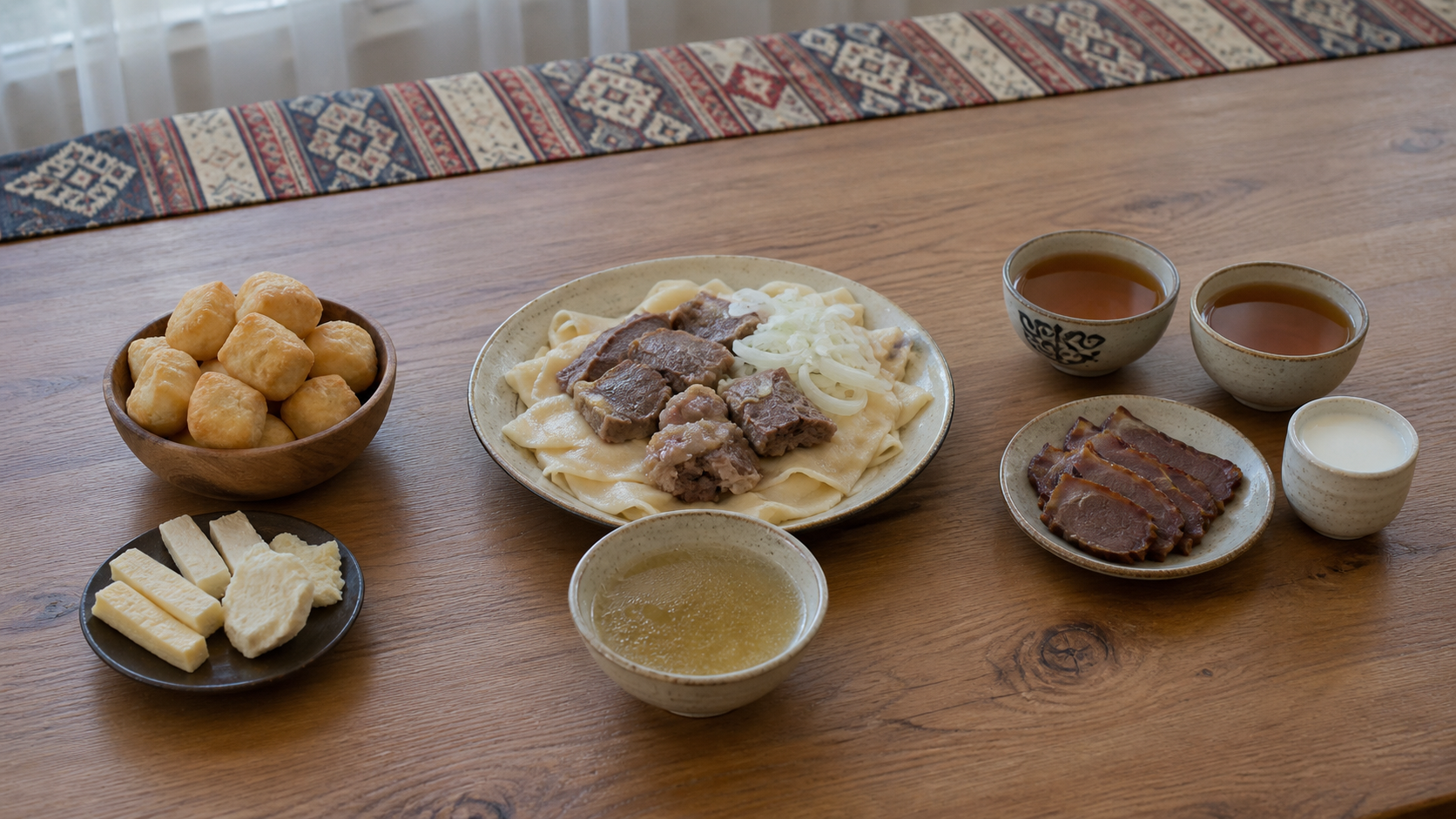
This table follows the actual order and logic of a Kazakh dastarkhan (feast table). Start with fermented dairy, move through fried dough and stuffed pastries, then center the meal on meat, conclude with soup and tea. This is not random tradition: each station solves a problem for the body and the meal structure.

StationDishPrimary IngredientTaste ProfileCostWhere to Find
Fermented Dairy (with tea)KumisFermented mare's milkSour, fizzy, thin1-2 KZT/literBazaars, roadside, summer only
KurtDried salted cheese ballsSalty, tangy, hard1-3 KZT per ballEvery bazaar, bus station
ShubatFermented camel's milkSour, fatty, rich2-4 KZT/portionSouthern regions (Mangystau)
IrimshikPressed cottage cheeseSweet, crumbly, dry2-5 KZT/pieceBazaars, homestays
Fried Dough (bread station)BaursakiYeasted fried dough puffsCrispy, airy, warm400-600 KZT/kgBazaars, every restaurant
ShelpekThin fried flatbreadThin, crispy, delicate400-800 KZT/plateTea tables, bazaars
Stuffed PastriesSamsaBaked meat pastrySavory, flaky, hot300-800 KZT eachBakeries, street stalls
MantySteamed meat dumplingsSavory, juicy, tender600-1,500 KZT/portionRestaurants, canteens
**The Bread **Tandyr NanClay-oven flatbreadSoft inside, crispy crust400-1,200 KZT eachBazaar nan vendors, bakeries
Meat CenterpieceBeshbarmakBoiled meat on flat noodlesRich, savory, ceremonial5-15 KZTEvery traditional restaurant
KazyHorse meat sausageGamey, marbled, dry15-25 KZT/100gBazaars, celebrations
KuurdakFried organ meatsSavory, organ-rich, quick5-12 KZTTraditional canteens
ShuzhukSmoked horse sausageSmoky, rich, dense12-20 KZT/100gBazaars, celebrations
PlovRice pilaf with meatFragrant, savory, rich5-12 KZTUzbek restaurants, bazaar food courts
Soup StationSorpaMeat brothGolden, meaty, clear1-3 KZTEvery meal with beshbarmak
Nauryz KozheFermented grain soupSeven ingredients, seasonalFree at NauryzPublic celebrations, March 21-22
LagmanHand-pulled noodle soupSavory, tangy, warming2-5 KZTAlmaty, Shymkent
Tea and Concluding SweetsChaiBlack tea with milkHot, milky, comforting500 KZT/potEvery home, every cafe

The Fermented and Dairy World: Foundation of the Meal

The Kazakh meal does not begin with meat. It begins with fermented dairy: kumis, kurt, shubat, and irimshik. These are the products of centuries without refrigeration, the reason Kazakh nomads survived on the steppe. They appear first on the dastarkhan, alongside tea, as appetite builders and digestive aids. Fermentation solved the problem of milk preservation. It also created foods of extraordinary complexity.

Kumis: Fermented Mare's Milk, The Prized Summer Drink

Kumis is the most famous traditional drink in Kazakhstan, a fermented mare's milk with a slightly sour, fizzy taste and a mild alcoholic content (around 1-3%). According to archaeological evidence published by the University of Exeter in 2009, residues of fermented mare's milk have been found in ceramic vessels from Bronze Age sites across the Kazakh steppe dating to approximately 3500 BCE. That makes kumis one of the oldest continuously produced fermented beverages on Earth - older than wine, older than beer as we know it.

What kumis tastes like: Sour, faintly fizzy, and slightly alcoholic. The texture is thin, closer to buttermilk than yogurt. Think liquid yogurt that someone carbonated and spiked with a tiny bit of beer. The sourness hits first, then a subtle sweetness underneath, then a bread-yeast aftertaste.

How kumis is made: Traditional kumis production follows a daily rhythm, not a one-time batch. Fresh mare's milk (mares are milked 4-6 times per day during May-September, yielding about 5-8 liters per mare) goes into a saba, a smoked leather bag seasoned over years of use with beneficial bacteria. The milk must be stirred or churned at least 1,000 times per day using a wooden paddle (bishkek). According to food science research published in LWT - Food Science and Technology, the fermentation produces probiotics with documented antimicrobial activity, plus 10x more vitamin C than cow's milk. In warm weather (25-30°C), kumis reaches drinking readiness in 1-2 days.

Health and nutrition: According to a 2019 study in Frontiers in Microbiology, kumis contains diverse lactobacillus strains with antimicrobial properties. Mare's milk has roughly 25 mg of vitamin C per liter, compared to 2 mg per liter in cow's milk. The fermentation breaks down 30-50% of the lactose, making kumis tolerable for many lactose-intolerant people. Historically, kumis sanatoriums operated across the Russian Empire and Soviet Union from the 1850s through the 1950s, where tuberculosis patients were sent to drink 1-3 liters daily. Leo Tolstoy and Anton Chekhov both visited kumis sanatoriums for their health.

Where to try: Roadside stands along highways during summer months (May through September), bazaars, and traditional restaurants. The freshest kumis comes from rural areas and steppe regions. Almaty's Green Bazaar sells it in the dairy section. Cost: 500-1,000 KZT ($1-2) per liter.

Pacing: Kumis is mild but adds up at 1-3% alcohol. Three to four bowls in a warm yurt over two hours is enough to feel a gentle effect.

Kurt: Dried Salted Cheese Balls, The Nomadic Staple

Kurt are small, hard, salty balls of dried fermented cheese. They are one of the most ancient preserved foods in Kazakh cuisine: lightweight, non-perishable, and packed with protein, making them the perfect nomadic travel food. Kazakh nomads carried kurt in leather bags during migrations; it could last for months without refrigeration.

What is kurt exactly: Kurt are salty dried dairy snacks made from strained sour milk (suzbe) that is rolled into small balls and dried in the sun or wind for several days until hard. According to ethnographic research by Kazakhstan's National Museum, kurt has been a staple of the nomadic Kazakh diet for at least 1,500 years. The name "kurt" comes from the Turkic root meaning "dried" or "rolled."

Types and regional variations: Hard kurt (qatty kurt) is dried until rock-solid and can be stored for 6+ months, traditional for travel. Soft kurt (jumsaq kurt) retains a chewy, crumbly texture with a shorter shelf life of 1-3 months. Kurt exists across the Turkic world under different names: "qurut" in Uzbekistan, "kashk" in Iran, "kurut" in Kyrgyzstan, and "chhurpi" in Nepal and Tibet. According to Wikipedia's article on qurut, the practice of drying fermented dairy into shelf-stable balls is attested across Central Asian, Middle Eastern, and South Asian nomadic cultures.

Nutrition: Per 100g, kurt contains 20-30g protein, 400-600mg calcium, and beneficial Lactobacillus bacteria. According to the World Health Organization's guidelines on calcium intake, adult daily calcium requirements are 1,000 mg, and traditional populations without year-round access to dairy relied on concentrated preserved forms to meet this need.

Cultural significance: According to UNESCO's Intangible Cultural Heritage documentation, dairy processing and food preservation practices are recognized as core elements of Kazakhstan's nomadic heritage. Kurt plays a role in Kazakh wedding ceremonies (scattered over the bride's path), Nauryz celebrations, and travel blessings (given before long journeys). Kazakh proverbs say "Kurt bar jerde, ashyq joq" - "Where there is kurt, there is no hunger."

How to eat kurt: Traditional hard kurt is meant to be sucked, not bitten, like a savory candy. The flavor develops gradually, starting salty and tangy, then mellowing as the ball dissolves - a single ball can last 15-30 minutes. You can also dissolve kurt in cold water to create a tangy, slightly salty drink that was the traditional way nomads stayed hydrated during summer migrations.

Where to try: Every bazaar, bus station, and roadside stop in Kazakhstan sells kurt. The Green Bazaar in Almaty has the widest selection. Cost: 1-3 KZT per ball.

Shubat: Fermented Camel's Milk, The Southern Desert Drink

Shubat is fermented camel's milk, thicker and creamier than kumis, with a stronger sour flavor. It is particularly common in the desert and semi-desert regions of southern and western Kazakhstan where camels are still herded.

Ingredients: Fresh camel's milk, natural fermentation cultures.

Cultural significance: Shubat is valued even more highly than kumis in some regions for its supposed medicinal properties. It is rich in vitamins and is traditionally given to people recovering from illness. Camel herding remains important in the Mangystau, Kyzylorda, and Turkistan regions.

Where to try: Southern and western Kazakhstan: Shymkent, Turkistan, Aktau. In Almaty, some bazaar vendors carry it, but it is less common than kumis.

Irimshik: Pressed Sweet Cheese, The Celebration Dairy

Irimshik is a traditional Kazakh cheese made by boiling fresh milk with sour cream or yogurt until the curds separate, then pressing and drying the result. It has a crumbly, slightly sweet flavor and ranges from soft and fresh to hard and dry.

Ingredients: Fresh milk, sour cream or yogurt, sometimes sugar.

Cultural significance: Irimshik represents the Kazakh mastery of dairy preservation. Fresh irimshik is a delicacy served at celebrations, while dried irimshik was another portable food for nomadic travel. The golden color of dried irimshik is considered beautiful and is sometimes given as a gift.

Where to try: Bazaars across Kazakhstan, especially in the dairy sections. Homestays and rural guesthouses often serve fresh irimshik with tea.

The Dough World: Bread, Fried Dough, and Pastries

No Kazakh meal is complete without bread or fried dough. The dough world solves multiple problems: it provides carbohydrates, fat solubility (fried dough absorbs fat and carries flavor), and symbolism (fried dough represents warmth, hospitality, and the sun in Kazakh tradition). The progression moves from simple fried puffs (baursaki), to thin flatbreads (shelpek), to filled pastries (samsa), to clay-oven bread (tandyr nan), and finally to steamed dumplings (manty) that blur the line between bread and meat dish.

Baursaki: Golden Fried Dough Puffs, The Universal Symbol

Baursaki are small pieces of yeasted dough deep-fried until golden and puffy. They are the single most ubiquitous food item at any Kazakh table, present at every celebration, every family gathering, every tea session, and most restaurant meals.

What baursaki are: Simple fried bread made from dough (flour, milk or water, yeast, salt, sometimes eggs and butter) that is cut into small pieces and deep-fried until golden and puffy. The result is a light, airy bread with a thin crispy crust and soft interior. Pieces can be round, diamond-shaped, or square depending on the region, typically 3 to 5 cm in size, served warm, piled high on a plate.

History: Baursaki originated among the nomadic Turkic peoples of the Central Asian steppe as a practical travel food. The genius of baursaki for nomadic life was practical: fried in animal fat (usually mutton tallow), the bread could be stored for weeks without spoiling. After increased contact with Russian settlers in the 18th and 19th centuries, who brought wheat flour milling to the Kazakh steppe, flour-based baursaki became widespread and transformed from a travel staple into the festive centerpiece it is today.

Cultural significance: According to UNESCO's Intangible Cultural Heritage program, food traditions that mark rites of passage are among the most enduring forms of living heritage. Baursaki appear at weddings (mountains of baursaki demonstrate the host family's hospitality), funerals (distributed to mourners as part of communal meals), Nauryz celebrations, and guest receptions. The name "baursak" comes from Kazakh words meaning "to unite," reflecting the food's role in bringing people together.

Recipe overview: Activate yeast in warm milk (40C), combine with flour and salt, knead 8-10 minutes, let rise 1-1.5 hours until doubled. Roll to 1 cm thickness, cut into 3-4 cm pieces or tear off small pieces and roll into balls. Fry in oil at 170-180C until golden (2-3 minutes per batch), turning once. Oil temperature is the critical variable: at 170-180C, baursaki puff fully and stay light; below 160C they absorb oil and turn greasy; above 190C the outside browns too fast while inside remains raw.

Regional variations: Northern Kazakhstan (Kostanay) makes larger, denser, square or diamond-shaped baursaki (5-7 cm). Southern Kazakhstan (Shymkent) makes medium-sized round balls sometimes with cottage cheese added. Eastern Kazakhstan makes small spheres (2-3 cm) extra crispy. Western Kazakhstan fries in mutton fat using traditional methods.

Where to try: Literally everywhere in Kazakhstan - every restaurant, every cafe, every home, every bazaar. In Almaty, bakeries near the Green Bazaar sell fresh baursaki by the kilogram. Cost: 400-600 KZT per kg in bazaars, 500-1,500 KZT per plate in restaurants.

Shelpek: Thin Fried Flatbread, The Tea Companion

Shelpek are thin, round flatbreads fried in oil. They are softer and flatter than baursaki and are traditionally prepared in sets of seven, representing completeness and the days of the week.

Ingredients: Flour, water or milk, salt, oil for frying.

Cultural significance: Shelpek are prepared every Friday in many Kazakh Muslim households as a form of remembrance for deceased relatives. They are also present at memorial gatherings (as) and on the dastarkhan at celebrations. The act of frying shelpek and sharing them with neighbors is a weekly ritual in traditional families.

Where to try: Tea tables at traditional restaurants, bazaars, and homestays across Kazakhstan.

Samsa: Baked Meat Pastries, The Street Food Essential

Samsa are triangular or round baked pastries filled with seasoned meat (usually lamb) and onion, cooked in a tandyr (clay oven) or regular oven. According to Britannica's coverage of Central Asian cuisine, they are among the most popular street foods across the region.

Ingredients: Flaky pastry dough, minced lamb or beef, onion, cumin, salt, pepper.

Cultural significance: Samsa bridges Kazakh and Uzbek culinary traditions. In southern Kazakhstan (Shymkent, Turkistan), samsa tends to be larger and spicier, showing Uzbek influence. In Almaty and the north, they are smaller and milder.

Where to try: Every bakery and street corner in Kazakhstan sells samsa. The best samsa is baked fresh in a tandyr oven, so look for bakeries with visible clay ovens. Shymkent produces arguably the best samsa in the country.

Tandyr Nan: Clay Oven Bread, The Daily Staple

Tandyr nan is round flatbread baked in a traditional clay oven (tandyr). It has a crispy exterior, soft interior, and a distinctive stamped pattern on top. It is the everyday bread of Kazakhstan and Central Asia.

Ingredients: Flour, water, yeast, salt, sometimes onion or sesame seeds on top.

Cultural significance: Tandyr nan is bought fresh daily and eaten with every meal. In bazaars, nan vendors stack their bread in tall towers. Breaking nan by hand (never cutting with a knife) and sharing it is a fundamental part of Kazakh table etiquette.

Where to try: Every bazaar has nan vendors. In Almaty, the Green Bazaar and Zelyony Bazaar have excellent fresh tandyr nan. Watch bakers pull it from the clay oven for the freshest experience.

Manty: Steamed Dumplings, The Meal Within a Meal

Kazakh manty are large steamed dumplings filled with hand-chopped meat (usually lamb or beef), raw onion, and tail fat (kurdyuk). They are cooked exclusively by steaming in a special multi-tiered steamer called a mantovarka. Each dumpling weighs 60-80 grams (about fist-sized), and the raw onion and fat melt during steaming, creating a burst of hot broth when bitten. Boiled dumplings are pelmeni, fried dumplings are chebureki, but manty are always steamed.

Why manty are unique: According to the UNESCO Intangible Cultural Heritage programme, the word "manty" traces back through Turkic languages to the Chinese mantou (steamed bun), reflecting the dish's journey along the Silk Road. However, the evolution from Chinese steamed bread to Central Asian meat dumplings represents centuries of cultural adaptation. Lamb replaced pork (reflecting Islamic dietary law), raw onion and fat became essential components, and the dumplings grew larger to serve as a substantial meal.

How manty are made: The dough is thin unleavened wheat dough rested to relax the gluten. The filling uses hand-chopped meat (not ground - grinding produces a dense texture; hand-chopping preserves loose texture for juice formation), finely chopped onion, and lamb tail fat at roughly a 70% meat / 30% onion-and-fat ratio. The onion and fat are critical because they melt during steaming and create the juice inside. Assembly uses a distinctive "rose" or four-pointed fold, fully sealed to prevent juice escape. Steaming happens in an oiled mantovarka for exactly 45 minutes over vigorous boiling water.

How to eat manty properly: Hold the dumpling with both hands, bite a small hole in the side or bottom first, and drink the hot juice before eating the rest. This prevents the broth from running down your chin and, more importantly, means you experience the best part of the dish, the internal juice, at full intensity.

Regional variations: Pumpkin manty (asqabaq manty) is the most popular non-meat variation in southern Kazakhstan. Qazy manty (using horse meat sausage) are a premium celebration version. Uzbek-style manty include more cumin and are served with katyk (strained fermented milk) rather than smetana.

Where to try: Almaty - Navat (upscale), Green Bazaar food court (cheap, 600-1,000 KZT per piece); Astana - Tugan Avylym or Arnau; Shymkent - bazaar area restaurants with Uzbek-influenced manty (1,000-2,000 KZT for 5 pieces). For more, see our Almaty guide.

The Meat Centerpiece: What Defines the Meal

Based on Food and Agriculture Organization (FAO) data on per-capita meat consumption, meat dominates Kazakh cuisine more than almost any other food tradition in the world. Horse meat and lamb are the most prestigious proteins, followed by beef. The meat centerpiece is what separates an ordinary dastarkhan from a celebration. These dishes mark occasions and convey honor.

Beshbarmak: The National Ceremony

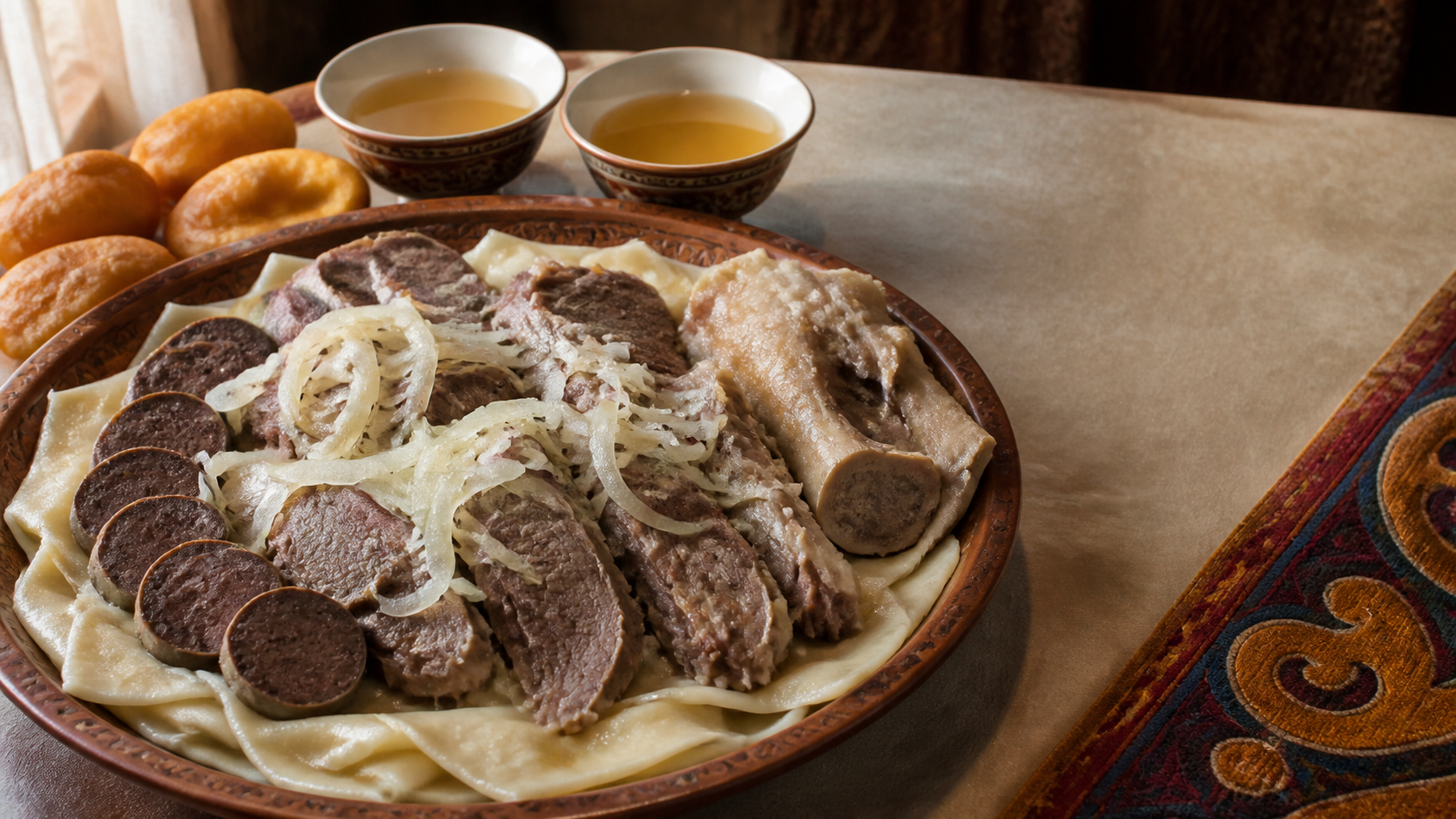
Beshbarmak is the single most important dish in Kazakhstan and the undisputed national food. The name translates to "five fingers" because it was traditionally eaten with the hands. It consists of large flat noodles (rolled and boiled fresh) topped with boiled meat (typically horse, lamb, or beef) and drenched in a rich onion sauce called tuzdyk. A bowl of the cooking broth (sorpa) is served alongside.

Ingredients: Flat pasta sheets, boiled meat (horse, lamb, or beef), onions, meat broth, salt, and black pepper.

Cultural significance: Beshbarmak is far more than a meal. It is a ritual. At traditional Kazakh gatherings, the host serves specific cuts of meat to specific guests based on their age, status, and relationship to the family. The eldest guest receives the head of the animal, a sign of highest respect. The bone from the leg goes to warriors or honored guests. The spine goes to respected elders. Refusing beshbarmak at a Kazakh home is considered deeply disrespectful. According to Britannica's coverage of Kazakhstan, beshbarmak represents the culmination of Kazakh hospitality tradition.

Where to try: Every traditional restaurant in Kazakhstan serves beshbarmak. In Almaty, head to Zheti Kazyna, Alasha, or Gakku for authentic versions. At the Green Bazaar, several canteen-style eateries serve it daily. In Astana, try Arnau or Line Brew for upscale preparations. Cost: 5-15 KZT per serving.

Kazy: Horse Meat Sausage, The Prestige Protein

Kazy is a dry-cured sausage made from horse rib meat stuffed into natural intestine casings and either smoked or air-dried. It has a rich, slightly gamey flavor with a distinctive marbling of fat that melts on the tongue. Kazy is sliced thin and served cold as an appetizer or alongside beshbarmak at celebrations.

Ingredients: Horse rib meat, horse fat, natural casing, salt, black pepper, garlic.

Cultural significance: Horse meat holds a sacred place in Kazakh food culture. Kazy is always present at weddings, funerals, and major holidays like Nauryz. Families in rural Kazakhstan still prepare kazy at home during the autumn slaughter season (sogym), when a horse is butchered and the meat preserved for winter. According to Britannica's entry on Kazakhstan, horse meat is the most prized meat in Kazakh cuisine.

Where to try: Bazaars in every Kazakh city sell kazy. The Green Bazaar in Almaty has the widest selection. Traditional restaurants serve it sliced as a cold appetizer. For the freshest kazy, visit during late autumn when sogym season is underway. Cost: 15-25 KZT per 100g.

Kuurdak: Fried Organ Meats, The First Dish After Slaughter

Kuurdak is a hearty pan-fried dish made from meat (usually lamb or beef liver, kidney, heart, and lung) cooked with onions and potatoes. It is one of the most practical and common everyday dishes in Kazakhstan: quick to prepare, filling, and economical.

Ingredients: Organ meats or regular cuts of lamb/beef, onions, potatoes, oil, salt, pepper.

Cultural significance: Kuurdak is traditionally the first dish prepared after an animal is slaughtered, using the organ meats that cannot be preserved. It represents the practical, waste-nothing philosophy of nomadic Kazakh cooking. A family celebrating a slaughter would immediately prepare kuurdak for relatives and neighbors to celebrate and distribute the fresh meat before preservation work began.

Where to try: Traditional restaurants and home-style canteens across Kazakhstan. It is especially common in rural areas and smaller cities where traditional cooking methods persist. Cost: 5-12 KZT.

Shuzhuk: Smoked Horse Sausage, The Winter Preservation

Shuzhuk is another horse meat sausage, distinct from kazy in that it uses a mixture of meat and fat from various parts of the horse rather than rib meat specifically. It is typically shorter, fatter, and has a smokier flavor than kazy.

Ingredients: Mixed horse meat, horse fat, natural casing, salt, spices.

Cultural significance: Like kazy, shuzhuk is prepared during sogym and stored for winter consumption. It features prominently at holiday feasts and as part of the traditional meat platter served to honored guests. The smoking process was a critical preservation technique on the steppe, where temperatures made salt-curing and smoking the only viable long-term preservation methods before the 20th century.

Where to try: Bazaars throughout Kazakhstan, traditional restaurants, and at family celebrations if you are fortunate enough to receive an invitation. Cost: 12-20 KZT per 100g.

Plov (Pilaf): The Celebration Rice Dish Linking South

Plov is a fragrant rice dish cooked with meat (usually lamb), shredded carrots, onions, and a blend of spices including cumin and sometimes barberries. While it originated in Uzbekistan, plov is deeply embedded in Kazakh cuisine, especially in the southern regions close to the Uzbek border.

Ingredients: Rice, lamb or beef, carrots, onions, oil, cumin, garlic, salt, sometimes chickpeas or raisins.

Cultural significance: Plov is the dish of celebration and large gatherings across Central Asia. At Kazakh weddings, funerals, and community events, enormous cauldrons (kazan) of plov are prepared, sometimes enough to feed hundreds or even thousands of people. The cook who prepares plov for a large gathering, called an oshpaz, holds a respected position. According to Britannica's coverage of Central Asian cuisine, plov is second only to beshbarmak in ceremonial importance.

Where to try: Every cafeteria, canteen, and restaurant in Kazakhstan serves plov. The best plov is found in Shymkent and Turkistan, where Uzbek culinary influence is strongest. In Almaty, try plov at Uzbek restaurants or the food courts at any bazaar. Cost: 5-12 KZT.

Soups, Broths, and the Closing Course

Soup and broth play an essential role in Kazakh cuisine, partly because broth is a natural byproduct of boiling meat for beshbarmak, and partly because hot liquid is vital during the harsh Kazakh winters when temperatures plummet to minus 30 degrees Celsius. According to Bureau of National Statistics of Kazakhstan, Kazakhstan's food processing industry processes over 1,200,000 tonnes of meat annually, with horse meat and lamb accounting for approximately 35% of all ceremonially significant preparations. Sorpa accompanies the meat course, while nauryz kozhe and lagman serve as lighter meal options or warming soups.

Sorpa: Meat Broth, The Digestive Companion

Sorpa is the rich, aromatic broth produced by slow-boiling meat and bones for several hours. It is served in a bowl (kese) alongside beshbarmak or on its own as a starter. Good sorpa has a clear golden color, a deep meaty flavor, and a thin layer of fat on the surface.

Ingredients: Meat and bones (horse, lamb, or beef), water, salt, sometimes onion and carrot.

Cultural significance: Sorpa is considered medicinal in Kazakh culture. It is given to the sick, to new mothers after childbirth, and to anyone recovering from illness. The depth of the broth reflects the skill and generosity of the cook. In traditional Kazakh gatherings, sorpa is the first course, opening the stomach for heavier dishes.

Where to try: Sorpa comes automatically with beshbarmak at any traditional restaurant. It is also sold on its own at bazaar food stalls and canteens. Any traditional Kazakh restaurant in Almaty will serve an authentic bowl. Cost: 1-3 KZT.

Nauryz Kozhe: The New Year Blessing Soup

Nauryz kozhe is a fermented grain-and-dairy soup prepared specifically for Nauryz, the Kazakh New Year celebrated on March 22, which UNESCO inscribed on the Representative List of the Intangible Cultural Heritage of Humanity in 2016. It must contain exactly seven ingredients, symbolizing the seven days of the week and completeness.

Ingredients: Seven components, typically including wheat or barley grain, kurt (dried cheese), meat, water, salt, onion, and fermented milk (ayran or kefir). Variations exist by region.

Cultural significance: Nauryz kozhe is the centerpiece of the Nauryz holiday table. Serving it represents hope for abundance in the coming year. During Nauryz celebrations in every city and village, large cauldrons of nauryz kozhe are prepared and distributed free to everyone. The seven ingredients have symbolic significance: together they represent completeness, unity, and the cyclical renewal of spring. Learn more about this tradition in our guide to Kazakh traditions.

Where to try: Only available around March 22 during Nauryz celebrations. Every public square, park, and community center in Kazakhstan offers it during the festival. Completely free.

Lagman: Hand-Pulled Noodle Soup, The Dungan Heritage

Lagman is a hearty noodle soup with hand-pulled noodles, chunks of meat (beef or lamb), and a savory tomato-based vegetable broth with peppers, tomatoes, onions, and garlic. According to Wikipedia, it traces its origins to the Dungan (Chinese Muslim) and Uyghur communities of Central Asia.

Ingredients: Hand-pulled noodles, beef or lamb, tomatoes, bell peppers, onion, garlic, spices.

Where to try: Almaty is the lagman capital of Kazakhstan, thanks to its large Dungan and Uyghur populations. The area around the Green Bazaar and the Dungan restaurants on Zhibek Zholy have some of the best lagman in Central Asia. Shymkent also has excellent lagman. For more food spots in Almaty, check our guide to things to do in Almaty. Cost: 2-5 KZT.

Tea Culture and the Closing Ritual

Chai: The Soul of Kazakh Hospitality and Table Ritual

Tea is not merely a drink in Kazakhstan. It is the foundation of social life. Kazakhs drink black tea with milk (sometimes with cream or butter) multiple times per day, and every social interaction begins and ends with tea. The phrase "let's have tea" (shay ishemiz) is the universal invitation that opens doors to families and neighborhoods.

How it is served: Strong black tea brewed in a pot, poured into a wide piala (handleless cup) filled only one-third full. Filling a cup completely is actually considered rude; it signals you want the guest to leave. A half-filled cup means you care enough to keep refilling it, extending the visit and showing genuine hospitality.

Cultural significance: The dastarkhan (tea table spread) is the centerpiece of Kazakh hospitality. Before any meat meal, the table is covered with baursaki, dried fruits, nuts, sweets, kurt, and candies alongside the tea. Tea time can last for hours and is when family news, community matters, and business are discussed. This ritual is a core part of Kazakh traditions. The tea table is where children learn family history, where neighbors settle disputes, where travelers are welcomed with the offer of tea.

The progression within a meal: Tea opens the dastarkhan with bread and dairy products, keeps the table warm during the meat courses, and closes the meal. Refilling tea cups throughout is the host's way of signaling "you are valued here; you are welcome to stay longer."

Where to experience it: Every restaurant, cafe, and home in Kazakhstan. For the most authentic experience, accept an invitation to a Kazakh family's home. The dastarkhan they prepare, the endless refilling of tea, and the stories told over hours of tea drinking will be one of the most memorable experiences of your trip to Kazakhstan.

Street Food and Bazaar Culture

The best way to experience Kazakh food is not in restaurants but in bazaars, where vendors fry baursaki to order, sell fresh kumis from the dairy section, grill fresh samsa from tandyr ovens, and where the prices are authentic - 400-1,200 KZT ($1-3 USD) for a full meal of street foods. The Green Bazaar in Almaty is the essential Kazakhstan food experience.

Vegetarian Options in Kazakhstan

Kazakhstan is one of the most meat-centric food cultures in the world, and finding vegetarian food requires some effort, but it is not impossible. Based on Food and Agriculture Organization (FAO) data, per-capita meat consumption in Kazakhstan averages around 82 kg per person per year, placing it among the top 15 countries globally, with approximately 80% of that consumption comprised of beef, lamb, and horse meat. Here are your best options:

  • Plov can sometimes be ordered without meat at Uzbek restaurants
  • Baursaki and shelpek are naturally vegetarian
  • Kurt and irimshik are dairy-based and widely available
  • Samsa with pumpkin filling (samsa s tykvoy) exists in southern Kazakhstan
  • Lagman can occasionally be prepared vegetarian in Almaty's international restaurants
  • Fresh salads: tomato-cucumber salads are served at most restaurants
  • Manty with pumpkin (manty s tykvoy) are available at some restaurants

In Almaty, international restaurants (Korean, Indian, Georgian) offer more vegetarian variety than traditional Kazakh establishments. In smaller cities and rural areas, options are very limited. Consider self-catering with bread, dairy products, fruits, and vegetables from bazaars.

Almaty, The Food Capital

Almaty offers the widest range of Kazakh food experiences in the country. The Green Bazaar is essential: vendors sell kazy, kurt, baursaki, fresh kumis, dried fruits, and every other traditional product. Traditional restaurants like Zheti Kazyna, Alasha, and Kishlak serve full beshbarmak experiences. The city also has strong Korean, Dungan, Uyghur, and Uzbek food scenes that enrich the overall culinary landscape. Plan your visit with our complete Almaty guide.

Shymkent, Southern Flavors

Shymkent has some of the best plov, samsa, and lagman in Kazakhstan, reflecting its proximity to Uzbekistan. The city's bazaars are lively and the street food culture is stronger here than anywhere else in the country.

Astana, Modern Kazakh Dining

The capital has upscale restaurants that present traditional Kazakh cuisine with modern techniques and plating. Arnau and Line Brew offer refined beshbarmak and kazy experiences.

Turkistan, Silk Road Food Heritage

Turkistan offers traditional food in a historical Silk Road setting near the Mausoleum of Khoja Ahmed Yasawi. The bazaar food here is straightforward and authentic.

Rural Homestays, The Real Experience

For the most authentic Kazakh food experience, stay at a rural guesthouse or accept an invitation to a family celebration. This is where you will taste home-prepared beshbarmak, fresh baursaki fried that morning, kumis from the family's own mares, and the full dastarkhan experience that no restaurant can match.

Tips for Eating in Kazakhstan

  1. Accept hospitality graciously. Refusing food or tea at a Kazakh home is considered extremely rude
  2. Expect meat. It will be the centerpiece of almost every meal
  3. Try horse meat. Kazy and beshbarmak with horse are cultural essentials that taste much better than most visitors expect
  4. Eat at bazaars. The freshest and most affordable traditional food is at markets, not tourist restaurants
  5. Drink kumis in summer. It is seasonal and best experienced fresh from May through September
  6. Learn basic food words. "Et" (meat), "nan" (bread), "shay" (tea), "su" (water), "dastarkhan" (table spread)
  7. Pace yourself at the dastarkhan. The tea table with snacks is only the beginning; the main meat courses come later

Frequently Asked Questions

What is the most popular food in Kazakhstan?
Beshbarmak is the most popular and culturally significant food in Kazakhstan. It is the national dish, boiled meat served over flat noodles with onion sauce and broth. Other top foods include kazy (horse meat sausage), baursaki (fried dough), plov (rice pilaf), and manty (steamed dumplings).
Is horse meat really eaten in Kazakhstan?
Yes. Horse meat is a prestigious and deeply traditional food in Kazakhstan, not a novelty. Kazy (horse meat sausage) and beshbarmak made with horse are served at weddings, funerals, holidays, and family celebrations. Most Kazakhs consider horse meat the finest and most honorable meat to serve guests.
What should vegetarians eat in Kazakhstan?
Vegetarian options are limited but available. Baursaki, shelpek, and tandyr nan are naturally vegetarian breads. Kurt and irimshik are dairy snacks. Pumpkin samsa and pumpkin manty exist in some regions. In Almaty, Korean and international restaurants offer more vegetarian variety.
What do Kazakhs drink with meals?
Black tea with milk is served at every meal in Kazakhstan, it is the foundation of social life. Traditional drinks include kumis (fermented mare's milk, available in summer) and shubat (fermented camel's milk, common in southern regions). Ayran (drinking yogurt) is also popular.
Where is the best place to try Kazakh food?
Almaty offers the widest range of Kazakh food experiences, with the Green Bazaar as the essential starting point. Shymkent is best for plov and samsa. For the most authentic experience, accept an invitation to a Kazakh family gathering where home-cooked beshbarmak and the full dastarkhan tradition are served.
What is a dastarkhan in Kazakhstan?
A dastarkhan is the traditional Kazakh table spread, a cloth or low table covered with tea, baursaki, dried fruits, nuts, sweets, and kurt before the main meal begins. It is the centerpiece of Kazakh hospitality and social life, and every gathering starts with the dastarkhan before heavier dishes are served.

The consolidated hub includes all content from the four merged satellite pages (kumis-drink, kurt-kazakh-snack, baursak, manty-kazakh) with full sourced detail restored. For deeper exploration:

Last verified: June 2026

Share this article WhatsApp X / Twitter
Tugelbay Konabayev
Written by Tugelbay Konabayev

Travel Writer & Local Expert · Almaty, Kazakhstan

Tugelbay Konabayev is a Kazakhstan-based travel writer who has lived in Almaty for 7+ years and Astana for 4+ years. He grew up in Aktobe, Kazakhstan and has covered Kazakh travel, food, culture, and visa policy with first-hand reporting since 2023.