Nauryz in Kazakhstan: Dates, Traditions and Trip Planning
Reported from the ground: Tugelbay Konabayev is a Kazakh native (born in Aktobe) who has lived 7 years in Almaty and 4 in Astana. About the author.
In this article8 sections
Nauryz in Kazakhstan has fixed statutory holiday dates: March 21, 22 and 23. Article 3 of Kazakhstan’s Law on Holidays names all three days. Public concerts, yurt areas, food fairs and road closures are separate decisions that require a current city notice; last year’s timetable is not a reliable plan for this year.
| What is fixed? | What still needs checking? |
|---|---|
| Nauryz Meiramy is March 21–23 under Kazakhstan law. | The current year’s official days-off calendar, including any transferred rest days. |
| A public holiday that coincides with a weekly day off normally shifts the day off to the next working day under Article 5. | City venues, event times, admission rules, transport changes and weather. |
| Nauryz is Kazakhstan’s name for the wider Nowruz spring tradition. | Which activities will actually run in the city you are visiting. |
That distinction matters. The astronomical equinox, the three legal holiday dates and a city’s festival program are related, but they are not interchangeable.
What Nauryz means in Kazakhstan
Nauryz is Kazakhstan’s three-day spring holiday within the wider Nowruz tradition. The name comes from the Persian for “new day.” The United Nations’ International Day of Nowruz page describes Nowruz as a spring celebration shared across a wide region and usually observed around March 20 or 21. In Kazakhstan, the legal holiday is spelled Nauryz Meiramy and runs for three fixed dates, regardless of the exact minute of the equinox.
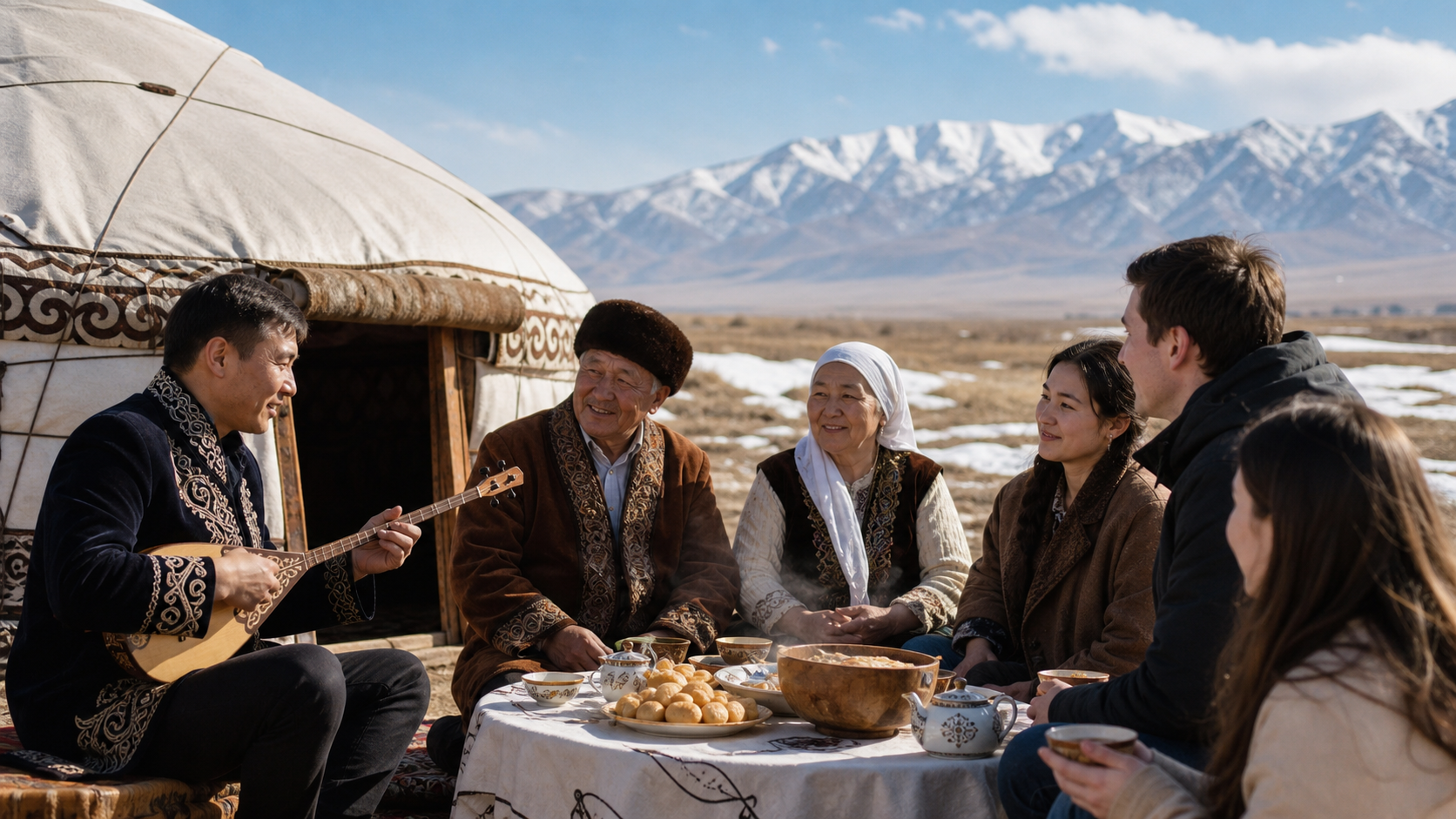
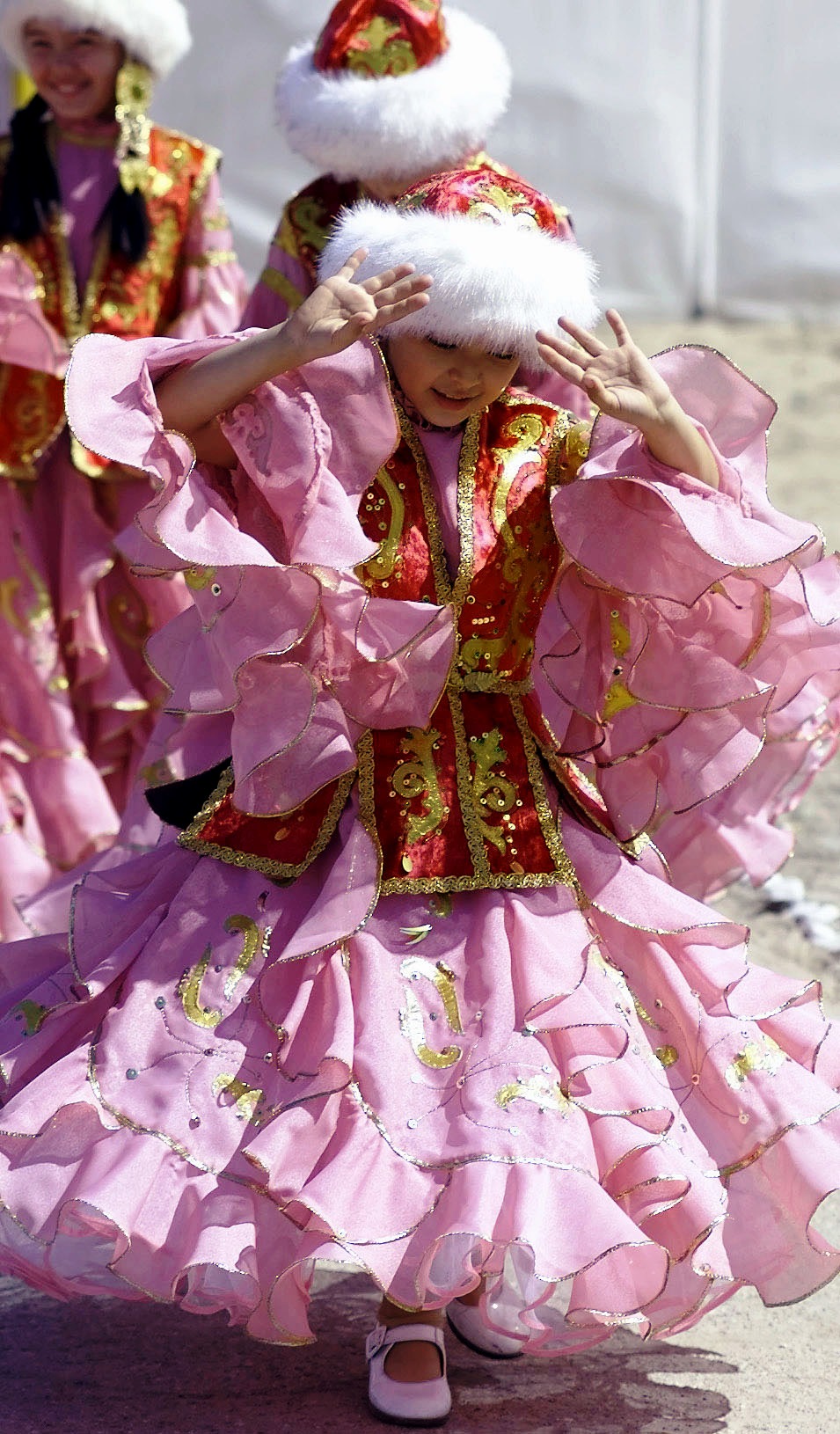
For many families, Nauryz is a chance to visit relatives, offer food, reconnect after winter and wish one another well for the year ahead. The public face is broader: local programs may bring music, craft displays, games, food and temporary yurts into parks or squares. Neither setting is a museum reconstruction. Modern Nauryz can be traditional, civic and casually social at the same time.
That range also explains why a visitor can have a meaningful day without finding one enormous headline festival. A neighborhood gathering, museum program or meal with friends can be just as recognizably Nauryz as a municipal stage. The shared idea is renewal and hospitality; the format belongs to the people and place organizing it.
It is misleading to present the festival as the property of one modern country. The UN traces its history to ancient Persian and Zoroastrian traditions and says related observances have existed for more than 3,000 years. That is useful regional context, not proof of a single, uninterrupted Kazakhstan-specific ritual lasting exactly three millennia.
For the larger cultural setting, see our guide to the culture of Kazakhstan and the practical overview of Kazakhstan traditions.
A careful reading of the history
The strongest evidence supports a shared ancient regional tradition and a separately documented modern revival in Kazakhstan. Nauryz articles often compress those histories into one neat origin story. The official record is less tidy.
The UN says UNESCO first inscribed Nowruz on its Representative List in 2009 and that the UN General Assembly proclaimed March 21 the International Day of Nowruz in 2010. The same UN page also refers to a 2016 multinational inscription. UNESCO’s current living-heritage record reflects a further extension in 2024. In other words, this is an evolving multinational record, not a Kazakhstan-only award and not a story in which “UNESCO recognized Kazakhstan’s Nauryz” on one simple date.
The modern revival inside Kazakhstan is easier to date. A Qazaqstan Tarihy interview with Toktasyn Omirzak, one of the people involved in the revival, records that public celebration was stopped in 1926 and returned in Almaty in 1988. His account places the first renewed district celebration on April 22, 1988. The same account describes larger celebrations in 1989 and 1990, followed by state-holiday recognition in 1991.
That source supports the 1926-to-1988 public-celebration timeline. It does not prove every sweeping explanation sometimes attached to the ban, nor does it justify inventing a uniform story about how every household secretly observed the festival. The honest conclusion is narrower: an important public tradition was suppressed for decades and deliberately rebuilt during the late Soviet and early independence years.
Each source does a different job. Kazakhstan law answers when the holiday occurs; the participant interview helps reconstruct the local revival; UN and UNESCO pages explain the international record. None is used to answer a question outside its remit.
What you may see at a celebration
Expect hospitality, food and cultural programming, but not one guaranteed national template. A city program can include a main stage, local performers, artisan displays, food service, traditional-sport demonstrations or temporary yurts. A family gathering may be much quieter. Weather, municipal budgets, venue rules and local custom shape the result.
Three details are useful for a first-time visitor:
- A dastarkhan is about hospitality, not spectacle. It can mean a cloth or table laid with food for guests. Accept what you are comfortable trying, thank the host and do not treat the meal as a photo prop.
- Traditional clothing is not a visitor requirement. Clean, weather-appropriate everyday clothes are fine. If you buy or borrow a chapan or embroidered item, wear it respectfully rather than as a joke costume.
- A yurt at a city event is a working social space. Wait to be invited before entering a closed or privately hosted yurt, and ask before photographing people at close range.
Music, including the dombra, is strongly associated with Kazakh public culture, but the exact performers and program must still be verified locally. The same rule applies to horse games and sport demonstrations: they are possible features, not guaranteed attractions in every city square.
Nauryz kozhe does not have one universal recipe
Nauryz kozhe is often described with seven components, but the ingredient list varies. It is the festival food most visitors ask about, yet the claim that every bowl must contain the same seven ingredients is not supported by the sources.
A Qazaqstan Tarihy article on Nauryz kozhe gives one concrete version: meat, fat, kurt, irimshik, wheat, onion and salt. Other households and regions use different grains, dairy products or proportions. Variation is part of the tradition, not evidence that one cook has made it incorrectly.
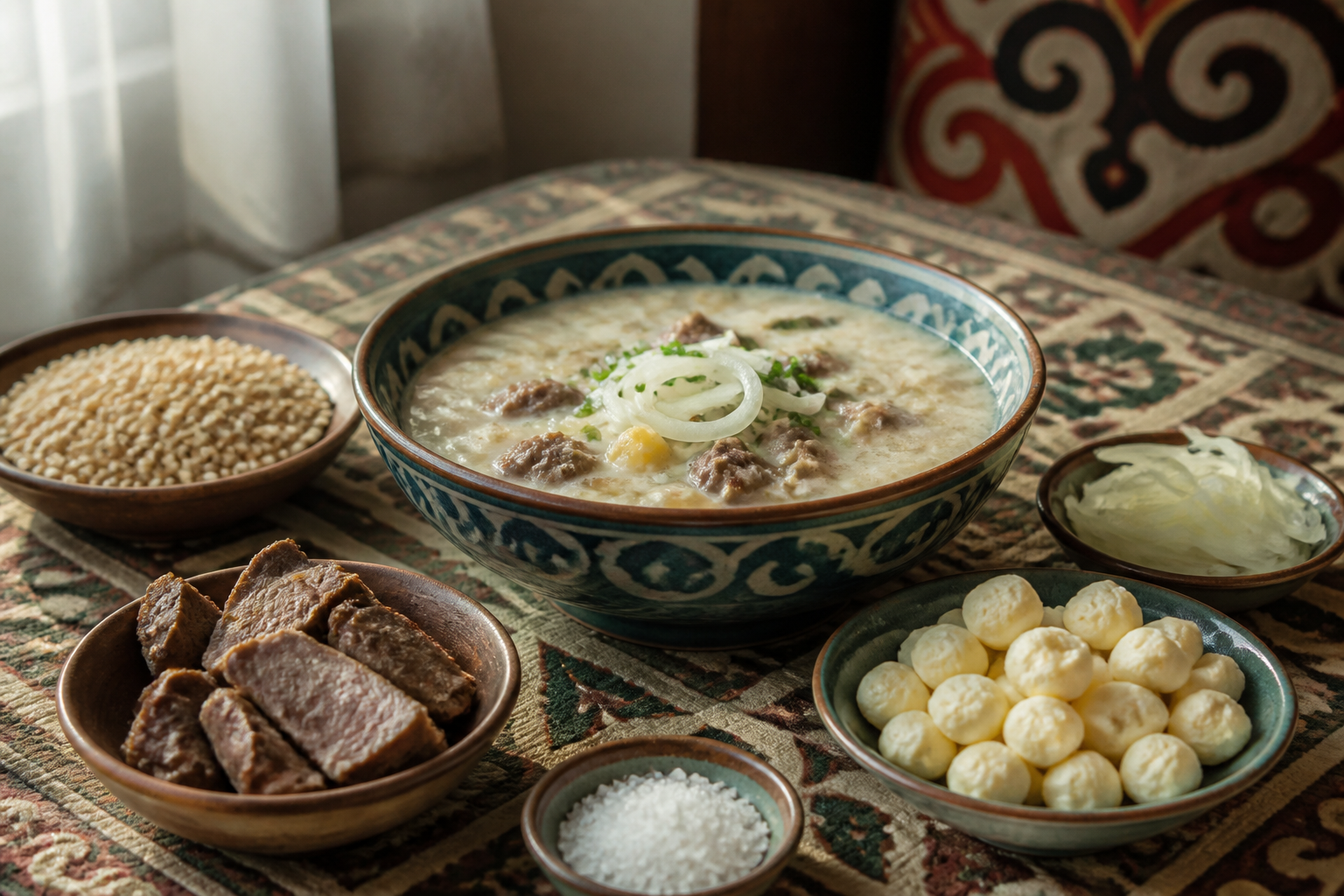
Editorial illustration, not a definitive recipe. Nauryz kozhe commonly uses seven components, but the ingredients vary by household, region and source.
If you are offered a bowl, you can simply ask what is in that version, especially if you avoid meat or dairy or have an allergy. It is more respectful than pretending there is one canonical recipe. For other foods you may encounter, read popular food in Kazakhstan.
How to plan a Nauryz trip without relying on stale listings
Use March 21–23 as the legal anchor, then build the trip from current official notices. Check once while booking and again shortly before arrival; a late weather or traffic update can matter more than an attractive schedule saved months earlier.
1. Check the official days-off calendar
Start with March 21–23, then confirm the government’s current annual calendar. Under Article 5 of the holiday law, a weekly rest day that coincides with a holiday normally moves to the next working day. Other calendar adjustments can also be published separately, so a three-date festival can produce a longer practical closure window.
Our Kazakhstan public-holiday calendar explains the current schedule, but the legal source remains the final authority.
2. Wait for the current city program
Search the relevant city akimat and official tourism channels shortly before travel. Confirm:
- venue and start time;
- whether entry or registration is required;
- indoor or outdoor setting;
- security and bag rules;
- road closures and public-transport changes;
- cancellation or relocation notices.
Do not build a non-refundable itinerary around a park, square or metro timetable copied from an earlier year.
When several official pages disagree, prefer the most recent notice from the authority responsible for that detail: the akimat for the city program, the transport operator for service changes and the venue for admission. Save the notice offline in case mobile data is congested near a large event.
3. Arrive with a weather backup
Late March can feel like spring in one part of Kazakhstan and lingering winter in another. Almaty and Astana do not share the same conditions, and a historical temperature average cannot tell you whether an outdoor event will be comfortable on a particular afternoon. Check a current forecast, carry layers and keep one indoor alternative.
The seasonal trade-offs are covered in the best time to visit Kazakhstan.
4. Expect ordinary holiday disruption
Government offices and many businesses close on public holidays. Restaurants, museums, shopping centers and transport services can keep special hours rather than closing uniformly. Confirm any place that matters to your trip directly. Pharmacies, groceries and ride services may be available, but availability is not a promise of normal staffing or normal traffic.
5. Keep bookings flexible
There is no reliable basis for promising a fixed Nauryz hotel surcharge or flight increase. Demand varies by route, city and year. Compare current prices, favor cancellable accommodation until the event program is published and leave margin around intercity transfers.
6. Choose the city for the whole trip
Almaty offers mountain views, a large restaurant scene and an extensive urban program when events are scheduled. Astana offers capital-city institutions and a very different steppe climate. Shymkent, Turkistan and regional centers can also publish substantial programs. “Best” depends on the current schedule, flight plan and the experience you want after the holiday, not an unsupported claim about which city has the biggest celebration.
How to use the three holiday days
Give each day one clear purpose and leave room for the current local program. A practical plan might use the first day for a public celebration, the second for family or food-focused activities, and the third for a museum, neighborhood walk or flexible departure. This is an itinerary method, not an official sequence of Nauryz rituals.
Place the confirmed venues on one map before assigning them to days. Public programs can be spread across a large city, and a road closure can make two nearby-looking events difficult to combine. Keep one indoor alternative for each outdoor block and decide which event you would drop if weather or transport changes. A shorter day with time to observe is better than rushing between stages only to reproduce a checklist.
Do not assume every invitation extends to the whole group or every meal is open to the public. Confirm the host, address, arrival time, dress expectations and whether bringing food is appropriate. For ticketed programs, keep the current confirmation and venue rules offline. For free municipal events, recheck the responsible authority’s notice on the morning itself. This structure protects the fixed March 21–23 holiday core while allowing the living celebration to vary by household, city and year.
A respectful visitor’s shorthand
You do not need traditional dress or specialist knowledge to join a public Nauryz event respectfully. Curiosity, ordinary courtesy and attention to local instructions matter more than performing expertise.
- Ask before taking a close portrait, especially of children or performers preparing offstage.
- Try food without ranking it against another culture’s version of Nowruz.
- Treat free public food as hospitality, not an unlimited sample counter.
- Follow barriers and staff instructions around animals, performances and temporary structures.
- Leave room for local people. A public celebration is community life first and a travel attraction second.
Sources and freshness notes
The legal dates and historical record are durable; venues, prices, closures and forecasts are not. This guide therefore separates the sources that establish long-lived facts from the checks a traveler must repeat:
- Kazakhstan’s Law on Holidays: statutory March 21–23 dates and the general rest-day rule.
- Government of Kazakhstan explanation of holiday dates: an official plain-language restatement of Article 3.
- UN International Day of Nowruz and UNESCO’s current multinational record: international context and inscription chronology.
- Qazaqstan Tarihy on the 1988 revival and one documented Nauryz kozhe recipe: local Russian-language evidence for the modern timeline and recipe variation.
City programs, transport notices, prices and forecasts are deliberately not frozen into this page. Recheck them for the year and place you will actually visit.
Frequently Asked Questions
When is Nauryz in Kazakhstan?
Kazakhstan's Law on Holidays fixes Nauryz Meiramy on March 21, 22 and 23. The exact equinox does not change those statutory dates. Confirm the current annual days-off calendar because coinciding rest days and other published adjustments can extend the practical closure window.
Is Nauryz the same as Nowruz?
Nauryz is Kazakhstan's name for the wider spring tradition commonly called Nowruz in English. Related celebrations extend across many countries, but local foods, languages and public programs differ.
Is Nauryz a religious holiday?
Kazakhstan's law fixes Nauryz Meiramy on March 21, 22 and 23 as non-working holiday dates. The UN describes ancient Persian and Zoroastrian context, so reducing the festival to either a modern Islamic holiday or a purely secular invention would flatten its history.
What are the seven ingredients in Nauryz kozhe?
There is no single universal list. Seven components are common, but recipes vary by household and region. One Qazaqstan Tarihy example uses meat, fat, kurt, irimshik, wheat, onion and salt; other versions substitute different grains or dairy products.
Where should a visitor celebrate Nauryz?
Choose a city based on its current official program and the rest of your itinerary. Almaty, Astana and regional centers publish their own venues and times close to the holiday. An old list of parks or stages should not decide a current trip.
Do shops and transport close for Nauryz?
Government offices and many businesses close, while shops, restaurants, museums and transport can use special holiday hours. Check the exact service or venue directly and allow extra time for road closures and crowds.
Last reviewed: August 22, 2026. Fixed holiday dates were checked against the current law; annual event details still require a fresh local check.
Google Preferred Sources
See more Kazakhstan stories in Google
Add About Kazakhstan as a preferred source to find more of our fresh, relevant stories in Google Search.
More Stories
culture
Kazakhstan Culture: Traditions, Etiquette & Living Heritage
A practical guide to Kazakhstan culture: hospitality, language, dombra and kuy, Nauryz, family customs, food, etiquette, and UNESCO-listed heritage.
culture
Kazakhstan Traditions: 15 Living Customs From the Steppe
Kazakhstan traditions: 15 living customs from dastarkhan hospitality and eagle hunting to Nauryz, horse games, and wedding rituals still practiced today.

culture
Dombra Guide: The Two-String Kuy Tradition of Kazakhstan
Source-checked dombra guide: what a kuy is, how tökpe and shertpe differ, works to hear, UNESCO context, National Dombra Day, lessons, and buying.
culture
Kazakhstan Traditional Clothing: Complete Guide
Complete guide to Kazakhstan traditional clothing: chapan robes, saukele headdresses, tymak fur hats. History, meaning, and where to buy authentic pieces.
Plan the Next Step
travel
Kazakhstan Tourist Attractions: Choose the Right First-Trip Route
Compare Kazakhstan tourist attractions by base and logistics: Almaty nature, Turkestan heritage, Mangystau, Astana, Baikonur, and more.
food
Beshbarmak Recipe: How Kazakh Et Is Served
A source-checked guide to Kazakh et, widely called beshbarmak: what is on the platter, a practical home recipe, regional differences, and guest etiquette.
culture
Women in Kazakhstan: Rights, Work and Daily Life in 2026
Source-checked guide to women in Kazakhstan: current legal rights, dated work and wage data, marriage statistics, safety, and respectful language.
culture
Dombra Guide: The Two-String Kuy Tradition of Kazakhstan
Source-checked dombra guide: what a kuy is, how tökpe and shertpe differ, works to hear, UNESCO context, National Dombra Day, lessons, and buying.
culture
Eagle Hunting in Kazakhstan: Ethical Berkutchi Guide
Understand Kazakh berkutchi tradition, UNESCO falconry status, ethical animal encounters, live booking checks, and responsible travel.
culture
Kazakhstan Traditions: 15 Living Customs From the Steppe
Kazakhstan traditions: 15 living customs from dastarkhan hospitality and eagle hunting to Nauryz, horse games, and wedding rituals still practiced today.

Travel Writer & Local Expert · Almaty, Kazakhstan
Tugelbay Konabayev is a Kazakhstan-based travel writer who has lived in Almaty for 7+ years and Astana for 4+ years. He grew up in Aktobe, Kazakhstan and has covered Kazakh travel, food, culture, and visa policy with first-hand reporting since 2023.