12 Best Things to See in Astana: A Practical 2-Day Plan
Reported from the ground: Tugelbay Konabayev is a Kazakh native (born in Aktobe) who has lived 7 years in Almaty and 4 in Astana. About the author.
In this article9 sections
Two full days are enough for Astana’s essential sights if you group them by district instead of crossing the city after every stop. Use one day for the Nurzhol Boulevard and Independence Square area, then a second day for Nur Alem, the riverfront and one indoor cultural stop.
My practical shortlist is:
- Bayterek Tower
- Nurzhol Boulevard
- Khan Shatyr
- National Museum of Kazakhstan
- Hazret Sultan Mosque
- Palace of Peace and Reconciliation
- Astana Grand Mosque
- Nur Alem Museum of Future Energy
- Ishim River embankment
- Astana Opera
- the old center around Beibitshilik Street
- ALZHIR memorial complex, if you have a half-day outside the center
This page is deliberately about what to see and how to group it. Use the companion Astana city guide for hotels, transport, weather and arrival logistics. Before leaving, verify the day’s opening status on the official Visit Astana map; museum schedules and ticket prices can change.
Day 1: Bayterek, Nurzhol Boulevard and Independence Square
Day 1 combines two neighboring sight clusters. Instead of treating the whole left bank as one continuous pedestrian zone, start with the Bayterek-to-Khan Shatyr axis, then use one short transfer to Independence Square for the National Museum, Hazret Sultan Mosque and the pyramid.
1. Bayterek Tower
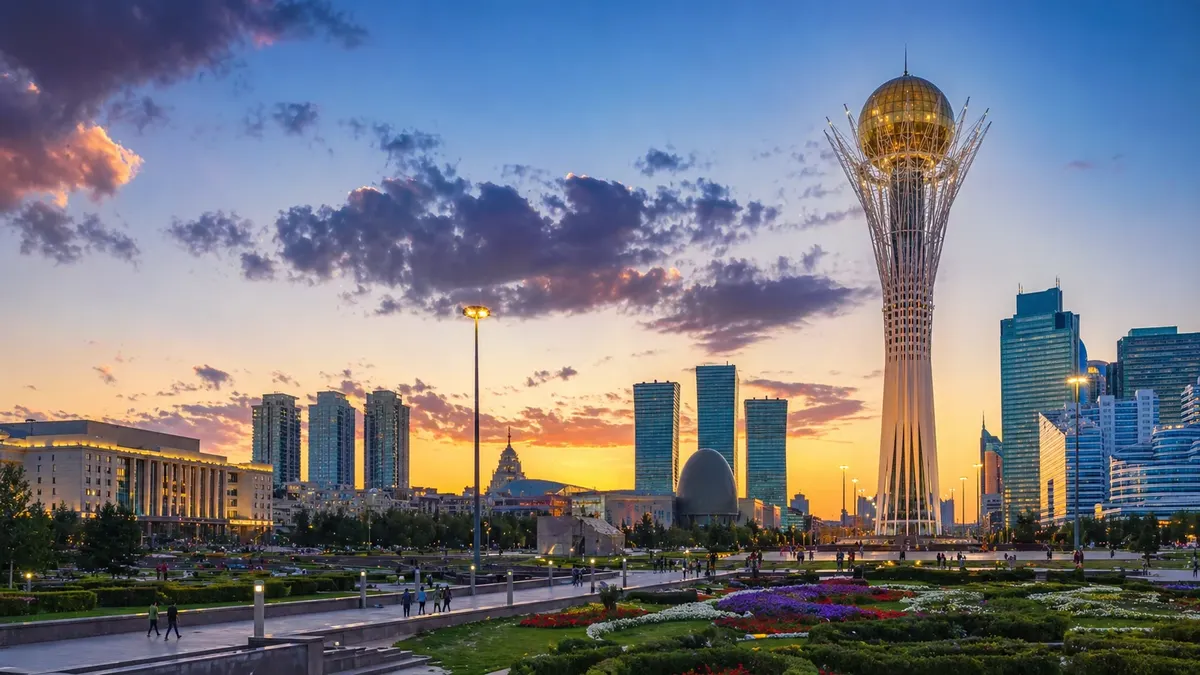
Bayterek is the clearest first stop because its observation level explains the layout of the left bank. The tower represents the Samruk bird and the tree of life from Kazakh legend; the viewing level sits inside the golden sphere.
The venue operator currently lists seasonal hours and an adult ticket of 2,500 KZT on the official Bayterek page. Check that page on the day rather than relying on an old guide; prices published elsewhere still range from 700 to 2,500 KZT.
Allow: 45–60 minutes. Go early for a quieter platform or near sunset for the city lights.
2. Nurzhol Boulevard
Walk the landscaped pedestrian boulevard after Bayterek. It is the ceremonial axis of the modern left bank, framed by government and commercial towers. The useful route runs between the Ak Orda viewpoint and Khan Shatyr, but not every major attraction is directly on that line.
Allow: 60–90 minutes with photo stops. Ak Orda is viewed from public areas; it is not a walk-in tourist attraction.
3. Khan Shatyr
Norman Foster’s tent-shaped building works as an architectural stop and a weather fallback. Entry to the shopping and dining areas is free; entertainment areas inside have separate prices. It is most useful at the northern end of a Nurzhol walk rather than as a separate cross-city journey.
Allow: 45–90 minutes, longer only if you plan to eat or use an attraction.
4. National Museum of Kazakhstan
The National Museum is the best single indoor stop for understanding Kazakh history, archaeology, independence and the “Golden Man” tradition. It is near Independence Square, not on the Bayterek–Khan Shatyr walking section.
The museum’s official site lists opening hours of 10:00–18:00 Tuesday–Sunday, with Monday closed. Check ticket categories at the official source before visiting.
Allow: 2–3 hours. If time is short, prioritize the archaeology, gold and ethnography halls.
5. Hazret Sultan Mosque
Hazret Sultan is beside the Independence Square museum cluster. Visitors are welcome outside prayer services. Wear clothing that covers shoulders and knees, remove shoes where indicated and keep photography unobtrusive.
Allow: 30–45 minutes. Combining it with the National Museum avoids an unnecessary extra transfer.
6. Palace of Peace and Reconciliation
The glass pyramid is another Foster landmark and was built for interfaith congresses. Interior access depends on events and tour availability, so treat the exterior and surrounding presidential park as the guaranteed part of the visit.
Allow: 30 minutes outside, about an hour if an interior visit is available.
Day 2: Grand Mosque, Nur Alem and the River
Day 2 starts in the EXPO district. Follow it with a flexible right-bank or riverfront afternoon. The Grand Mosque and Nur Alem belong in one route; the Ishim embankment and old center require a separate transfer.
7. Astana Grand Mosque
The Grand Mosque opened in 2022 near the EXPO district and is separate from Hazret Sultan. Its scale, blue dome and interior decoration justify visiting both only if architecture is a priority. Follow the same respectful dress and prayer-time rules.
Allow: 30–45 minutes.
8. Nur Alem Museum of Future Energy
The spherical Nur Alem pavilion is the visual anchor of the former EXPO 2017 site. Eight levels present energy and technology themes, making it a strong indoor choice in Astana’s wind, heat or winter cold.
QazExpoCongress publishes the current schedule; Monday is listed as a technical day. Check the official page for weekend hours and ticket categories.
Allow: 1.5–2.5 hours.
9. Ishim River Embankment
The riverfront shows a more everyday side of Astana than the ceremonial left bank. Walk the central embankment in the evening, when residents use the paths and public spaces. Nur Alem is in the EXPO district and is not a riverfront reflection viewpoint; plan these as separate stops.
Allow: 45–90 minutes in suitable weather.
10. Astana Opera
Astana Opera is worth entering for a performance rather than only photographing the facade. Check the official program and choose a seat before building the evening around it; performance dates matter more than generic opening hours.
11. The Old Center
For contrast with the left bank, walk part of Beibitshilik Street and the older right-bank center. Add the Saken Seifullin Museum if Kazakh literature and early 20th-century history interest you. This is a neighborhood stop, not a promise that one bazaar or café represents the whole city.
12. ALZHIR Memorial Complex
ALZHIR commemorates women imprisoned at the Akmolinsk camp during Soviet repression. It is outside central Astana, near Akmol village, and needs a dedicated transfer. Choose it for historical depth, not as a quick add-on between downtown monuments.
Allow: roughly half a day including transport. Confirm opening status before departure.
The Logical Two-Day Itinerary
Use this itinerary as a default route, not a rigid checklist. It does not need to survive bad weather, closures or a late arrival. Keep one indoor alternative ready and drop ALZHIR if you do not have a genuine half-day.
| Time | Day 1 | Day 2 |
|---|---|---|
| Morning | Bayterek → Nurzhol Boulevard | Grand Mosque → Nur Alem |
| Lunch | Khan Shatyr or left bank | EXPO district |
| Afternoon | National Museum → Hazret Sultan | old center or ALZHIR half-day |
| Evening | Palace of Peace exterior / park | Ishim embankment or Astana Opera |
Do not force every item into 48 hours. In winter or strong wind, replace an outdoor walk with the National Museum or Nur Alem. If you have only one day, choose Bayterek, a short Nurzhol walk, the National Museum and one mosque.
Which Astana Sights Fit Different Trip Lengths
Prioritize by usable hours, not by the number of saved map pins. Airport and railway transfers can consume a large part of a short stay, and Astana’s districts are farther apart than the skyline makes them appear.
Six usable hours
Choose Bayterek, a Nurzhol walk and the National Museum. This combination gives you the modern capital’s layout and a serious history collection. If the museum is closed, substitute Nur Alem rather than trying to visit three small museums.
One full day
Use the Day 1 route: Bayterek, Nurzhol, Khan Shatyr, then Independence Square. Finish at Hazret Sultan or the Palace of Peace exterior. Skip the old center and EXPO district unless one of them is your main interest.
Two full days
Follow both district days. This is enough for the 12-item shortlist only if ALZHIR replaces part of the old-center afternoon; it does not fit as an extra stop without cutting museum time.
Three days
Add ALZHIR, a scheduled performance or a slower museum day. For a nature day, compare the separate logistics of Burabay rather than describing it as an Astana city sight. The broader things to do in Kazakhstan guide helps place the capital within a longer national route.
How the Sight Clusters Fit Together
Astana is easier when you think in four clusters. The official Visit Astana map provides addresses; the grouping below explains which places belong in the same outing.
| Cluster | Main sights | Best use |
|---|---|---|
| Nurzhol / left bank | Bayterek, boulevard, Khan Shatyr, Ak Orda viewpoint | first orientation walk |
| Independence Square | National Museum, Hazret Sultan, Palace of Peace | history and architecture |
| EXPO district | Grand Mosque, Nur Alem | indoor second-day morning |
| right bank / river | old center, Seifullin Museum, Ishim embankment | local contrast and evening walk |
ALZHIR sits outside these clusters. Astana Opera is near the left-bank route but should be scheduled around an actual performance. This clustering corrects a common map error: the National Museum is not a stop between Bayterek and Khan Shatyr, and Nur Alem is not on the riverfront.
For intercity timing, use the separate Almaty-to-Astana transport guide. Do not plan a full sightseeing morning immediately after a scheduled arrival unless the transport and hotel check-in times make it realistic.
What Astana Attractions Cost
Use official same-day prices. Several English guides still quote old ticket levels. The clearest example is Bayterek: the operator currently lists 2,500 KZT for an adult, while older pages still show 700 KZT.
Free public-space stops include Nurzhol Boulevard, exterior views of Ak Orda, the river embankment and mosque entry. Museums, observation decks, guided interiors and performances use separate tickets. A free building entrance does not mean every entertainment area inside is free.
Budget in categories rather than a false total:
- one observation-deck ticket;
- one major state museum;
- Nur Alem if it is part of Day 2;
- local transport between clusters;
- a performance ticket only after checking the program.
For cash, cards and current exchange context, see the Kazakhstan money guide. This page does not convert every ticket into dollars because exchange rates and venue prices move on different schedules.
Astana in Winter, Heat and Strong Wind
Weather changes the order of the route more than the list of attractions. Astana can be extremely cold in winter, hot in summer and windy in any season. Long ceremonial avenues offer little shelter when conditions are poor.
Use short outdoor links between long indoor stops. A winter day can pair Bayterek with Khan Shatyr, then use a vehicle to reach the National Museum. Day 2 can pair the Grand Mosque with Nur Alem. Save the full river walk and long Nurzhol photography session for a calmer forecast.
In summer, walk early or late and use the museum hours for the hottest part of the afternoon. The Kazakhstan weather-by-month guide gives national seasonal context, but check Astana’s daily wind and temperature immediately before leaving.
Accessibility and Respectful Visits
Confirm accessibility with each venue. Modern flagship venues are generally easier to access than long outdoor routes, but facilities can change. Bayterek’s observation experience, museum lifts, entrance security and mosque visitor routes can change during maintenance, events or prayer services.
At mosques, dress modestly, remove shoes where directed and avoid photographing people at prayer. At ALZHIR, treat the site as a memorial rather than a photo stop. Around Ak Orda and government buildings, follow barriers and security instructions; an exterior viewpoint is not permission to enter a restricted area.
Families should allow more time at Nur Alem and Khan Shatyr. Travelers with limited mobility should favor one cluster per half-day and confirm lift access directly rather than relying on an old review.
What to Verify Before You Go
Five minutes of official checking prevents most wasted transfers. Save the venue pages and confirm the details below on the morning of the visit.
- Monday and technical-day closures for museums
- current Bayterek and Nur Alem ticket categories
- prayer times and visitor access at mosques
- performance schedule for Astana Opera
- weather and wind before long outdoor walks
- transport time if choosing ALZHIR
Frequently Asked Questions
What are the must-see attractions in Astana?
For a first visit, prioritize Bayterek, Nurzhol Boulevard, the National Museum, one major mosque, Nur Alem and the Ishim riverfront. These show the capital’s architecture, history and everyday public space without excessive cross-city travel.
How many days do I need in Astana?
Two full days are enough for the essential city sights. Add a third day for ALZHIR, Burabay or a slower museum and performance schedule.
Can I walk between Astana’s main attractions?
Bayterek, Nurzhol Boulevard and Khan Shatyr form one walkable group. The National Museum and Hazret Sultan form another. Nur Alem, the Grand Mosque, the old center and ALZHIR require separate transfers.
Are Astana museums open on Monday?
Do not assume so. The National Museum lists Monday as closed, and Nur Alem lists Monday as a technical day. Verify each official schedule before travel.
Is Bayterek free?
No. The surrounding boulevard is free, but the Bayterek observation level requires a ticket. The official venue page should be checked for the current price and seasonal hours.
Last verified: July 14, 2026
Google Preferred Sources
See more Kazakhstan stories in Google
Add About Kazakhstan as a preferred source to find more of our fresh, relevant stories in Google Search.
More Stories
travel
Things to Do in Almaty: 22 Best Activities
Things to do in Almaty, Kazakhstan: 22 best activities from Medeu skating and Big Almaty Lake to Green Bazaar food tours. 2026 prices and local tips.
travel
Almaty Travel Guide 2026: Things to Do & 3-Day Plan
Plan Almaty with a practical 3-day route through central sights, food and the mountains, plus live checks for airport, metro, weather and day trips.
travel
Solo Female Travel in Kazakhstan: A Practical Safety Plan
Plan solo female travel in Kazakhstan with current advice for arrivals, taxis, nightlife, trains, mountain routes, lodging, and emergencies.
travel
Best Hotels in Kazakhstan: Almaty & Astana for Every Budget (2026)
Where to stay in Kazakhstan: luxury hotels from $120, mid-range from $40, hostels from $10. Real 2026 prices for Almaty, Astana, Aktau.
Plan the Next Step
travel
Kazakhstan Tourist Attractions: Choose the Right First-Trip Route
Compare Kazakhstan tourist attractions by base and logistics: Almaty nature, Turkestan heritage, Mangystau, Astana, Baikonur, and more.
food
Beshbarmak Recipe: How Kazakh Et Is Served
A source-checked guide to Kazakh et, widely called beshbarmak: what is on the platter, a practical home recipe, regional differences, and guest etiquette.
culture
Women in Kazakhstan: Rights, Work and Daily Life in 2026
Source-checked guide to women in Kazakhstan: current legal rights, dated work and wage data, marriage statistics, safety, and respectful language.
travel
Things to Do in Kazakhstan: 13 Places Worth Your Time
Choose the best things to do in Kazakhstan by trip length: Almaty, Charyn, Kolsai, Astana, Turkestan, Tamgaly, Altyn-Emel, food, and Nauryz.
travel
12 Best Day Trips from Almaty: Complete Guide 2026
Best Almaty day trips — Charyn Canyon, Big Almaty Lake, Kolsai Lakes, Tamgaly petroglyphs, Altyn-Emel. Distances, costs, and how to get there.
travel
Shymkent Travel Guide: City Sights, Food & Day Trips
Plan a Shymkent visit with reliable city clusters, food choices, Turkestan and Sayram options, live transport checks, and heat-aware itineraries.

Travel Writer & Local Expert · Almaty, Kazakhstan
Tugelbay Konabayev is a Kazakhstan-based travel writer who has lived in Almaty for 7+ years and Astana for 4+ years. He grew up in Aktobe, Kazakhstan and has covered Kazakh travel, food, culture, and visa policy with first-hand reporting since 2023.