Kazakhstan Weather by Month: Cities, Regions & Packing
Reported from the ground: Tugelbay Konabayev is a Kazakh native (born in Aktobe) who has lived 7 years in Almaty and 4 in Astana. About the author.
In this article8 sections
Kazakhstan does not have one useful national forecast. Astana has a long, windy steppe winter; Almaty is milder but wetter and sits beside high mountains; Shymkent and Turkestan heat up earlier; Mangystau is dry and exposed; mountain conditions can change within hours. Use the monthly matrix below for packing and risk planning, then check a short-range forecast for the exact city and elevation before each travel day.
This page explains climate and packing. If your question is when to book a particular route, festival, or activity, use the separate best time to visit Kazakhstan guide. Climate normals describe what is typical; they do not predict the weather during your trip.
The Climate Baseline Behind This Guide
Use climate normals to understand the season, not to predict a particular travel day. The World Bank Climate Change Knowledge Portal presents observed Kazakhstan climatology for 1991-2020 using station-based CRU data. It also warns that national and gridded averages have limits where station coverage is sparse. That is why a single “Kazakhstan temperature” is not a safe planning tool for a country covering roughly 2.7 million sq km.
The latest climate is also warmer than older travel summaries imply. UNDP Kazakhstan reports that the country’s annual temperature in 1991-2020 was 0.9°C higher than in 1961-1990, with more days above 30-35°C, particularly in the south, southwest, and west.
Two city anchors show the practical range:
- Almaty climate normals put the typical January average high/low near -2°C/-11°C and July near 29°C/16°C.
- Astana climate normals put January near -11°C/-20°C and July near 26°C/14°C. Wind makes the capital’s winter feel harsher than the temperature alone suggests.
These are historical averages, rounded for planning. A cold wave, heatwave, storm, or mountain front can sit far outside them.
City Climate Anchors
Almaty and Astana are useful anchors because their January averages differ by about 9 degrees, but neither describes the whole country. Almaty’s mountain setting moderates the city compared with the northern steppe, while nearby elevation creates colder conditions only a short drive away. Astana has warmer summer days than many visitors expect, yet its cool nights and open exposure make the same clothing plan unsuitable for both capitals.
Shymkent and Turkestan sit farther south and reach hot conditions earlier in the year. Aktau is influenced by the Caspian coast, while interior Mangystau is drier and more exposed. East Kazakhstan adds Altai elevation, valley inversions, and longer snow-access constraints.
For planning, treat the country as at least 5 regions: Almaty and the Tian Shan, Astana and the northern steppe, the southern Silk Road cities, western Kazakhstan and Mangystau, and East Kazakhstan/Altai. A forecast for one should never be copied onto another.
The World Meteorological Organization distinguishes climate information from weather forecasts and warnings. For the actual trip, check the local forecast and warnings issued through Kazhydromet rather than treating a monthly table as operational advice.
Kazakhstan Weather by Month
| Month | Almaty and foothills | Astana and northern steppe | South, west, and mountains | Pack / watch for |
|---|---|---|---|---|
| January | Freezing city days, snow, colder above the city | Deep cold, wind, persistent snow and short daylight | South is milder; Mangystau and steppe nights still freeze | Insulated coat, thermal layers, winter boots; limit exposed time in strong wind |
| February | Winter continues; skiing conditions can be good at altitude | Still severe and windy, with possible transport disruption | Dry cold inland; mountain access remains winter-only | Same as January; check roads and flight status before long transfers |
| March | Rapid swings between thaw, rain, and late snow | Winter loosens slowly; snow and ice can persist | South warms first; Nauryz weather can still be changeable | Waterproof footwear, warm layer, rain shell; do not pack for spring only |
| April | Greener, wetter, and highly variable; mountain trails remain muddy or snowy | Cool, windy transition with sharp day-to-night changes | Shymkent/Turkestan become comfortable; desert routes can be windy | Layers, waterproof shell, closed shoes; verify trail and road access |
| May | Mild to warm city weather; one of the wetter periods; snow remains high in the mountains | Spring finally settles, but wind and cool nights continue | South and west can already be hot in the afternoon | Light layers plus rain shell; sun protection; warmer layer for evenings |
| June | Warm, long days; foothill storms possible | Comfortable to warm with very long daylight | South becomes hot; high mountain routes begin opening | Sun hat, water, light rain shell, fleece for altitude |
| July | Hot city days; cooler at elevation; afternoon mountain storms remain possible | Warmest month but usually cooler at night than Almaty | Serious heat risk in the south and west; exposed desert trips require planning | Strong sun protection, water, breathable clothing; do not underestimate mountain cold |
| August | Hot and often clearer; dry city conditions do not rule out mountain storms | Warm, with nights beginning to cool late in the month | Southern and western heat can persist | Summer kit plus a warm mountain layer; carry more water on desert routes |
| September | Warm early, cooler and more stable later; first high-altitude snow is possible | Fast cooling and shorter evenings | South becomes easier; Mangystau remains exposed and dry | Layering system, sun protection, light insulation for evenings |
| October | Cool, variable, with rain and early snow near mountain passes | Cold winds and increasingly frequent frost | South remains milder; remote seasonal services may reduce | Waterproof shell, insulation, gloves for northern or mountain routes |
| November | Damp-to-cold transition; city snow may come and go | Winter conditions return, with ice, wind, and short daylight | South cools; desert nights become cold | Winter-ready layers; flexible transport plans; traction-aware footwear |
| December | Freezing nights and regular winter conditions | Full winter: deep cold, wind, and snow | Milder only by comparison in the far south and Caspian coast | Winter coat, thermals, boots, gloves, face protection in the north |
Daylight, Elevation, and Daily Swings
The same month can require summer clothing at midday and insulation after sunset or at altitude. Kazakhstan spans close to 10 degrees of latitude, and mountain routes add large elevation changes on top of that north-south distance. Long summer daylight extends activity time, but it also increases sun exposure; short winter daylight compresses road and sightseeing plans.
Build the day around three checkpoints:
- Morning: check the city forecast, wind, precipitation, and any official warning.
- Route: check the highest elevation and the most remote road section, not only the departure point.
- Return: confirm sunset, transport availability, and the temperature after dark.
A mountain cable-car station, lake, or pass can be much colder than central Almaty. A desert stop can remain hot after a comfortable morning in Aktau. On an intercity route, weather may change over more than 1,000 km before arrival. Carrying one insulating layer and one weatherproof outer layer is often more useful than packing only for the month’s average high.
Region-by-Region Reality
Almaty: city weather is not mountain weather
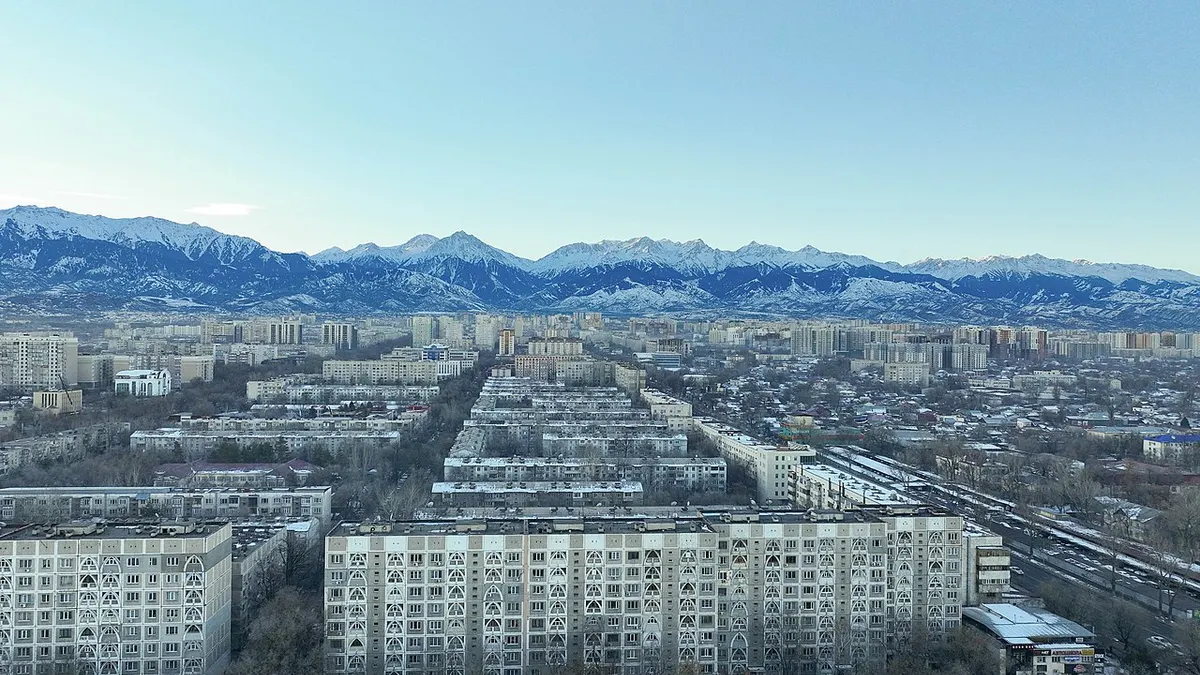
Almaty sits at the foot of the Tian Shan. The city can be warm while Shymbulak or a high trail is cold, stormy, or snow-covered. Elevation changes faster than the calendar: carry a warm layer and rain protection even on a sunny summer departure.
May is relatively wet in the city climate record, while July is the hottest month and August usually has clearer skies. In winter, Almaty is materially milder than Astana, but freezing nights, snow, and icy pavements are normal.
For hiking rather than city packing, use the Kazakhstan hiking guide and confirm the exact trail condition locally.
Astana: wind changes the risk
Astana is exposed to the northern steppe. The main winter hazard is the combination of cold, wind, and distance between sheltered places. A temperature that looks manageable on an app can become uncomfortable quickly in an open district.
Summer is much easier: July averages are warm rather than tropical, with cooler nights. Spring arrives later and autumn ends earlier than in the south. For a short visit outside summer, plan indoor stops and keep transport flexible.
Shymkent and Turkestan: heat arrives earlier
Southern Kazakhstan has a longer hot season than Almaty or Astana. April and October may feel mild while the north is still cold. July and August can bring heat that changes the itinerary: visit exposed archaeological sites early, carry water, and avoid treating shade as guaranteed.
Aktau and Mangystau: dry does not mean easy
The Caspian coast moderates Aktau compared with the interior, but Mangystau routes are exposed, dry, and far from services. Wind, summer heat, cold nights outside summer, and weak mobile coverage all matter. Weather readiness includes water, vehicle condition, offline navigation, and a route shared with someone else.
East Kazakhstan and the Altai: elevation and access matter
Valleys can be comfortable while passes remain cold or blocked. Snow season lasts longer at elevation than in nearby towns. Treat a regional forecast as the starting point, not the answer for a specific lake, pass, or trek.
Packing by Season
Winter: December to February
For Astana or the northern steppe, use thermal base layers, an insulated outer layer, warm boots, gloves, a hat, and face protection. For Almaty city, a normal cold-winter system may be sufficient, but add mountain gear separately. Do not attempt a remote winter drive without local road information and emergency supplies.
Spring: March to May
Spring requires the widest range: waterproof footwear, a rain shell, a warm mid-layer, and clothes that can be removed during a warm afternoon. High trails may remain unsuitable even when the city is green.
Summer: June to August
Pack breathable clothing, a hat, sunscreen, water capacity, and a light rain shell. Add fleece or light insulation for altitude. In the south and west, heat exposure can be the limiting factor; in the mountains, a fast temperature drop is the limiting factor.
Autumn: September to November
Early September can still feel like summer, while November is winter in the north. Bring a layering system, waterproof outerwear, and warmer evening clothing. Check mountain roads because seasonal closures and early snow do not wait for the calendar month to end.
Weather Hazards That Change Plans
Heat
The national climate record shows increasing hot days, especially in southern, southwestern, and western Kazakhstan. Move exposed activities to morning, carry more water than a city walk requires, and have a shaded or indoor alternative.
Cold and wind
In Astana and on the steppe, wind chill and distance from shelter matter. If official warnings or local authorities advise against a road journey, changing the itinerary is safer than relying on a historical average.
Mountain storms and snow
Mountain weather can change independently of Almaty. Start early, carry offline navigation and an insulating layer, and turn back when visibility or footing deteriorates. A summer date does not guarantee snow-free high terrain.
Road closures
Use official/local road status before an intercity or remote drive. Weather on the departure screen does not describe conditions hundreds of kilometres away. The Almaty to Astana guide covers the main transport trade-offs.
How to Use This Page for an Actual Trip
Combine the monthly pattern with a short-range forecast, exact elevation, and live road or trail status. The matrix provides the seasonal baseline; it cannot see the front arriving during your travel window.
- Find your month in the matrix.
- Read the section for the exact region, not only Kazakhstan generally.
- Check a forecast within a few days of travel.
- Check the mountain trail or road separately on the day.
- Pack for the coldest/highest part of the itinerary, not only the hotel city.
- Keep one indoor or lower-elevation backup for weather-sensitive days.
For a drive, check the latest official road information from QazAvtoJol before departure and again after a major weather warning. On a remote route, leave enough fuel, water, warm clothing, and schedule margin to wait rather than force the journey. Even a 24 hours delay is cheaper than entering a closed or unsafe section.
Frequently Asked Questions
What is Kazakhstan's weather like by month?
January and February are deep winter, especially in Astana and the north. March-April and October-November are variable transition periods. June-August are warm to hot, with serious heat in the south and west but colder conditions at mountain elevation. September starts warm and cools quickly.
Is Almaty warmer than Astana?
Yes, especially in winter. Historical city averages put Almaty's January near -2°C/-11°C for high/low, versus roughly -11°C/-20°C in Astana. Exact weather varies, and mountain areas above Almaty are colder than the city.
How cold is Astana in winter?
January historical averages are around -11°C by day and -20°C at night, but colder outbreaks occur. Wind and exposure can make conditions feel substantially harsher, so winter clothing and short outdoor intervals matter.
How hot is Kazakhstan in summer?
Almaty and Astana are warmest in July, with historical average highs around 29°C and 26°C respectively. Southern and western regions can be hotter, while mountain destinations remain cooler and can still receive storms.
Can I use monthly averages as my forecast?
No. Climate normals describe typical historical conditions. Check a short-range city forecast, road status, and mountain conditions separately before each weather-sensitive day.
Last reviewed: July 2026. Climate references describe historical conditions; always use a current forecast and official local warnings for travel decisions.
Google Preferred Sources
See more Kazakhstan stories in Google
Add About Kazakhstan as a preferred source to find more of our fresh, relevant stories in Google Search.
More Stories
travel
Cities in Kazakhstan: 90 Cities and Major City Guide
Cities in Kazakhstan ranked by size and travel value: Almaty, Astana, Shymkent, Karaganda and more, with May 2026 stat.gov.kz population data.
travel
Kazakhstan Mountains: Regions, Hikes & Safety (2026)
Choose the right Kazakhstan mountain region: Almaty and Ile-Alatau, Western Tian Shan, Kolsai, Dzungarian Alatau, and Altai, with seasons and safety checks.
travel
Kazakhstan Travel Cost Index 2026: Prices in 20 Cities
Compare official 2026 hotel, bus, cinema, fuel and grocery prices across 20 Kazakhstan cities. Use the city comparison tool and download the CSV/JSON dataset.
travel
Atyrau, Kazakhstan: Things to Do & Saraishyq Guide
Plan a short Atyrau stay around the Zhayyk riverfront and Saraishyq, with honest sightseeing scope, live transport checks, hotels, weather, and local sources.
Plan the Next Step
travel
Kazakhstan Tourist Attractions: Choose the Right First-Trip Route
Compare Kazakhstan tourist attractions by base and logistics: Almaty nature, Turkestan heritage, Mangystau, Astana, Baikonur, and more.
food
Beshbarmak Recipe: How Kazakh Et Is Served
A source-checked guide to Kazakh et, widely called beshbarmak: what is on the platter, a practical home recipe, regional differences, and guest etiquette.
culture
Women in Kazakhstan: Rights, Work and Daily Life in 2026
Source-checked guide to women in Kazakhstan: current legal rights, dated work and wage data, marriage statistics, safety, and respectful language.
travel
Things to Do in Kazakhstan: 13 Places Worth Your Time
Choose the best things to do in Kazakhstan by trip length: Almaty, Charyn, Kolsai, Astana, Turkestan, Tamgaly, Altyn-Emel, food, and Nauryz.
travel
12 Best Day Trips from Almaty: Complete Guide 2026
Best Almaty day trips — Charyn Canyon, Big Almaty Lake, Kolsai Lakes, Tamgaly petroglyphs, Altyn-Emel. Distances, costs, and how to get there.
travel
Shymkent Travel Guide: City Sights, Food & Day Trips
Plan a Shymkent visit with reliable city clusters, food choices, Turkestan and Sayram options, live transport checks, and heat-aware itineraries.

Travel Writer & Local Expert · Almaty, Kazakhstan
Tugelbay Konabayev is a Kazakhstan-based travel writer who has lived in Almaty for 7+ years and Astana for 4+ years. He grew up in Aktobe, Kazakhstan and has covered Kazakh travel, food, culture, and visa policy with first-hand reporting since 2023.