Hiking in Kazakhstan: Regions, Seasons and Safety
Reported from the ground: Tugelbay Konabayev is a Kazakh native (born in Aktobe) who has lived 7 years in Almaty and 4 in Astana. About the author.
In this article11 sections
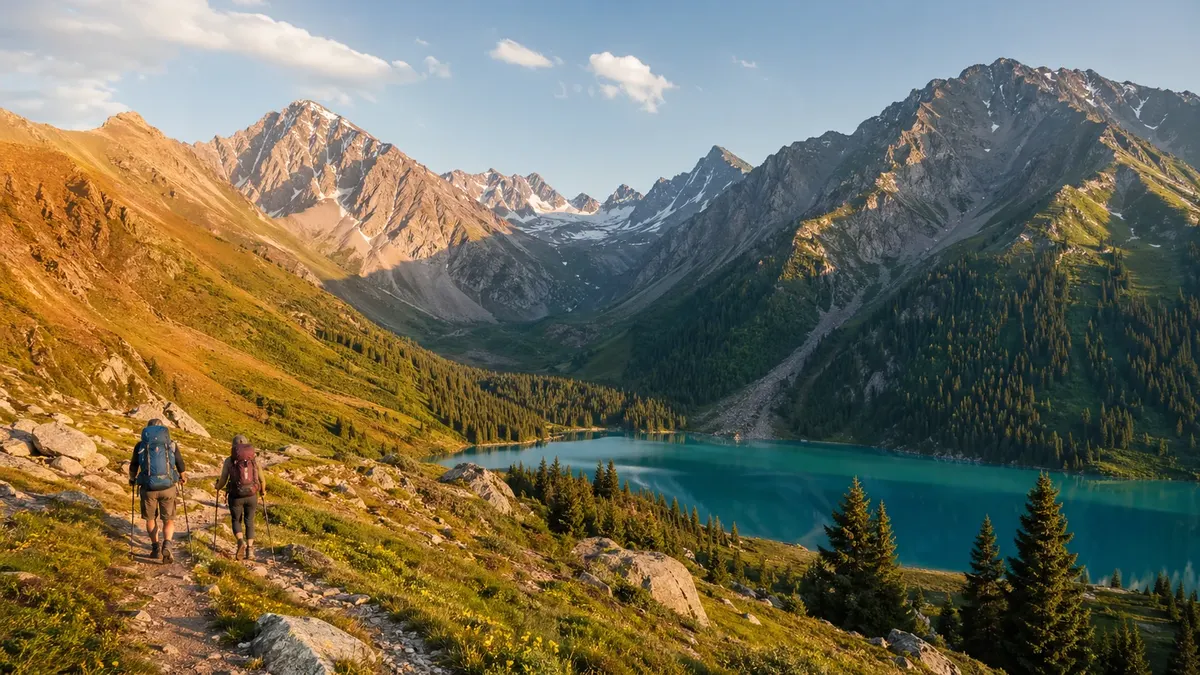
For a first hiking trip to Kazakhstan, base yourself in Almaty and choose a route only after checking current weather, access and trail conditions. The nearby Ile-Alatau National Park has the country’s most practical concentration of mountain options, while Kolsai, the deserts, the north and the Altai suit different seasons and levels of self-sufficiency.
This is a planning guide, not a live trail bulletin. Kazakhstan’s routes can change with snow, rain, mudflows, fire restrictions, road closures and protected-area rules. The official park list confirms that a route exists; it does not prove that the route is open or suitable on the day you arrive.
If you need a broad trip sequence rather than a hiking decision, start with our Kazakhstan itinerary. This page answers a narrower question: where should you hike, when should you go and what must you verify before leaving?
Last verified: August 6, 2026.
Choose a hiking region first
Almaty is the easiest first base, but it is not the right base for every Kazakhstan landscape. Choose the terrain and operating difficulty before choosing a famous place name.
| Region or route type | Practical base | Best fit | Main planning risk | What to verify live |
|---|---|---|---|---|
| Ile-Alatau mountains | Almaty | Day hikes and progressive mountain days | Altitude, storms, snow, route finding | Park access, weather, route condition |
| Kolsai and Kaindy area | Saty or a booked tour | Lake scenery and an overnight regional trip | Long road transfer, seasonal trail and road conditions | Park rules, transport, accommodation, route access |
| Charyn and Altyn-Emel | Almaty, Saty or Basshi | Canyon and desert walking | Heat, exposure, scarce shade and water | Temperature, park entry, road condition |
| Burabay and Bayanaul | Local resort town | Lower mountain and lakeside walks | Weekend crowds, weather and local access | Trailhead, local restrictions, return transport |
| Altai and Katon-Karagai | Oskemen plus a regional operator | Remote multi-day expedition | Distance, permits, communications and rescue time | Guide, border rules, road, permit and emergency plan |
“Best hike” is therefore the wrong starting question. A well-known high route can be a poor choice after fresh snow, while a modest forest or canyon walk can be the better day. Match the route to current conditions, your group’s slowest member and the consequences of a delayed return.
The Oskemen guide explains how to keep that city base separate from the remote Altai journey.
Almaty and Ile-Alatau: the practical first base
Ile-Alatau National Park gives first-time visitors the broadest official menu of routes close to a major city. The park’s Russian-language FAQ says it has 43 tourist routes and trails. Its list includes areas such as the Tuyuksu glacier, Gorelnik waterfalls, Butakovka waterfall, Kok-Zhailau, Big Almaty Lake, Turgen and Issyk Lake.
That list is useful for discovery, not for ranking. It does not mean every route has the same markings, transport, exposure or opening status. It also does not turn a glacier approach into an ordinary city walk. Open the park’s official questions and answers page and visitor rules before setting out, then confirm the chosen route with a current local source.
Almaty works well because you can separate the trip into decisions:
- Spend the first day in the city and assess weather and how you feel.
- Choose a lower-commitment outing with an obvious turnaround point.
- Move to a longer or higher day only if the first outing was comfortable.
- Use a qualified guide when the route involves glaciers, technical terrain, winter conditions or uncertain navigation.
This is safer than assigning every visitor the same fixed “first-week progression.” Fitness at low altitude does not predict acclimatisation, and a route that was easy in dry summer conditions can become serious in snow or thunderstorms. Never continue merely because an online itinerary says the next objective should be harder.
Use the Almaty travel guide to choose a city neighbourhood and the best time to visit Almaty for broader seasonal context. Neither replaces a same-day mountain forecast.
Kolsai and Kaindy: plan the transfer before the trail
Kolsai and Kaindy are better treated as a regional trip than as casual extensions of an Almaty morning. The attraction is the lake landscape, but the operating question is how you will reach the area, where you will sleep and what route is actually available when you arrive.
Avoid building the plan around copied claims about fixed hiking times, horse prices or guaranteed road access. These details change with season, weather, vehicle, demand and park operations. Confirm the following shortly before travel:
- whether your intended road and trailhead are accessible;
- current protected-area entry requirements and payment method;
- whether a local vehicle transfer is required;
- accommodation or camping rules for the night you intend to stay;
- whether the route is appropriate without a guide;
- the latest return option if weather cancels the walk.
The disciplined version of the trip has a fallback. If a higher or longer route is closed, enjoy the accessible lake area or a shorter approved walk rather than improvising beyond barriers. If the road transfer itself is uncertain, keep a spare day or choose a closer Ile-Alatau outing.
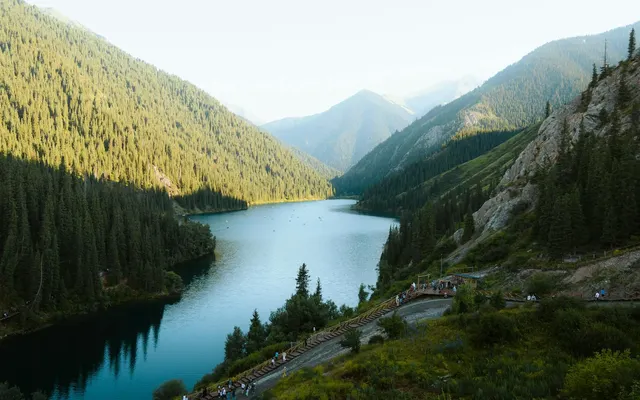
Our Kolsai Lakes guide covers the longer lake hike, while the Lake Kaindy guide covers the separate river-road and walking approach. Use them for orientation, then rely on official or local live confirmation for the date of travel.
Desert walking is not mountain hiking
Charyn and Altyn-Emel reward walking, but heat and exposure are the defining risks rather than altitude. A short canyon path in strong sun can demand more water and caution than a longer shaded mountain walk.
Spring and autumn are normally the sensible planning windows for desert landscapes. Even then, check the day’s forecast, start with enough water, protect your head and skin, and know exactly where the vehicle will meet you. Summer plans should not rely on a generic seasonal average: the actual temperature and time in direct sun matter.
Charyn is often included in a southeast loop with Kolsai, while Altyn-Emel generally requires its own road logistics. The two parks are not interchangeable. Charyn centres on canyon landscapes; Altyn-Emel involves large distances between desert features. Read the Charyn Canyon guide and Altyn-Emel guide before deciding whether you need a driver, guide or overnight base.
Do not label a desert sightseeing stop as a “beginner hike” without describing the conditions. Beginner-friendly navigation does not remove heat, loose ground, flash-flood risk or a long walk back to transport. Turn around early if the group is consuming water faster than planned.
Northern and eastern Kazakhstan need different logistics
Burabay and Bayanaul suit lower mountain walking, while the Altai is a remote-trip commitment. Grouping all three under one difficulty label hides the travel time and emergency-access gap.
Burabay combines lakes, forest and rocky hills within reach of Astana by road or rail plus local transport. It can work as a short nature break, but exact trail access and return transport still need confirmation. Our Burabay guide explains how it fits an Astana itinerary.
Bayanaul offers another lake-and-granite landscape farther east. It is better for travellers who have deliberately allocated the transfer time, not for someone searching for an unplanned half-day outside Astana. Accommodation and local transport are part of the route plan.
Katon-Karagai and the wider Altai demand the most preparation in this comparison. Distances are long, mobile coverage may be limited, weather can isolate roads and some itineraries approach regulated border areas. Use an experienced regional operator who can explain permits, transport, communications and emergency procedures. A generic map pin is not a sufficient expedition plan.
The UNESCO Western Tien-Shan listing is useful for understanding the international ecological significance of Kazakhstan’s southern mountain landscapes, but UNESCO status is not a trail-condition service. Heritage recognition, park permission and safe passage are three separate questions.
When to hike in Kazakhstan
There is no single national hiking season because altitude and region change faster than the calendar label suggests. Use the month only as a first filter, then check the actual route.
| Planning period | Usually worth considering | Conditions that can change the answer |
|---|---|---|
| March to May | Lower desert and canyon walks; later spring at lower mountain elevations | Snowmelt, mud, cold nights, high water, rain and early heat |
| June to August | Many mountain day hikes and high-country plans | Thunderstorms, remaining snow, heat at lower elevations and holiday demand |
| September to October | Lower mountain, forest and desert routes | Early snow, shorter daylight, cold nights and seasonal service changes |
| November to February | Purpose-built winter outings with appropriate local expertise | Avalanche terrain, ice, severe cold, short daylight and closed access |
The table is not a promise that a trail opens on the first day of a month. Elevation can create winter conditions above a warm city, and rain can make a canyon or unpaved road unsafe. Ask about the specific route, not simply “Is hiking open in Kazakhstan?”
Build at least one weather-flexible day into a hiking-focused trip. Kazakhstan has enough contrasting landscapes that changing the objective is usually better than forcing the original plan. The best time to visit Kazakhstan explains the country-level trade-offs.
Safety: register the route and leave a real plan
Kazakhstan’s Ministry for Emergency Situations advises hikers not to go alone, to tell relatives their route and to register mountain routes through 112 or the territorial emergency department. Its official mountain-safety notice says registration can reduce search time if help is needed.
The notice counts 18 sites as mountain huts and 4 sites as rescue posts. Do not rely on any hut or post being open, reachable or stocked: confirm current conditions and depart with independent shelter, reserves and a route plan appropriate to the trip.
A useful route notice contains more than a destination name. Share:
- the exact route and intended direction;
- trailhead and planned exit point;
- departure time, turnaround time and expected return;
- names and contact details for the group;
- vehicle and driver details when relevant;
- guide or operator contact;
- the time at which your contact should call for help.
Registration is not rescue insurance and does not make a poor plan safe. It gives rescuers better information. Your group still needs a conservative turnaround rule, navigation that works offline, charged communications and enough reserve for a delay.
The official park FAQ recommends headwear, warm clothing, sports footwear, insect repellent, a flashlight, shelter or sleeping equipment where needed, matches or a lighter and a first-aid kit. Treat that as a baseline. Add water, food, sun protection, an offline map, a power bank and any route-specific equipment your guide requires.
For glaciers, steep snow, avalanche terrain or technical scrambling, ordinary hiking gear is not enough. Do not infer competence from owning equipment. Use a qualified guide and confirm that the operator’s plan covers the actual hazard.
Independent hike or guided trip?
Go independently only when the route, conditions and consequences are comfortably within your experience. Hire a guide when local access is uncertain, the route is remote, winter or glacier hazards exist, permits are involved, or your group cannot navigate and manage an emergency without outside direction.
Before booking, ask the operator for specific answers:
- Which route will we take, and what is the fallback?
- What current condition report are you using?
- What equipment is included and what must I bring?
- How large is the group, and who sets the turnaround time?
- How will you communicate if mobile service fails?
- Are transport, park entry, meals and accommodation included?
- What happens if weather or access cancels the route?
A professional answer identifies uncertainty instead of guaranteeing a summit, lake or perfect weather. Avoid sellers who cannot name the route, pressure the group to continue or treat rescue as the default backup.
A reliable pre-departure check
A final ten-minute verification is more valuable than another old “top trails” list. Run this sequence on the evening before the hike and repeat the weather check in the morning:
- Confirm the route is open with the park, guide or current local authority.
- Check the forecast for the trail elevation, not only the city.
- Save the route offline and identify the turnaround point.
- Tell a contact the plan and register it when advised by MChS.
- Check water, layers, light, first aid, food and battery reserve.
- Confirm transport both to and from the trailhead.
- Change the plan if the slowest group member, weather or access makes it marginal.
This approach is deliberately less exciting than a numbered ranking. It is also more useful in a country where a city, glacier valley, desert canyon and remote border region can all appear under the same search for “Kazakhstan hiking.”
Sources and verification notes
The guidance above uses official sources for route inventory and safety, then treats day-specific conditions as a live check. No fee, taxi fare, trail time or opening claim is presented as permanently current.
- Ile-Alatau National Park questions and answers for the park’s 43-route statement, listed destinations and baseline equipment advice.
- Kazakhstan Ministry for Emergency Situations mountain-safety notice for route registration, group communication and the advice not to hike alone.
- UNESCO Western Tien-Shan for protected-landscape context, not live trail access.
The Ile-Alatau page includes an older fee example, so this guide does not repeat it as a 2026 price. Fees, opening status, permits, transfers and weather must be reconfirmed for the travel date.
Frequently asked questions
Frequently Asked Questions
Where is the best place to hike in Kazakhstan for a first trip?
Almaty is the most practical first base because Ile-Alatau National Park offers many route types near a major city. Start with a lower-commitment outing, check the current park and weather information, and hire a guide for glaciers, winter terrain or uncertain navigation.
When is the best time to hike in Kazakhstan?
Summer is the broadest planning window for mountain hiking, while spring and autumn often suit desert and lower routes. There is no fixed national season: elevation, snow, heat, storms and road access can change the answer for a specific trail.
Do I need a guide for hiking in Kazakhstan?
Not for every established day walk, but a guide is the sensible choice for remote regions, glaciers, winter or avalanche terrain, permit-sensitive areas and routes your group cannot safely navigate independently.
Should I register a mountain hike in Kazakhstan?
Kazakhstan's Ministry for Emergency Situations advises registering mountain routes through 112 or the territorial emergency department and telling relatives the route. Registration can shorten search time, but it does not replace preparation or sound decisions.
Are Kolsai and Kaindy day trips from Almaty?
They are better planned as a regional trip because the road transfer, local access, accommodation and seasonal conditions all matter. Some tours market a long same-day circuit, but you should judge it by the current itinerary and time available rather than the label.
Can I rely on trail times and prices from older blogs?
No. Use old reports for orientation only. Trail condition, transport, park fees, horse services, accommodation and access can change, so confirm the live details with the park or operator before departure.
Google Preferred Sources
See more Kazakhstan stories in Google
Add About Kazakhstan as a preferred source to find more of our fresh, relevant stories in Google Search.
More Stories
nature
Mangystau, Kazakhstan: Routes, Seasons and Trip Costs
Plan a Mangystau expedition from Aktau with current route, season, operator, sacred-site, safety and quote-check guidance for 2026.
nature
Kolsai Lakes, Kazakhstan: Hiking & Lake Kaindy Side Trip
Plan Kolsai Lakes from Almaty: hiking routes, Saty stays and park fee checks. Visiting Lake Kaindy too? Find its separate sunken-forest route and access guide.
nature
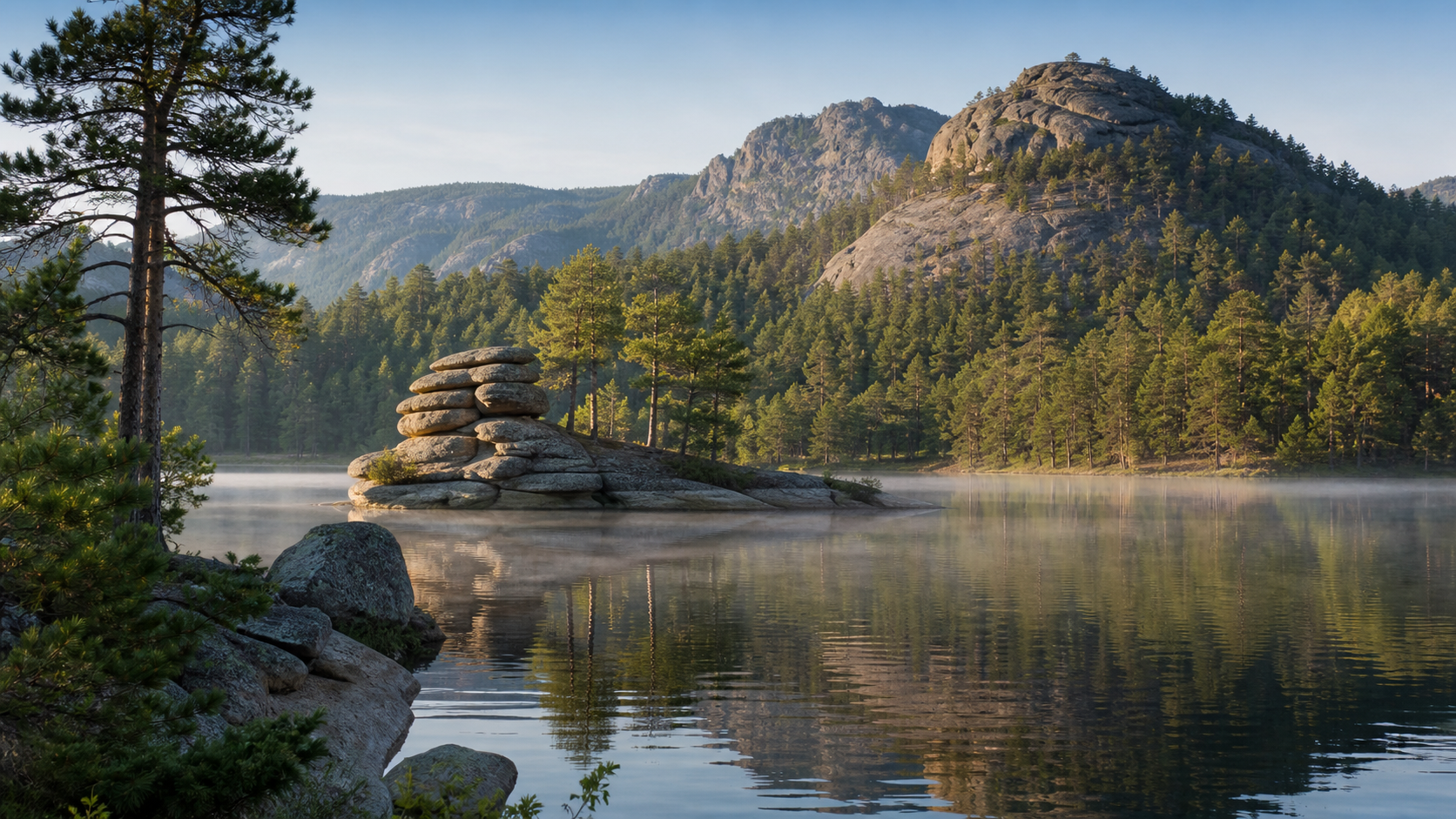
Kazakhstan Nature: 12 Stunning Landscapes You Must See
Explore Kazakhstan's nature from the Altai Mountains to the Caspian shore. National parks, lakes, canyons, steppes, and the best times to visit each region.
nature
Burabay, Kazakhstan: Lakes, Trails & Trip Planning
Plan a Burabay escape around one flexible park day, live weather and access checks, lake viewpoints, marked trails, hotels, and a safe return.
Plan the Next Step
travel
Kazakhstan Tourist Attractions: Choose the Right First-Trip Route
Compare Kazakhstan tourist attractions by base and logistics: Almaty nature, Turkestan heritage, Mangystau, Astana, Baikonur, and more.
food
Beshbarmak Recipe: How Kazakh Et Is Served
A source-checked guide to Kazakh et, widely called beshbarmak: what is on the platter, a practical home recipe, regional differences, and guest etiquette.
culture
Women in Kazakhstan: Rights, Work and Daily Life in 2026
Source-checked guide to women in Kazakhstan: current legal rights, dated work and wage data, marriage statistics, safety, and respectful language.
nature
Lake Balkhash Travel Guide: Two Waters, One Lake
A source-checked Lake Balkhash guide: why west and east differ, Kazakhstan's 2026 water update, a realistic trip plan, and swimming and fishing boundaries.
nature
Mangystau, Kazakhstan: Routes, Seasons and Trip Costs
Plan a Mangystau expedition from Aktau with current route, season, operator, sacred-site, safety and quote-check guidance for 2026.
nature
Kazakh Steppe: Landscape, Wildlife and How to Visit
Source-checked guide to the Kazakh steppe: its extent, Saryarka, Korgalzhyn, 2025 saiga data, seasons, and responsible access.

Travel Writer & Local Expert · Almaty, Kazakhstan
Tugelbay Konabayev is a Kazakhstan-based travel writer who has lived in Almaty for 7+ years and Astana for 4+ years. He grew up in Aktobe, Kazakhstan and has covered Kazakh travel, food, culture, and visa policy with first-hand reporting since 2023.