Kazakhstan Winter Olympics: Denis Ten, Smirnov Gold & Athletes
Reported from the ground: Tugelbay Konabayev is a Kazakh native (born in Aktobe) who has lived 7 years in Almaty and 4 in Astana. About the author.
In this article10 sections
Kazakhstan’s journey at the Winter Olympics spans from its independence debut in 1994 to historic success in 2026. Since competing as an independent nation for the first time at the Lillehammer 1994 Winter Olympics, Kazakh athletes have won eight Winter Olympic medals across ice skating, cross-country skiing, and other winter sports. The nation reached a historic milestone in February 2026 when Mikhail Shaidorov won gold in men’s figure skating at Milano Cortina, becoming Kazakhstan’s first figure skating Olympic champion and only the second Kazakh athlete to claim Winter Olympic gold, according to official Olympic records.
Kazakhstan’s First Winter Olympic Gold Medal - 1994 Lillehammer
Vladimir Smirnov secured Kazakhstan’s maiden Winter Olympic gold medal in the most dramatic fashion. On the final day of competition at the 1994 Lillehammer Winter Olympics in Norway, Vladimir Smirnov won the 50-kilometer classical-style cross-country skiing race. His time of 2:07:20.3 gave newly independent Kazakhstan its first gold medal in Winter Olympic history, a moment that shaped the nation’s entire Olympic identity.
Smirnov was born on March 7, 1964, in Shchuchinsk, Kazakh SSR, and had previously competed for the Soviet Union at the 1988 Calgary Winter Olympics, where he won multiple medals. His transition to representing independent Kazakhstan made his 1994 victory even more significant. Beyond his Lillehammer triumph, Smirnov compiled an extraordinary Olympic and World Championship record:
- 1 Olympic gold (50 km, 1994 Lillehammer)
- 4 Olympic silver medals (10 km classical 1994, 10 km + 15 km pursuit 1994, plus medals from Calgary 1988)
- 2 Olympic bronze medals
- 4 World Championship gold medals (1989, 1995 x3)
- 30 World Cup victories
The cross-country skiing legend remains a symbol of Kazakhstan’s first step onto the global Winter Olympic stage. After his retirement from competitive skiing in 1998, Smirnov transitioned into sports administration and leadership roles. He became closely involved in developing winter sports in Kazakhstan and served in various capacities to promote cross-country skiing and other winter disciplines. His involvement in post-competitive sports governance helped establish institutional knowledge and mentorship networks that supported subsequent generations of Kazakh winter athletes.
Smirnov’s 1994 victory was particularly significant because it occurred during a transitional moment in international skiing. The post-Soviet era presented unique challenges and opportunities for athletes from newly independent states. Smirnov’s success proved that Kazakhstan could compete at the highest levels of international winter sports despite the economic and infrastructural challenges of the early independence period. His performance validated the country’s emerging Olympic program and inspired domestic investment in winter sports development.
Winter Olympic Medals by Games and Sport
| Games | Location | Athletes | Gold | Silver | Bronze | Total | Key Athletes |
|---|---|---|---|---|---|---|---|
| 1994 | Lillehammer | 29 | 1 | 2 | 0 | 3 | Vladimir Smirnov |
| 1998 | Nagano | 60 | 0 | 0 | 2 | 2 | Smirnov (bronze) |
| 2002 | Salt Lake City | 50 | 0 | 0 | 0 | 0 | - |
| 2006 | Turin | 56 | 0 | 0 | 0 | 0 | - |
| 2010 | Vancouver | 37 | 0 | 1 | 0 | 1 | Speed skating |
| 2014 | Sochi | 52 | 0 | 0 | 1 | 1 | Denis Ten |
| 2018 | Pyeongchang | 46 | 0 | 0 | 1 | 1 | Speed skating |
| 2022 | Beijing | 34 | 0 | 0 | 0 | 0 | - |
| 2026 | Milano Cortina | - | 1 | - | - | 1+ | Mikhail Shaidorov |
Source: Kazakhstan at the Olympics - Wikipedia
Denis Ten - Kazakhstan’s Figure Skating Pioneer
Denis Ten transformed figure skating in Kazakhstan, becoming the country’s first international skating champion across multiple prestigious competitions. Born on June 13, 1993, in Almaty, Denis Yurievich Ten was a member of the Korean minority in Kazakhstan. His great-great-grandfather, Min Geung-ho, was a famous Korean independence fighter during Korea’s struggle for independence from Japan.
Olympic Achievement
Ten’s most celebrated achievement came at the 2014 Sochi Winter Olympics, where he won the bronze medal in men’s singles figure skating. This medal made him:
- The first figure skater from Kazakhstan to win an Olympic medal
- The first Kazakh skater to stand on the World Championships podium (silver 2013, bronze 2015)
- The first Kazakh skater to win the Four Continents Championships (gold 2015)
International Records and Championships
Beyond his Olympic success, Ten established himself among elite figure skaters globally:
- Two World Championship medals - Silver in 2013 (London), Bronze in 2015 (Shanghai)
- 2015 Four Continents Champion (Seoul)
- 2017 Winter Universiade Champion
- Eight-time national champion of Kazakhstan
- Qualifier for Olympic spots - His performances helped Kazakhstan earn two berths in men’s figure skating for both the 2010 and 2014 Winter Olympics
Ten also earned the distinction of being the first skater from Kazakhstan to win an International Skating Union competition at the 2008-09 ISU Junior Grand Prix event in Belarus. His competitive legacy helped establish a framework for future Kazakh figure skaters to succeed on the international stage, making him not just an athlete but a pioneer for the sport in his country.
Tragic Legacy and Honors
On July 19, 2018, Denis Ten was murdered in Almaty at the age of 25 during an attempted robbery while defending his car. The figure skating community was devastated by his death, and he remains a beloved figure in Kazakhstan’s Winter Olympic history. His legacy continues through:
- Annual Denis Ten Memorial Challenge - A figure skating competition held in Kazakhstan
- Olympic ambassador legacy - He served as the official ambassador for the Almaty 2022 Winter Olympic Bidding Committee
- Inspiration for young skaters - His achievements opened doors for future Kazakh figure skaters
Mikhail Shaidorov - Kazakhstan’s Historic 2026 Gold Medalist
In February 2026, Mikhail Shaidorov made history by becoming Kazakhstan’s first-ever figure skating Olympic champion. Competing at the Milano Cortina 2026 Winter Olympics, Shaidorov won gold in men’s singles figure skating, making him only the second Kazakhstani athlete ever to claim Winter Olympic gold - the first being Vladimir Smirnov in 1994, 32 years earlier.
Shaidorov’s 2026 victory signifies a new era for figure skating in Kazakhstan. Born in Almaty, he represents a new generation of Kazakh skaters competing at the highest international level and carrying on the legacy established by Denis Ten.
At Milano Cortina 2026, Shaidorov defeated Japan’s Kagiyama Yuma and Sato Shun, while USA’s title favorite Ilia Malinin, who led the short program, finished 8th. The performance demonstrated that Kazakhstan has developed world-class figure skaters capable of competing against and defeating the sport’s top nations.
Shaidorov’s victory is particularly meaningful within the broader context of Kazakh sports development. His gold medal represents the culmination of decades of investment in sports infrastructure, coaching excellence, and athlete development systems. The young skater from Almaty became an instant national hero, and his achievement is expected to inspire the next generation of Kazakh figure skaters to pursue excellence at the Olympic level. Media coverage of his victory in Kazakhstan emphasized how the achievement validates the country’s winter sports programs and positions Kazakhstan as an emerging figure skating power in international competition.
Medeu Ice Rink - Training Hub for Kazakh Winter Athletes
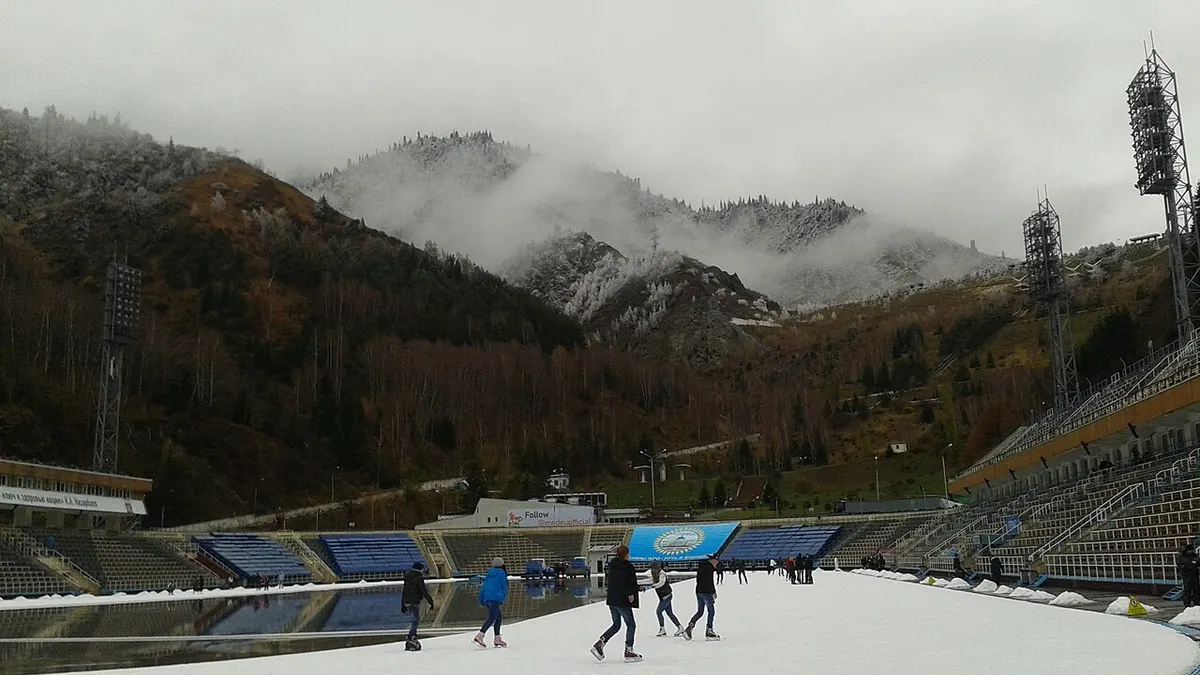
The Medeu ice rink in Almaty is the world’s highest open-air speed skating stadium and plays a crucial role in training Kazakhstan’s winter athletes. Located at 1,691 meters above sea level in the Medeu Valley, near the southeastern outskirts of Almaty, Medeu consists of 10.5 thousand square meters of ice maintained by a sophisticated freezing and watering system.

Historical Significance
Medeu has been a legendary venue since the Soviet era and continues to host:
- World-class speed skating competitions and training
- Figure skaters’ conditioning workouts
- Public skating and recreational activities
- International skating events
The high altitude (1,691 m) and fresh mountain air create unique advantages for athlete training. The rink’s sophisticated ice maintenance system allows for competitions and training even during harsh Alpine winters. A nearby anti-mudflow dam and nature park complete the Medeu complex, making it both a sporting facility and a destination for Almaty visitors seeking mountain experiences.
Medeu’s Olympic Legacy
Medeu holds special significance in the history of Olympic speed skating. The venue has hosted international skating championships and served as training grounds for Olympic competitors from multiple countries. The altitude advantage gives athletes training opportunities that simulate competition conditions at high-elevation venues. Many of Kazakhstan’s speed skaters who have earned Olympic medals prepared extensively at Medeu before competing on the world stage. The rink’s role in producing competitive athletes demonstrates how infrastructure investment directly supports Olympic success. For more on Medeu’s cultural significance, see the detailed guide to Medeu in Almaty.
For more on Almaty’s attractions, see the guide to things to do in Almaty.
Almaty’s 2022 Winter Olympics Bid - Near Miss for Kazakhstan
Kazakhstan came remarkably close to hosting the Winter Olympics when Almaty made a competitive bid to host the 2022 Winter Games. At the 2015 International Olympic Committee (IOC) voting session, Almaty faced Beijing in the final decision, according to reporting from the New York Times. Beijing narrowly won with 44 votes to Almaty’s 40 votes - just a four-vote margin.
The Almaty 2022 bid was ambitious and reflected Kazakhstan’s growing Winter Olympic infrastructure and athlete development. Denis Ten served as the official ambassador for the Almaty 2022 Olympic Bidding Committee, helping promote the country’s candidacy on the international stage. While the host city honor went to Beijing, the bid process strengthened Kazakhstan’s profile in international winter sports.
Kazakhstan’s Winter Sports Infrastructure
Beyond Medeu, Kazakhstan has developed winter sports facilities across the country:
- Shymbulak Ski Resort (near Almaty) - Alpine skiing and snowboarding venue with modern chairlifts and training slopes
- Sports stadiums and ice hockey arenas in Astana, Almaty, and other major cities
- Government support for winter sport athlete development through the National Olympic Committee of Kazakhstan (olympic.kz)
- Training academies affiliated with major sports clubs that identify and develop young talent
The national Olympic programs have expanded significantly since independence. According to the National Olympic Committee of Kazakhstan, the country maintains dedicated training centers and funding for winter sports athletes competing at international levels. Investment in sports facilities and infrastructure reflects the government’s commitment to positioning Kazakhstan as a competitive winter sports nation.
The development of winter sports infrastructure parallels Kazakhstan’s broader sports modernization. Government programs identify talented young athletes through regional competitions and provide subsidized training and coaching. Athletes showing Olympic potential receive support including funding for international competitions, access to world-class coaches, and training camps at premier facilities. This systematic approach to athlete development has proven effective in producing medal-winning competitors across multiple winter sports disciplines.
Kazakh Winter Olympians Across Multiple Sports
While figure skating and cross-country skiing represent Kazakhstan’s strongest Winter Olympic performances, Kazakh athletes have competed in:
- Speed skating - multiple medals across various Games
- Biathlon - competing in Olympic qualifying events
- Skiing - Alpine and cross-country events
- Other winter disciplines - bobsled, ice hockey representatives
Each Winter Olympics since 1994, Kazakhstan has sent delegations ranging from 29 athletes in 1994 Lillehammer to 60 athletes in 1998 Nagano, reflecting the nation’s commitment to winter sports development.
Kazakhstan’s Road to Winter Olympic Success
The trajectory from 1994 to 2026 shows steady progress:
- 1994 Lillehammer - Vladimir Smirnov’s gold established Kazakhstan’s Winter Olympic presence
- 1998 Nagano - Two medals, including Smirnov’s bronze
- 2002-2006 - No medals, but athletes continued competing
- 2010-2018 - Sporadic medals including Denis Ten’s historic 2014 bronze
- 2026 Milano Cortina - Mikhail Shaidorov’s gold marks a return to gold medal glory
This progression reflects:
- Development of coaching programs aligned with international standards
- Investment in training facilities like Medeu
- Identification and nurturing of young talent through academy systems
- International partnerships and athlete exchange programs
For more on Kazakhstan’s athletic achievements, see the guide to Kazakhstan football and famous people from Kazakhstan.
Frequently Asked Questions
Has Kazakhstan ever won a Winter Olympic gold medal?
Yes, Kazakhstan has won two Winter Olympic gold medals. Vladimir Smirnov won the first gold in cross-country skiing (50 km) at the 1994 Lillehammer Winter Olympics. Mikhail Shaidorov won the second gold in men's figure skating at the 2026 Milano Cortina Winter Olympics, making him Kazakhstan's first figure skating Olympic champion.
What was Denis Ten's Olympic achievement?
Denis Ten won the bronze medal in men's singles figure skating at the 2014 Sochi Winter Olympics. He was the first figure skater from Kazakhstan to win an Olympic medal and the first Kazakh skater to compete at the World Championships podium level.
How many Winter Olympics has Kazakhstan participated in?
Kazakhstan has participated in every Winter Olympics since its independence debut in 1994 Lillehammer. The country has sent delegations to 1994, 1998, 2002, 2006, 2010, 2014, 2018, 2022, and 2026 Winter Olympic Games.
What is the Medeu ice rink?
Medeu is the world's highest open-air speed skating stadium, located at 1,691 meters above sea level in Almaty, Kazakhstan. It has 10,500 square meters of ice and is used for international speed skating competitions, figure skater training, and public skating. It has been a legendary venue since the Soviet era.
Did Kazakhstan ever bid to host the Winter Olympics?
Yes. Almaty made a bid to host the 2022 Winter Olympics but narrowly lost to Beijing in 2015 by just four votes (Beijing 44, Almaty 40). The bid was championed by figure skater Denis Ten, who served as the official ambassador for the Almaty 2022 Olympic Bidding Committee.
What sports has Kazakhstan competed in at the Winter Olympics?
Kazakhstan has competed in multiple winter sports including figure skating, speed skating, cross-country skiing, biathlon, and Alpine skiing. The strongest performances have come in figure skating and cross-country skiing.
Sources
- Kazakhstan at the Olympics - Wikipedia
- Vladimir Smirnov (skier) - Wikipedia
- Denis Ten - Wikipedia
- Mikhail Shaidorov - Wikipedia
- NBC Olympics - Mikhail Shaidorov’s Historic Gold
- Cross-country skiing at the 1994 Winter Olympics - Wikipedia
- New York Times - Beijing Selected as Host of 2022 Winter Olympics
- Medeu Skating Rink - Wikimedia Commons
- Almaty bid for the 2022 Winter Olympics - Wikipedia
- National Olympic Committee of Kazakhstan
Last verified: June 2026
Google Preferred Sources
See more Kazakhstan stories in Google
Add About Kazakhstan as a preferred source to find more of our fresh, relevant stories in Google Search.
More Stories

culture
Famous People from Kazakhstan: Athletes, Artists & Thinkers
An evidence-led guide to notable people from Kazakhstan, including Gennadiy Golovkin, Dimash Qudaibergen, Abai, athletes, artists, and scientists.

culture
Dombra Guide: The Two-String Kuy Tradition of Kazakhstan
Source-checked dombra guide: what a kuy is, how tökpe and shertpe differ, works to hear, UNESCO context, National Dombra Day, lessons, and buying.
culture
Kazakhstan Traditional Clothing: Complete Guide
Complete guide to Kazakhstan traditional clothing: chapan robes, saukele headdresses, tymak fur hats. History, meaning, and where to buy authentic pieces.
culture
Kazakhstan Culture: Traditions, Etiquette & Living Heritage
A practical guide to Kazakhstan culture: hospitality, language, dombra and kuy, Nauryz, family customs, food, etiquette, and UNESCO-listed heritage.
Plan the Next Step
travel
Kazakhstan Tourist Attractions: Choose the Right First-Trip Route
Compare Kazakhstan tourist attractions by base and logistics: Almaty nature, Turkestan heritage, Mangystau, Astana, Baikonur, and more.
food
Beshbarmak Recipe: How Kazakh Et Is Served
A source-checked guide to Kazakh et, widely called beshbarmak: what is on the platter, a practical home recipe, regional differences, and guest etiquette.
culture
Women in Kazakhstan: Rights, Work and Daily Life in 2026
Source-checked guide to women in Kazakhstan: current legal rights, dated work and wage data, marriage statistics, safety, and respectful language.
culture
Dombra Guide: The Two-String Kuy Tradition of Kazakhstan
Source-checked dombra guide: what a kuy is, how tökpe and shertpe differ, works to hear, UNESCO context, National Dombra Day, lessons, and buying.
culture
Eagle Hunting in Kazakhstan: Ethical Berkutchi Guide
Understand Kazakh berkutchi tradition, UNESCO falconry status, ethical animal encounters, live booking checks, and responsible travel.
culture
Kazakhstan Traditions: 15 Living Customs From the Steppe
Kazakhstan traditions: 15 living customs from dastarkhan hospitality and eagle hunting to Nauryz, horse games, and wedding rituals still practiced today.

Travel Writer & Local Expert · Almaty, Kazakhstan
Tugelbay Konabayev is a Kazakhstan-based travel writer who has lived in Almaty for 7+ years and Astana for 4+ years. He grew up in Aktobe, Kazakhstan and has covered Kazakh travel, food, culture, and visa policy with first-hand reporting since 2023.