Kazakhstan Nature: 12 Stunning Landscapes You Must See
Reported from the ground: Tugelbay Konabayev is a Kazakh native (born in Aktobe) who has lived 7 years in Almaty and 4 in Astana. About the author.
In this article10 sections
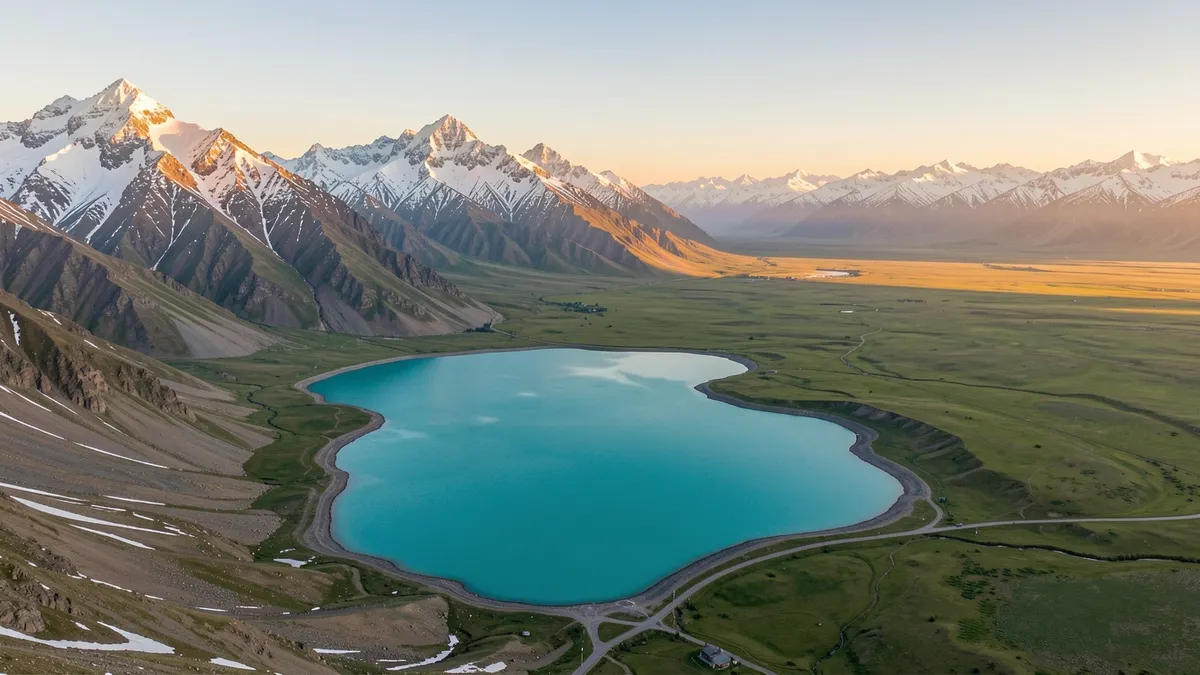
Kazakhstan spans about 2.7 million square kilometers from the Caspian basin to the Altai and Tian Shan, with steppe, desert, wetlands, canyons, glaciers, and high-altitude lakes. Comparisons with the Grand Canyon, Patagonia, or New Zealand are subjective and hide what is distinctive here: enormous travel distances, highly seasonal access, fragile water systems, and wildlife populations that can change quickly. Use the protected area’s current notice, not a saved price or old access post, before setting out.
Geography and Climate Zones
Kazakhstan stretches across five distinct climate zones, creating an extraordinary range of ecosystems within a single country.
| Zone | Region | Landscape | Best Season |
|---|---|---|---|
| Alpine | Southeast (Tian Shan, Altai) | Glaciers, peaks above 4,000 m, alpine meadows | June-September |
| Semi-arid steppe | Central Kazakhstan | Endless grasslands, the Kazakh Steppe | May-June, September |
| Desert | South-central (Kyzylkum, Betpak-Dala) | Sand dunes, saxaul forests, canyons | March-May, October |
| Caspian lowland | West | Coastal wetlands, below sea level | April-May |
| Forest-steppe | North | Birch forests, rolling hills, lakes | June-August |
This diversity means you can stand on a glacier at 4,000 meters in the morning and drive through desert dunes by evening, all within the same country.
Top Natural Landmarks
Charyn Canyon
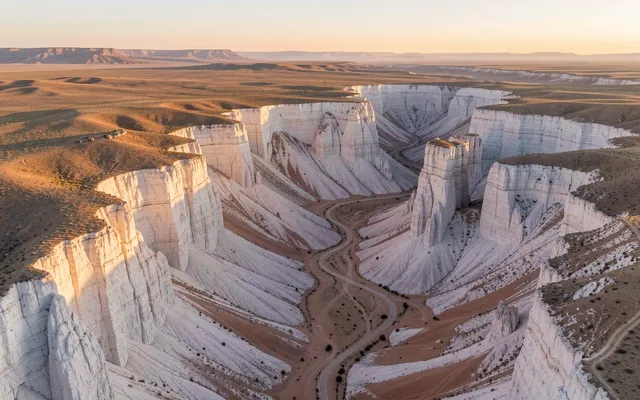
Charyn Canyon runs along the Charyn River east of Almaty. The Valley of Castles is the best-known visitor section. Treat it as a full day trip from Almaty and check the national park’s current entrance, route, weather, and fee notice before departure.
Big Almaty Lake
Big Almaty Lake is a high-altitude lake in the Zailiysky Alatau near Almaty. Road, checkpoint, and hiking access can change; do not rely on old claims that a private 4WD can reach a particular gate or that one fixed hike time applies. Confirm the current approved route and required documents before travel.
Kolsai Lakes
Three alpine lakes sit at different elevations in the Kungey Alatau range. Route time depends on the starting gate, weather, trail condition, fitness, and whether the park allows the intended section. UNESCO identifies Kolsai Kolderi as a Man and the Biosphere reserve nominated in 2021. The lakes are surrounded by Tian Shan spruce forest, and Saty is the usual accommodation base. Check current park entry, transport, horse-hire rules, and lodging prices directly before travel.
Altyn-Emel National Park
The official park directory lists the Singing Dune, Aktau, Katutau, Besshatyr and other natural and cultural sites. They do not all share one approach: plan the Basshi and Shengeldy sides separately. The dedicated Altyn-Emel National Park guide covers the route choice, advance pass, live service categories and Basshi accommodation without freezing prices or promising wildlife sightings.
Lake Balkhash
The world’s 15th largest lake and one of only a few that is half freshwater, half saltwater, split by a narrow strait. The western half feeds Kazakhstan’s fishing industry, while the eastern half supports unique saline ecosystems. At 605 km long, it is visible from space.
Kazakh Steppe
The Kazakh Steppe covers an immense part of the country. In spring, some areas develop short-lived wildflower displays, while saiga herds move across landscapes that are not ordinary wildlife parks. Kazakhstan’s reported spring 2026 aerial estimate reached about 4.69 million saiga, according to local reporting on the April count conducted by Association for the Conservation of Biodiversity of Kazakhstan specialists. This is a dated estimate rather than a formal census or a promise that travelers can approach or reliably see a herd.
National Parks Worth Visiting
Kazakhstan’s 14 national parks protect the country’s most important ecosystems. The top five for visitors:
| Park | Region | Highlight | Access From |
|---|---|---|---|
| Ile-Alatau | Almaty suburbs | Big Almaty Lake, hiking trails | Almaty (20 min) |
| Charyn | Southeast | Valley of Castles, river rafting | Almaty (3.5 hr) |
| Altyn-Emel | Southeast | Singing Dune, Aktau, Katutau, Besshatyr | Route-dependent |
| Kolsai Lakes | Southeast | Three alpine lakes, camping | Almaty (5 hr) |
| Burabay (Borovoe) | North | Pine forests, lakes and rounded granite | Astana gateway |
Fees, vehicle charges and camping rules vary by park and date. Use each park’s live service page and camp only in the currently designated areas.
Kazakhstan’s Mountains
The country’s southeastern border holds the northern Tian Shan range, with peaks exceeding 7,000 meters. Khan Tengri (6,995 m) on the Kazakhstan-Kyrgyzstan border is one of Central Asia’s most sought-after mountaineering objectives.
For trekkers, the Zailiysky Alatau range behind Almaty offers dozens of day and multi-day hikes ranging from easy valley walks to technical alpine routes. Popular routes include:
- Kok-Zhailau meadow: 3-4 hour round trip, easy, spectacular views of Almaty
- Furmanov Peak: 6-7 hours, moderate, 3,050 m summit
- Big Almaty Peak: Full day, challenging, 3,681 m
- Ozerniy trek: 2-3 days, moderate, crosses between Almaty valleys
Wildlife
Kazakhstan hosts an impressive range of wildlife adapted to its extreme environments:
- Snow leopard: present in Kazakhstan’s mountain systems, but a global WWF species page does not establish a current Kazakhstan population count
- Saiga antelope: about 4.69 million in Kazakhstan’s spring 2026 aerial count; population estimates should always carry a survey date
- Golden eagle: Used in traditional eagle hunting, with an estimated 2,000 trained birds
- Flamingos: Colonies of up to 30,000 breed at Tengiz-Korgalzhyn lakes, a UNESCO World Heritage site
- Caspian seal: Endangered, found along Kazakhstan’s Caspian coast
Best Time to Visit for Nature
| Goal | Best Months | Why |
|---|---|---|
| Wildflower steppe | May-June | Steppe blooms, mild temperatures |
| Alpine hiking | July-August | Snow melts above 3,000 m, trails clear |
| Autumn colors | September-October | Golden larches in Tian Shan, warm days |
| Skiing | January-February | Peak snow, all resorts open |
| Bird watching | April-May | Migration through wetlands |
| Photography | May, September | Best light, moderate weather |
For the widest range of accessible landscapes, visit between late May and early October.
Practical Tips for Nature Travel
A safe nature itinerary needs a route-specific check, not only a list of beautiful places. Before departure, record the protected area, official entrance, current opening notice, weather, daylight, water availability, phone coverage, guide or driver, and return deadline. Share the route with someone who is not traveling with you.
For remote desert, steppe, canyon, or mountain travel, ask who controls the access road and who can respond if the vehicle fails. Confirm whether the operator carries recovery equipment, first aid, spare water, and a satellite device where mobile service is absent. A generic “4x4 tour” label does not establish any of those protections.
Wildlife viewing should remain distant and non-disruptive. Never direct a driver off an approved track to follow saiga, approach nests, feed animals, or publish precise locations for a sensitive species. In mountain areas, turn back for weather, altitude symptoms, unstable snow, or a ranger closure even if a saved itinerary says the viewpoint is close.
Transport: Many natural landmarks require road transport beyond scheduled public routes. Request a dated rental or tour quote and verify vehicle type, insurance, driver, fuel, park fees, pickup, cancellation, and recovery arrangements.
Accommodation: Outside major cities, availability and standards vary. Confirm the exact property pin, heating or cooling, water, meals, bathroom, late arrival, cancellation, and whether camping is allowed at the intended site.
Connectivity: Cell coverage exists along major roads but drops to zero in canyons, mountains, and remote steppe areas. Download offline maps (Maps.me or Google Maps offline) before heading out.
Permits: Ask the protected-area administration and, where relevant, border authorities what documents, route approval, fee, and lead time apply to your nationality and destination. Do not rely on an old distance threshold, gate price, or application deadline.
Guides: For remote areas like the Altai Mountains or Mangystau, verify the guide’s legal identity, route experience, communications, insurance, emergency plan, inclusions, and cancellation terms. No current primary registry was captured that supports a national operator count or reusable daily package price, so neither is published here.
Frequently Asked Questions
What is the most beautiful natural place in Kazakhstan?
Kolsai Lakes and Charyn Canyon are the two most photographed natural landmarks. Kolsai offers turquoise alpine lakes surrounded by spruce forest, while Charyn features dramatic red rock formations. Both are reachable as day trips from Almaty.
Is Kazakhstan good for hiking?
Kazakhstan has hiking from foothill walks to technical alpine routes, but access and permit requirements depend on the exact trail and date. Check the park's current opening notice, permit and route-approval requirements for your nationality, border-zone rules, weather, and route condition before departure.
Are there dangerous animals in Kazakhstan?
Large predators (snow leopard, brown bear, wolf) exist in remote mountain areas but encounters with humans are extremely rare. Ticks are the main concern in spring and early summer in grassy areas. Snakes exist in desert regions but are not aggressive.
Can you see flamingos in Kazakhstan?
Yes. Greater flamingos breed at Tengiz-Korgalzhyn lakes, 130 km southwest of Astana, from May through September. Colonies can exceed 30,000 birds. The Saryarka steppe and lakes system is a UNESCO World Heritage site (whc.unesco.org/en/list/1102) and one of the northernmost flamingo breeding grounds in the world.
How many national parks does Kazakhstan have?
Protected-area counts and categories should be checked against the current Kazakhstan registry. Ile-Alatau, Charyn, Altyn-Emel, Kolsai Kolderi, and Burabay are common trip-planning names, but entry fees and access rules vary by park and date.
What is the best month to visit Kazakhstan for nature?
June and September offer the best combination of accessible trails, comfortable temperatures, and dramatic scenery. June has wildflowers on the steppe and snow still on high peaks. September brings golden autumn colors in the mountains with fewer tourists.
Conservation Challenges and Successes
Kazakhstan’s natural landscapes face real pressures, but the country has also achieved conservation results that are among the most dramatic in the world.
The saiga recovery is the clearest example of why nature figures need dates. The Convention on Migratory Species overview records growth from 21,000 animals in 2003 to 1.318 million in 2022; the later spring 2026 national estimate was about 4.69 million. Conservation management remains active, and visitors should never leave approved roads or pursue a herd for photographs.
Snow leopard estimates are harder to compare because survey areas and methods differ. WWF’s species overview explains the wider conservation pressures, but it is not a current Kazakhstan census. Treat any precise national count without a dated Kazakhstan survey and methodology as provisional; seeing one is extremely unlikely and should never be marketed as a normal tour outcome.
The Aral Sea catastrophe remains Kazakhstan’s most visible environmental failure. The sea lost over 90% of its volume between 1960 and 2000 due to Soviet irrigation diversion of the Syr Darya and Amu Darya rivers. The northern section (the Small Aral Sea, located in Kazakhstan) has partially recovered since the completion of the Kokaral Dam in 2005, funded by the World Bank. According to a World Bank project assessment, water levels in the Small Aral Sea rose by 12 meters within 18 months of dam completion, fish populations returned, and local fishing communities recovered partial livelihoods. The southern section, in Uzbekistan, remains a desert.
Adventure Activities Across Kazakhstan’s Landscapes
Kazakhstan’s natural diversity supports a wider range of outdoor activities than most visitors expect, from technical mountaineering at altitude to flat-water paddling on steppe lakes.
In the Tian Shan, mountaineering routes on Khan Tengri (6,995 m) and Pik Pobedy (7,439 m) attract climbers from Russia, Europe, and Japan. According to the Central Asian Mountaineering Association, both peaks require technical ice and mixed climbing skills, proper altitude acclimatization, and permits from the Kazakhstan Sports Committee. The climbing season runs July to August. For trekkers without technical skills, the approach valleys offer multi-day routes through some of Central Asia’s most remote glaciated terrain.
River rafting runs on the Charyn, Chilik, and Ili rivers east of Almaty during spring and early summer when snowmelt fills the channels. According to local outfitters, the Charyn River offers Class III-IV rapids through the canyon system, combining white water with the red rock scenery of the canyon walls. The Ili River below Kapchagay Reservoir is calmer and suitable for multi-day float trips through semi-desert landscape.
Horse trekking is offered in parts of the Altai, Tian Shan foothills, and steppe. Ask the operator for a dated itinerary that identifies horse welfare standards, guide credentials, rider limits, insurance, accommodation, food, evacuation arrangements, and the exact protected-area permissions. Do not reuse an old package price as a current quote.
Winter brings ice climbing on frozen waterfalls in the Tian Shan gorges, ice fishing on the steppe lakes of northern Kazakhstan, and heli-skiing on untracked powder in remote ranges accessible only by helicopter from Almaty. Shymbulak is the most accessible ski resort, but backcountry routes from its summit reach terrain that sees almost no visitors.
Start Planning
The most practical approach is to base yourself in Almaty and explore outward. The city sits at the foot of the Tian Shan, putting Big Almaty Lake, Shymbulak mountain area, and Charyn Canyon all within a few hours. A 7-10 day itinerary lets you cover the southeastern highlights comfortably.
Kazakhstan’s natural regions reward careful planning rather than speed. Choose fewer areas, verify the current access notice, and leave enough time for weather, road, and permit changes.
For a first trip, keep one city base and one remote region rather than joining several distant parks into a rushed loop. This makes it easier to verify one operator, carry appropriate equipment, respond to closures, and avoid losing most of the itinerary to transfers.
Last verified: July 10, 2026. Wildlife estimates carry survey dates; park access, fees, and routes require a current official check.
Google Preferred Sources
See more Kazakhstan stories in Google
Add About Kazakhstan as a preferred source to find more of our fresh, relevant stories in Google Search.
More Stories
nature
Hiking in Kazakhstan: Regions, Seasons and Safety
Plan hiking in Kazakhstan by region, season and risk. Compare Almaty, Kolsai, desert and remote routes, then use official live checks before departure.
nature
Burabay, Kazakhstan: Lakes, Trails & Trip Planning
Plan a Burabay escape around one flexible park day, live weather and access checks, lake viewpoints, marked trails, hotels, and a safe return.
nature
Kazakhstan National Parks: All 14 Parks, Areas & Entry Fees
Compare Kazakhstan's 14 national parks using the official register. Download area data and a size chart, and check park-specific entry fees.
nature
Mangystau, Kazakhstan: Routes, Seasons and Trip Costs
Plan a Mangystau expedition from Aktau with current route, season, operator, sacred-site, safety and quote-check guidance for 2026.
Plan the Next Step
travel
Kazakhstan Tourist Attractions: Choose the Right First-Trip Route
Compare Kazakhstan tourist attractions by base and logistics: Almaty nature, Turkestan heritage, Mangystau, Astana, Baikonur, and more.
food
Beshbarmak Recipe: How Kazakh Et Is Served
A source-checked guide to Kazakh et, widely called beshbarmak: what is on the platter, a practical home recipe, regional differences, and guest etiquette.
culture
Women in Kazakhstan: Rights, Work and Daily Life in 2026
Source-checked guide to women in Kazakhstan: current legal rights, dated work and wage data, marriage statistics, safety, and respectful language.
nature
Lake Balkhash Travel Guide: Two Waters, One Lake
A source-checked Lake Balkhash guide: why west and east differ, Kazakhstan's 2026 water update, a realistic trip plan, and swimming and fishing boundaries.
nature
Mangystau, Kazakhstan: Routes, Seasons and Trip Costs
Plan a Mangystau expedition from Aktau with current route, season, operator, sacred-site, safety and quote-check guidance for 2026.
nature
Kazakh Steppe: Landscape, Wildlife and How to Visit
Source-checked guide to the Kazakh steppe: its extent, Saryarka, Korgalzhyn, 2025 saiga data, seasons, and responsible access.

Travel Writer & Local Expert · Almaty, Kazakhstan
Tugelbay Konabayev is a Kazakhstan-based travel writer who has lived in Almaty for 7+ years and Astana for 4+ years. He grew up in Aktobe, Kazakhstan and has covered Kazakh travel, food, culture, and visa policy with first-hand reporting since 2023.