Mangystau, Kazakhstan: Routes, Seasons and Trip Costs
Reported from the ground: Tugelbay Konabayev is a Kazakh native (born in Aktobe) who has lived 7 years in Almaty and 4 in Astana. About the author.
In this article12 sections
Plan Mangystau as an Aktau-based remote expedition, not as a loose list of roadside stops. For a first visit, reserve at least 3 days for one focused route or 4–5 days for a mix of natural and sacred sites. Choose the route and operator before buying non-refundable transport, because vehicle type, access, weather, camp format and transfer time change what is realistic.
The region’s current official tourism update reports 23 tour operators and 256 developed tourist routes. It names Bozzhyra, Sherkala, Bokty, Torysh, Karagiye, Beket Ata, Shopan Ata, Karaman Ata, Airakty-Shomanai, Kokala and Ybykty Sai among the popular natural and cultural sites. That breadth is the reason a single “see everything” itinerary is a bad starting point.
| Time available | Sensible trip shape | Main compromise |
|---|---|---|
| 1 day | Aktau plus one operator-confirmed outing | Long transfers can consume most of the day |
| 2–3 days | One natural-landscape route or one pilgrimage focus | Do not force distant highlights into both days |
| 4–5 days | Natural sites plus one or two sacred complexes | Requires a clear overnight and return plan |
| 6+ days | Broader route with a weather or access buffer | More camp nights and vehicle time |
These durations are editorial planning ranges, not official route times. Ask the operator for the exact sequence and return time for your dates.
Is Mangystau Right for Your Trip?
Choose Mangystau for remote landscapes and sacred heritage, not for an easy city break. Aktau provides the arrival base, accommodation and supplies. The places that define the trip sit across a much larger region and may involve unsealed roads, long transfers, limited communications and overnight camps.
Mangystau is a good fit when:
- you are comfortable spending substantial time in a vehicle;
- a landscape or pilgrimage route matters more than restaurant and nightlife choice;
- you can accept an operator-led change for weather, road or access conditions;
- you are willing to carry layers, sun protection, water and essential medication;
- you can keep the final return to Aktau separate from a same-day flight.
It is a poor fit when every night must have full hotel facilities, the schedule cannot move, or a missed flight would cause a serious problem. For a city-led western Kazakhstan trip, use the Aktau guide and add only one verified excursion.
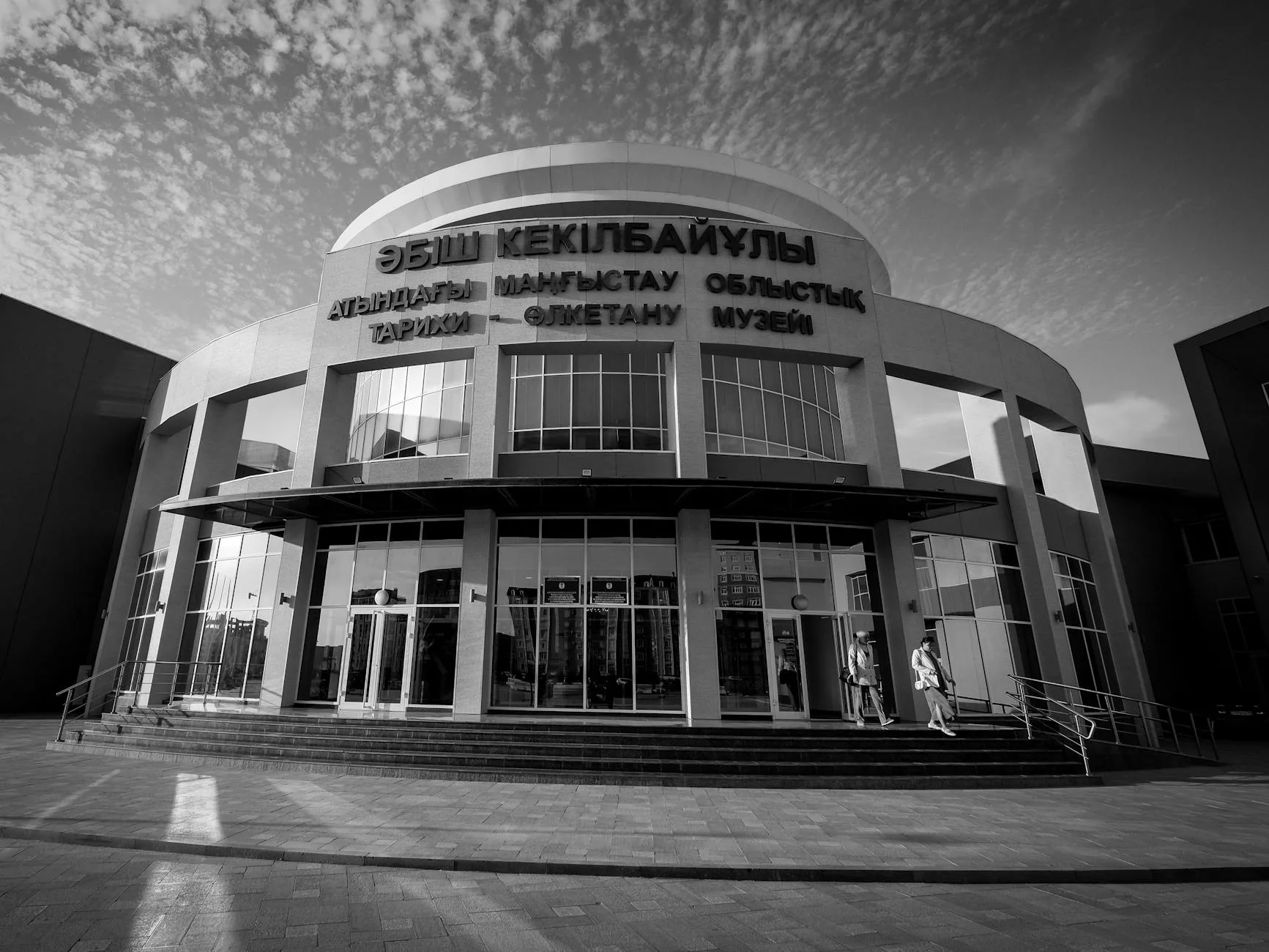
Use Aktau for arrival, supplies and the final night instead of treating it as a minor stop between desert transfers.
The Places to Choose Between
Build the route from two or three priorities, not every name on a map. The official regional list confirms the core places, but it does not make them interchangeable. A white escarpment, a field of stone concretions and a living pilgrimage complex require different timing and behaviour.
Bozzhyra
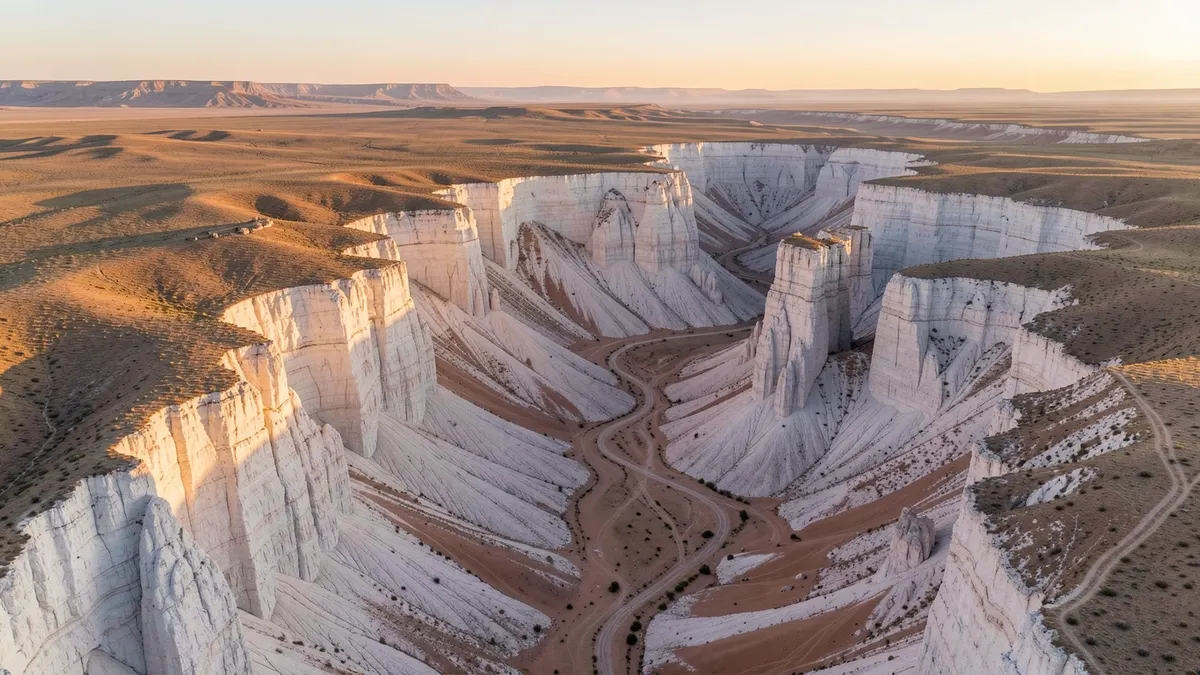
Bozzhyra is the visual anchor for many first trips: pale escarpments, isolated ridges and broad viewpoints on the Ustyurt landscape. The existing hero on this page is an editorial illustration of that landscape type, not proof of current road or viewpoint access.
Ask which Bozzhyra viewpoint is included, whether the plan stays on the rim or descends, how much walking is expected, and what condition cancels the route. “Bozzhyra included” is not enough detail for a quote.
Torysh
Torysh is known for round stone concretions spread across open terrain. It gives a different scale and texture from Bozzhyra and works well for travellers interested in geology or close-range photography. Avoid copying old claims about exact ages, formation chemistry or sphere size unless the operator provides a current scientific or protected-area source.
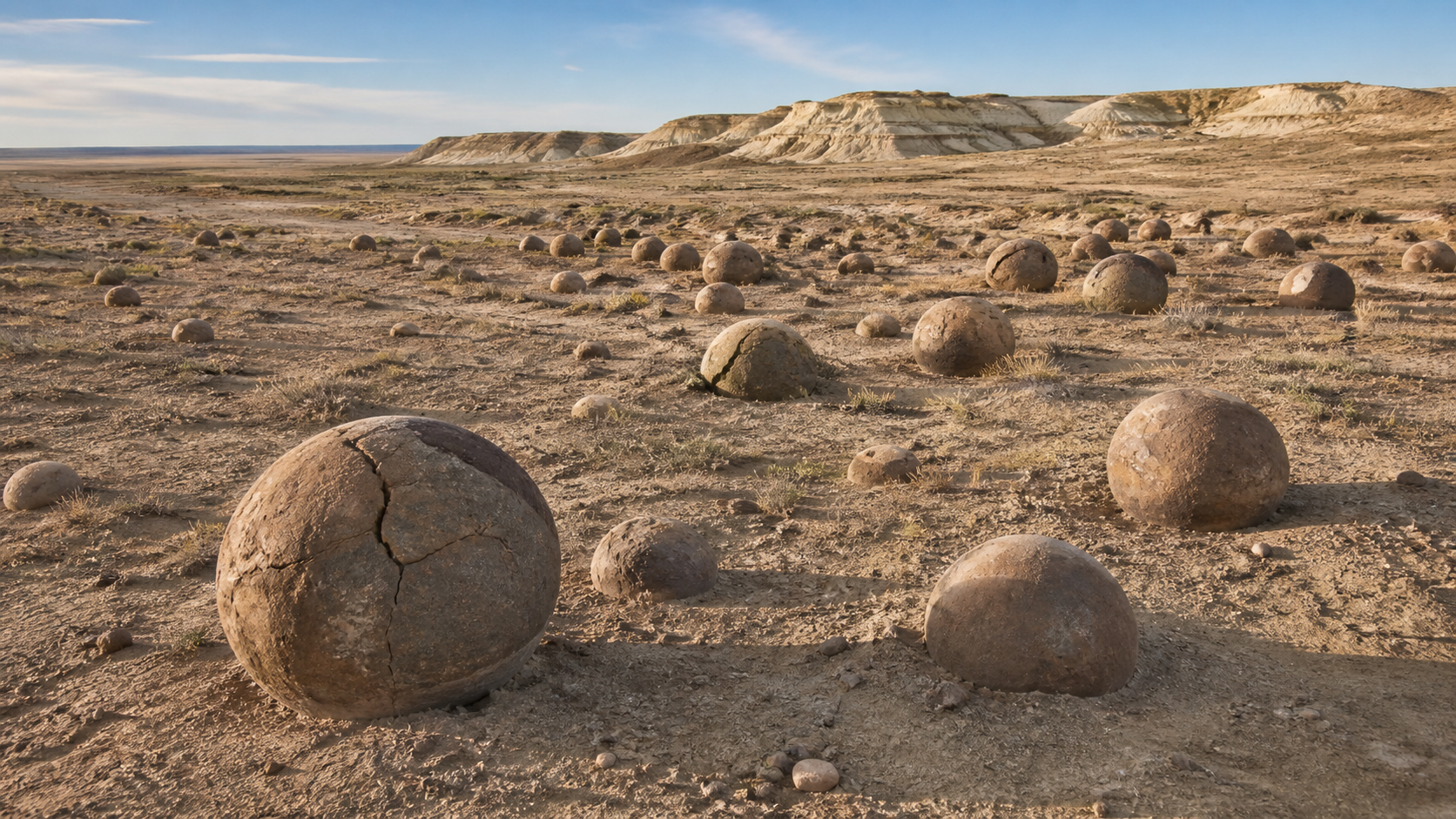
Editorial illustration of the Torysh landscape. Treat the formations as a site to observe, not props to move, climb or damage.
Sherkala, Bokty, Airakty and Kyzylkup
These names often appear in longer landscape routes. Use them as route choices, not a checklist. Ask for the exact viewpoint, walking surface, access method and time allocation at each stop. A route that names five formations but allows only a brief roadside stop at each may be worse than a focused two-site plan.
Karagiye and Ybykty Sai
Karagiye and Ybykty Sai add different terrain to the more familiar plateau imagery. They are useful when the operator can explain why they fit the same route. Do not accept claims such as “the fifth-deepest point on Earth” or an exact depth without a current geological source tied to the measurement method.
Mangystau’s World Heritage Rock Mosques
The sacred complexes are living pilgrimage landscapes, not decorative cave stops. The official UNESCO listing names the serial property “Rock Mosques and Associated Sacred Sites of Mangystau.” It was inscribed in 2026 and brings together 5 complexes: Shopan Ata, Karaman Ata, Shakpak Ata, Sultan Epe and Beket Ata.
UNESCO records the property under criteria (ii) and (iii) and describes the sites as centuries-old pilgrimage destinations. The Kazakhstan Ministry of Culture and Information announcement adds that each complex forms a sacred landscape that can include a rock mosque, historic necropolis, burial of a respected Sufi teacher, pilgrimage path, sacred well and other religious elements. The ministry says the sites remain pilgrimage centres with living traditions.
This changes the standard for a visit. Ask whether the route enters a mosque or visits only the surrounding landscape, what clothing and photography rules apply, and who will explain the site’s protocol. Follow the custodian’s instructions, keep voices low, do not photograph worshippers without permission, and do not treat tombs or prayer spaces as a backdrop for staged content.
All five complexes are under state protection, according to the ministry. A management plan for 2027–2032 is being developed, so visitor routing and conservation rules may continue to evolve. Verify the current arrangement rather than relying on a blog written before the inscription.
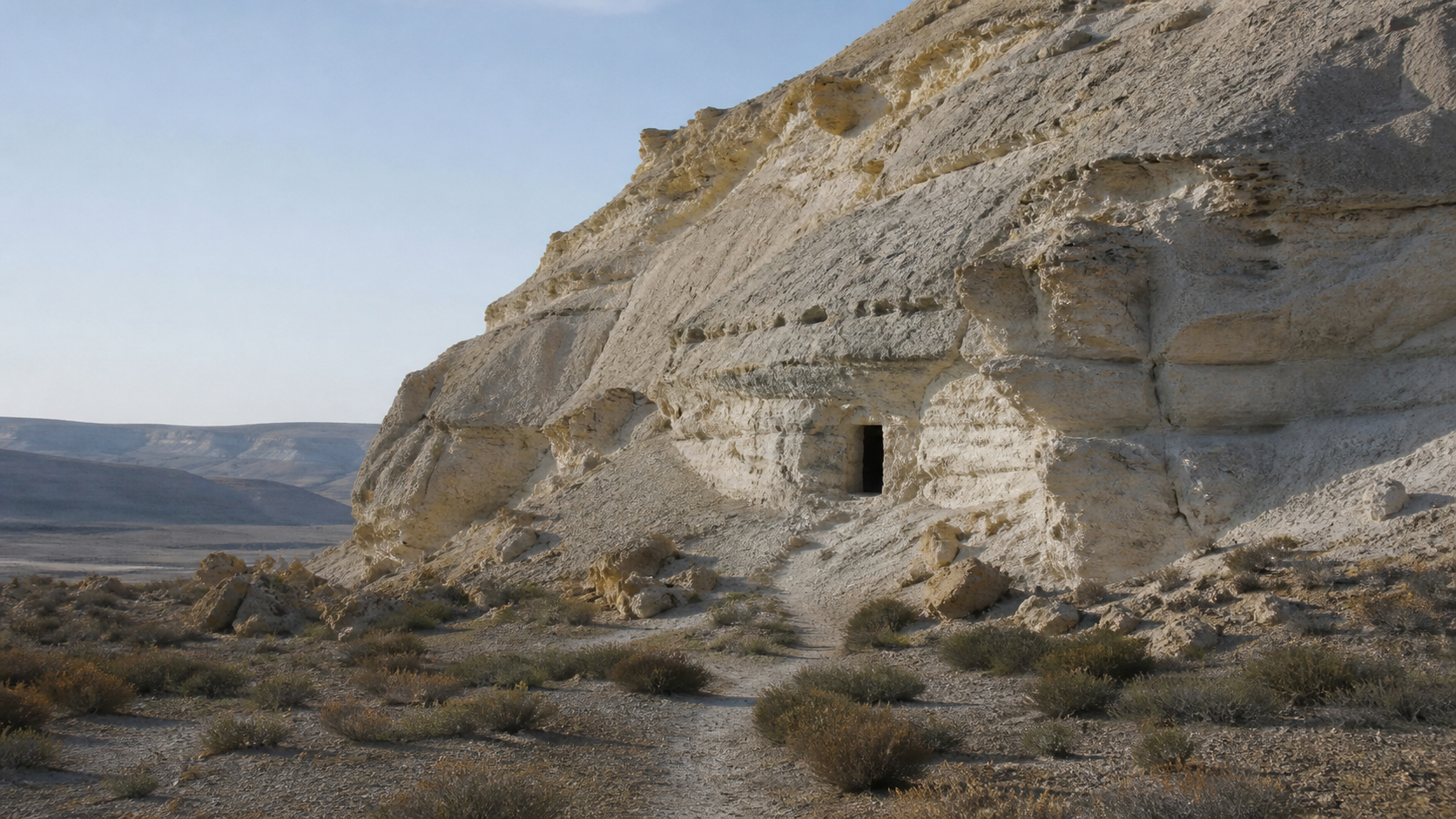
Generic editorial illustration, not a reconstruction of a named mosque. Site-specific access and etiquette come from the local custodian.
When to Visit Mangystau
Use April–May or September–October as the first planning windows, then check the route forecast. This recommendation balances the coastal Aktau climate with the practical need to avoid the hottest part of summer and the coldest winter period. It is not a promise about the desert interior.
Kazhydromet’s Aktau page publishes 1991–2020 normals from its coastal station at 15 m below sea level. The values below describe the gateway city, not Bozzhyra, the Ustyurt Plateau or a campsite.
| Planning period | Aktau city-station mean | What the number does not tell you |
|---|---|---|
| March | 4.9 °C | Wind, road state and camp conditions on your route |
| April | 11.5 °C | Whether an unsealed road is passable |
| May | 17.7 °C | Daily heat, sun exposure or overnight conditions inland |
| June | 22.4 °C | The hottest hours during an exposed stop |
| July | 24.8 °C | Extreme daily heat away from the coast |
| August | 24.5 °C | Route-specific heat and water needs |
| September | 19.7 °C | Wind and night conditions at camp |
| October | 12.7 °C | Cold nights and changing daylight on a long route |
The same official table records an absolute Aktau maximum of 44.1 °C in August 2015. That is a historical station extreme, not an annual forecast, but it is enough reason to reject a summer plan that lacks a heat threshold, water calculation and early-exit option.
Winter is possible only with an itinerary designed for it. January and February city-station means are -1.1 °C and -0.2 °C, while inland and night conditions can differ. Confirm sleeping equipment, wind protection and the vehicle recovery plan before accepting a winter camp.
How to Choose a Mangystau Operator
Compare the route and safety plan before comparing the headline price. A low quote is not cheaper if it omits accommodation, food, camp equipment, admission, airport transfer or the final return to Aktau.
Ask every operator for the same written fields:
- Legal company name and the person responsible for the trip.
- Exact route sequence, overnight locations and expected return time.
- Vehicle model, seat allocation, luggage limit and backup for a breakdown.
- Driver and guide roles, including the language used during safety briefings.
- Included meals, drinking-water plan and dietary limits.
- Tent, mattress, sleeping bag and toilet arrangements for each night.
- Mobile, radio or satellite communication plan when coverage fails.
- Weather, road or site-access cancellation conditions.
- Medical and evacuation procedure.
- Total price, deposit, refund terms and every likely extra.
Do not treat a social-media gallery as proof that the company will run the same route safely on your dates. Ask for a current itinerary and terms you can preserve offline.
What a Mangystau Trip Costs
There is no durable region-wide per-day price. The total depends on group size, route length, private or shared vehicle, camp nights, food, equipment, guide language, airport transfer and the operator’s cancellation terms. The previous version of this guide published fixed USD bands without a current, comparable operator sample; those numbers have been removed.
Build a comparable total instead:
| Quote line | What to verify |
|---|---|
| Transport | Pickup point, route, vehicle, fuel and final Aktau return |
| Staff | Driver, guide, language and whether one person fills both roles |
| Overnight | Hotel, guesthouse or camp; single supplement; bedding |
| Food and water | Number of meals, dietary limits and drinking-water allocation |
| Equipment | Tent, mattress, sleeping bag, tables, lighting and charging |
| Access | Site fees, permits, local custodians and protected-area rules |
| Risk terms | Weather cancellation, route substitution, evacuation and refund |
Convert all quotes into one trip total before comparing. If one operator quotes per vehicle and another per person, write the actual group size next to both.
Safety and Communications
Remote-route failure is the main planning risk. The current FCDO safety advice for Kazakhstan warns that weather can change quickly in remote areas, mobile and satellite coverage can be limited, and medical or rescue help can be difficult to access. It advises using a reputable agency, sharing the return plan and not trekking alone.
Before leaving Aktau, send a trusted contact the route, vehicle, operator contact and overdue time. Carry essential medication and one communication or power backup that does not depend on the main phone. Keep water, sun protection and a warm layer accessible in the vehicle, not buried under camp luggage.
Do not publish a universal water number such as “3 litres per person per day” without the route, heat, exertion and cooking plan. Make the operator state the drinking-water calculation and reserve for the actual group.
Kazakhstan’s official eGov portal lists 102 for police and 112 for unified emergency dispatch. Save both, but do not confuse an emergency number with a rescue plan. A remote group still needs a location-sharing method, vehicle recovery plan and named person who will raise the alarm if it is overdue.
Getting to Aktau
Aktau is the practical gateway, but transport schedules are live data. Compare the current flight and rail options for your exact dates and keep enough margin before and after the expedition. The region’s official update confirms active domestic and international air connections, but route counts and destinations can change.
Do not copy the old promises of daily fares or direct flights from London, Baku, Tbilisi or Istanbul. Verify the operating carrier, airport, baggage terms and connection on the booking date. The Kazakhstan airports guide covers the broader domestic network.
Return to Aktau at least one night before an important onward flight when the expedition includes remote roads. A same-evening connection turns a vehicle or access delay into a missed departure.
A Practical 5-Day Framework
Use this as a workload pattern, not a fixed driving route. The operator must replace the placeholders with a geographically coherent sequence.
Day 1: Arrive in Aktau, buy missing supplies, confirm the vehicle, route, weather threshold, communications and final return time.
Day 2: Travel to the first natural site and use one meaningful walking or photography block rather than several rushed stops. Camp or use the agreed accommodation.
Day 3: Continue to the second natural site only if road, heat and timing remain inside the plan. Preserve the option to shorten the route.
Day 4: Visit one sacred complex with current local protocol, or keep the day for a landscape route if the trip has no pilgrimage focus. Return toward Aktau according to the operator’s plan.
Day 5: Use the buffer for a delayed return, Aktau sightseeing or rest. Keep the onward departure on the following day when possible.
For a shorter trip, remove a site instead of removing the buffer and safety checks.
Packing List
Pack for vehicle-based remote travel with short exposed walks. A practical core includes:
- closed footwear with grip;
- sun hat, sunscreen and sunglasses;
- light long sleeves plus a warm and wind-resistant layer;
- personal medication and basic blister care;
- headlamp, power bank and offline copies of the route and booking;
- identification, insurance details and emergency contacts;
- dust protection for camera and electronics;
- reusable water containers sized from the operator’s calculation;
- a modest cover layer for sacred sites.
Ask what the operator supplies before buying camping gear. “Equipment included” should specify the sleeping bag temperature rating, mattress and shelter, not just a tent photograph.
The Bottom Line
Mangystau rewards a focused route and punishes vague planning. Start and finish in Aktau, choose two or three priorities, compare written operator terms, use coastal climate normals only for the seasonal frame, and make every remote-route decision from current weather and access information.
The region now combines internationally recognised sacred heritage with the natural sites travellers already associate with Bozzhyra and Torysh. Treat both layers with the same discipline: verify, leave buffer time and avoid claims that the evidence cannot support.
Compare the regional route with the seasonal trade-offs in the best time to visit Kazakhstan, then review the remote-travel controls in Is Kazakhstan safe for travel?.
Frequently Asked Questions
How many days do I need for Mangystau?
Allow at least 3 days for one focused route or 4–5 days for a mix of natural and sacred sites. These are planning ranges, not official route times. Get the exact sequence, overnight plan and return time from the operator.
What is the best time to visit Mangystau?
April–May and September–October are the best starting windows for planning. Kazhydromet's coastal Aktau means range from 11.5 °C in April to 19.7 °C in September, but the desert interior and camp can differ. Check the route forecast and access conditions.
Can I visit Mangystau without a tour?
Independent travel is possible only for people equipped for remote driving, navigation, communications, water, recovery and emergency planning. For a first trip, a verified operator with a written route and backup plan is the safer default.
How much does a Mangystau tour cost?
There is no reliable region-wide price. Compare the total for the same group size, route, vehicle, staff, meals, water, camp equipment, access costs, airport transfer, cancellation and evacuation terms.
Which Mangystau rock mosques are UNESCO-listed?
Kazakhstan's Ministry of Culture says the serial World Heritage property includes Shopan Ata, Karaman Ata, Shakpak Ata, Sultan Epe and Beket Ata. They are living pilgrimage landscapes, so follow the local custodian's current access, clothing and photography rules.
What are the emergency numbers in Kazakhstan?
Call 102 for police or 112 for unified emergency dispatch. For a remote Mangystau route, also carry the operator's communication and evacuation plan because coverage and rescue access can be limited.
Sources and Update Notes
- Mangystau regional communications: current tourism routes and popular sites, checked August 21, 2026
- UNESCO World Heritage Centre: Rock Mosques and Associated Sacred Sites of Mangystau, checked August 21, 2026
- Kazakhstan Ministry of Culture and Information: Mangystau rock mosques added to the World Heritage List, checked August 21, 2026
- Kazhydromet: Aktau climate observations and 1991–2020 normals, checked August 21, 2026
- UK FCDO: Kazakhstan safety and security, checked August 21, 2026
- eGov Kazakhstan: official emergency numbers, page updated July 12, 2026 and checked August 21, 2026
This article was fully rebuilt on August 21, 2026. The previous Wikipedia-led geology, population and wildlife claims; fixed USD tour and flight prices; named airlines and international routes; operator recommendations; exact drive times and road conditions; categorical safety verdict; fixed water allowance; and unsupported “fifth-deepest point” ranking were removed. The hero and two inline landscape images are labeled editorial illustrations, not documentary records of current access.
Last reviewed: August 2026.
Google Preferred Sources
See more Kazakhstan stories in Google
Add About Kazakhstan as a preferred source to find more of our fresh, relevant stories in Google Search.
More Stories
nature
Hiking in Kazakhstan: Regions, Seasons and Safety
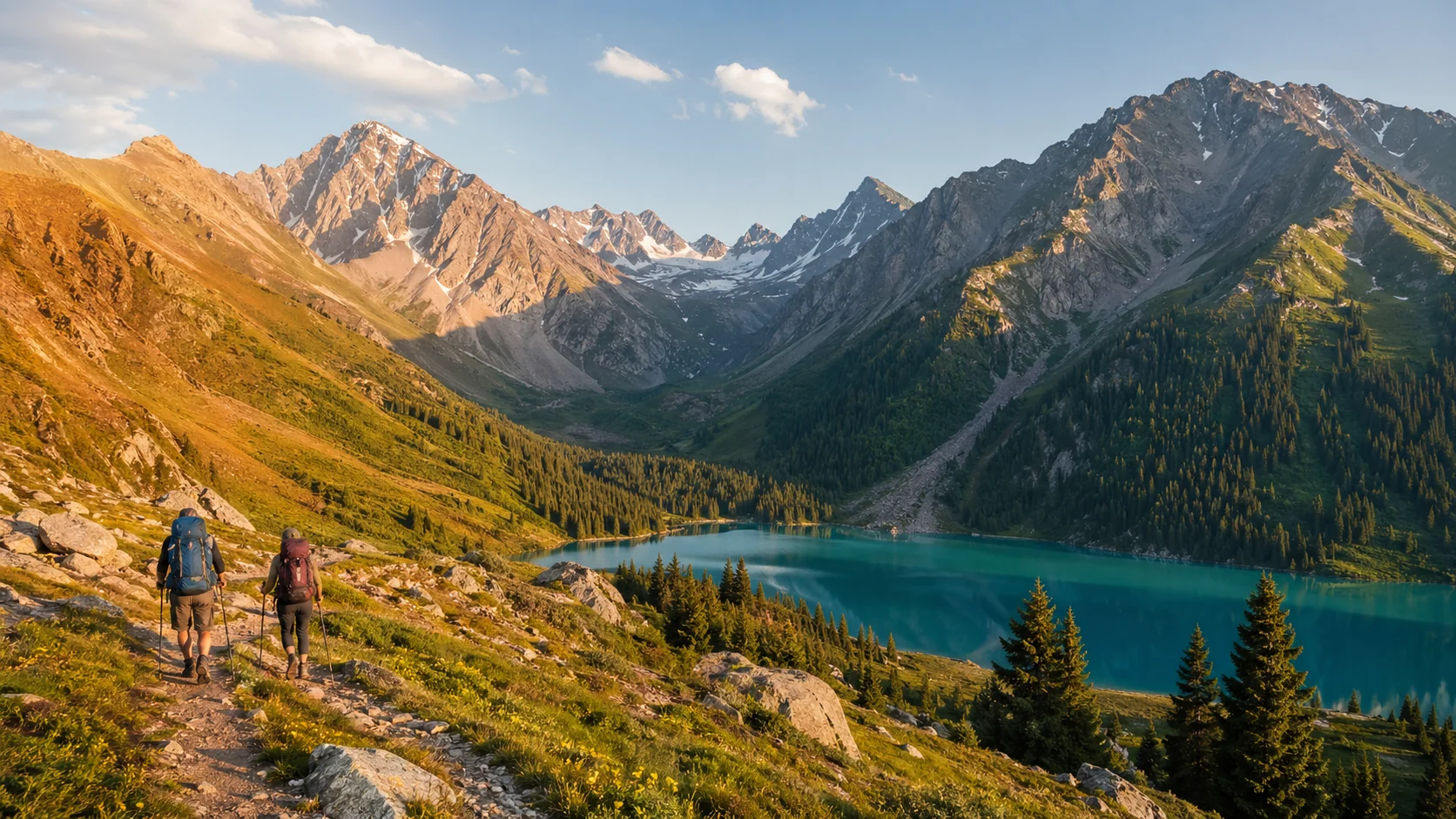
Plan hiking in Kazakhstan by region, season and risk. Compare Almaty, Kolsai, desert and remote routes, then use official live checks before departure.
nature
Burabay, Kazakhstan: Lakes, Trails & Trip Planning
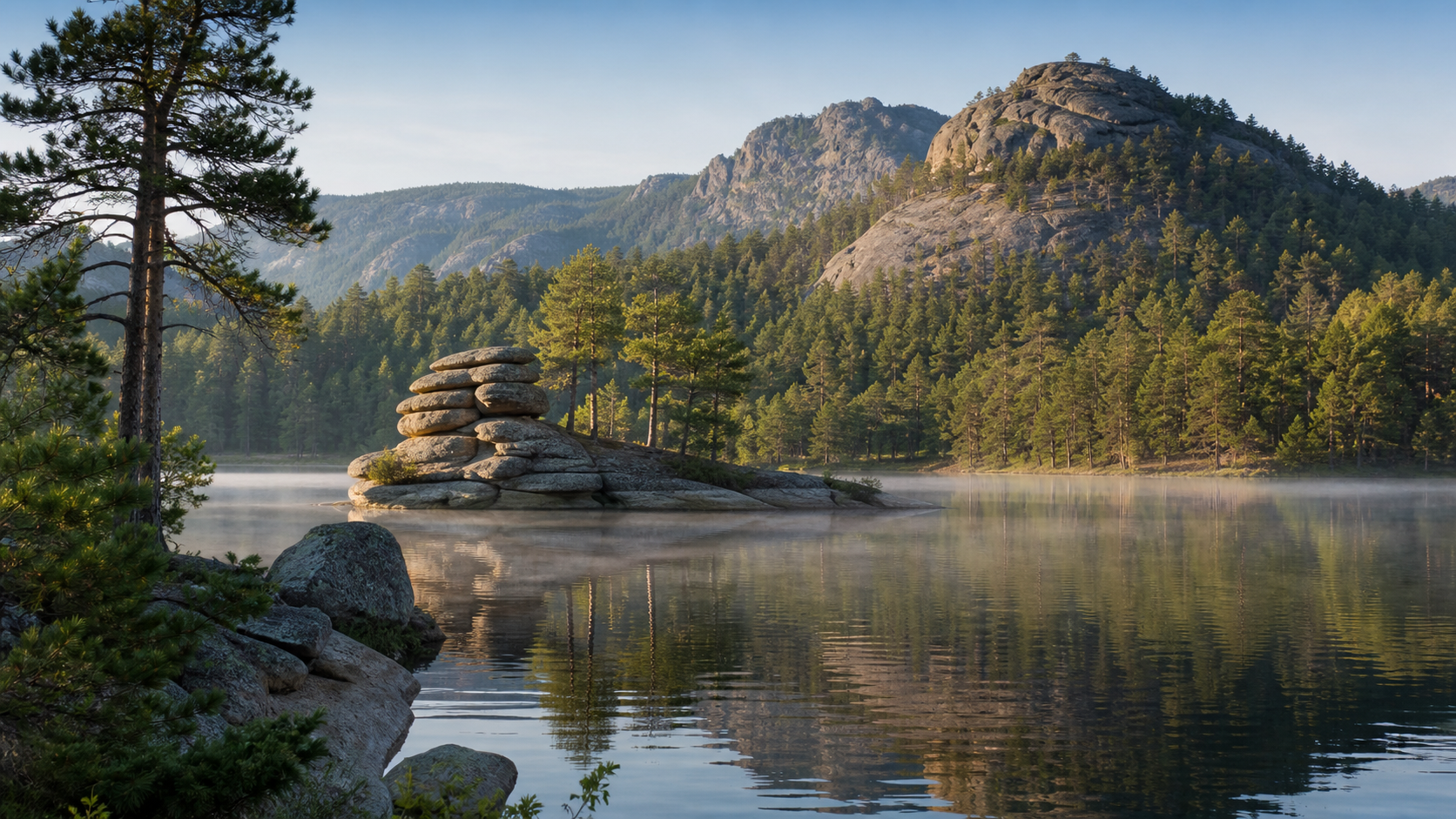
Plan a Burabay escape around one flexible park day, live weather and access checks, lake viewpoints, marked trails, hotels, and a safe return.
nature
Kazakhstan Nature: 12 Stunning Landscapes You Must See
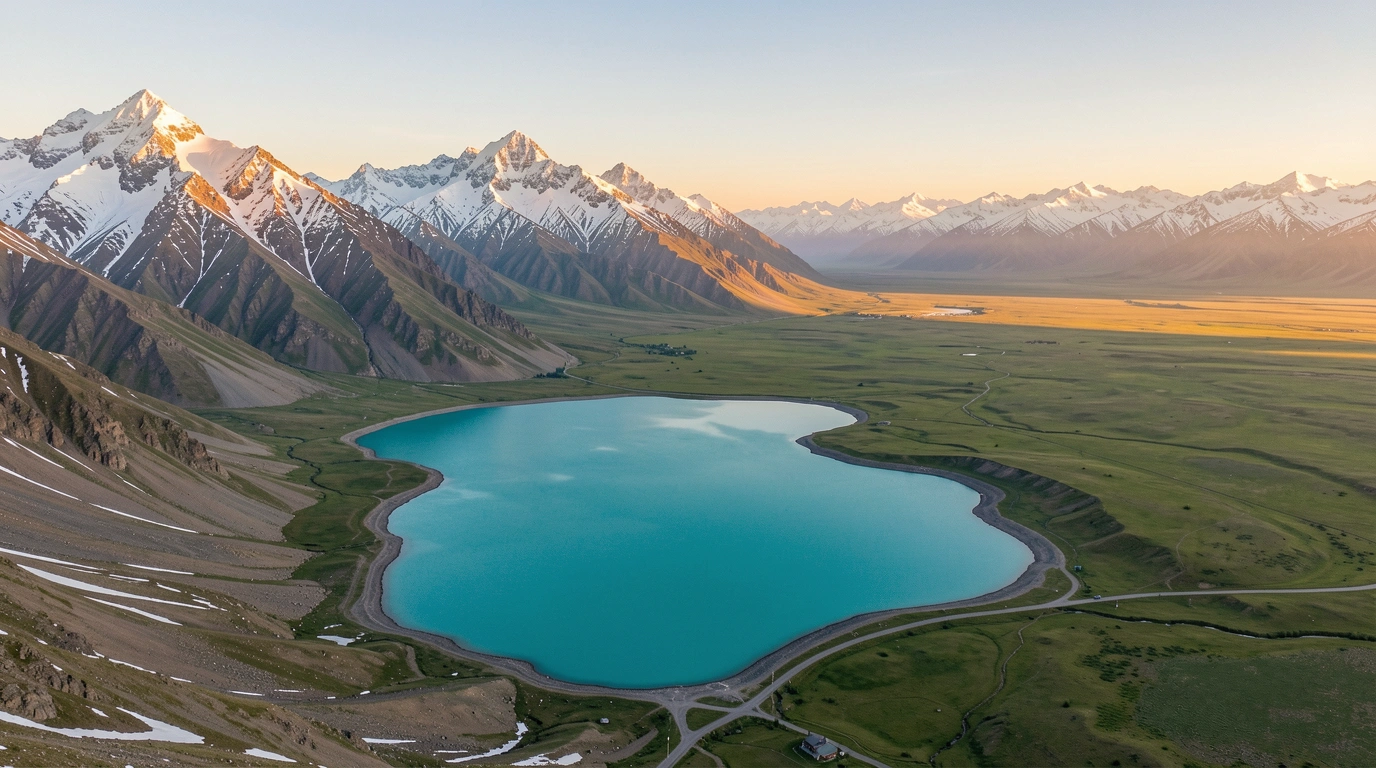
Explore Kazakhstan's nature from the Altai Mountains to the Caspian shore. National parks, lakes, canyons, steppes, and the best times to visit each region.
nature
Kazakhstan National Parks: All 14 Parks, Areas & Entry Fees
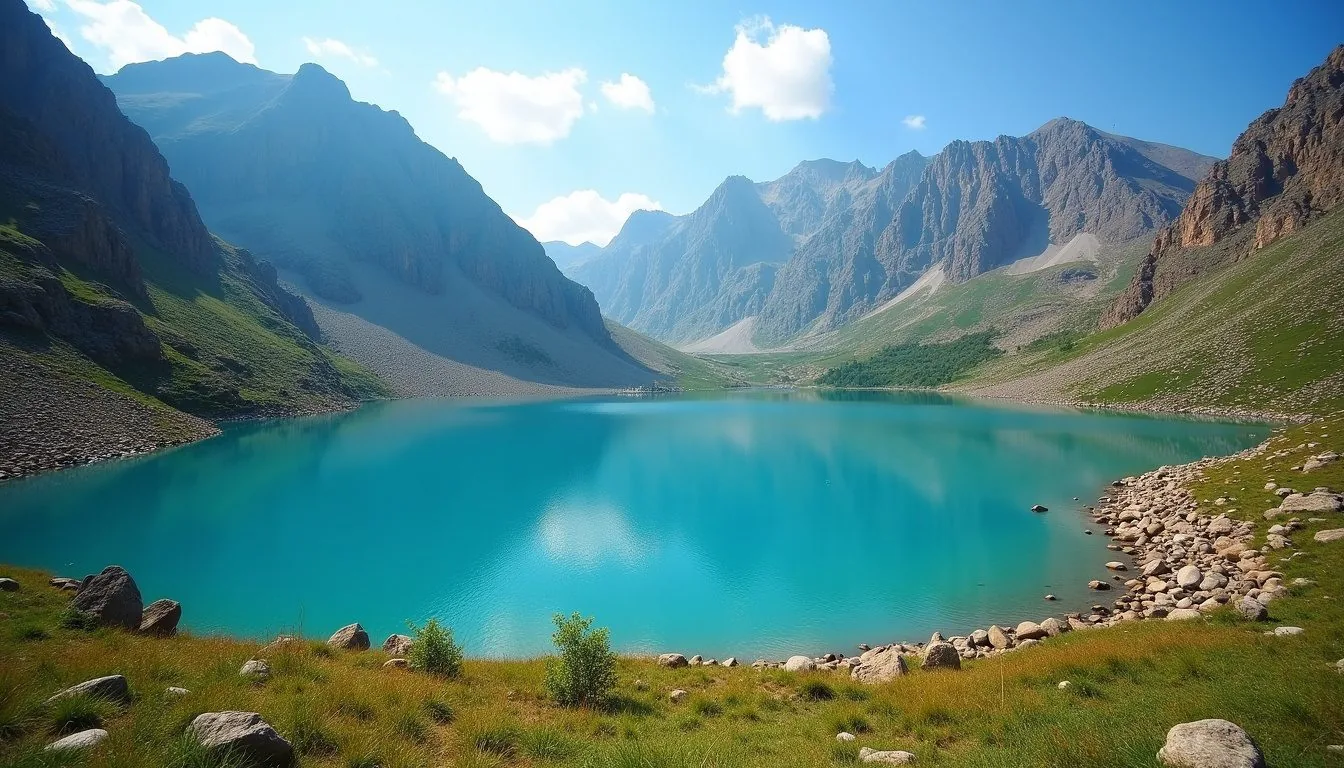
Compare Kazakhstan's 14 national parks using the official register. Download area data and a size chart, and check park-specific entry fees.
Plan the Next Step
travel
Kazakhstan Tourist Attractions: Choose the Right First-Trip Route
Compare Kazakhstan tourist attractions by base and logistics: Almaty nature, Turkestan heritage, Mangystau, Astana, Baikonur, and more.
food
Beshbarmak Recipe: How Kazakh Et Is Served
A source-checked guide to Kazakh et, widely called beshbarmak: what is on the platter, a practical home recipe, regional differences, and guest etiquette.
food
Popular Food in Kazakhstan: 15 Foods and Drinks to Try
Popular food in Kazakhstan explained: 15 Kazakh dishes and drinks, what each contains, how meals are served, and what to ask before ordering.
nature
Lake Balkhash Travel Guide: Two Waters, One Lake
A source-checked Lake Balkhash guide: why west and east differ, Kazakhstan's 2026 water update, a realistic trip plan, and swimming and fishing boundaries.
nature
Kazakh Steppe: Landscape, Wildlife and How to Visit
Source-checked guide to the Kazakh steppe: its extent, Saryarka, Korgalzhyn, 2025 saiga data, seasons, and responsible access.
nature
Charyn Canyon Guide: Valley of Castles & Access
Plan Charyn Canyon from Almaty: Valley of Castles route, weather, safety, current park-access checks, and responsible travel advice.

Travel Writer & Local Expert · Almaty, Kazakhstan
Tugelbay Konabayev is a Kazakhstan-based travel writer who has lived in Almaty for 7+ years and Astana for 4+ years. He grew up in Aktobe, Kazakhstan and has covered Kazakh travel, food, culture, and visa policy with first-hand reporting since 2023.