Karaganda, Kazakhstan: City Guide & Dolinka Planning
Published by About Kazakhstan. Read about our sources, author, and corrections. About the author.
In this article11 sections
Karaganda is worth adding when Soviet history, industrial cities and the living memory of political repression are central to your trip. It is not an automatic first-visit stop between Kazakhstan’s headline attractions. The strongest plan gives the contemporary city its own usable day, then treats the Museum of Memory of Victims of Political Repressions in Dolinka as a separate, carefully confirmed memorial visit.
This distinction matters. Karaganda is a working regional city, while Dolinka lies outside the city and carries a difficult history. It is not a dark-tourism spectacle or an abandoned-site adventure. Use live local information for both layers, protect time to understand what you see and keep an alternative ready if an institution changes access.
| Quick question | Practical answer |
|---|---|
| Is Karaganda worth visiting? | Yes, for travellers with a specific interest in industrial development, Soviet history, regional life and political-repression memory. |
| What belongs in the city plan? | A live visitor-information check, one coherent central-city walk, an independently confirmed cultural stop and an unhurried meal or evening. |
| Is Dolinka part of a casual city walk? | No. Plan it as a separate out-of-city memorial visit with current opening, transport and return details. |
| What should be checked live? | Museum access, temporary exhibitions, arrival terminal, intercity transport, local transfers, weather, accessibility and photography rules. |
| Who may prefer another stop? | Travellers seeking resort scenery, a dense old town or a fast checklist of famous monuments. |
Is Karaganda worth visiting?
Choose Karaganda for context, not spectacle. The city makes the most sense when you want to understand how Central Kazakhstan’s modern urban and industrial story intersects with Soviet rule, forced labour and present-day regional life. That is a narrower promise than a classic leisure destination, but it can produce a more coherent trip than adding another distant landmark simply because it appears on a national map.
Karaganda is a strong fit for:
- readers of twentieth-century Central Asian and Soviet history;
- travellers interested in working cities beyond Almaty and Astana;
- visitors prepared to approach memorial institutions with patience and respect;
- an overland or rail route whose arrival and onward segments already pass through Central Kazakhstan;
- repeat visitors building a deeper Kazakhstan itinerary after the main gateways.
It is a weaker fit when your priority is mountain scenery, resort infrastructure, a preserved Silk Road core or a short connection with no schedule margin. In those cases, compare the country’s visitor bases in the cities of Kazakhstan guide before adding another transport leg.
Karaganda also deserves to be seen as a current city rather than a prologue to Dolinka. Let the first day show you ordinary streets, public space, local food and the scale of the regional centre. The memorial visit becomes more meaningful when it follows that orientation instead of replacing it.
How should you use your first Karaganda day?
Build the day around orientation and one confirmed indoor anchor, not a crowded attraction list. Karaganda’s value comes from connecting the present city with its history. A sequence that still works after one closure is more useful than a rigid hourly itinerary.
| Part of the day | Sensible focus | What not to assume |
|---|---|---|
| Arrival and orientation | Confirm the terminal, hotel transfer and current visitor information | That every online pin marks an active entrance |
| Central-city block | Follow one compact route through everyday public and civic space | That every listed museum or exhibition is open |
| Indoor anchor | Use one institution whose access you verified directly | That an old article proves today’s hours |
| Meal and pause | Choose a practical local stop near the next confirmed point | That a top-rated listing is close or currently trading |
| Evening or departure | Leave margin for weather, traffic and luggage retrieval | That Dolinka can be added casually at the end |
The local report on Karaganda Region’s visitor centres identifies information points at Karaganda’s railway station and Sary-Arka airport. It says they can help with routes, accommodation and tourism services, and that regional centres are expected to warn visitors when a route or site becomes unavailable. Use that service as a current orientation layer, not as proof that every attraction is open.
If you arrive somewhere else, use the Visit Karaganda portal before setting out. Its current route ideas, tourist memo and contact channels are better starting points than a saved social-media itinerary. Ask a precise question: which entrance is active today, which exhibition can actually be visited and what return arrangement is realistic?
Planning estimate scope: the first usable day inside Karaganda after arrival; it includes one live-information checkpoint, one compact city cluster, one confirmed indoor stop, a meal and disruption margin, but excludes the journey into Karaganda, Dolinka, queues and temporary closures. Planning estimate basis: decomposition of the current visitor-centre role, one independently verified institution and a city block that does not depend on an unconfirmed museum. This is planning guidance, not a promised duration.
What should you see in Karaganda itself?
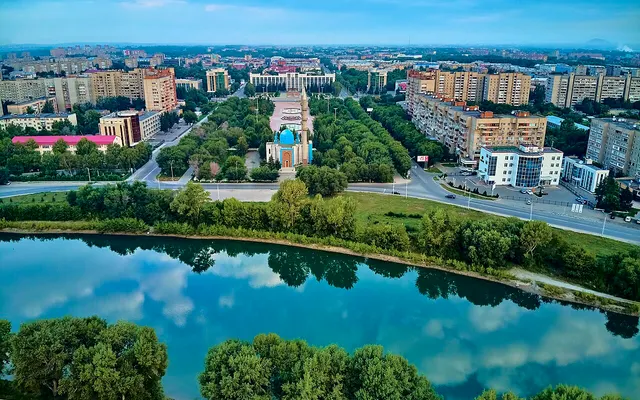
Start with the contemporary city and choose one historical thread that is verifiably accessible. You do not need to force every topic into the first day. Karaganda’s broad streets, civic buildings, residential fabric and everyday commercial life give useful context even when a particular exhibition changes.
A resilient city plan has three layers:
- Present-day orientation. Walk a compact central area chosen from a current local route. Notice how public space, housing and cultural buildings form a regional centre rather than searching for a single postcard viewpoint.
- One institutional story. Confirm a museum, gallery or cultural venue through its active official page or the visitor centre. Check the exact building and entrance, because a regional institution may operate more than one site or rotate exhibitions.
- An ordinary local pause. Leave time for a meal, a bookshop, a park or a cafe near the next confirmed stop. That pause prevents the city from becoming only a backdrop for difficult history.
Do not build the day around a museum simply because a map labels it open. Renovation, re-exposition and temporary closure can outlive third-party listings. If your preferred city museum cannot confirm access, keep the outdoor orientation and replace the indoor block through Visit Karaganda or the visitor centre.
The same rule applies to photography. A public exterior is not permission to photograph staff, visitors, school groups or sensitive display material. Ask before shooting indoors and accept a no without argument.
How do you plan Dolinka and the Karlag museum?
Treat Dolinka as a separate memorial visit with a confirmed outward journey, museum entrance and return. The Visit Karaganda museum page identifies the Museum of Memory of Victims of Political Repressions in the former Karlag headquarters building in Dolinka. Its exhibitions address the system of repression, investigation and confinement, the experiences of women and children, and the lives of scientists and artists affected by the camp system.
The national E-history overview of Karlag places the camp’s creation in 1931 and its administrative centre in Dolinka. That context is enough to understand why this is not an industrial-ruin excursion. The museum is an institution of memory connected to forced labour, deportation, disrupted families and state violence.
Before leaving Karaganda, confirm:
- that the museum is receiving visitors on your date;
- the active entrance and any ticket or identification procedure;
- how you will travel from Karaganda to Dolinka and return;
- whether the return depends on a pre-booked driver or a limited service;
- which languages are available for interpretation or guided material;
- current accessibility, cloakroom and photography rules;
- how much unhurried museum time your transport arrangement actually protects.
Check the official museum site and the current Visit Karaganda listing close to departure. Do not copy an old timetable, fare or phone number into the itinerary. A live page can change after publication, and a search-result preview can remain stale even when the institution has updated its own channel.
How should you behave at a repression memorial?
Let the institution’s human story set the pace and tone. Read the introductory material before photographing objects. Names, personal effects, cells and testimony are evidence of lived harm, not props for a dramatic travel feed.
Use a few simple boundaries:
- avoid playful poses, costume-like gestures and staged confinement photographs;
- do not touch displays, doors or memorial objects unless clearly invited;
- keep voices low around testimony, school groups and other visitors;
- ask before photographing identifiable people or sensitive documents;
- do not reduce the visit to a claim about scale when individual lives and families are documented;
- leave room afterward rather than scheduling an entertainment stop against the museum exit.
If travelling with children or anyone directly affected by family histories of repression, check the exhibition content and available support before entering. A respectful decision to shorten or skip part of an exhibition is better than forcing the visit to fit a checklist.
The article’s generated images deliberately avoid prison reconstructions, uniforms and historical impersonation. They are conceptual orientation assets, not documentary evidence. The same distinction should guide what you post after the visit.
How do you get to Karaganda and continue the trip?
Compare the complete route to your hotel, not just the intercity ticket. Karaganda may appear in rail, air and road searches, but the practical choice is the one with a confirmed terminal, city transfer and onward margin.
For rail, use the official Kazakhstan Railways ticket portal and verify the city, station, service date, carriage conditions and change rules before payment. For air, use the active airline and airport channels, then solve the transfer from Sary-Arka airport to the exact hotel. For road travel, check current restrictions and construction through the relevant official road channel rather than relying on an old journey time.
The Almaty to Astana route guide explains how Karaganda can fit the broader north-south corridor. Its route ideas are a framework, not a current timetable. If Karaganda is the reason for the journey, protect the city and Dolinka as separate blocks instead of treating both as incidental roadside stops.
Before buying, verify:
- the exact arrival and departure terminals;
- the hotel check-in window and luggage plan;
- a fallback if the inbound service changes;
- the Dolinka transport and return independently of the intercity leg;
- cancellation terms for every booking that depends on another service.
Where should you stay in Karaganda?
Choose a base by your arrival terminal and first confirmed city stop, not by a vague “centre” label. A central hotel may still be inconvenient if the pin is wrong, the entrance is on another street or your arrival is outside staffed check-in.
Put these points on one current map before paying:
- the exact station or airport arrival point;
- the hotel’s verified entrance;
- the first visitor-information or cultural stop;
- your Dolinka pickup point, if that visit is confirmed;
- a food option that works around the actual arrival;
- the departure terminal and luggage-retrieval plan.
Prioritize flexible cancellation when rail, air or museum access can change. Confirm heating or cooling for the season, late check-in, luggage storage, breakfast timing and step-free access when needed. Do not assume a hotel can arrange Dolinka transport until it gives you the vehicle, pickup, waiting and return terms.
When should you visit and what should you carry?
Let the live forecast and confirmed openings choose the day order. Central Kazakhstan conditions can change the comfort of long outdoor blocks and the reliability of road transfers. A monthly climate chart is useful for broad packing, but it cannot settle the operating day.
Check Kazhydromet before departure and again before an out-of-city transfer. Carry:
- a wind or rain layer appropriate to the current forecast;
- comfortable closed shoes for mixed pavements and indoor standing;
- water, medication and a compact first-aid kit;
- a charged phone, backup power and offline hotel pin;
- the museum name and address in Cyrillic as well as Latin script;
- a quiet layer of clothing suitable for a memorial institution;
- a low-effort city alternative if Dolinka access or weather changes.
The Kazakhstan weather-by-month guide helps with the broad seasonal decision. Keep transport and museum checks live right up to departure.
How can Karaganda fit with Astana?
Pair the cities only when the connection leaves Karaganda with usable time. Astana supplies the national-capital layer; Karaganda adds a regional industrial city and, if separately planned, the Dolinka memorial institution. They complement each other when neither becomes a rushed station transfer.
Start with the Astana city guide if the capital is your main base. Then compare live rail, road and air options in both directions, including the terminal transfers and the final departure. An overnight in Karaganda is often more resilient than attempting a museum-dependent out-and-back around an inflexible connection, but the right shape depends on the current services and access you confirm.
If your national route already includes Semey, compare the emotional and historical load of consecutive memorial institutions. The Semey guide treats nuclear-testing memory with similar care. You do not need to place every difficult twentieth-century site in one compressed itinerary.
Common Karaganda planning mistakes
- Treating Karaganda only as the gateway to Karlag. Give the present city its own orientation and ordinary life.
- Adding Dolinka to the end of a city walk. It is an out-of-city memorial visit with separate transport and return details.
- Using an old listing as proof of opening. Confirm the active museum page or visitor-information channel close to departure.
- Turning repression into dark-tourism theatre. Focus on people, institutions and documented history.
- Assuming every museum pin is current. Verify the building, entrance and exhibition rather than just the institution name.
- Booking a hotel from a centre label. Check the exact property against the arrival and first stop.
- Copying fixed journey times. Weather, road work, service changes and terminal transfers alter the real route.
- Leaving no alternative. Keep a city walk, cafe or confirmed cultural venue ready if the preferred institution changes access.
Sources
This guide uses source-locked Kazakhstan evidence. Prices, schedules, openings, exhibitions, weather, accessibility, transport and commercial availability remain live checks.
- Visit Karaganda: current regional visitor-information hub, route ideas, tourist memo and live planning channels.
- Visit Karaganda: Museum of Memory of Victims of Political Repressions: current local destination page for the Dolinka institution, former headquarters building and exhibition scope.
- Official Karlag museum: current institutional identity and official visitor-information channel.
- E-history: Karlag: national history portal context for the camp system, its 1931 creation and Dolinka headquarters.
- InKaraganda: regional visitor centres: current local reporting on the station and airport information points and their route/access role.
Frequently Asked Questions
Is Karaganda, Kazakhstan worth visiting?
Yes, when industrial history, Soviet-era memory and the experience of a working Central Kazakhstan city fit your route. It is a specialist stop rather than an automatic first-trip destination.
What should you do on a first day in Karaganda?
Start with a live visitor-information check, follow one compact central-city route, use one independently confirmed cultural institution and leave room for an ordinary meal or evening. Keep Dolinka separate.
Is the Karlag museum in Karaganda?
The Museum of Memory of Victims of Political Repressions is in Dolinka outside Karaganda. Confirm the active entrance, opening, outward transport and return before leaving the city.
Can you visit Dolinka as a day trip?
It can be planned as a separate visit when the museum confirms access and you have reliable transport in both directions. Do not add it casually to the end of a city itinerary or rely on an old public-transport listing.
How should visitors behave at the Karlag museum?
Treat it as a memorial institution. Read before photographing, keep voices low, follow current rules, avoid staged prison poses and give personal testimony and other visitors appropriate space.
Where should you stay in Karaganda?
Choose a cancellable hotel by the exact arrival terminal and first confirmed city stop. Verify the entrance, check-in, luggage storage, seasonal room conditions and any Dolinka pickup arrangement before paying.
Last checked: August 31, 2026. Museum openings, exhibitions, transport, weather, accessibility, prices, route access and commercial availability still require a current check.
Google Preferred Sources
See more Kazakhstan stories in Google
Add About Kazakhstan as a preferred source to find more of our fresh, relevant stories in Google Search.
More Stories
travel
Kostanay, Kazakhstan: City Guide & Naurzum Planning
Plan Kostanay around the Tobol, active local museums and live logistics, while treating Naurzum Nature Reserve as a separate confirmed journey.
travel
Oskemen, Kazakhstan: City Guide & East Altai Planning
Plan Oskemen around the Irtysh, Ulba and active museums, while treating Katon-Karagai and the East Altai as a separate confirmed journey.
travel
Cities in Kazakhstan: 90 Cities and Major City Guide
Cities in Kazakhstan ranked by size and travel value: Almaty, Astana, Shymkent, Karaganda and more, with May 2026 stat.gov.kz population data.
travel
Atyrau, Kazakhstan: Things to Do & Saraishyq Guide
Plan a short Atyrau stay around the Zhayyk riverfront and Saraishyq, with honest sightseeing scope, live transport checks, hotels, weather, and local sources.
Plan the Next Step
travel
Kazakhstan Tourist Attractions: Choose the Right First-Trip Route
Compare Kazakhstan tourist attractions by base and logistics: Almaty nature, Turkestan heritage, Mangystau, Astana, Baikonur, and more.
food
Beshbarmak Recipe: How Kazakh Et Is Served
A source-checked guide to Kazakh et, widely called beshbarmak: what is on the platter, a practical home recipe, regional differences, and guest etiquette.
food
Popular Food in Kazakhstan: 15 Foods and Drinks to Try
Popular food in Kazakhstan explained: 15 Kazakh dishes and drinks, what each contains, how meals are served, and what to ask before ordering.
travel
Things to Do in Kazakhstan: 13 Places Worth Your Time
Choose the best things to do in Kazakhstan by trip length: Almaty, Charyn, Kolsai, Astana, Turkestan, Tamgaly, Altyn-Emel, food, and Nauryz.
travel
12 Best Day Trips from Almaty: Complete Guide 2026
Best Almaty day trips — Charyn Canyon, Big Almaty Lake, Kolsai Lakes, Tamgaly petroglyphs, Altyn-Emel. Distances, costs, and how to get there.
travel
Kazakhstan Travel Cost Index 2026: Prices in 20 Cities
Compare official 2026 hotel, bus, cinema, fuel and grocery prices across 20 Kazakhstan cities. Use the city comparison tool and download the CSV/JSON dataset.

Creator of About Kazakhstan
Tugelbay Konabayev is a digital marketer and content strategist from Aktobe, Kazakhstan, and the creator of About Kazakhstan. The site's research guides bring together local-language and primary sources for English-speaking readers. Sources and review dates identify what each article can support.