Oskemen, Kazakhstan: City Guide & East Altai Planning
Published by About Kazakhstan. Read about our sources, author, and corrections. About the author.
In this article12 sections
Oskemen is worth visiting when you want one grounded East Kazakhstan city day before or after a larger regional journey. The Irtysh and Ulba rivers, an active museum and the low Altai foothills give the city a clear identity without requiring an inflated attraction checklist. Russian-language schedules and booking systems may still use Ust-Kamenogorsk, the older English transliteration of the same city.
Oskemen is also a practical staging point for East Kazakhstan, but it is not the East Altai itself. Katon-Karagai, Markakol and other remote landscapes require their own operator, road, border-zone, permit, weather, communication and return checks. Keep the city visit and the remote journey as two separate planning blocks.
| Quick decision | Practical answer |
|---|---|
| Is Oskemen good for a first Kazakhstan trip? | Usually as a specialist eastern stop, not one of the automatic first three bases. |
| What anchors the city day? | One verified museum, the Irtysh and Ulba, a compact central sequence and an ordinary local meal. |
| Which name should you search? | Try both Oskemen and Ust-Kamenogorsk; live transport and museum systems may use either. |
| Is Katon-Karagai a city excursion? | No. It is a remote regional journey requiring a complete outward, access and return plan. |
| What must stay live? | Transport, museum building and exhibition, weather, road and border-zone conditions, permits, prices and accessibility. |
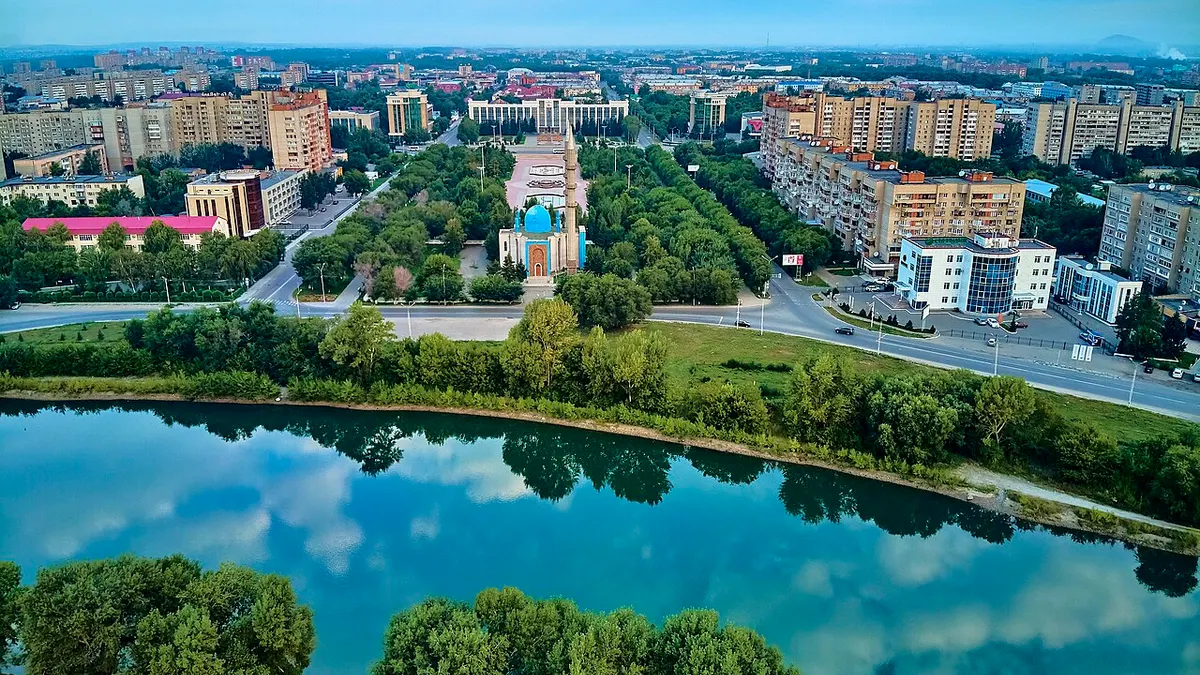
Cover: Oskemen panorama, photographed on 8 August 2019 by Andriej Szypiłow, CC BY-SA 3.0. Wikimedia thumbnail reused without generative changes; responsive display versions may be resized, compressed or cropped and remain under the same license. This is a dated photograph, not evidence of current access or services.

Is Oskemen worth visiting?
Choose Oskemen for rivers, regional history and a usable eastern base rather than a famous-landmarks race. The official Visit East city page places the city at the meeting of the Ulba and Irtysh in the foothills of the Rudny Altai. That geography is the real organising idea: water and low ridges frame an ordinary regional centre whose museums explain more than a quick photo stop can.
It is a sensible fit for:
- a route already entering East Kazakhstan;
- travellers interested in local history, art or the Irtysh;
- a weather-buffer day before a remote regional departure;
- repeat visitors looking beyond Almaty, Astana and Turkistan;
- people who prefer one coherent city day to another immediate transfer.
It is a weaker fit when you have only enough time for the country’s primary gateways, expect a preserved old town or want to reach the Altai without arranging onward logistics. Compare the main bases in the cities of Kazakhstan guide before adding another domestic leg.
Oskemen does not need to imitate a resort. A confirmed museum, a river-led walk and an unhurried centre can form a complete visit. If that promise feels too modest, spend the time on the destination that actually matches your trip.
Are Oskemen and Ust-Kamenogorsk the same place?
Yes. Oskemen and Ust-Kamenogorsk refer to the same East Kazakhstan city. Oskemen is the current Kazakh name and the best default in English prose. Ust-Kamenogorsk remains common on Russian-language institutions, older English pages, airline systems and map listings.
Use both names during live checks. Search the exact museum, terminal or hotel rather than assuming every provider has updated its label. The airport code UKK is often more stable than the city spelling, but a valid code still does not prove that a particular flight operates on your date.
The two names are a search problem, not two destinations. Do not create duplicate reservations or treat a spelling difference as a transfer between places.
How should you use your first Oskemen day?
Build the day around one verified indoor anchor and one flexible river sequence. Visit East lists museums, parks and cultural activities, but a tourism menu is not an operating guarantee. Confirm the exact institution first, then let the rivers absorb changes in weather or opening.
A resilient order is:
- confirm the arrival terminal, hotel transfer and museum entrance;
- visit one indoor anchor while its access is certain;
- follow a compact central sequence toward the Irtysh or Ulba;
- pause for a local meal without adding a long cross-city transfer;
- use the riverfront as the flexible closing block.
If the museum changes access, reverse the order or choose another institution with a current official page. A saved map pin does not confirm the building, exhibition, language support or final admission time.
Planning estimate scope: one usable Oskemen city day after arrival; it includes one confirmed museum, one compact central sequence, a riverfront block, a meal and disruption margin, but excludes the journey into Oskemen and any remote East Kazakhstan excursion. Planning estimate basis: decomposition of one independently verified institution plus outdoor public space that remains useful if the indoor stop changes. This is an itinerary shape, not a promised duration.
What do the Irtysh and Ulba add to the visit?
Use the rivers to read the city rather than to chase every named embankment feature. Visit East describes Oskemen at the Ulba’s confluence with the Irtysh. The official regional history museum’s city exhibition also treats the two rivers as part of the settlement, fortress, transport and twentieth-century development story.
For a visitor, the value is practical. Water provides an orientation line, an outdoor fallback and a way to see the relationship between the centre, later urban development and the foothills. The Kazakhstan rivers guide supplies the wider Irtysh context; the city day should stay local and observable.
Walk only the section that fits your confirmed start, daylight and return. Do not assume a boat service, fountain, path segment, seasonal facility or river access is operating because it appears on an old guide. Keep away from closed construction, unstable banks and fast water.
Which Oskemen museum should you choose?
Choose one museum by the question you want answered. The East Kazakhstan Regional Museum of History and Local Lore has a dedicated city-history hall. Its official page connects archaeological finds from the Bronze Age, early Iron Age and medieval period with a separate account of the Russian fortress founded at the rivers in 1720 and the city’s later development. That makes it the strongest first choice for understanding that Oskemen’s human history did not begin with the fortress.
The East Kazakhstan Museum of Arts is the more focused visual-culture alternative. Its official bilingual site says the institution opened in 1990, holds work by Kazakhstani artists including Abilkhan Kasteev and more than 1,000 works connected with Leonid Ageykin, and organises exhibitions, meetings and excursions. Confirm which gallery and exhibition are public on your date rather than treating the home page as a permanent display list.
The East Kazakhstan Regional Architecture, Ethnographic and Natural Landscape Museum-Reserve is another official regional institution. Its public web presence identifies both Kazakh- and Russian-language branches, but the landing page does not prove a specific complex, entrance or exhibition. Use the institution as a lead and confirm the exact visitor site directly.
For any museum, check:
- the active building and public entrance;
- the exhibition available that day;
- final admission rather than only closing time;
- the language of labels or guided material;
- photography, bag and accessibility rules;
- whether a temporary event changes normal access.
How should you plan Katon-Karagai and the East Altai?
Treat the East Altai as a separate remote journey, not an Oskemen attraction. Reaching the city by air or rail only solves the first leg. The Kazakhstan hiking guide treats Oskemen plus a regional operator as a staging model because roads, border rules, permits, communications and rescue time can define the trip. The same separation applies to Lake Zaysan: choose a specific shore and road before treating Oskemen as a base.
Before leaving the city, confirm in one written sequence:
- the operator and named destination;
- the vehicle, driver and pickup point;
- road and weather conditions for the actual route;
- border-zone or protected-area requirements;
- accommodation and meals beyond Oskemen;
- communication and emergency arrangements;
- the complete return to Oskemen or the next transport hub.
Do not label Katon-Karagai or Markakol a day trip from Oskemen unless a current local provider confirms the complete outward journey, meaningful time at the permitted destination and a protected return. A map distance does not prove road condition, entry procedure, daylight or driver availability.
This guide therefore publishes no fixed drive time, permit rule or route status. Those details are only useful when tied to the exact destination and travel date.
When is the best time to visit Oskemen?
Choose by the activity you can verify, then check the forecast close to travel. A city-only plan can work in more seasons because a museum and short river walk have indoor and outdoor alternatives. Remote East Kazakhstan adds roads, snow, fire risk, water levels, border-zone access and communication constraints.
Use seasonal logic rather than a promise:
- warmer months support longer river walks but can bring heat, storms and smoke;
- shoulder seasons can be comfortable yet change quickly;
- winter requires serious cold-weather planning and shorter outdoor blocks;
- spring thaw or heavy rain may matter more to an onward road than the city forecast.
Check Kazhydromet for the official forecast, then ask the museum or operator about conditions a forecast cannot answer. The best time to visit Kazakhstan guide helps compare regions but does not replace a route-specific check.
How do you get to Oskemen and move around?
Choose the live connection that leaves enough usable city time after every transfer. Oskemen’s UKK airport is a logical eastern gateway, but it does not turn the Altai into an airport transfer. The Kazakhstan airports guide explains that boundary and links the code to the official certified-aerodrome list.
For any air or rail option, record:
- the operating carrier or train number;
- whether the system labels the city Oskemen or Ust-Kamenogorsk;
- the exact departure and arrival terminal;
- baggage and change conditions;
- the final hotel transfer;
- the onward pickup before committing to a remote route.
Inside the city, compare walking and a live taxi estimate for the exact museum entrance. A “central” label does not prove that the airport, station, riverfront and museum form one easy cluster.
Where should you stay in Oskemen?
Choose a hotel for the confirmed city plan, not for a vague gateway label. For a city-only stay, compare the property with your arrival terminal, chosen museum and riverfront section. For the East Altai, first confirm where the operator pickup actually starts; an Oskemen hotel cannot solve an unverified remote meeting point.
Check cancellation terms, seasonal heating or cooling, late arrival, luggage storage, breakfast timing and step-free access where needed. Ask the property to identify its entrance and realistic transfer options. Treat any onward transport it offers as a separate service requiring the vehicle, pickup, waiting and return details.
How does Oskemen fit a wider Kazakhstan route?
Add Oskemen when it creates a coherent eastern chapter, not just another pin. Semey offers Abai, regional history and a distinct Irtysh city story; Oskemen adds the Ulba confluence, active regional museums and the logistics boundary before the East Altai. The two cities can complement each other, but the connection still needs a live timetable and enough margin.
For a first trip, the Kazakhstan tourism guide still gives priority to the main gateways. Oskemen becomes stronger on a repeat visit, a route already crossing the east or a journey deliberately built around remote nature.
If the Altai is the real objective, work backward from the operator and access confirmation. If the city is the objective, let the rivers and museums carry the visit without forcing a remote excursion.
Common Oskemen planning mistakes
- Treating Oskemen and Ust-Kamenogorsk as different cities. Use both names to find the same live service.
- Calling the East Altai a city day trip. Roads, access and return transport require a separate plan.
- Trusting a map’s museum status. Verify the active building, entrance and exhibition on an official page.
- Publishing fixed drive times or permit rules. The answer depends on the exact destination, route and date.
- Assuming every riverfront feature operates year-round. Use the rivers as orientation, not a facilities guarantee.
- Booking a “gateway” hotel blindly. Compare the exact property with the pickup you confirmed.
- Letting a flight solve only the first leg. Protect the onward vehicle and return before booking sectors independently.
- Leaving no weather fallback. A museum-led city day and a remote journey need different alternatives.
Sources
This guide uses source-locked Kazakhstan evidence. Museum access, exhibitions, transport, weather, roads, border-zone and protected-area rules, permits, prices, accessibility and commercial availability remain live checks.
- Visit East Qazaqstan: Ust-Kamenogorsk: official regional tourism context for the Ulba-Irtysh confluence, foothills and city visitor categories.
- East Kazakhstan Regional Museum of History and Local Lore: city-history hall: official museum account of archaeological evidence, the fortress and later city development.
- East Kazakhstan Regional Architecture, Ethnographic and Natural Landscape Museum-Reserve: official institution identity and Kazakh/Russian branches.
- East Kazakhstan Museum of Arts: official bilingual museum history, collection overview, exhibitions and visitor contacts.
Frequently Asked Questions
Is Oskemen, Kazakhstan worth visiting?
Yes, when a grounded East Kazakhstan city day, the Irtysh and Ulba, and regional museums fit your route. It is a specialist stop rather than an automatic first-trip base.
Are Oskemen and Ust-Kamenogorsk the same city?
Yes. Oskemen is the current Kazakh name; Ust-Kamenogorsk remains common on Russian-language institutions, older English pages and some booking systems.
What should you do on a first day in Oskemen?
Confirm one active museum, follow a compact central sequence toward the Irtysh or Ulba, leave time for an ordinary meal and use the riverfront as a flexible final block.
Which Oskemen museum should you visit?
Choose the regional history museum for archaeology and city development, or the Museum of Arts for visual culture. Confirm the active building and exhibition before going.
Can you visit Katon-Karagai as a day trip from Oskemen?
Do not assume so. Treat it as a separate remote journey unless a current local provider confirms the exact destination, access, meaningful visit time and complete return.
Where should you stay in Oskemen?
Choose a cancellable property by the exact arrival terminal, confirmed museum and riverfront section. If an Altai journey is planned, verify the operator pickup before booking around it.
Editorial update: 2 October 2026, replacing the hero with a licensed panorama photographed on 8 August 2019 and removing the synthetic inline illustration. Museum, transport, road and permit sources were last checked on 31 August 2026; current access, services and prices were not rechecked in October.
Google Preferred Sources
See more Kazakhstan stories in Google
Add About Kazakhstan as a preferred source to find more of our fresh, relevant stories in Google Search.
More Stories
travel
Karaganda, Kazakhstan: City Guide & Dolinka Planning
Plan a thoughtful Karaganda visit around the modern city, industrial history, live logistics and a separate respectful trip to the Karlag museum.
travel
Kostanay, Kazakhstan: City Guide & Naurzum Planning
Plan Kostanay around the Tobol, active local museums and live logistics, while treating Naurzum Nature Reserve as a separate confirmed journey.
travel
Cities in Kazakhstan: 90 Cities and Major City Guide
Cities in Kazakhstan ranked by size and travel value: Almaty, Astana, Shymkent, Karaganda and more, with May 2026 stat.gov.kz population data.
travel
Atyrau, Kazakhstan: Things to Do & Saraishyq Guide
Plan a short Atyrau stay around the Zhayyk riverfront and Saraishyq, with honest sightseeing scope, live transport checks, hotels, weather, and local sources.
Plan the Next Step
travel
Kazakhstan Tourist Attractions: Choose the Right First-Trip Route
Compare Kazakhstan tourist attractions by base and logistics: Almaty nature, Turkestan heritage, Mangystau, Astana, Baikonur, and more.
food
Beshbarmak Recipe: How Kazakh Et Is Served
A source-checked guide to Kazakh et, widely called beshbarmak: what is on the platter, a practical home recipe, regional differences, and guest etiquette.
food
Popular Food in Kazakhstan: 15 Foods and Drinks to Try
Popular food in Kazakhstan explained: 15 Kazakh dishes and drinks, what each contains, how meals are served, and what to ask before ordering.
travel
Things to Do in Kazakhstan: 13 Places Worth Your Time
Choose the best things to do in Kazakhstan by trip length: Almaty, Charyn, Kolsai, Astana, Turkestan, Tamgaly, Altyn-Emel, food, and Nauryz.
travel
12 Best Day Trips from Almaty: Complete Guide 2026
Best Almaty day trips — Charyn Canyon, Big Almaty Lake, Kolsai Lakes, Tamgaly petroglyphs, Altyn-Emel. Distances, costs, and how to get there.
travel
Kazakhstan Travel Cost Index 2026: Prices in 20 Cities
Compare official 2026 hotel, bus, cinema, fuel and grocery prices across 20 Kazakhstan cities. Use the city comparison tool and download the CSV/JSON dataset.

Creator of About Kazakhstan
Tugelbay Konabayev is a digital marketer and content strategist from Aktobe, Kazakhstan, and the creator of About Kazakhstan. The site's research guides bring together local-language and primary sources for English-speaking readers. Sources and review dates identify what each article can support.