Kazakhstan Nature: Steppes, Mountains, Deserts & National Parks
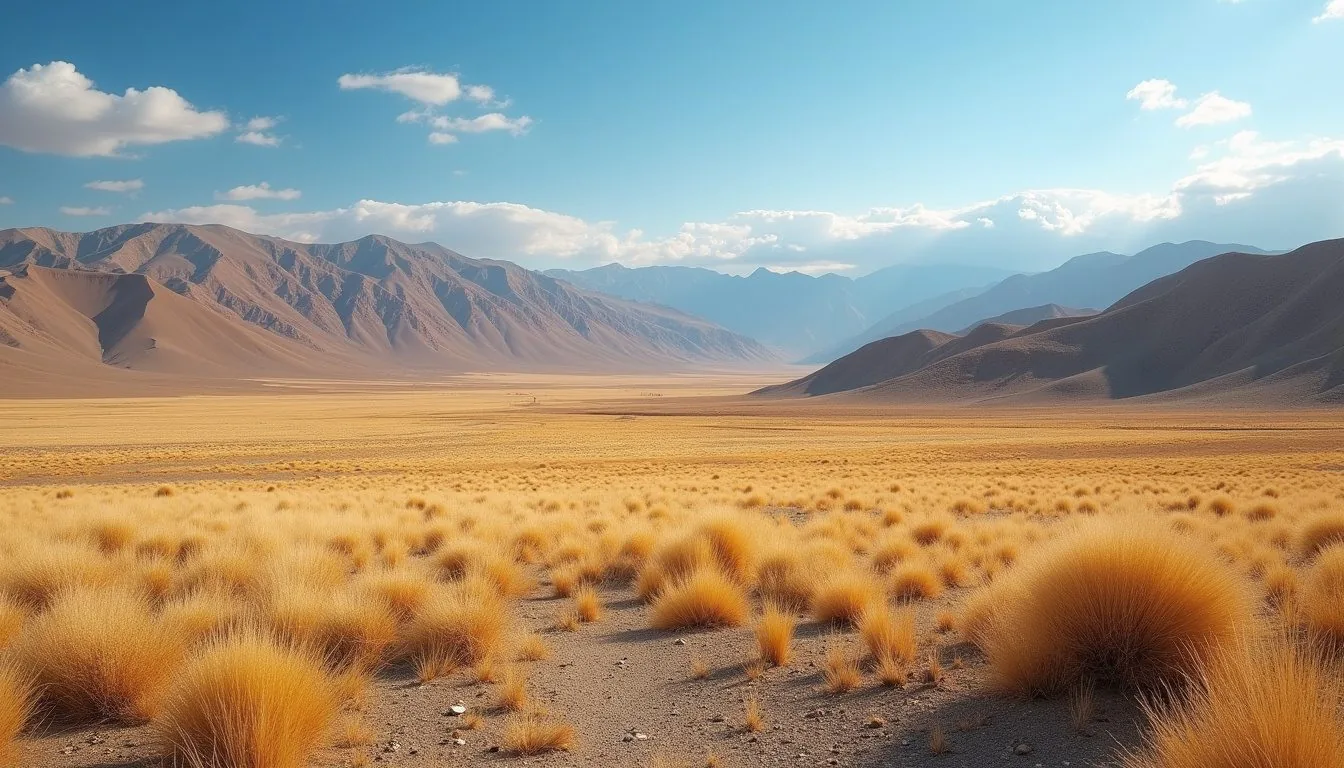
Kazakhstan is the world’s ninth-largest country, and its size alone means extraordinary natural diversity. In a single country you find the world’s largest dry steppe, glaciated peaks over 7,000 meters, saxaul forests, salt flats, semi-deserts, the shrinking Aral Sea, alpine lakes, and birch forests bordering Siberia. Kazakhstan’s nature is not a single landscape — it is a continent compressed into one country.
Most of this nature is untouched. With fewer than 7 people per square kilometer on average, vast areas of Kazakhstan have seen minimal human impact. This makes it one of the last places on Earth where you can experience genuinely wild, unmodified landscapes.
Kazakhstan’s Five Major Natural Zones
1. Steppe (Dala)
The Kazakh steppe is the largest dry grassland ecosystem on Earth. It stretches from the Ural River in the west to the Altai foothills in the east — covering approximately 804,000 km², an area larger than France and Germany combined.
The steppe is not uniform. It transitions from meadow steppe in the north (moister, more lush) to dry steppe in the center and south (sparse grass, semi-arid). In spring, the steppe blooms with tulips, poppies, and wildflowers — a transformation that astonishes first-time visitors.
Wildlife of the steppe:
- Saiga antelope — one of the world’s oldest mammals, present for over a million years. Kazakhstan holds the world’s largest population: over 1.9 million saiga as of 2023, rebounding from near-extinction in the 1990s. During migration, herds of 100,000+ animals are visible.
- Great bustard — the world’s heaviest flying bird
- Steppe eagle, steppe fox, corsac fox
- Ground squirrels (suslik) — in enormous numbers, the base of the food chain
- Marmots in the eastern steppe
The Saryarka (Kazakh Uplands) steppe in central Kazakhstan is a UNESCO World Heritage Site, recognized for its unique landscape and migratory bird habitat.
2. Mountains (Tау)
The southeast and east of Kazakhstan are dominated by the Tian Shan and Altai mountain ranges — see our complete Kazakhstan mountains guide for detail.
In terms of nature:
- Tian Shan contains one of the world’s most diverse temperate ecosystems
- Wild apple (Malus sieversii), walnut, and apricot — the genetic ancestors of today’s cultivated varieties — originate from the Tian Shan forests of Kazakhstan
- Snow leopard population: approximately 180–200 individuals in Kazakhstan
- The Zailiysky Alatau above Almaty contains the largest concentration of endemic plant species in Central Asia
3. Desert and Semi-Desert
Kazakhstan’s southern half transitions from steppe into semi-desert and desert. The two main desert systems are:
Betpak-Dala (“Hungry Steppe”) — a vast semi-desert plateau in south-central Kazakhstan, covering approximately 75,000 km². Sparse vegetation, extreme temperatures (-30°C in winter, +40°C in summer), and one of the most desolate landscapes in Central Asia. Despite this, it is critical saiga antelope habitat.
Kyzylkum Desert — extends from southern Kazakhstan into Uzbekistan. The name means “Red Sand” in Uzbek. Characterized by sand dunes, saxaul forests, and adapted wildlife including goitered gazelle, monitor lizards, and sand cats.
Ustyurt Plateau — a vast flat plateau in the west, between the Caspian Sea and the Aral Sea. An ancient seabed now exposed as desert. Dramatic cliffs (chinks) drop hundreds of meters to the surrounding lowlands.
4. Wetlands and Lakes
Despite being landlocked, Kazakhstan has extraordinary water environments:
Caspian Sea — Kazakhstan has 1,894 km of Caspian Sea coastline (western border). The Caspian is the world’s largest inland body of water. Kazakhstan’s portion includes important sturgeon spawning grounds and the Caspian seal (Pusa caspica), the world’s only landlocked seal species.
Balkhash Lake — one of the world’s largest lakes at 16,996 km². Remarkable for being half freshwater (western end, fed by the Ili River from China) and half saltwater (eastern end). It is gradually shrinking due to reduced inflow.
Alakol Lake system — a Ramsar-listed wetland in eastern Kazakhstan, critical stopover for migratory birds on the Central Asian flyway. Over 300 bird species recorded.
Zaysan Lake — in East Kazakhstan, on the Irtysh River, surrounded by the Altai foothills. Habitat for rare aquatic species.
5. Forests
Although Kazakhstan is not primarily associated with forests, approximately 4.7% of the country is forested — about 13 million hectares.
Saxaul forests (zhide) — the dominant tree in Kazakhstan’s deserts and semi-deserts. Saxaul (Haloxylon ammodendron) is adapted to extreme aridity. It plays a critical role in fixing sand dunes and providing shelter for steppe wildlife. Kazakhstan has vast saxaul forest areas in the south.
Birch and aspen forests — in northern Kazakhstan, transitioning into the Siberian taiga
Tian Shan spruce forests — coniferous forests in the mountains above Almaty and in the Ile-Alatau National Park
Apple orchards of the wild — the Dzungarian Alatau and Tian Shan foothills contain the world’s last significant stands of wild apple forest — the direct ancestors of every apple variety grown commercially today
Kazakhstan’s National Parks and Protected Areas
Kazakhstan protects approximately 10.3% of its territory through a network of national parks (milli parktar), nature reserves (zapovedniks), and natural monuments.
Ile-Alatau National Park
Location: Directly behind Almaty city Area: 199,700 hectares Elevation: 1,200m – 4,973m
The most visited national park in Kazakhstan, simply because of its proximity to Almaty. It includes Big Almaty Lake, Shymbulak ski resort, and the full range of Zailiysky Alatau mountains. Snow leopards, ibex, bears, and wolves live in the park alongside a massive tourism infrastructure.
Best for: Day hikes, mountain biking, ski touring, wildlife photography
Altyn Emel National Park
Location: 260 km east of Almaty, near Kapchagay Reservoir Area: 520,000 hectares
One of Kazakhstan’s most dramatic and diverse parks. Contains:
- Singing Dunes (Aynakol) — sand dunes that emit a deep humming sound due to wind conditions
- Aktau White Mountains — stark white chalk cliffs eroded into bizarre formations
- Katutau Volcanic Hills — ancient black volcanic landscape
- Ash trees in the Ili River delta — unusual forest habitat
Wildlife includes Przewalski’s horse (reintroduced), saiga, onager (wild ass), and a vast bird population.
Best for: 4WD adventures, unique geology, saiga viewing, Przewalski’s horses
Charyn Canyon National Park
Location: 215 km east of Almaty Area: 127,700 hectares
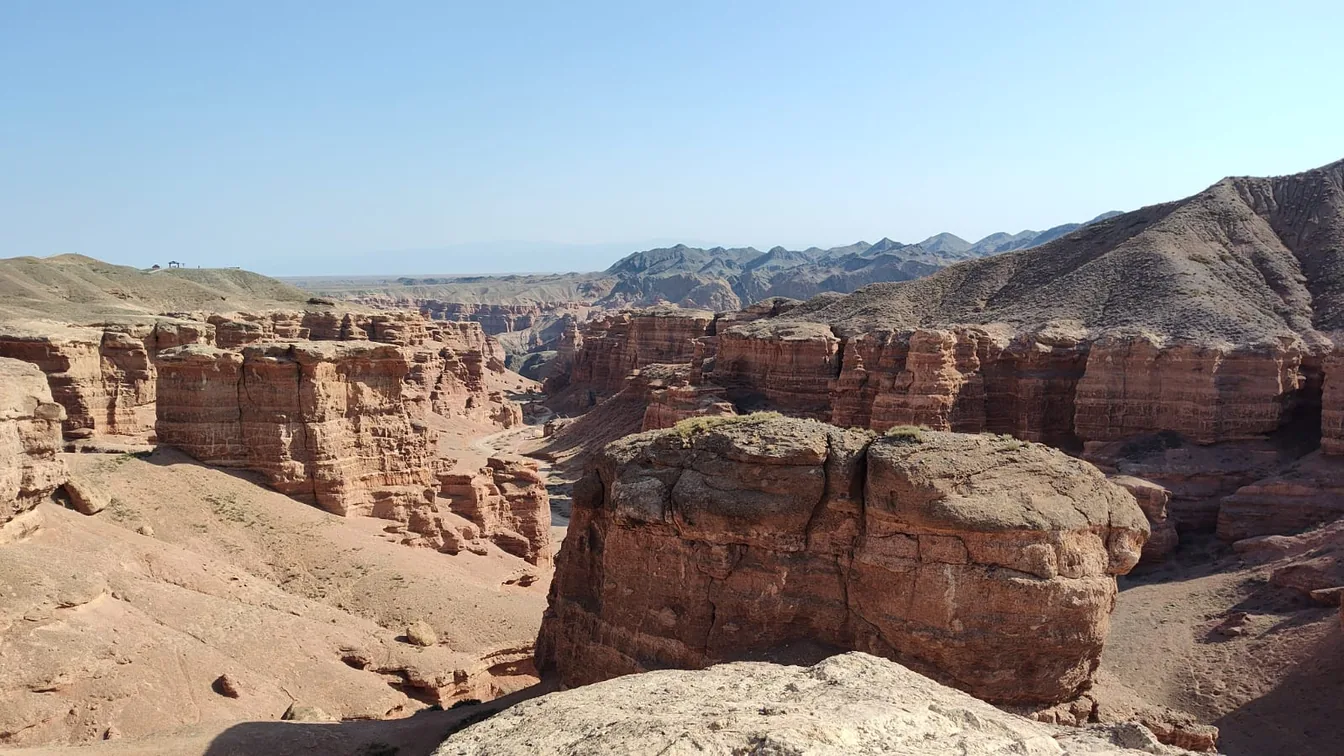
The Charyn River canyon is often called the “Grand Canyon’s younger brother.” While that comparison undersells it — Charyn is its own thing entirely. The canyon is 150–300 meters deep, carved through red sandstone and clay. The Valley of Castles section has extraordinary eroded formations.
Adjacent to the canyon is the Charyn Ash Grove — one of the few surviving stands of Sogdian ash trees, a relict forest from the Tertiary period that survived the last ice age in this protected microclimate.
Best for: Day trips from Almaty, photography, easy canyon walks
Kokshetau National Park
Location: North-central Kazakhstan, near Kokshetau city Area: 196,000 hectares
The park contains the famous Burabay (Borovoe) resort area — called the “Switzerland of Kazakhstan” by locals. A dramatic landscape of granite boulders rising from pine forest, dotted with clear lakes. Completely different from southern Kazakhstan’s desert and mountains.
Best for: Summer swimming, pine forest walks, dramatic granite scenery
Ustyurt Nature Reserve
Location: Western Kazakhstan, Mangystau region Area: 223,342 hectares
Protects the extraordinary Ustyurt Plateau ecosystem — ancient flat desert with dramatic cliff edges (chinks) dropping to the surrounding lowlands. The reserve protects the goitered gazelle, saiga, and various raptors.
Barlyk-Arasan Reserve and Markakol Lake
Location: East Kazakhstan (Altai region) Markakol area: 75,000 hectares
Markakol is an alpine lake at 1,449m in the Altai mountains, surrounded by dense taiga forest. The surrounding reserve protects one of Kazakhstan’s largest concentrations of brown bears, as well as the endemic Altai osman fish found only in Markakol.
The Aral Sea: Kazakhstan’s Environmental Tragedy
The Aral Sea was once the world’s fourth-largest lake. Soviet irrigation projects in the 1960s–1980s diverted its feeder rivers (Syr Darya and Amu Darya) to grow cotton. The result was an environmental catastrophe — the lake shrank to 10% of its original size by 2007.
In Kazakhstan, the Kokaral Dam (completed 2005) has partially restored the North Aral Sea — the portion within Kazakhstan’s borders. The water level in the North Aral has risen by 12 meters since the dam’s construction. Fish have returned, and fishing communities have partially revived.
The South Aral Sea (in Uzbekistan) continues to shrink and is likely unrecoverable as a lake. The exposed seabed has become the Aralkum Desert — a new desert of salt and dust that carries toxic residue from Soviet-era pesticides, causing health problems for hundreds of kilometers around.
Kazakhstan’s Endangered and Iconic Animals
| Species | Status | Population in Kazakhstan | Location |
|---|---|---|---|
| Snow leopard | Vulnerable | ~180–200 | Tian Shan, Altai |
| Saiga antelope | Vulnerable | 1.9 million (2023) | Steppe |
| Caspian seal | Endangered | ~100,000 | Caspian Sea |
| Przewalski’s horse | Endangered (reintroduced) | ~200 | Altyn Emel NP |
| Siberian crane | Critically endangered | Stopover migrant | Northern wetlands |
| Pallas’s cat | Least concern (rare to see) | Present | Steppe |
| Argali (Marco Polo sheep) | Near threatened | ~2,000 | Mountains |
| Golden eagle | Least concern (iconic) | Widespread | Steppe, mountains |
Best Time to Visit Kazakhstan’s Nature
Spring (April–May): Steppe wildflower bloom, saiga migration, migratory birds arrive. Best for steppe nature.
Summer (June–August): Mountain hiking, national parks fully accessible, Burabay swimming. Hot in south.
Autumn (September–October): Excellent visibility in mountains, fall foliage in Altai, cooler temperatures. Underrated season.
Winter (November–March): Steppe snowscapes, wolf tracking, eagle hunting season, Shymbulak skiing. Extreme cold (-30°C to -40°C in north).
Frequently Asked Questions
- What is the nature of Kazakhstan like?
- Kazakhstan has extraordinary natural diversity across five zones: vast grassland steppe (the world's largest dry steppe), glaciated mountain ranges (Tian Shan, Altai), desert and semi-desert in the south, extensive wetlands and lakes, and northern birch forests bordering Siberia. Most of this landscape is untouched due to low population density.
- What animals live in Kazakhstan?
- Kazakhstan's most iconic animals include the saiga antelope (1.9 million — the world's largest population), snow leopard (180–200 individuals in the mountains), Caspian seal (the world's only landlocked seal), Przewalski's horse (reintroduced in Altyn Emel), golden eagle (used for traditional hunting), and argali (world's largest wild sheep).
- What are the best national parks in Kazakhstan?
- The top national parks are: Ile-Alatau (behind Almaty — most accessible), Charyn Canyon (215 km from Almaty — dramatic red rock canyon), Altyn Emel (singing dunes, Przewalski's horses, Aktau white mountains), Kokshetau/Burabay (pine forest and granite boulders in the north), and Markakol Lake (pristine alpine lake in the Altai).
- Is the Kazakh steppe the largest in the world?
- Yes. The Eurasian steppe belt is the world's largest grassland system, and the Kazakh steppe is its central and largest section. The Kazakh steppe alone covers approximately 804,000 km² — larger than France and Germany combined. It stretches from the Ural River in the west to the Altai foothills in the east.
- What happened to the Aral Sea in Kazakhstan?
- The Aral Sea was once the world's fourth-largest lake. Soviet-era irrigation projects in the 1960s–80s diverted its feeder rivers, causing it to shrink to 10% of its original size. Kazakhstan built the Kokaral Dam in 2005, which has partially restored the North Aral Sea (the portion in Kazakhstan) — water levels have risen 12 meters and fishing has resumed.
More Stories
travel
Almaty vs Astana: Which City Should You Visit in Kazakhstan?
Almaty vs Astana compared — climate, cost, attractions, nightlife, mountains, and architecture. Which Kazakhstan city is right for your trip?
travel
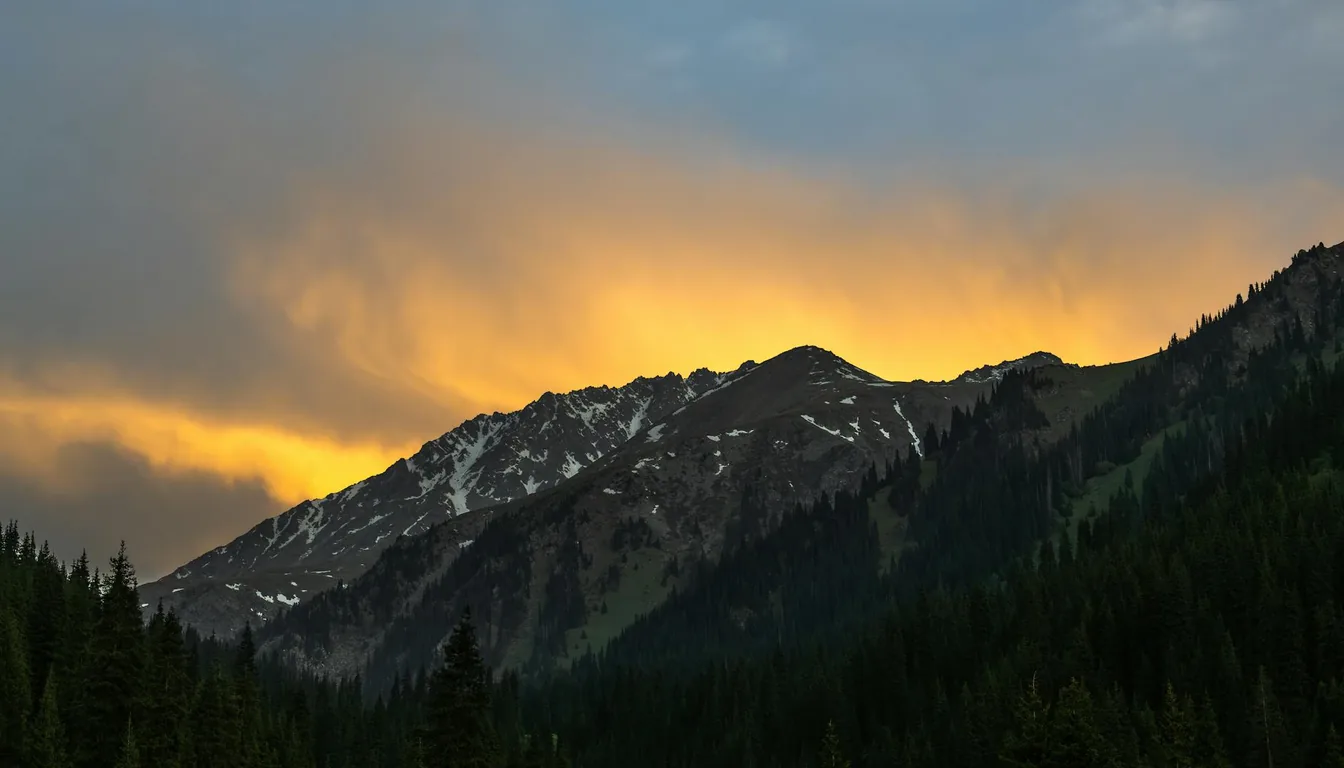
Best Time to Visit Almaty: Month-by-Month Guide
When to visit Almaty — complete month-by-month breakdown covering weather, crowds, mountain conditions, festivals, and practical travel tips for every season.
travel
Kazakhstan 7-Day Itinerary: The Perfect First Trip
The best 7-day Kazakhstan itinerary covering Almaty, Charyn Canyon, Kolsai Lakes, and Astana. Day-by-day plan with transport, costs, and practical tips.