Kazakhstan Religion: Islam, Christianity & More
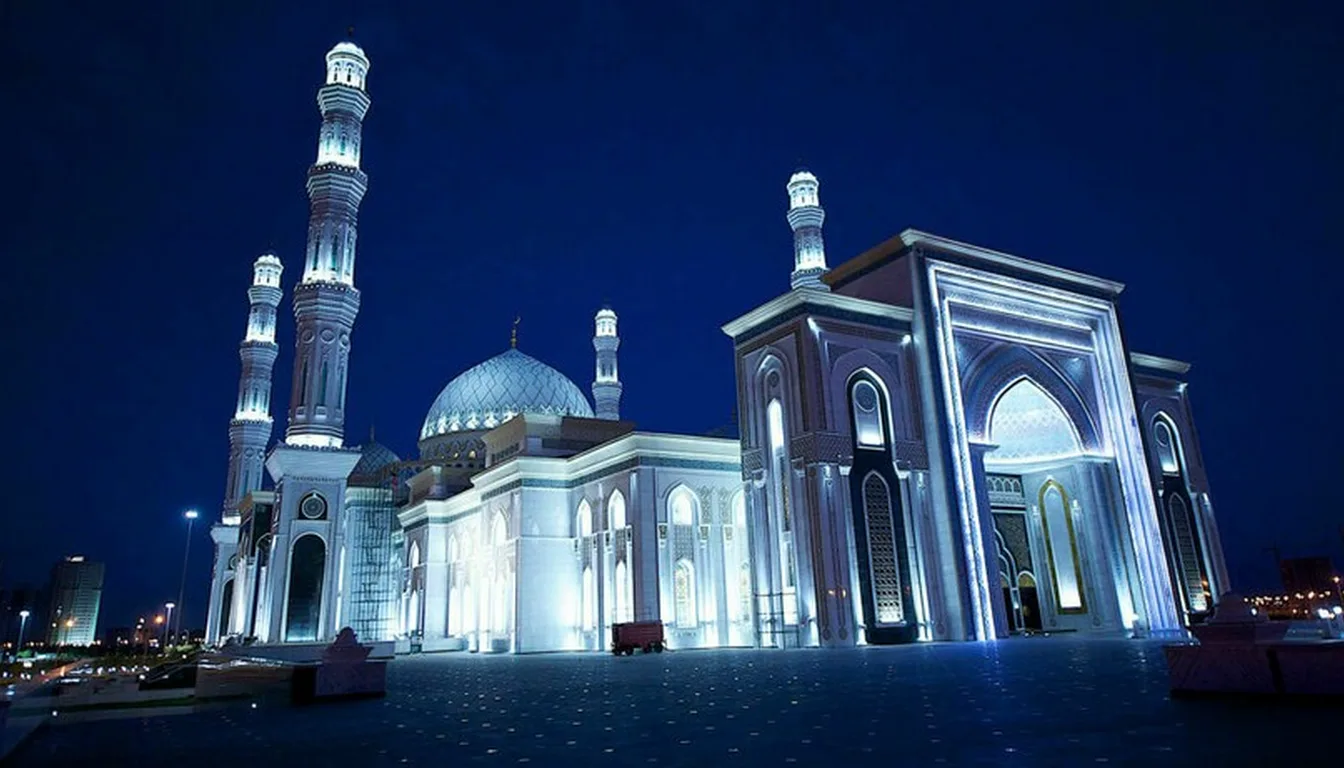
Kazakhstan is a predominantly Muslim country, but one of the most secular Muslim-majority nations in the world. Approximately 70% of the population identifies as Muslim (predominantly Sunni, Hanafi school), while about 17% is Russian Orthodox Christian. Kazakhstan’s constitution establishes it as a secular state. There is no sharia law, alcohol is legal and widely consumed, and religious practice is generally moderate and culturally-oriented rather than strictly doctrinal. Understanding religion in Kazakhstan means understanding how Islam, ancient nomadic spirituality, Soviet-era atheism, and post-independence national identity all interact. Religion is one of the most fascinating threads running through the broader culture of Kazakhstan.
Religious Demographics of Kazakhstan (2026)
| Religion | Percentage | Estimated Population |
|---|---|---|
| Islam (predominantly Sunni Hanafi) | ~70% | ~14 million |
| Russian Orthodox Christianity | ~17% | ~3.4 million |
| Other Christian denominations | ~2% | ~400,000 |
| Non-religious / atheist / agnostic | ~8% | ~1.6 million |
| Other religions (Catholic, Buddhist, Jewish, etc.) | ~3% | ~600,000 |
These figures align with Kazakhstan’s official census data and Pew Research surveys. The Muslim majority corresponds roughly with the ethnic Kazakh population (~70% of total); the Orthodox Christian minority corresponds largely with the ethnic Russian population (~15%). As of 2026, Kazakhstan’s total population is approximately 20 million.
Islam in Kazakhstan
How Islam Arrived: 7th–18th Centuries
Islam first reached Central Asia along the Silk Road in the 7th–8th centuries CE. The cities of southern Kazakhstan (Taraz, Turkestan, Otrar) became significant centers of Islamic learning. The region’s most influential figure was Khoja Ahmed Yasawi (1093–1166), a Sufi poet and mystic whose followers spread a Sufi-inflected, culturally adaptive form of Islam across the Kazakh steppe. His mausoleum in Turkestan, built by Timur in the 1390s, is now a UNESCO World Heritage Site and the most important Islamic pilgrimage site in Central Asia.
The Kazakh steppe, however, was only partially and unevenly Islamicized for much of its history. The nomadic Kazakhs maintained pre-Islamic beliefs like Tengrism (worship of the sky god Tengri), shamanism (baqsy), and ancestor veneration alongside their nominal Islamic identity for centuries. This blending created a distinctly Kazakh form of Islam that absorbed local traditions rather than replacing them.
Soviet Suppression: 1920–1991
Soviet rule actively suppressed religion across all faiths. Mosques were closed or repurposed; religious education was banned; clergy faced persecution and deportation. By 1989, Kazakhstan had only 25 registered mosques serving a Muslim population of millions. This 70-year interruption in religious transmission meant that post-Soviet Kazakhs largely had to rediscover Islam after independence in 1991.
Islamic Revival Since Independence
Since 1991, the Islamic revival has been dramatic:
- Mosques: As of 2026, Kazakhstan has over 2,600 registered mosques, up from 25 in 1989
- Religious education: Islamic universities, madrasas, and Sunday schools have expanded significantly
- Pilgrimage: Kazakhstan sends tens of thousands of pilgrims to Mecca annually (hajj quotas apply)
- Visibility: Hijab, prayer, and Islamic content in media have all increased, especially among younger Kazakhs
What Kazakh Islam Looks Like in Practice
Kazakh Islam is distinctly different from Islam in Saudi Arabia, Iran, or even Turkey. Several characteristics define it:
Hanafi school: Kazakhstan follows the Hanafi madhab, the most liberal and reason-oriented of the four main Sunni legal schools and historically the most compatible with local customs.
Moderate practice: Most Kazakhs who identify as Muslim observe some Islamic practices (many fast during Ramadan, avoid pork at home, and observe Islamic burial rites) but relatively few pray five times daily or wear religiously distinctive dress.
Cultural Islam: For many Kazakhs, being Muslim is primarily a cultural identity: a part of being Kazakh, not a daily doctrinal commitment. The phrase “Я мусульманин, но…” (“I am Muslim, but…”), followed by an explanation of drinking alcohol or not praying regularly, is common and socially acceptable.
Pre-Islamic survivals: Elements of Tengrism, shamanism, and ancestor veneration persist within Kazakh folk practice. Rituals include hanging colored ribbons on sacred trees and springs (baqbaq), consulting traditional healers (baqsy), and spiritual practices connected to the land and ancestors. These coexist with Islamic identity without perceived contradiction.
Alcohol: Kazakhstan has a significant alcohol culture. Vodka, beer, and koumiss (fermented mare’s milk, technically alcoholic) are widely consumed, including by self-identifying Muslims. Alcohol is available everywhere, normalized socially, and not religiously policed.
Women’s dress: In Almaty and Astana, most Kazakh women wear Western-style clothing. Hijab is a personal choice, more common in southern cities and among more observant families but uncommon in urban professional settings. No dress code is enforced.
The Hazrat Sultan Mosque — Largest in Central Asia
The Hazrat Sultan Grand Mosque in Astana, completed in 2012, is the largest mosque in Central Asia. It can accommodate up to 10,000 worshippers simultaneously in its main hall. Designed to reflect Kazakh national architectural motifs alongside Islamic design principles, it has become the defining landmark of modern Astana and a point of national pride.
Named after Khoja Ahmed Yasawi, the mosque hosts major Friday prayers and Islamic holidays. Non-Muslim visitors are welcome outside prayer times; modest dress required.
Russian Orthodox Christianity in Kazakhstan
Kazakhstan’s Russian Orthodox community (roughly 17% of the population) is concentrated in northern Kazakhstan, where ethnic Russian settlement was heaviest during the 19th-century Cossack expansion and Khrushchev’s 1950s Virgin Lands campaign, which brought millions of Russian and Ukrainian settlers.
Cities with significant Orthodox populations include Petropavl, Kostanay, Pavlodar, Oskemen, and Karaganda. For a full overview of Kazakhstan’s urban centers, see our cities in Kazakhstan guide. The Russian Orthodox Church (Moscow Patriarchate) operates hundreds of churches across Kazakhstan.
Relations between the Muslim majority and Orthodox minority are generally stable. Kazakhstan’s government actively promotes interreligious dialogue and holds an annual Congress of World and Traditional Religions in Astana, which has met since 2003 and brings together religious leaders from Christianity, Islam, Judaism, Buddhism, and other faiths.
Cathedral of the Holy Ascension, Almaty: A beautiful wooden Russian Orthodox cathedral built in 1907, located in central Almaty. One of the few buildings to survive the catastrophic 1911 Almaty earthquake intact. Its wooden construction is remarkable, built without nails in the Russian ecclesiastical style, and it remains an active place of worship and a popular visitor attraction.
The Government and Religion: A Careful Balance
Kazakhstan’s constitution (Article 1) establishes it as a “secular, democratic, and rule-of-law state.” Article 22 guarantees freedom of religion. The government’s approach has two sides:
Support for Traditional Religion
The government actively supports moderate Hanafi Islam and the Russian Orthodox Church, framing both as part of Kazakhstan’s cultural heritage and social stability. State funds have been used to construct mosques (including the Hazrat Sultan), restore historical religious sites, and support religious institutions. Kazakhstan’s presidents have consistently appeared at Islamic and Orthodox ceremonies.
Restriction on “Non-Traditional” Religion
At the same time, Kazakhstan applies significant restrictions to religious organizations it classifies as “non-traditional” or potentially destabilizing:
- Salafi and Wahhabist groups are banned as extremist organizations
- Jehovah’s Witnesses face legal restrictions and have been fined or imprisoned for proselytizing
- Certain Protestant and evangelical denominations require registration and face scrutiny
- All religious organizations must register with the state
- Foreign-led proselytizing is prohibited
This dual approach (embracing traditional, moderate religion while tightly controlling what the state views as radical or foreign-influenced movements) reflects Kazakhstan’s broader security calculus regarding Central Asian stability.
The Congress of World and Traditional Religions
Since 2003, Astana has hosted this international interreligious forum every three years. It has become a signature element of Kazakhstan’s diplomatic soft power, positioning the country as a bridge between civilizations and a model of religious coexistence. The congress brings together popes, patriarchs, grand muftis, chief rabbis, and Buddhist leaders. For more on how religion connects with daily customs, see our guide to Kazakhstan traditions.
Sacred Sites and Religious Tourism in Kazakhstan
Mausoleum of Khoja Ahmed Yasawi (Turkestan)
The most important Islamic site in Kazakhstan and one of the great buildings of Central Asia. Built in 1389–1405 on the orders of Timur (Tamerlane) over the grave of the Sufi saint Khoja Ahmed Yasawi, the mausoleum was never fully completed because Timur died before the work was finished, and by convention it has stayed that way. Its vast turquoise dome, monumental portal, and detailed tilework are extraordinary. The city of Turkestan has been massively invested in since 2018 and is developing as a major Islamic tourism destination, especially for travelers exploring the Silk Road in Kazakhstan. UNESCO World Heritage Site.
Beket-Ata Underground Mosque (Mangystau)
A cave mosque carved into chalk cliffs in the remote western deserts of Kazakhstan, associated with the 18th-century Sufi saint Beket-Ata (Beket Myrzagululy). Pilgrims travel from across Kazakhstan and Central Asia to visit, many on foot across the desert. The setting (white chalk cliffs, underground chambers, oil lamp light) is genuinely otherworldly. Accessible only by 4WD, about 150km from Aktau.
Aisha Bibi Mausoleum (Taraz)
An 11th–12th century mausoleum in the city of Taraz (southern Kazakhstan), considered one of the finest examples of pre-Mongol Central Asian terracotta tile architecture. Its detailed geometric and floral tilework is remarkable for its complexity and preservation.
Hazrat Sultan Mosque (Astana)
The modern centerpiece of Islamic Kazakhstan. Visitors are welcome during non-prayer hours. The complex also includes a small museum of Islamic history.
Cathedral of the Holy Ascension (Almaty)
Built 1907, survived the 1911 earthquake, still active. Located in Panfilov Park in central Almaty and well worth a visit.
Religion and Daily Life: What Visitors Need to Know
Food: Pork is largely absent from Kazakh restaurants because most meat is halal. Russian and European restaurants serve pork dishes. Alcohol is freely available in restaurants, bars, and supermarkets everywhere in Kazakhstan.
Ramadan: Observed by many Kazakhs. Restaurants stay open, but you may notice reduced daytime eating in public, especially in southern cities. Night markets and increased social activity occur in the evenings during Ramadan.
Dress at religious sites: Women should cover their heads when entering mosques (scarves are typically available at the entrance). Both sexes should cover shoulders and knees. Modest dress is also advisable in rural areas and conservative southern regions.
Islamic greetings: “Assalamu Alaykum” (peace be upon you) and its response “Wa Alaykum Assalam” are widely used even by secular Kazakhs as a cultural norm that signals respect, not necessarily religious identity. Using it when greeting Kazakh hosts is always appropriate and appreciated.
Religious holidays: Nauryz (March 21-22, pre-Islamic spring festival absorbed into the national calendar), Kurban Ait (Eid al-Adha, a major public holiday with feasting and prayer), and Ramazan Ait (Eid al-Fitr) are the main religious-cultural events.
Frequently Asked Questions
- What is the religion of Kazakhstan?
- Approximately 70% of Kazakhstan's population identifies as Muslim (predominantly Sunni, Hanafi school), and about 17% is Russian Orthodox Christian. Kazakhstan is officially a secular state with no sharia law. Kazakh Islam is moderate and culturally-oriented — shaped by nomadic traditions, Sufi influences, and 70 years of Soviet atheism — making it among the most liberal expressions of Islam in the world.
- Is Kazakhstan a Muslim country?
- Kazakhstan has a Muslim majority (~70%) but is constitutionally secular. It is not a theocratic state — there is no sharia law, alcohol is legal and widely consumed, and women are not required to wear hijab. As of 2026, Kazakhstan has over 2,600 mosques. The dominant form of Islam is moderate Hanafi — shaped by nomadic traditions and 70 years of Soviet suppression of religion.
- Can you drink alcohol in Kazakhstan?
- Yes. Alcohol is legal and widely available throughout Kazakhstan. Beer, vodka, wine, and spirits are sold in supermarkets, restaurants, and bars across the country. Kazakhstan has a significant drinking culture. The country's Muslim majority does not translate into any alcohol prohibition — this is consistent with Kazakhstan's secular constitution and its culturally moderate approach to Islam.
- What percentage of Kazakhstan is Muslim?
- Approximately 70% of Kazakhstan's population identifies as Muslim. This corresponds roughly to the ethnic Kazakh population. Some surveys place the figure at 73–75%. Most Kazakh Muslims practice a moderate, culturally-oriented version of Islam rather than strict doctrinal observance — alcohol consumption, non-observance of the five daily prayers, and Western dress are common among self-identifying Muslims.
- What is the largest mosque in Central Asia?
- The Hazrat Sultan Grand Mosque in Astana, Kazakhstan's capital, is the largest mosque in Central Asia. Completed in 2012, it can accommodate up to 10,000 worshippers in its main hall. Named after the Sufi saint Khoja Ahmed Yasawi, it has become an iconic landmark of modern Astana and a symbol of Kazakhstan's Islamic identity.
- What religion do ethnic Russians in Kazakhstan practice?
- Most ethnic Russians in Kazakhstan (approximately 15% of the total population) practice Russian Orthodox Christianity. The Russian Orthodox Church (Moscow Patriarchate) has a significant presence with hundreds of churches, concentrated in northern Kazakhstan where ethnic Russian settlement was heaviest. Relations between the Muslim majority and Orthodox minority are generally peaceful — Kazakhstan actively promotes interreligious dialogue.
More Stories
culture
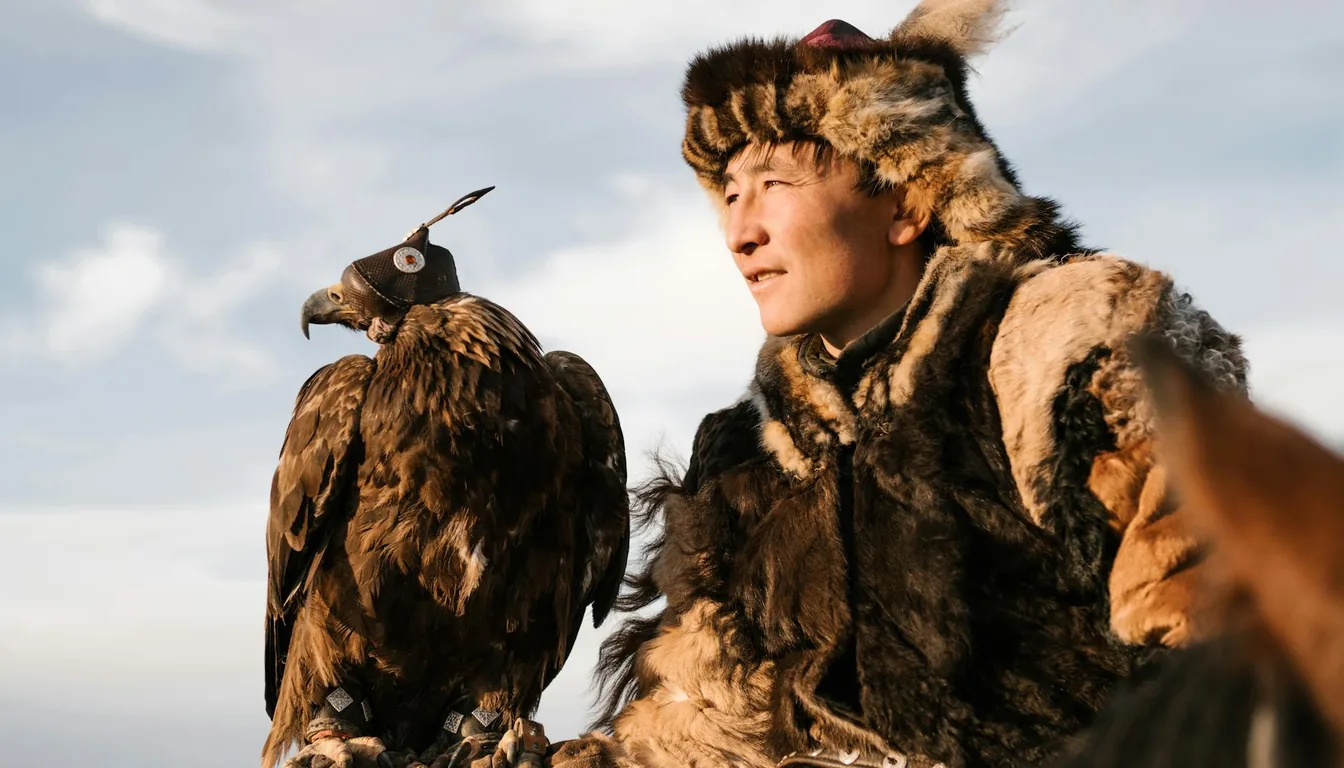
Eagle Hunting in Kazakhstan: Berkutchi Tradition
Eagle hunting in Kazakhstan is a 4,000-year-old UNESCO tradition with only 250 berkutchi left. How it works, where to watch, and how to book a tour.

culture
Famous People from Kazakhstan: Top Icons & Stars
Famous people from Kazakhstan: GGG, Dimash Kudaibergen, Abai, and 30+ icons across sports, music, science and politics. Full bios and achievements.

culture
Kazakh Language Basics: 40+ Essential Phrases
Kazakh language basics for travelers — 40+ essential phrases for greetings, food, directions, emergencies, pronunciation, and when to use Kazakh vs Russian.