Nauryz in Kazakhstan
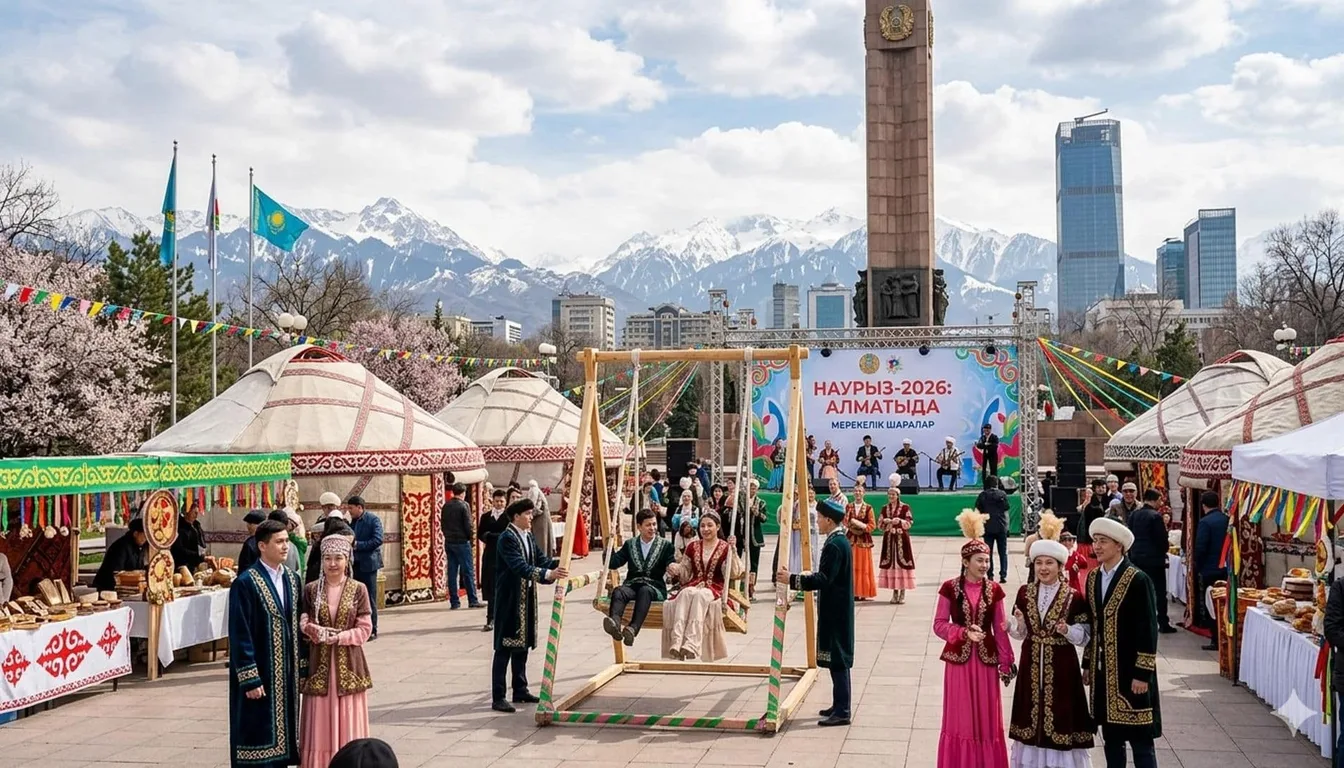
Nauryz is the Kazakh and Central Asian New Year, celebrated on March 22 at the spring equinox. It is over 3,000 years old, rooted in ancient Zoroastrian traditions, and marks the beginning of a new year of abundance, renewal, and community. Banned for 62 years during the Soviet era and revived in 1988, Nauryz has become Kazakhstan’s most important and most visible national celebration, a three-day public holiday (March 21–23) when entire cities fill with yurt villages, horse games, dombra music, and communal pots of the ritual seven-ingredient nauryz kozhe soup. In 2009, Nowruz (the broader holiday family) was inscribed on UNESCO’s Representative List of Intangible Cultural Heritage. For visitors, Nauryz is the single most culturally rewarding event you can witness in Kazakhstan.
What Is Nauryz?
Nauryz (Наурыз) means “New Day” in Persian, from “nau” (new) and “ruz” (day). It marks the vernal equinox, when day and night are equal in length and the natural world reawakens after the long Central Asian winter. For Kazakhs, this is the true beginning of the year, far older and more culturally embedded than the January 1 calendar date.
The holiday belongs to a vast family of equinox celebrations stretching from the Balkans to western China. Persians call it Nowruz, Azerbaijanis say Novruz, Uzbeks celebrate it as Navro’z, and Tajiks know it as Navruz. In Kazakhstan, the celebration carries distinctly Kazakh elements: horse games (kokpar, baige), aitys poetry competitions, eagle hunting demonstrations, and the prominent role of the dombra, the two-stringed Kazakh lute that provides the musical soundtrack to every gathering.
Nauryz is not a religious holiday. While the majority of Kazakhs are Muslim, Nauryz predates Islam by millennia. It is a cultural and astronomical celebration tied to the earth’s orbit, the return of warmth, and the survival of pastoral nomadic communities that depended entirely on the seasons. This pre-Islamic character is precisely why the Soviet government banned it, and precisely why its revival after 1988 carried such powerful symbolic weight for Kazakh identity.
For a deeper look at what makes Kazakh identity distinct, see our guide to the culture of Kazakhstan.
History of Nauryz: From Zoroastrian Roots to Modern Revival
Ancient Origins
Nauryz traces its origins to the Zoroastrian traditions of ancient Persia, at least 3,000 years ago and possibly older. The Achaemenid Empire (550–330 BCE) celebrated the equinox as the start of the new year, and inscriptions at Persepolis depict tribute-bearers arriving for Nowruz festivities. As Turkic and Iranian peoples migrated across Central Asia, the holiday spread along the Silk Road, absorbing local customs at each stop.
For the nomadic Kazakhs of the Great Steppe, the spring equinox was existentially important. It signaled the end of the brutal winter when livestock losses determined whether a family survived. Spring meant new lambs, new foals, fresh koumiss (fermented mare’s milk), and the ability to move to summer pastures. Nauryz was a celebration of literal survival, not abstract symbolism.
The Soviet Ban (1926–1988)
In 1926, Soviet authorities officially banned Nauryz along with most traditional holidays, religious observances, and expressions of ethnic identity. The reasoning was twofold. Nauryz was labeled a “feudal superstition” incompatible with socialist modernization, and its role as a focus of Kazakh national feeling made it politically dangerous.
For 62 years, public celebration was prohibited. Schools did not teach Nauryz traditions. Newspapers did not mention it. Cultural organizations could not promote it. Yet the holiday survived quietly, in rural homes, among grandmothers who still prepared nauryz kozhe on the equinox and told children stories about the meaning of the seven ingredients.
Revival and National Holiday
The ban was lifted in 1988 under Mikhail Gorbachev’s glasnost reforms, and the first public Nauryz celebrations in decades took place that year. When Kazakhstan declared independence in December 1991, making Nauryz an official holiday was one of the earliest acts of cultural restoration. Today, March 21–23 is a three-day national holiday, and the week surrounding it features events in every city and village across the country.
The revival has been described by Kazakh cultural historians as “recovering something that was almost erased.” For many Kazakhs born before 1988, the first public Nauryz they attended remains one of their most powerful memories. Understanding the traditions of Kazakhstan means understanding how much of Kazakh culture had to be actively reclaimed after independence.
How Kazakhs Celebrate Nauryz
The Dastarkhan: Nauryz Feast Table
The dastarkhan (traditional tablecloth spread on the floor or a low table) is the center of every Nauryz celebration. Families prepare for days: cooking, cleaning the house (spring cleaning before Nauryz is mandatory), and arranging the table with symbolic abundance.
At Nauryz, the dastarkhan must overflow. An empty or sparse table is considered bad luck for the coming year. Expect to see:
- Nauryz kozhe: the ritual seven-ingredient soup (see below)
- Baursak (бауырсақ): deep-fried dough puffs, piled in pyramids
- Beshbarmak: boiled meat with flat noodles, Kazakhstan’s national dish
- Koumiss (қымыз): the first fresh fermented mare’s milk of the season
- Kurt: dried sour milk balls, a nomadic staple
- Irimshik: sweet dried cottage cheese
- Dried fruits, nuts, and sweets: representing abundance and prosperity
For more on these dishes, read our guide to popular food in Kazakhstan.
Nauryz Kozhe: The Seven-Ingredient Ritual Soup
Nauryz kozhe (Наурыз көже) is the most important food of the holiday, eaten specifically and only at Nauryz. The number seven is sacred in Kazakh tradition, representing the seven virtues, seven celestial bodies known to the ancients, and seven elements of life. The soup must contain exactly seven ingredients:
- Water: the source of all life
- Meat (usually lamb or horse): sustenance and strength
- Salt: wisdom and preservation
- Butter or fat: prosperity and richness
- Millet or rice: the harvest and hard work
- Kurt or sour milk (qatyk): the nomadic dairy tradition
- Wheat or dried fruit: renewal and the coming harvest
The result is a mild, warming, slightly sour soup, comfort food with deep symbolic meaning. At public celebrations, enormous communal cauldrons of kozhe are prepared and ladled out free to anyone who approaches. Refusing nauryz kozhe when offered is considered rude.
Yurt Assembly and the Nomadic Heritage
Yurts (кииз үй, kiiz ui) are erected throughout cities and towns for Nauryz — hundreds of them in major cities like Almaty and Astana. This is not merely decorative. The yurt is the defining symbol of Kazakh nomadic civilization, and assembling yurts for Nauryz reconnects modern urban Kazakhs with their pastoral heritage.
Each yurt at a public Nauryz celebration typically represents a region, a clan, or an organization. Inside, visitors find a dastarkhan with traditional food, dombra players, and elders who explain the traditions. Walking through a Nauryz yurt village is an immersive cultural experience. It is the closest most visitors will come to understanding what life on the steppe looked like for centuries.
Horse Games: Kokpar, Baige, and Kures
Nauryz is the premier occasion for Kazakhstan’s traditional equestrian sports, spectacles that have been part of steppe culture for millennia.
Kokpar (Қоқпар): The most dramatic and visceral. Two teams of mounted horsemen compete to seize a goat carcass and carry it to the opponent’s goal. Riders gallop at full speed, grapple for possession, and crash into one another. Kokpar originated as training for mounted warfare and hunting. Matches draw thousands of spectators and generate genuine excitement; this is not a sanitized tourist performance.
Baige (Байге): Long-distance horse racing across open terrain, typically 10–30 km. Young jockeys ride light and fast. The winning horse and rider receive substantial prizes, and breeders compete fiercely for the prestige of producing champions.
Kures (Күрес): Traditional Kazakh belt wrestling. Two competitors grip each other’s sashes and attempt throws. Clean technique is prized over brute strength. Similar to Mongolian bokh and Turkish yagli gures.
Audaryspak: Mounted wrestling — two riders on horseback attempt to unseat each other. Requires extraordinary riding skill and upper-body strength simultaneously.
Aitys: Improvisational Poetry Duels
Aitys (айтыс) is one of Kazakhstan’s most distinctive cultural traditions, a competitive form of improvised sung poetry performed by two poets (aitysker) who take turns composing witty, sharp, and often hilarious verses on the spot, accompanied by dombra.
During Nauryz, major aitys competitions are held in cities across Kazakhstan. The best aityskers are celebrities, known nationally, followed on social media, and capable of drawing stadium-sized crowds. Topics range from love and philosophy to sharp political satire. The tradition requires exceptional verbal agility, musical skill, and courage because everything is improvised in real time before a live audience.
National Dress and Traditional Clothing
Nauryz is the one time of year when traditional Kazakh dress appears in force across the entire country. On the streets during Nauryz, you will see:
- Chapan (шапан): the long ornamental robe, often in rich blues, reds, or golds with embroidered patterns
- Saukele: the tall, ornate bridal headdress, worn at Nauryz celebrations by young women
- Kalpak: the white felt hat worn by men, symbol of purity and dignity
- Tymak: the fur-lined winter hat with earflaps
- Kamzol: a fitted velvet vest worn by women, embroidered with national ornaments
Modern Kazakhs increasingly blend traditional elements with contemporary fashion. A chapan over jeans and sneakers is a common and celebrated look at Nauryz.
Nauryz Events in Almaty
Almaty hosts the largest and most accessible Nauryz celebrations in Kazakhstan. The city’s relatively mild March climate (compared to Astana) means outdoor events are more comfortable.
Key locations:
- Panfilov Park and surrounding streets: the historic heart of the celebration, with yurt villages, food stalls, and performances
- Central Stadium / Almaty Arena area: major concerts and official ceremonies
- Kok-Tobe vicinity: family-oriented events with views over the city
- Arbat (Zheltoksan Street): street performers, vendors, and a festive walking atmosphere
- Green Bazaar area: the famous market overflows with Nauryz food preparations in the days before
What to expect: Arrive by 10am on March 22 for the best experience. Crowds build through midday. Bring cash, as many food vendors do not take cards. The atmosphere is genuinely joyful, not performative. Almatians take Nauryz seriously.
Practical tip: Public transport (metro line 1) runs extended hours during Nauryz. Taxis surge in price, so book in advance or use the metro.
Nauryz Events in Astana
Astana’s celebrations are more formal and large-scale, befitting the capital city. March weather in Astana is significantly colder than Almaty (often below 0°C), so dress warmly.
Key locations:
- Baiterek Tower and Left Bank boulevard: the main ceremonial area with concerts, yurt villages, and the “Nauryz Aidyny” (Light of Nauryz) program
- Hazrat Sultan Mosque: Kazakhstan’s largest mosque hosts special Nauryz prayers and community events
- EXPO grounds: large-scale exhibitions and cultural programs
- Khan Shatyr Entertainment Center: indoor events for families
Official state ceremonies take place in Astana and are broadcast nationally. The President typically delivers a Nauryz address, and diplomatic receptions are held for the international community.
The scale of Astana’s celebrations is impressive — purpose-built stages, professional lighting, and nationally famous performers. But Almaty’s more organic, neighborhood-centered celebrations often win out for visitors seeking authenticity.
When to Visit Kazakhstan for Nauryz
Nauryz is the best cultural reason to visit Kazakhstan in spring. If you are planning a trip specifically for the holiday:
Best dates: Arrive March 20, stay through March 23. This gives you the eve preparations plus all three official holiday days.
Weather:
- Almaty in late March: daytime 8–14°C, nights around 0°C. Occasional rain. Pack layers.
- Astana in late March: daytime -2 to 5°C, nights -10°C or colder. Wind. Pack serious winter clothing.
Accommodation: Book at least 2–3 weeks in advance. Hotels in central Almaty and Astana fill up for Nauryz, and prices increase 20–40% during the holiday week.
Combining with other travel: Late March is early spring, not ideal for mountain trekking (still snow at altitude) but good for city exploration. After Nauryz, you can head to Shymkent or Turkestan for warmer weather and Silk Road sites. See our guide on the best time to visit Kazakhstan for seasonal planning.
Flight tip: International flights to Almaty and Astana on March 20–21 are more expensive than usual. Domestic flights between cities are also busier. Book early.
Nauryz vs. Nowruz: How Kazakhstan Compares
Nauryz belongs to the broader Nowruz family celebrated by over 300 million people across more than 20 countries. Here is how the Kazakh version compares to its relatives:
| Aspect | Kazakhstan (Nauryz) | Iran (Nowruz) | Afghanistan (Nawroz) |
|---|---|---|---|
| Date | March 21–23 | March 20–April 2 (13 days) | March 21 |
| Ritual food | Nauryz kozhe (7-ingredient soup) | Haft-sin table (7 symbolic items) | Haft mewa (7-fruit compote) |
| Key activity | Horse games, aitys poetry | Fire jumping (Chaharshanbe Suri) | Buzkashi, Guli Surkh (Red Flower) festival |
| Music | Dombra, folk singing | Setar, traditional Persian music | Attan dance, rubab |
| Duration | 3 official days | 13 days (Sizdah Bedar) | 1–2 days |
| Character | Nomadic, equestrian, communal | Domestic, family-centered, elaborate | Regional, agricultural |
The common thread across all versions: the number seven, spring cleaning before the holiday, ritual foods shared communally, family visits, new clothes, and the core message of renewal and forgiveness. Kazakhstan’s version is uniquely shaped by its nomadic heritage. The horse games, the yurt assembly, and the outdoor communal character of the celebration reflect a culture that lived on horseback across open steppe.
UNESCO Intangible Cultural Heritage Status
In 2009, the United Nations General Assembly recognized March 21 as the International Day of Nowruz (Resolution 64/253). The same year, Nowruz was inscribed on UNESCO’s Representative List of the Intangible Cultural Heritage of Humanity, submitted jointly by Azerbaijan, India, Iran, Kyrgyzstan, Pakistan, Turkey, and Uzbekistan. Kazakhstan was later added to the multinational nomination.
The UNESCO recognition acknowledges Nowruz/Nauryz as:
- A celebration promoting peace, solidarity, and reconciliation among peoples
- A tradition of cultural diversity and friendship among civilizations
- An ancient practice that contributes to social cohesion and community identity
For Kazakhstan specifically, the UNESCO designation validates the significance of a tradition that was nearly destroyed during the Soviet period. It is also a powerful tool for cultural tourism. Nauryz is now promoted internationally as one of Kazakhstan’s signature cultural experiences, drawing increasing numbers of foreign visitors each year.
The inscription strengthened Kazakhstan’s broader efforts to preserve and promote its intangible heritage, including Kazakh eagle hunting (inscribed 2010), aitys traditions, and the traditional knowledge of yurt construction (inscribed 2014).
Frequently Asked Questions
- What is Nauryz in Kazakhstan?
- Nauryz is the Kazakh spring New Year, celebrated on March 22 at the vernal equinox. It is over 3,000 years old, rooted in ancient Zoroastrian traditions, and marks renewal, abundance, and community. Banned during the Soviet era (1926–1988), it was revived after independence and is now a 3-day public holiday (March 21–23) — Kazakhstan's most important cultural celebration.
- When is Nauryz 2026 in Kazakhstan?
- Nauryz 2026 falls on March 22 (spring equinox), with the official public holiday running March 21–23. Many cities extend celebrations for the full week of March 18–23. The main public events and celebrations are concentrated on March 21 and 22.
- What is nauryz kozhe?
- Nauryz kozhe is the sacred ritual soup of Nauryz, made with exactly 7 ingredients: water, meat (lamb or horse), salt, butter/fat, millet or rice, kurt or sour milk, and wheat or dried fruit. The number 7 represents seven virtues in Kazakh tradition. The soup is shared communally — at public events, large cauldrons are prepared and served free to everyone.
- Is Nauryz the same as Nowruz?
- Yes — Nauryz is the Kazakh name for the same holiday known as Nowruz in Iran, Nawroz in Afghanistan, and Novruz in Azerbaijan. All celebrate the spring equinox and share common themes: seven symbolic elements, ritual foods, spring cleaning, family visits, and renewal. Kazakhstan's version is unique for its horse games (kokpar, baige), aitys poetry duels, and yurt assembly traditions.
- Where is the best place to celebrate Nauryz in Kazakhstan?
- Almaty offers the largest and most accessible celebrations — Panfilov Park, Central Stadium area, and street festivals with yurt villages, food stalls, and performances. Astana has more formal, large-scale state events around Baiterek Tower. Smaller cities like Shymkent and Kokshetau offer more traditional, community-centered celebrations closer to the holiday's roots.
- Why was Nauryz banned in the Soviet Union?
- The Soviet government banned Nauryz in 1926, labeling it a feudal superstition incompatible with socialist ideology. The ban also targeted Nauryz as a focus of Kazakh national identity and ethnic sentiment. For 62 years (1926–1988), public celebration was prohibited, though families continued observing it quietly in rural homes. It was officially restored in 1988 under Gorbachev's glasnost reforms.
More Stories
culture
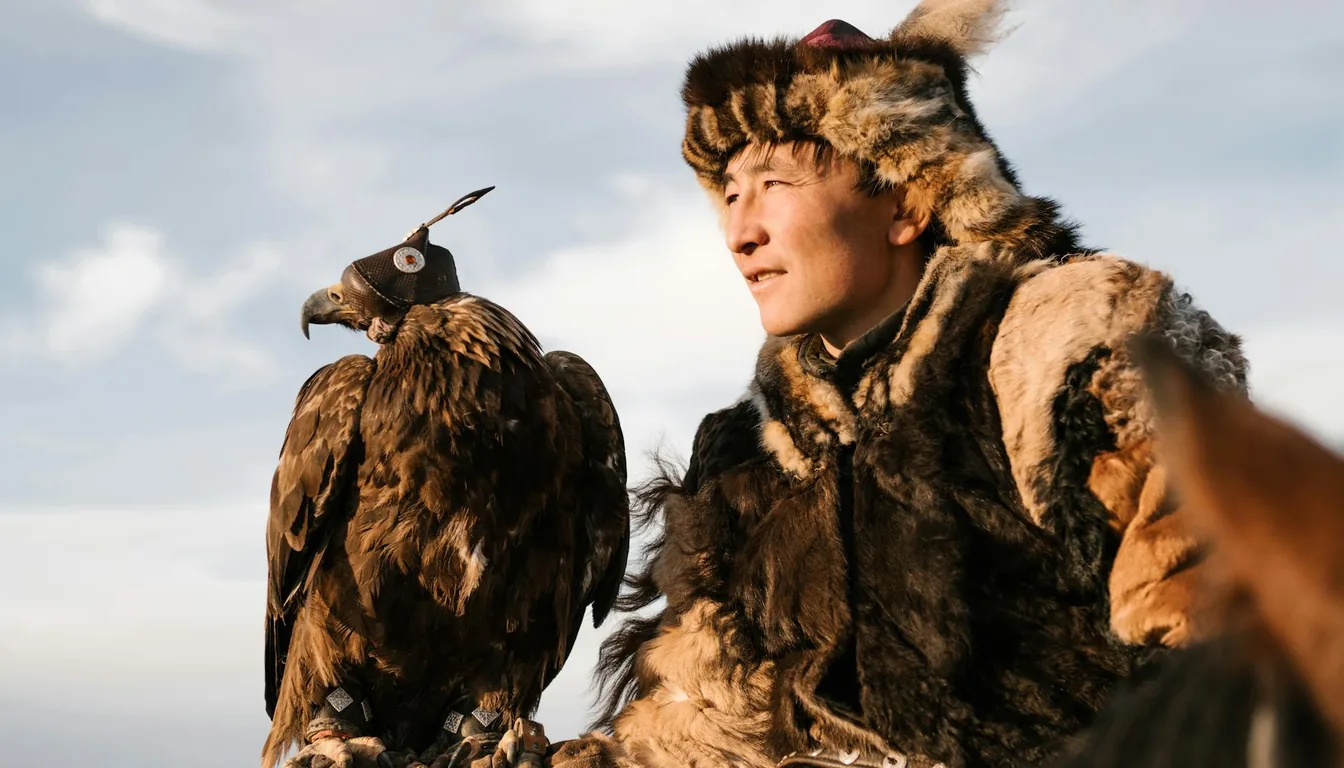
Eagle Hunting in Kazakhstan: Berkutchi Tradition
Eagle hunting in Kazakhstan is a 4,000-year-old UNESCO tradition with only 250 berkutchi left. How it works, where to watch, and how to book a tour.

culture
Famous People from Kazakhstan: Top Icons & Stars
Famous people from Kazakhstan: GGG, Dimash Kudaibergen, Abai, and 30+ icons across sports, music, science and politics. Full bios and achievements.

culture
Kazakh Language Basics: 40+ Essential Phrases
Kazakh language basics for travelers — 40+ essential phrases for greetings, food, directions, emergencies, pronunciation, and when to use Kazakh vs Russian.