Where Is Central Asia? Location, Map, Countries & Geography
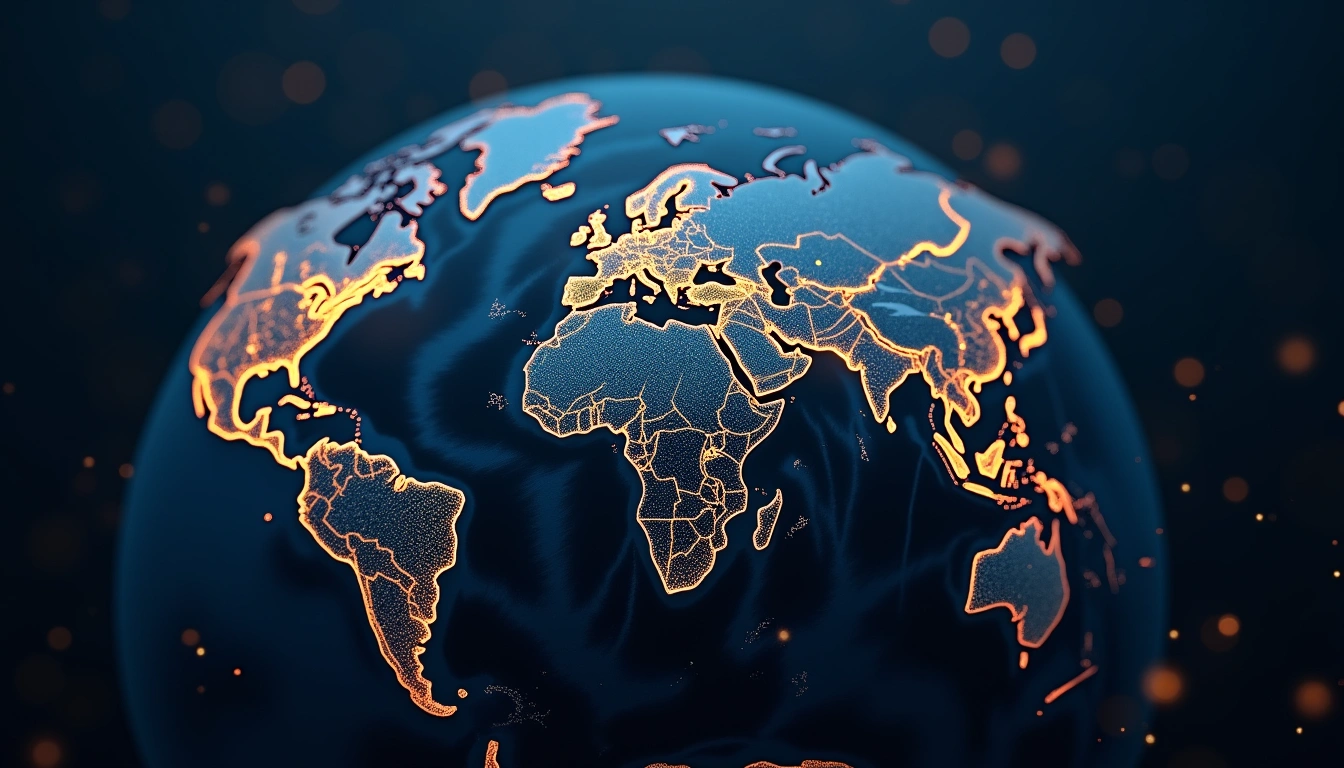
Central Asia is a landlocked region in the heart of the Asian continent, comprising five countries: Kazakhstan, Uzbekistan, Kyrgyzstan, Tajikistan, and Turkmenistan. Located roughly between latitudes 35°N and 55°N and longitudes 46°E and 87°E, the region sits at the geographic crossroads of Russia to the north, China to the east, Afghanistan and Iran to the south, and the Caspian Sea to the west. Central Asia covers approximately 4 million km² (about the size of the European Union) and is home to roughly 79 million people (World Bank, 2024). Despite being one of the least-visited parts of the world by Western tourists, this region shaped global history through the Silk Road, the Mongol Empire, and the Great Game between the British and Russian empires.
Central Asia on the Map: Exact Geographic Location
Central Asia occupies the interior of the Eurasian landmass, far from any ocean. Its approximate center lies near 41°N, 64°E, in the desert between the Uzbek cities of Bukhara and Samarkand.
Here is how the region is bordered on all four sides:
- North: Russia (the longest border, stretching over 7,600 km along Kazakhstan’s northern edge)
- East: China (Xinjiang Uyghur Autonomous Region), sharing borders with Kazakhstan, Kyrgyzstan, and Tajikistan
- South: Afghanistan (bordering Tajikistan, Uzbekistan, and Turkmenistan) and Iran (bordering Turkmenistan)
- West: The Caspian Sea (bordered by Kazakhstan and Turkmenistan), with the Caucasus and Russia beyond
The entire region is landlocked. Neither the Caspian Sea (the world’s largest enclosed body of water) nor the shrinking Aral Sea provides ocean access. This landlocked geography has been Central Asia’s defining constraint for centuries, shaping trade routes, military strategy, and economic development. The nearest ocean coastline (the Persian Gulf) lies roughly 1,500 km to the south.
The 5 Central Asian Countries: Quick Profiles
The United Nations officially defines Central Asia as five post-Soviet republics, all of which gained independence in 1991. Here is a comparison of each country:
| Country | Capital | Area (km²) | Population | GDP per Capita | Official Language |
|---|---|---|---|---|---|
| Kazakhstan | Astana | 2,724,900 | 20.2M | $13,190 | Kazakh, Russian |
| Uzbekistan | Tashkent | 448,978 | 36.8M | $2,568 | Uzbek |
| Kyrgyzstan | Bishkek | 199,951 | 7.1M | $1,665 | Kyrgyz, Russian |
| Tajikistan | Dushanbe | 143,100 | 10.6M | $1,187 | Tajik (Persian) |
| Turkmenistan | Ashgabat | 488,100 | 6.4M | $8,280 | Turkmen |
Sources: World Bank (2024), CIA World Factbook
Total region: ~4,005,029 km² and ~81 million people.
Kazakhstan: The Giant
Kazakhstan alone accounts for 68% of Central Asia’s total land area, making it the ninth-largest country in the world, larger than all of Western Europe combined. It is the wealthiest country in the region by GDP per capita (~$13,190), the most urbanized (58%), and the most connected to global markets thanks to oil, gas, and uranium exports. Its geography stretches from the Caspian coast in the west across the vast Kazakh Steppe to the Altai Mountains in the east, and from the Russian border in the north to the Tian Shan peaks in the south.
Uzbekistan: The Cultural Heart
Uzbekistan is the most populous Central Asian country (36.8 million) and the cultural core of the region. The ancient Silk Road cities of Samarkand, Bukhara, and Khiva contain some of the finest Islamic architecture on Earth, including the Registan, Shah-i-Zinda, and the Kalon Minaret. Uzbekistan has been opening rapidly to tourism since 2018, with visa-free entry for citizens of over 90 countries.
Kyrgyzstan: The Mountain Republic
Over 90% of Kyrgyzstan lies above 1,500 meters, earning it the nickname “the Switzerland of Central Asia.” Lake Issyk-Kul, the world’s second-largest alpine lake, sits at 1,607 meters. Kyrgyzstan is the most democratic of the five countries and has the most developed trekking and adventure tourism infrastructure.
Tajikistan: The Roof of the World
Tajikistan is the poorest Central Asian country by GDP per capita but arguably the most dramatic in landscape. The Pamir Mountains (known locally as “the Roof of the World”) dominate the eastern Gorno-Badakhshan region, with peaks exceeding 7,000 meters. The Pamir Highway is one of the world’s greatest road trips. Tajikistan is the only Central Asian country where the dominant language is Persian (Tajik), not Turkic.
Turkmenistan: The Hermit State
Turkmenistan is one of the world’s most isolated and authoritarian nations. The Karakum Desert covers roughly 80% of the country. Despite this, Turkmenistan sits on the world’s fourth-largest natural gas reserves. The Darvaza Gas Crater (“Door to Hell”), a burning natural gas field that has been alight since 1971, is its most famous attraction. Independent tourism is extremely restricted; most visitors require a government-approved guide.
Broader Definitions: What Else Counts as Central Asia?
The five-country definition is standard, but broader definitions exist:
- UNESCO’s definition includes Afghanistan, Mongolia, northeastern Iran, northern Pakistan, and parts of western China (Xinjiang and Tibet). This “greater Central Asia” reflects historical and cultural continuity rather than modern political borders.
- The Soviet definition was essentially the four southern republics (Uzbekistan, Kyrgyzstan, Tajikistan, Turkmenistan) grouped as “Средняя Азия” (Middle Asia), with Kazakhstan classified separately as part of a broader “Kazakhstan and Central Asia” concept.
- Geopolitical definitions sometimes include Afghanistan (sharing ethnic Uzbek and Tajik populations in its north) and Mongolia (steppe culture, nomadic heritage). The countries ending in “-stan” also include Afghanistan and Pakistan, both of which share cultural roots with the region.
For most practical purposes (travel, diplomacy, and statistics), Central Asia means the five post-Soviet republics.
Geographic Features: Steppes, Deserts, Mountains, and Rivers
Central Asia’s landscape is extraordinarily diverse, ranging from flat grasslands at sea level to peaks above 7,000 meters within a few hundred kilometers.
The Steppe
The Kazakh Steppe is part of the vast Eurasian steppe belt, stretching from Hungary to Mongolia. In Central Asia, it dominates northern and central Kazakhstan, one of the world’s largest unbroken grassland ecosystems. These flat, treeless plains enabled the horse-mounted nomadic cultures that shaped history: the Scythians (8th–3rd century BCE), the Huns (4th–5th century CE), the Mongols (13th century), and the Kazakh nomads (15th–19th century) all emerged from or moved through the Central Asian steppe.
The Deserts
Central Asia contains several major deserts:
- Kyzylkum Desert (“Red Sand”), shared between Uzbekistan and Kazakhstan, approximately 298,000 km². Despite its name, it contains significant deposits of gold, uranium, and natural gas.
- Karakum Desert (“Black Sand”), covering roughly 350,000 km², or about 80% of Turkmenistan. The Darvaza Gas Crater sits in its northern reaches.
- Ustyurt Plateau: a high desert plateau between the Caspian and Aral seas, shared by Kazakhstan and Uzbekistan. Its dramatic chalk cliffs and canyons are increasingly popular with adventurous travelers.
The Mountain Systems
Central Asia’s mountains are among the highest and most dramatic on Earth:
- Tian Shan (“Heavenly Mountains”), running east-west through Kazakhstan, Kyrgyzstan, and into China’s Xinjiang. The highest peak, Jengish Chokusu (Victory Peak), reaches 7,439 meters. The range forms the spectacular backdrop to Almaty, Kazakhstan’s largest city.
- Pamir Mountains (“Roof of the World”), predominantly in Tajikistan, with extensions into Afghanistan, China, and Kyrgyzstan. Ismoil Somoni Peak reaches 7,495 meters, the highest point in the former Soviet Union.
- Altai Mountains, in northeastern Kazakhstan and extending into Russia, Mongolia, and China. Lower than the Tian Shan (peaks to ~4,500 m) but extraordinarily beautiful, with dense taiga forests and glaciated valleys.
- Hindu Kush and Karakoram: the southernmost mountain systems, in the border zone between Tajikistan, Afghanistan, and Pakistan.
The Rivers
Two great river systems defined Central Asian civilization:
- Amu Darya (the ancient Oxus), flowing from the Pamir glaciers of Tajikistan through Afghanistan, Uzbekistan, and Turkmenistan. Historically it fed the Aral Sea; today most of its water is diverted for irrigation.
- Syr Darya (the ancient Jaxartes), flowing from the Tian Shan in Kyrgyzstan through Uzbekistan and Kazakhstan to the Aral Sea. Like the Amu Darya, Soviet-era cotton irrigation decimated its flow.
- Ili River, flowing from China through Kazakhstan into Lake Balkhash, Central Asia’s second-largest lake.
These river systems created the oasis civilizations (Samarkand, Bukhara, Khiva, Merv) where the Silk Road cities flourished for centuries.
Historical Significance: From the Silk Road to the Soviet Union
Central Asia was not peripheral to world history; it was the crossroads. For over two thousand years, the region connected Chinese, Indian, Persian, and European civilizations.
The Silk Road (2nd Century BCE – 15th Century CE)
The network of trade routes connecting China with the Mediterranean ran directly through Central Asia. Samarkand and Bukhara became two of the wealthiest and most cosmopolitan cities on Earth, where Chinese silk, Indian spices, Persian metalwork, and Roman glass were exchanged. These cities were also major centers of Islamic scholarship. The mathematician al-Khwarizmi (from whom we get the word “algorithm”) and the physician Avicenna (Ibn Sina) both came from Central Asia.
The Mongol Empire (13th Century)
Genghis Khan conquered Central Asia between 1219 and 1221, destroying many of its great cities (Bukhara, Samarkand, Merv, Urgench). His successors, particularly Chagatai Khan, ruled Central Asia for over a century. The Mongol period, though devastatingly violent initially, eventually reopened the Silk Road and enabled cultural exchange across all of Eurasia.
Timur and the Timurid Renaissance (1370–1507)
Timur (Tamerlane), born near Samarkand, built a vast empire stretching from India to Turkey. He made Samarkand his capital and filled it with the world’s finest Islamic architecture: the Registan, Bibi-Khanym Mosque, and Gur-e-Amir mausoleum. His descendants presided over a remarkable cultural renaissance, producing the astronomer Ulugh Beg and the painter Kamaleddin Behzad.
The Great Game and Russian Conquest (19th Century)
The Russian Empire absorbed the Kazakh steppe gradually through the 18th and 19th centuries, then conquered the Central Asian khanates by military force. Tashkent fell in 1865, Samarkand in 1868, Khiva in 1873, and the Turkmen fortress of Geok Tepe in 1881. Meanwhile, Britain pushed northward from India. This rivalry for control of Central Asia was dubbed “the Great Game.”
The Soviet Period (1917–1991)
Stalin-era policies created the five Soviet Socialist Republics with borders deliberately drawn to cut across ethnic lines, a divide-and-rule strategy. Forced collectivization destroyed the Kazakh nomadic economy, causing the devastating famine of 1931–1933 that killed an estimated 1.5 million Kazakhs (roughly 40% of the population). Soviet irrigation projects drained the Aral Sea (once the world’s fourth-largest lake) into an environmental catastrophe. The Virgin Lands campaign (1954–1960s) converted millions of hectares of Kazakh steppe into wheat farms.
Independence (1991–Present)
All five countries declared independence when the Soviet Union collapsed. They have taken markedly different paths: Kazakhstan became the most economically successful (driven by oil and mineral wealth); Uzbekistan the most culturally rich and populous; Kyrgyzstan the most democratic (with two revolutions); Tajikistan the poorest (scarred by a civil war, 1992–1997); and Turkmenistan the most isolated authoritarian state.
Is Central Asia in Europe or Asia?
Central Asia is definitively in Asia. However, this question arises because Kazakhstan straddles the conventional Europe-Asia boundary. The standard geographic division runs along the Ural Mountains, down the Ural River, and along the Caspian Sea’s western shore. A small sliver of northwestern Kazakhstan (roughly 4–5% of its territory, west of the Ural River) technically falls on the European side of this divide.
Despite this technicality, no international organization classifies any Central Asian country as European. Kazakhstan competes in both Asian and European sports federations (notably UEFA for football) for practical reasons, but geographically and culturally, Central Asia is Asian, with deep Turkic, Persian, and Mongol roots rather than European ones.
Climate: Extreme Continentality
Central Asia has one of the most extreme continental climates on Earth. Far from any moderating ocean influence, the region experiences:
- Scorching summers: Temperatures in the Karakum and Kyzylkum deserts regularly exceed 45°C (113°F) in July. Tashkent averages 36°C in summer.
- Brutal winters: Northern Kazakhstan regularly sees temperatures below −30°C (−22°F) in January. Astana is the second-coldest capital city in the world (after Ulaanbaatar).
- Low rainfall: Most of Central Asia receives less than 300 mm of precipitation annually. The deserts receive under 100 mm.
- Massive temperature swings: Almaty can see −25°C in January and +35°C in July, a 60°C annual range.
The best time to visit is April–June and September–October, when temperatures are moderate (15–28°C) and the landscape is at its most beautiful — wildflowers on the steppe in spring, golden foliage in autumn.
Population and Languages
Central Asia is home to approximately 81 million people (2024), with Uzbekistan accounting for nearly half. Population density is extremely low — Kazakhstan averages just 7 people per km², one of the lowest densities on Earth.
The Turkic Language Family
Four of the five Central Asian languages belong to the Turkic language family:
- Kazakh — spoken by 20+ million people, closely related to Kyrgyz
- Uzbek — spoken by 37+ million, the most widely spoken Central Asian language
- Kyrgyz — spoken by 7+ million, mutually intelligible with Kazakh to a significant degree
- Turkmen — spoken by 7+ million, more closely related to Turkish and Azerbaijani
Tajik: The Persian Exception
Tajik is the one non-Turkic Central Asian language — it is a variety of Persian (Farsi), mutually intelligible with the Persian spoken in Iran and the Dari spoken in Afghanistan. This reflects the deep Persian cultural influence across Central Asia, particularly in the great cities of Samarkand and Bukhara (where Persian was the language of literature and governance for centuries).
Russian as a Lingua Franca
Russian remains widely spoken across the region as a legacy of Soviet rule. It is an official language in Kazakhstan and Kyrgyzstan and commonly used in business, education, and inter-ethnic communication in all five countries. However, all five nations are actively promoting their national languages, and Russian fluency is declining among younger generations.
Why Central Asia Matters Today
Central Asia is increasingly relevant in global geopolitics, energy, and trade:
- Energy resources: Kazakhstan is the world’s largest uranium producer (43% of global supply), a top-15 oil producer, and holds massive natural gas reserves. Turkmenistan has the world’s fourth-largest gas reserves. Uzbekistan is a significant gold producer.
- China’s Belt and Road Initiative (BRI): Central Asia is the overland corridor for China’s signature infrastructure project. New railways, highways, and pipelines are transforming the region’s connectivity — echoing the ancient Silk Road.
- Russia-China competition: Both powers vie for influence. Russia retains military bases and cultural ties; China offers investment and trade. The Shanghai Cooperation Organisation (SCO), headquartered in Beijing, includes all five Central Asian states.
- Water and climate: Disputes over the Amu Darya and Syr Darya water rights are intensifying as upstream countries (Kyrgyzstan, Tajikistan) build hydroelectric dams and downstream countries (Uzbekistan, Turkmenistan) depend on irrigation. Climate change is accelerating glacier melt in the Tian Shan and Pamirs, threatening long-term water security.
- The “Middle Corridor”: Since Russia’s 2022 invasion of Ukraine disrupted northern trade routes, the Trans-Caspian International Transport Route (Middle Corridor) through Central Asia has gained enormous strategic importance as an alternative freight link between China and Europe.
Central Asia’s geographic position — between the world’s two largest economies (China and the EU) and two nuclear powers (Russia and China) — ensures the region will only grow in strategic significance.
Frequently Asked Questions
- Where exactly is Central Asia located?
- Central Asia is located in the interior of the Eurasian continent, roughly between latitudes 35°N and 55°N and longitudes 46°E and 87°E. It is bordered by Russia to the north, China to the east, Afghanistan and Iran to the south, and the Caspian Sea to the west. The region's approximate geographic center is near 41°N, 64°E, in the desert between Bukhara and Samarkand, Uzbekistan.
- What countries are in Central Asia?
- Central Asia comprises five countries: Kazakhstan, Uzbekistan, Kyrgyzstan, Tajikistan, and Turkmenistan. All five are former Soviet republics that gained independence in 1991. Kazakhstan is the largest (2.7 million km², 68% of the region's land area). Uzbekistan is the most populous (36.8 million). Broader definitions sometimes include Afghanistan, Mongolia, and parts of western China.
- Is Central Asia in Europe or Asia?
- Central Asia is definitively in Asia. However, a small portion of northwestern Kazakhstan (about 4-5% of its territory, west of the Ural River) technically falls on the European side of the conventional Europe-Asia boundary. No international organization classifies any Central Asian country as European. The region's cultural roots are Turkic, Persian, and Mongol rather than European.
- What languages are spoken in Central Asia?
- Four of the five Central Asian countries speak Turkic languages: Kazakh, Uzbek, Kyrgyz, and Turkmen. Tajikistan speaks Tajik, which is a variety of Persian. Russian is widely spoken across the entire region as a legacy of Soviet rule and serves as a lingua franca for inter-ethnic communication. Russian is an official language in Kazakhstan and Kyrgyzstan.
- Is Central Asia safe to visit?
- Yes, Central Asia is generally safe for tourists. Kazakhstan, Uzbekistan, and Kyrgyzstan are all rated Level 1 (exercise normal caution) by the US State Department. Tajikistan is mostly safe except near the Afghan border. Turkmenistan is safe but extremely difficult to visit independently due to strict visa and guide requirements. Standard travel precautions apply everywhere.
- What is Central Asia known for?
- Central Asia is known for the ancient Silk Road cities of Samarkand, Bukhara, and Khiva (Uzbekistan); the vast Kazakh Steppe; the Tian Shan and Pamir mountain ranges; Lake Issyk-Kul (Kyrgyzstan); the Aral Sea environmental disaster; the Darvaza Gas Crater in Turkmenistan; nomadic horse culture; and extraordinary Islamic architecture. Historically, it was the crossroads connecting China, India, Persia, and Europe.
More Stories
facts
Is Kazakhstan in Europe or Asia? The Definitive Answer
Is Kazakhstan in Europe? No — it's in Central Asia. A tiny western sliver crosses into Europe geographically, but 95%+ of the country is in Asia.
facts
Interesting Facts About Kazakhstan: 25+ Surprising Truths
Interesting facts about Kazakhstan — the largest landlocked nation, Baikonur space launches, origin of the apple, and 25+ surprising truths.
facts
Countries Ending in Stan: All 7 Explained
Countries ending in stan: all 7 nations explained — Kazakhstan to Pakistan. Population, GDP, area, maps and a detailed side-by-side comparison table.