Gennady Golovkin: The Pride of Karaganda
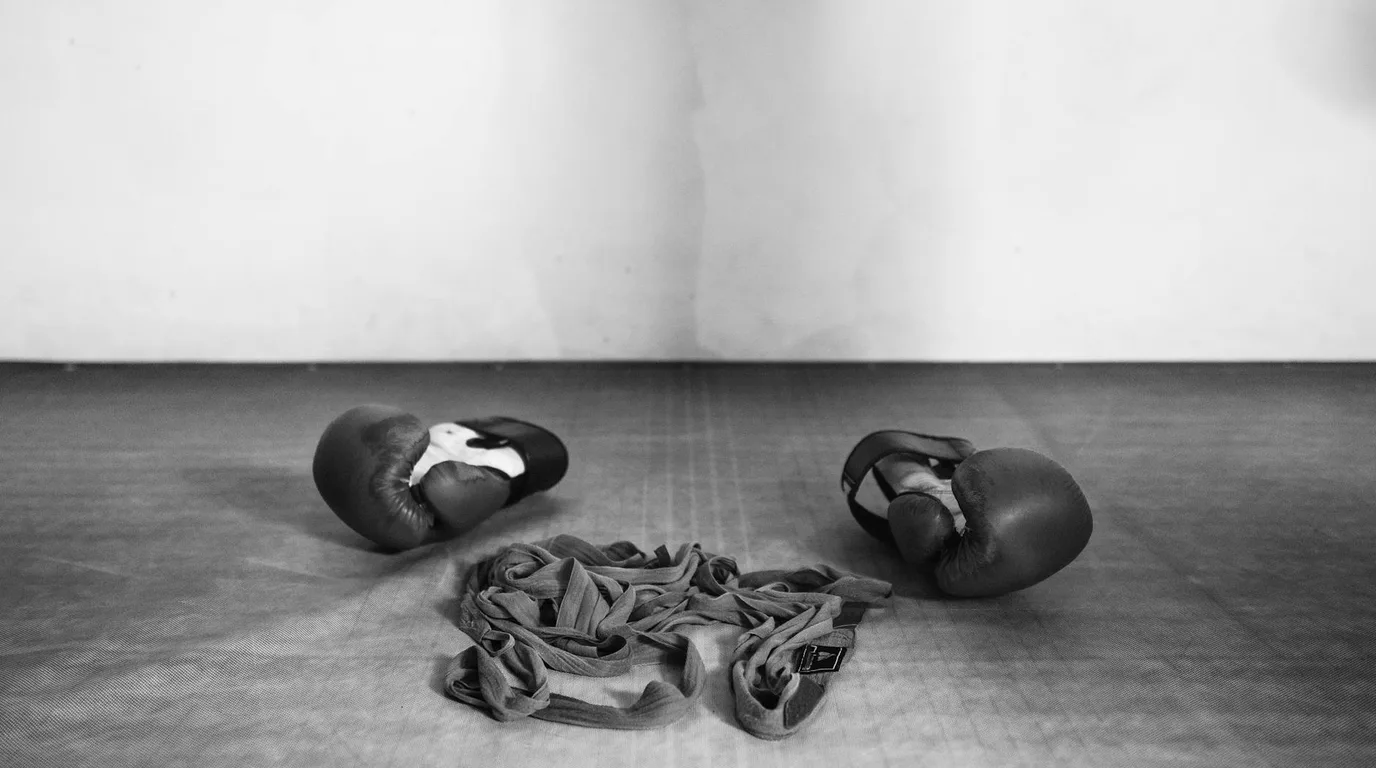
September 16, 2017. I am watching my phone in a bar in Almaty at 4 AM. Gennady Golovkin has just fought Canelo Alvarez to a draw at T-Mobile Arena in Las Vegas, and every Kazakh I know is awake and furious. The scorecard read 118-110 for Canelo from one judge. According to CompuBox punch statistics, Golovkin outlanded Canelo 218 to 169 in total punches. The Associated Press had it 115-113 for GGG. Twenty of 22 media scorecards scored it for the Kazakh. None of that mattered on paper. But here is what did matter: a kid from Karaganda - a coal mining city in the middle of the steppe - had just fought the biggest fight in boxing and the entire country stopped to watch.
That is the Golovkin story. Not just the record, not just the knockouts. The story of what one fighter did for a country’s sense of itself.
From Karaganda to the World
Gennady Gennadyevich Golovkin was born on April 8, 1982, in Karaganda, Kazakhstan. According to Wikipedia’s entry on Karaganda, the city was built around coal mining during the Soviet era and today has a population of approximately 500,000, making it Kazakhstan’s fourth-largest city. It is not the kind of place that produces global sports icons.
His family background is itself a story of Kazakhstan’s ethnic diversity. Golovkin has Korean ancestry on his mother’s side (part of the Koryo-saram community deported to Kazakhstan in 1937) and Russian heritage on his father’s side. According to Wikipedia’s article on Koryo-saram, approximately 170,000 Koreans were forcibly deported from the Soviet Far East to Kazakhstan and Uzbekistan in 1937 by Stalin’s order, and their descendants now number over 100,000 in Kazakhstan. According to interviews with ESPN, his twin brother Max also boxed, and two older brothers, Vadim and Sergey, both served in the Soviet military. Sergey and Vadim were both killed - Sergey during military service and Vadim in unclear circumstances. Golovkin rarely speaks about this publicly, but has said it shaped his intensity in the ring.
He started boxing at age 10 at the Karaganda boxing gym. The equipment was Soviet-era. The heating was unreliable. The coach was strict. This is how most Kazakh athletes begin.
Quick Profile
| Detail | Information |
|---|---|
| Full name | Gennady Gennadyevich Golovkin |
| Born | April 8, 1982, Karaganda, Kazakhstan |
| Nickname | GGG, Gennady Golovkin, known as Triple G |
| Height | 179 cm (5’10.5”) |
| Reach | 178 cm (70”) |
| Stance | Orthodox |
| Pro record | 42-2-1 (37 KOs) |
| KO rate | 88% |
| Divisions | Middleweight, super middleweight |
Amateur Career: Building the Foundation
Before the big purses and the Vegas lights, Golovkin was an amateur fighter representing Kazakhstan:
- 2002 Asian Games: Gold medal (Busan, South Korea)
- 2003 World Championships: Gold medal at 75 kg in Bangkok - according to AIBA’s official records, the first world amateur title for Kazakhstan at middleweight
- 2004 Athens Olympics: Silver medal - lost a controversial decision in the final to Russia’s Gaydarbek Gaydarbekov, as confirmed by official IOC results
The Olympic silver hurt. According to a 2017 interview with The Ring Magazine, Golovkin said he felt he won that fight. He turned professional two years later, determined to leave judging controversies behind by knocking everyone out. For most of his career, that is exactly what he did.
Professional Career
The Knockout Machine (2006-2016)
Golovkin turned professional in 2006 in Germany, fighting under the Universum Box-Promotion banner. He later moved his training camp to Big Bear, California, working with trainer Abel Sanchez.
The numbers from this era are staggering:
- 23 consecutive knockouts (a middleweight record)
- 17 consecutive world title defenses by knockout
- According to CompuBox, he averaged 38 power punches landed per round during 2014-2016 - the highest in the middleweight division
Key wins during this period:
| Year | Opponent | Result | Significance |
|---|---|---|---|
| 2010 | Milton Nunez | TKO 1 | Won WBA interim middleweight title |
| 2014 | Daniel Geale | TKO 3 | Added WBA (Super) title |
| 2015 | David Lemieux | TKO 8 | Unified WBA/IBO/IBF titles at Madison Square Garden |
| 2015 | Martin Murray | TKO 11 | Fought in Monte Carlo |
| 2016 | Kell Brook | TKO 5 | Broke Brook’s eye socket with a single punch |
| 2016 | Dominic Wade | KO 2 | 22nd consecutive title defense |
According to ESPN’s pound-for-pound rankings, Golovkin reached #2 in the world during this stretch, behind only Floyd Mayweather Jr.
What made him special was not just power. His jab was rated by Ring Magazine as one of the best in middleweight history - heavy enough to hurt, accurate enough to set up everything else. He walked opponents down with what trainers call “educated pressure” - cutting off the ring, forcing fights on his terms, never retreating. And his chin was made of something inhuman. According to BoxRec records, he was never knocked down in 45 professional fights.
The Canelo Trilogy (2017-2022)
The three fights against Canelo Alvarez defined Golovkin’s legacy and became the most commercially successful middleweight rivalry in decades.
Fight 1: September 16, 2017 - Draw
According to CompuBox, Golovkin outlanded Canelo 218-169 total and 148-123 in power punches. The fight was scored a split draw: 115-113 Golovkin, 114-114, and 118-110 Canelo. That last scorecard, from judge Adalaide Byrd, was universally condemned. According to The Athletic, 20 of 22 media members scored it for GGG. The fight generated $27.5 million at the gate, according to the Nevada State Athletic Commission.
Fight 2: September 15, 2018 - Canelo wins by majority decision
Canelo won 115-113, 115-113, 114-114. A closer fight on the scorecards and in reality. According to CompuBox, Golovkin landed more total punches (234-202) but Canelo was more accurate with power shots. This one could have gone either way. Revenue exceeded $94 million according to DAZN.
Fight 3: September 17, 2022 - Canelo wins by unanimous decision
Fought at super middleweight (168 lbs) instead of middleweight. Golovkin was 40 years old. Canelo won clearly 116-112, 116-112, 115-113. According to post-fight interviews, Golovkin acknowledged he was past his best but expressed no regrets about taking the fight.
Combined, the trilogy generated over $300 million in total revenue according to industry estimates reported by ESPN.
Fighting Style: Why Experts Love GGG
For non-boxing fans, here is what made Golovkin special in technical terms:
The jab. According to Teddy Atlas (ESPN boxing analyst), Golovkin threw “the most effective jab in the middleweight division since Marvin Hagler.” It was not a range-finder. It was a weapon - stiff enough to snap heads back, accurate enough to set up right hands.
Pressure without desperation. Many fighters who come forward are wild. Golovkin was methodical. He cut off the ring at angles, herded opponents to the ropes, then went to work. According to fight analysis by The Ring Magazine, he consistently forced opponents to fight at his pace, not theirs.
The chin. 45 professional fights. 3 fights with Canelo Alvarez, one of the hardest punchers at 160-168 lbs. Multiple wars with fighters like Daniel Jacobs and Sergiy Derevyanchenko. Never knocked down. According to BoxRec, that makes him one of only a handful of modern champions to retire without ever touching the canvas.
Both hands. 37 of his 42 wins came by knockout, an 88% finish rate. The power came from both hands equally - right hand, left hook, uppercut. According to CompuBox data compiled by ESPN, his power accuracy rate exceeded 40% for most of his career.
Gennady Golovkin Net Worth and Earnings
According to Forbes’ annual athlete earnings reports and verified fight purse data:
| Source | Amount |
|---|---|
| Canelo 1 purse | $25 million (according to NSAC) |
| Canelo 2 purse | $30 million (according to DAZN) |
| Canelo 3 purse | $20 million (according to DAZN) |
| DAZN contract (2019) | 6 fights, $100 million total |
| Jordan Brand deal | Undisclosed, multi-year |
| Other purses (2006-2022) | Estimated $40+ million cumulative |
Celebrity Net Worth estimates his total net worth at $30-50 million. The $100 million DAZN deal, signed in 2019, was the largest individual contract in middleweight boxing history according to Sports Illustrated.
What GGG Means to Kazakhstan
This is the part Wikipedia cannot give you.
When Golovkin fought, Kazakhstan stopped. According to Kazakh sports journalist Dmitry Yagunov, viewership for GGG fights on Kazakh national television regularly exceeded 5 million - in a country of 20 million. Bars in Almaty and Astana would stay open until 4-5 AM for Vegas fight cards. Work started late the next morning across the country.
He changed how Kazakhs see themselves. Before GGG, Kazakhstan’s international reputation was mostly “Borat.” After GGG, it was also “the country that produced the most feared middleweight in the world.” According to a 2018 survey by the Kazakh Institute for Strategic Studies, Golovkin was named the most recognizable Kazakhstani globally - ahead of the president.
He stayed Kazakh. Despite training in Germany and the USA for 15 years, Golovkin always fought under the Kazakhstan flag. He walked out to Kazakh music. He thanked Kazakhstan in every post-fight interview. According to ESPN, he was offered to fight under the German or American flag early in his career and refused.
The “GGG” brand. “Big Drama Show” became his catchphrase, said with a thick Kazakh-Russian accent that endeared him to American audiences. His Instagram handle, his merchandise, his Jordan Brand sneakers - all carried the GGG logo. According to Google Trends data, searches for “Kazakhstan” spike during his fight weeks.
Government recognition. According to the Akorda (Kazakhstan’s presidential administration), Golovkin received the “Khalyk Qaharmany” (People’s Hero) title and the Order of Dostyk (Friendship) first class - among the highest civilian honors Kazakhstan awards.
Boxing in Kazakhstan After GGG
Golovkin opened a pipeline. According to the Kazakhstan Boxing Federation:
- Zhanibek Alimkhanuly - current WBO middleweight champion (2024), trained in the USA
- Beibut Shumenov - held WBA light heavyweight title
- Bekzad Nurdauletov - 2019 World Championships gold medalist
- Kazakhstan at the Olympics - the country consistently medals in boxing, with multiple medals in 2020 (Tokyo) and 2024 (Paris)
According to IBA (International Boxing Association) world rankings, Kazakhstan is a top-5 amateur boxing nation globally. The sport receives significant government funding, and boxing gyms have proliferated across Kazakh cities since GGG’s rise. According to the Kazakhstan Boxing Federation’s 2024 report, over 800 boxing clubs operate across the country, training approximately 45,000 registered amateur boxers. The government allocated 4.2 billion KZT ($8.5 million) to combat sports development programs in 2025, with boxing receiving the largest share. Karaganda, GGG’s hometown, now hosts an annual international boxing tournament named after him, attracting amateur competitors from over 20 countries each year.
Retirement and Legacy
Golovkin retired in 2023 at age 41 with a record of 42-2-1 (37 KOs). According to Ring Magazine’s post-retirement ranking, he is considered a top-10 middleweight of all time.
His legacy in boxing, as documented by Ring Magazine’s historical records:
- Third-longest middleweight title defense streak in history (20), behind only Bernard Hopkins (20) and Carlos Monzon (14 consecutive defenses)
- Never knocked down in 45 professional fights
- 88% knockout ratio among modern champions
- The Canelo trilogy as the defining middleweight rivalry of the 2010s-2020s
His legacy in Kazakhstan:
- Most famous Kazakhstani athlete in global history
- Proved that a fighter from a coal mining city on the steppe could become the most feared man in boxing
- Made “GGG” synonymous with Kazakhstan for millions of casual sports fans worldwide
- Inspired the next generation of Kazakh boxers who are now winning world titles of their own
According to famous Kazakhstanis tracked by international media, GGG consistently ranks alongside Dimash Kudaibergen as one of the two most recognized people from Kazakhstan globally.
Frequently Asked Questions
- What is Gennady Golovkin's boxing record?
- According to BoxRec, Golovkin retired with a professional record of 42-2-1 with 37 knockouts, an 88% KO rate. His only losses were to Canelo Alvarez in 2018 and 2022. The draw was also against Canelo in 2017. He was never knocked down in 45 fights.
- Where is Gennady Golovkin from?
- Golovkin was born in Karaganda, Kazakhstan, an industrial coal mining city in central Kazakhstan. He has Korean ancestry on his mother's side and Russian on his father's side, reflecting Kazakhstan's multi-ethnic society. He started boxing at age 10 in Karaganda.
- What is Gennady Golovkin's net worth?
- According to Forbes and Celebrity Net Worth estimates, GGG's net worth is between $30-50 million. His career earnings exceeded $100 million from fight purses. He signed a $100 million, 6-fight deal with DAZN in 2019, the largest in middleweight history according to Sports Illustrated.
- Why is Golovkin called GGG?
- GGG stands for his initials: Gennady Gennadyevich Golovkin. The nickname Triple G was adopted early in his professional career. He is also known for his catchphrase Big Drama Show, delivered in his Kazakh-Russian accent during post-fight interviews.
- Did Golovkin beat Canelo in the first fight?
- The first fight (September 2017) was officially scored a split draw. According to CompuBox, Golovkin outlanded Canelo 218-169 in total punches. Twenty of 22 media scorecards, as tracked by The Athletic, scored it for GGG. Judge Adalaide Byrd's 118-110 card for Canelo was widely criticized.
- Is Golovkin retired from boxing?
- Yes. According to his official announcement, Golovkin retired from professional boxing in 2023 after the third Canelo fight. He finished with a 42-2-1 record. Ring Magazine ranks him as a top-10 middleweight in boxing history.
Last verified: March 2026
More Stories
culture
35 Famous People from Kazakhstan: Athletes, Musicians & Leaders
Famous people from Kazakhstan: GGG, Dimash, Abai and 35 icons across sports, music, science, politics. Full bios, achievements, why they matter.
culture
Dimash Kudaibergen Wife: Not Married in 2026 (Truth Revealed)
Dimash Kudaibergen is not married in 2026. Sister Raushan's August 2025 wedding confused fans. Six-octave range, $10M+ net worth, 2026 tour dates.
culture
Dombra: Kazakhstan's Two-String Soul (Complete Guide)
The dombra is Kazakhstan's national instrument with 4,000+ years of history. Learn about types, famous players, UNESCO recognition, and where to hear it live.