Dimash Qudaibergen: Career, Voice & Music Guide
Reported from the ground: Tugelbay Konabayev is a Kazakh native (born in Aktobe) who has lived 7 years in Almaty and 4 in Astana. About the author.

In this article11 sections
Dimash Qudaibergen is a Kazakh singer and multi-instrumentalist known for combining pop, classical technique and Kazakh musical traditions. His career is public, but his personal net worth, per-show income and a standardized full vocal range are not established by audited or independent primary records.
According to Billboard, Dimash is the most internationally recognized musician from Kazakhstan, performing in eight languages and blending opera, pop, rock, and traditional Kazakh music. He performs across contrasting registers, but viral octave counts use inconsistent definitions and should not be treated as a standardized independent measurement. For questions about his personal life, see our dedicated guide on Dimash’s relationship status and family.
Who Is Dimash Kudaibergen?
Dimash Qudaibergen (Kazakh: Дінмұхамед Қанатұлы Қудайберген) was born on May 24, 1994, in Aktobe, Kazakhstan. He comes from a musical family - both his parents, Kanat Aitbayev and Svetlana Aitbayeva, are professional singers. His grandfather Kudaibergen was also a musician, and Dimash took his grandfather’s name as his stage surname.
Quick Facts
| Detail | Information |
|---|---|
| Full name | Dinmukhamed Kanatuly Kudaibergen |
| Born | May 24, 1994 |
| Birthplace | Aktobe, Kazakhstan |
| Height | 190 cm (6’3”) |
| Vocal range | No standardized independent measurement published |
| Languages sung in | Kazakh, Russian, English, Chinese, Italian, French, Turkish, Spanish |
| Fanbase name | Dears |
| Major label | Universal Music (China) |
Dimash studied at the Kazakh National University of Arts in Astana, where he refined his technique in classical and contemporary vocal performance. Even before international fame, he was recognized in Kazakhstan as a prodigious talent, winning the Grand Prix at Slavianski Bazaar in Vitebsk in 2015 - the youngest solo performer ever to win the award.
Dimash Kudaibergen’s Vocal Range
Dimash is known for contrasting low, high, head-voice, and whistle-like effects in live performance. Viral C2-D8 and “six-octave” graphics use inconsistent clips and definitions, so this page does not present them as a standardized independent measurement.
To understand how unusual this is:
| Voice category | Typical range | Notes |
|---|---|---|
| Bass | E2-E4 | Not a Dimash measurement |
| Baritone | A2–A4 | - |
| Tenor | C3–C5 | - |
| Countertenor | E3–E5 | - |
| Soprano | C4–C6 | - |
| Whistle register | C6-C7 (rare) | Not a Dimash measurement |
His performance of SOS d’un terrien en détresse on Singer in 2017 became an important international discovery point for listeners. View totals change continuously and differ between official uploads, reposts, and reaction videos, so this guide does not publish a combined count.
Signature techniques include:
- Belting in the tenor and baritone range with full resonance
- Falsetto transitions that are seamless and controlled
- Whistle-like effects used in selected live arrangements, without assigning a standardized endpoint
- Subharmonics in the bass range, rare among pop/classical crossover artists
Vocal Training and Education
Dimash’s extraordinary range is not an accident of biology - it is the product of rigorous academic training at the Kazakh National University of Arts in Astana, one of Central Asia’s most prestigious conservatories. He enrolled in the vocal performance faculty and studied under leading Kazakh classical voice coaches, developing technique in operatic, folk, and contemporary styles simultaneously. This institutional foundation separates him from most pop crossover singers, who typically train in one genre.
His training covered several disciplines that remain visible in his performances:
- Classical bel canto - the Italian school of singing that prioritizes tone quality, legato phrasing, and breath control. This is where his seamless register transitions come from.
- Kazakh folk vocal technique - traditional throat resonance and ornamentation specific to Central Asian music, audible in songs like Samaltau and Qairan Elim.
- Contemporary pop technique - microphone technique, belting, and studio vocal production, which allowed him to adapt his classical training to arena pop performance.
- Music theory and composition - giving him the ability to arrange and adapt material rather than relying entirely on outside producers.
His university years also produced early competition results: the 2015 Slavianski Bazaar Grand Prix win came while he was still completing his degree, demonstrating that his academic training translated directly into competitive performance. Other famous people from Kazakhstan have reached international audiences through sport or politics, but Dimash is rare in having gone through formal conservatory training and using it as a launchpad for pop stardom.
The combination of classical discipline and Central Asian folk roots gives his voice a quality that neither pure opera singers nor pop vocalists can replicate. Western vocal coaches who have analyzed his performances on YouTube have noted that his breath support and resonance placement are textbook classical, while his emotional delivery and stage presence are entirely contemporary.
Personal Life and Family
Dimash is a private person who keeps his personal relationships separate from his public career. For detailed information about his relationship status, wife rumors, and family background, see Dimash Kudaibergen’s relationship status.
Career Timeline and Achievements
Dimash’s career arc from Aktobe to global stages:
2010–2015: Early Career in Kazakhstan
- Won multiple national singing competitions as a teenager
- Studied at the Kazakh National University of Arts
- Won Grand Prix at Slavianski Bazaar (2015) - youngest solo winner in the festival’s history
2017: The China Breakthrough
- Competed on Singer (Hunan TV) - a top-rated Chinese music competition
- Became the only foreign contestant to reach the finals
- Performances gained over 1 billion combined views on Chinese platforms (Weibo, Youku, Bilibili)
- Signed with Universal Music China
2018–2019: International Expansion
- Performed at the United Nations General Assembly in New York
- Released Arnau concert program, blending opera, pop, folk, and electronic music
- Toured across Asia, Europe, and North America
- Performed for 50,000+ fans at Arnau concert in Nur-Sultan (now Astana)
2020–2022: Global Consolidation
- Sold out Madison Square Garden in New York City (2022) - a milestone for any Central Asian artist
- Released singles in multiple languages
- Collaborated with international producers and musicians
- Performed at the Kremlin Palace in Moscow
2023–2026: Ongoing World Tours
- Continued touring across the Americas, Europe, and Asia
- Expanded into Latin American markets with Spanish-language releases
- Maintained one of the most active global concert schedules of any Central Asian performer
- Continues representing Kazakhstan through music and his documented IOM role
Dimash Kudaibergen Net Worth
Dimash’s personal net worth is not publicly verified. Entertainment-site estimates, gross ticket sales and claimed per-show fees are not audited personal-finance evidence. Concert revenue is divided among promoters, venues, production, management, rights holders and taxes, so this guide does not assign a dollar range.
In 2024 the International Organization for Migration named him a Regional Goodwill Ambassador. IOM later appointed him a Global Goodwill Ambassador, a documented role supporting migrant rights and humanitarian advocacy.
Music Style and Signature Songs
Dimash defies easy genre classification. His repertoire spans:
- Classical crossover - operatic arias adapted for popular audiences
- Pop - contemporary ballads and upbeat tracks
- Kazakh folk - traditional melodies reimagined with modern production
- Electronic/EDM - experimental tracks with vocal layering
Most Famous Songs
| Song | Genre | Why it matters |
|---|---|---|
| SOS d’un terrien en détresse | French pop/opera | The viral performance that launched his global career |
| Ogni Pietra (Every Stone) | Italian opera crossover | Showcases his full range from bass to whistle register |
| Love Is Like a Dream | Ballad | Fan favorite, performed at nearly every concert |
| Lay Down | Pop/electronic | Shows his contemporary side |
| Samaltau | Kazakh folk | Traditional Kazakh song reimagined - connects to his roots |
| Be With Me | Pop ballad | English-language crossover hit |
| Qairan Elim | Patriotic | Performed for Kazakhstan’s 30th independence anniversary |
Dimash Kudaibergen Religion
Dimash identifies as Muslim, consistent with the majority of ethnic Kazakhs. According to Pew Research Center demographic data, approximately 70% of Kazakhstan’s population identifies as Muslim, predominantly Sunni of the Hanafi school.
Dimash has not made religion a prominent part of his public persona, but has:
- Spoken respectfully about Islamic values and Kazakh spiritual traditions in interviews
- Participated in Nauryz celebrations - Kazakhstan’s spring holiday with both cultural and spiritual significance
- Expressed gratitude to God in acceptance speeches and social media posts
His approach reflects the broader Kazakh cultural attitude toward religion - respectful, present, but generally private and moderate.
Fan Culture: The “Dears”
Dimash’s global fanbase is known as Dears and organizes translations, fan projects, and concert communities across languages. Follower, subscriber, and view totals change continuously and can include unofficial accounts, so this guide does not freeze them into an audience-size claim.
Fan groups operate across many countries and are distinguished by behavior that goes beyond passive fandom:
- Coordinate charity drives in Dimash’s name - donating to hospitals, orphanages, and disaster relief funds across multiple countries
- Translate content into dozens of languages within hours of publication, making Dimash accessible to non-Kazakh/Russian speakers worldwide
- Crowdfund concert attendance - organizing group trips from countries like the US, Brazil, Turkey, and Indonesia
- Maintain detailed wikis and archives of every performance, interview, and appearance
- Lobby streaming platforms to add Dimash’s catalog to regional libraries where it was previously unavailable
The Dears are credited with much of Dimash’s international growth, particularly in markets where he had no label support initially. Their grassroots promotion on social media helped build his audience in Latin America, Turkey, Southeast Asia, and beyond. This fan-driven expansion model - where the audience does the work of distribution - is unusual at his commercial scale and helps explain how a singer from Aktobe reached Madison Square Garden without the conventional Western music industry infrastructure behind him.
Dimash and Kazakhstan’s Cultural Identity
Dimash is a visible international representative of contemporary Kazakh music. For some listeners, his performances are an entry point to Kazakhstan and Kazakh culture. This is cultural reach, not a measurable ranking against government initiatives.
The qualitative cultural impact is visible, but it is not reduced here to an audience or tourism metric:
- Audience discovery: his concerts and media appearances can prompt listeners to explore Kazakhstan, but this guide does not assign an unsourced audience or search-uplift total.
- Cultural discovery: fan discussions and projects often introduce Kazakh language, music, and places, but this is not evidence of a measured tourism increase.
- He consistently represents Kazakh culture on global stages - singing in Kazakh, incorporating traditional musical elements, wearing costumes that reference Central Asian textile traditions, and speaking about Kazakhstan in international interviews.
- The Kazakhstan government recognized him with state cultural achievement awards, and he has performed at official state events including Kazakhstan’s 30th independence anniversary celebrations.
This kind of cultural visibility is difficult to quantify. Dimash provides an entry point to Kazakhstan for some international listeners, while the scale and downstream tourism effect require dedicated evidence rather than promotional estimates.
For readers, the practical distinction is simple: official releases, institutional appointments, and dated interviews can support specific claims. Fan enthusiasm can explain cultural context, but it should not be converted into financial, demographic, tourism, or audience statistics without a transparent dataset.
His cultural visibility is relevant to both Almaty and Astana, where music, venues, and national institutions shape Kazakhstan’s public image. This guide does not claim that either city received a measured tourism or economic benefit from his audience without a dedicated dataset.
How to Follow Dimash
Official channels for the latest updates:
- Instagram: use the Instagram destination linked from DimashNews universal links
- YouTube: use the official video destination linked from DimashNews universal links
- Weibo: Dimash’s verified account (major Chinese platform presence)
- Official website: for concert dates, merchandise, and announcements
- Telegram: official fan channels in multiple languages
Frequently Asked Questions
What is Dimash Kudaibergen's vocal range?
He is known for performances across strongly contrasting registers, but viral C2-D8 and six-octave claims use inconsistent clips and definitions. No standardized independent full-range measurement was identified, so this guide does not assign exact endpoints.
What is Dimash Kudaibergen's net worth?
His personal net worth is not publicly verified. Entertainment-site estimates, gross ticket sales, and claimed per-show fees are not audited personal-finance evidence, so this guide does not assign a dollar range.
What religion is Dimash Kudaibergen?
Dimash identifies as Muslim, which is consistent with the majority of ethnic Kazakhs. About 70% of Kazakhstan's population is Muslim, predominantly Sunni Hanafi. Dimash does not prominently discuss religion publicly but has expressed respect for Islamic values and Kazakh spiritual traditions.
Where is Dimash Kudaibergen from?
Dimash was born in Aktobe, a city in western Kazakhstan. He later studied at the Kazakh National University of Arts in Astana (the capital). Both his parents are professional singers, making music a family tradition.
How tall is Dimash Kudaibergen?
Dimash Kudaibergen is 190 cm tall, which is approximately 6 feet 3 inches. His tall stature combined with his stage presence contributes to his commanding concert performances.
How did Dimash become famous?
Dimash gained broad international attention through his 2017 performances on China's Singer, including SOS d'un terrien en détresse. Before that, he won the Grand Prix at Slavianski Bazaar in 2015. This guide does not combine changing view totals across official uploads and reposts.
Has Dimash performed at Madison Square Garden?
Yes. Dimash sold out Madison Square Garden in New York City in 2022, making him one of very few Central Asian artists to headline the iconic venue. The concert drew fans from across the Americas and internationally.
Last reviewed: July 2026
Google Preferred Sources
See more Kazakhstan stories in Google
Add About Kazakhstan as a preferred source to find more of our fresh, relevant stories in Google Search.
More Stories
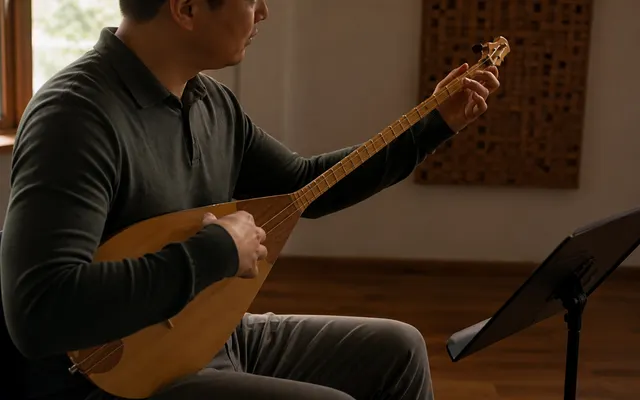
culture
Dombra Guide: The Two-String Kuy Tradition of Kazakhstan
Source-checked dombra guide: what a kuy is, how tökpe and shertpe differ, works to hear, UNESCO context, National Dombra Day, lessons, and buying.
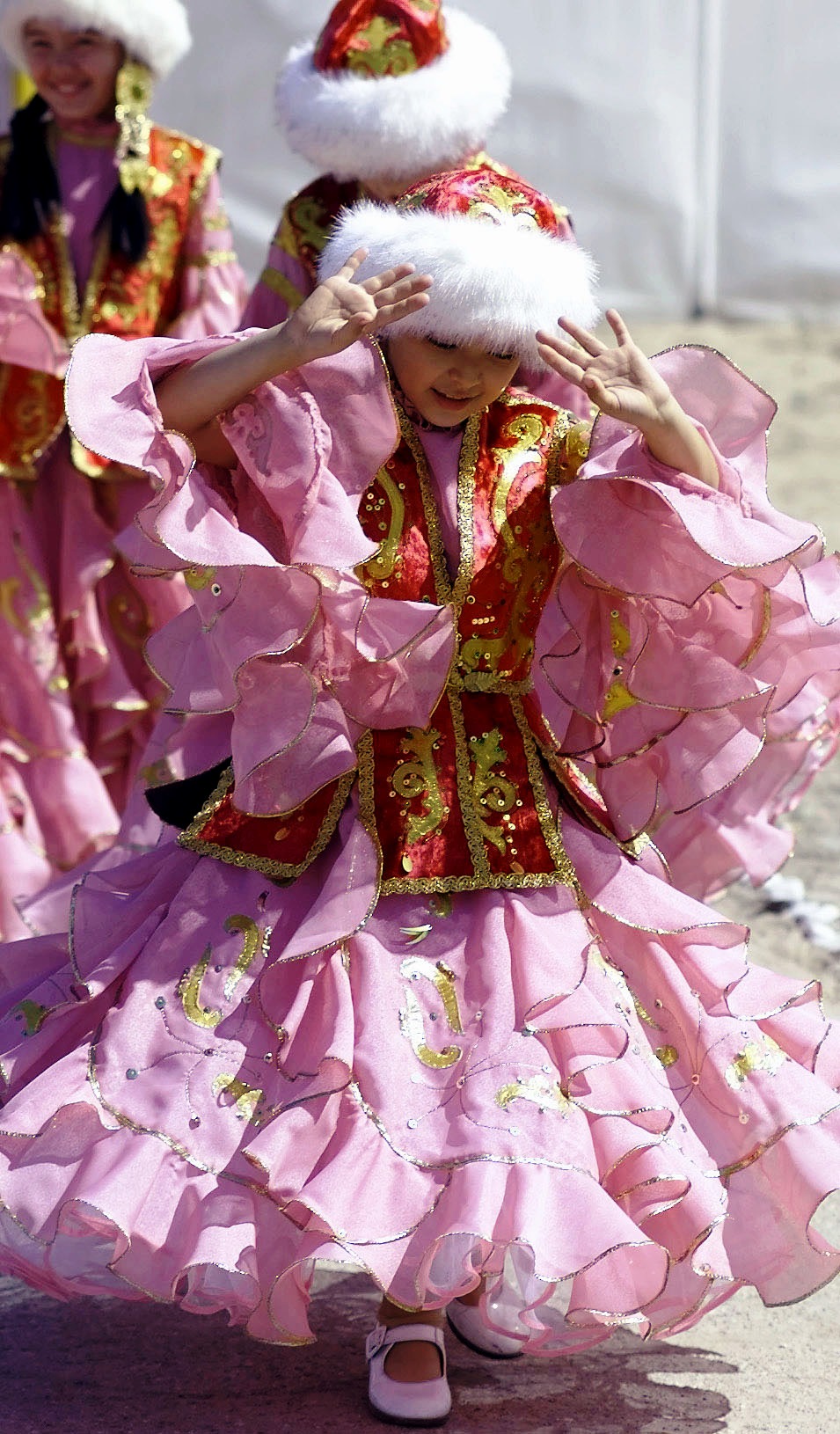
culture
Kazakhstan Traditional Clothing: Complete Guide
Complete guide to Kazakhstan traditional clothing: chapan robes, saukele headdresses, tymak fur hats. History, meaning, and where to buy authentic pieces.
culture
Dimash Kudaibergen Wife: Is He Married?
Is Dimash Kudaibergen married? Read what Kazakhstan media reported in April 2026, his comments on marriage, and what the sources actually confirm.
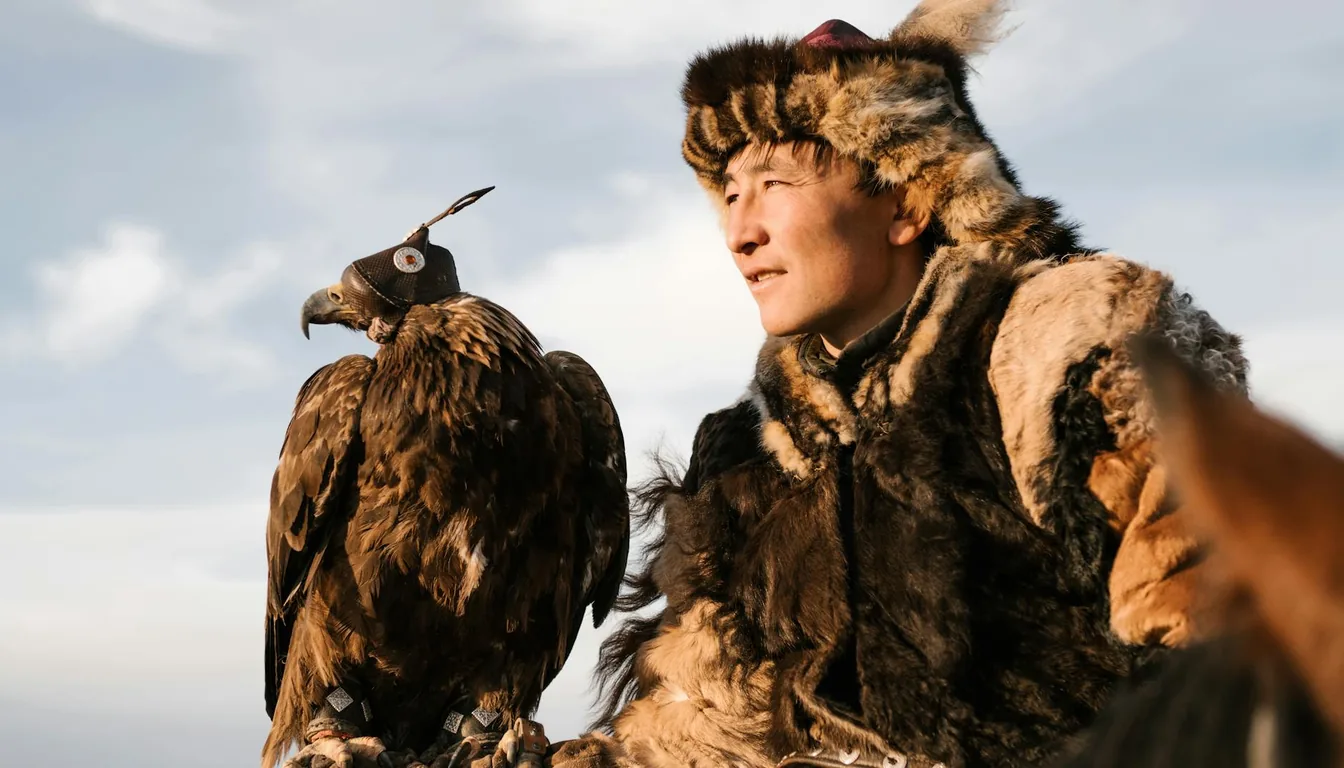
culture
Eagle Hunting in Kazakhstan: Ethical Berkutchi Guide
Understand Kazakh berkutchi tradition, UNESCO falconry status, ethical animal encounters, live booking checks, and responsible travel.
Plan the Next Step
travel
Kazakhstan Tourist Attractions: Choose the Right First-Trip Route
Compare Kazakhstan tourist attractions by base and logistics: Almaty nature, Turkestan heritage, Mangystau, Astana, Baikonur, and more.
food
Beshbarmak Recipe: How Kazakh Et Is Served
A source-checked guide to Kazakh et, widely called beshbarmak: what is on the platter, a practical home recipe, regional differences, and guest etiquette.
culture
Women in Kazakhstan: Rights, Work and Daily Life in 2026
Source-checked guide to women in Kazakhstan: current legal rights, dated work and wage data, marriage statistics, safety, and respectful language.
culture
Dombra Guide: The Two-String Kuy Tradition of Kazakhstan
Source-checked dombra guide: what a kuy is, how tökpe and shertpe differ, works to hear, UNESCO context, National Dombra Day, lessons, and buying.
culture
Eagle Hunting in Kazakhstan: Ethical Berkutchi Guide
Understand Kazakh berkutchi tradition, UNESCO falconry status, ethical animal encounters, live booking checks, and responsible travel.
culture
Kazakhstan Traditions: 15 Living Customs From the Steppe
Kazakhstan traditions: 15 living customs from dastarkhan hospitality and eagle hunting to Nauryz, horse games, and wedding rituals still practiced today.

Travel Writer & Local Expert · Almaty, Kazakhstan
Tugelbay Konabayev is a Kazakhstan-based travel writer who has lived in Almaty for 7+ years and Astana for 4+ years. He grew up in Aktobe, Kazakhstan and has covered Kazakh travel, food, culture, and visa policy with first-hand reporting since 2023.