Countries Ending in Stan: All 7 Explained
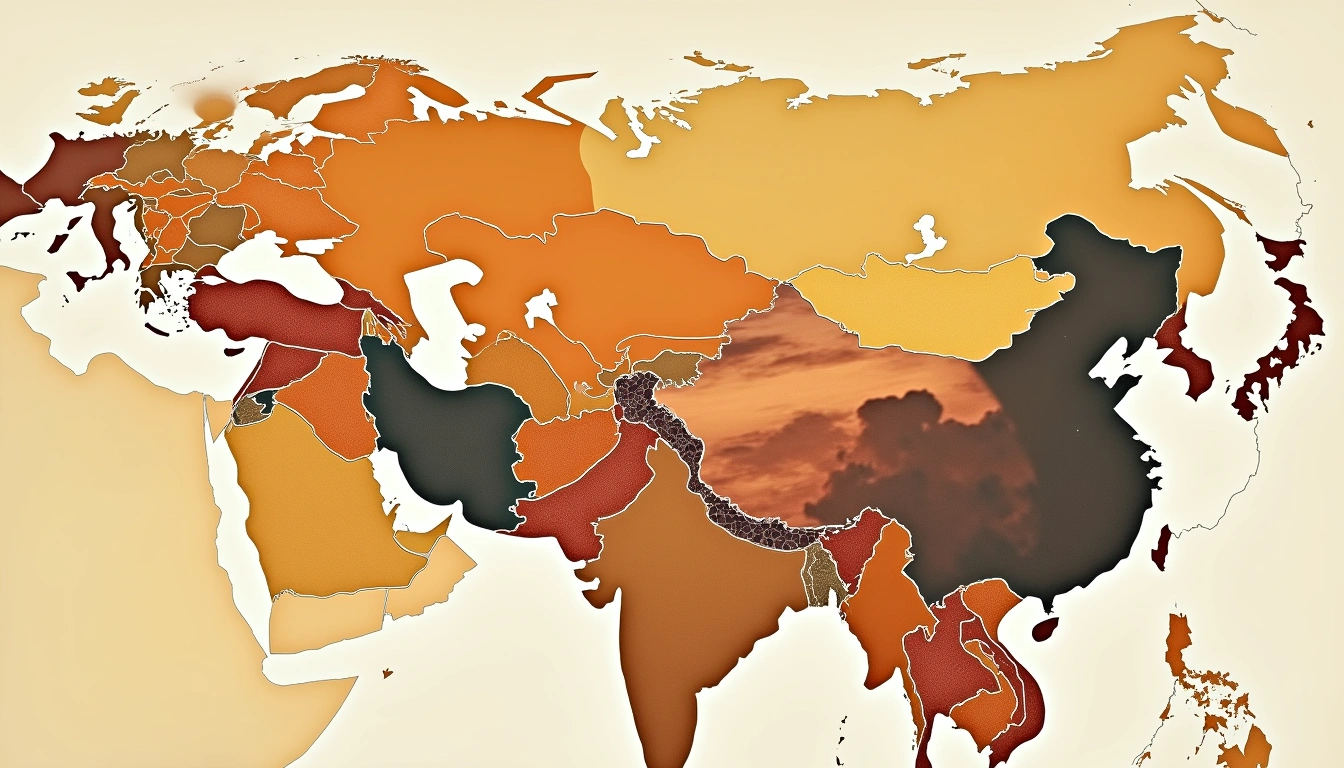
There are 7 countries ending in stan: Kazakhstan, Uzbekistan, Kyrgyzstan, Tajikistan, Turkmenistan, Afghanistan, and Pakistan. All seven share the Persian suffix “-stan” meaning “land of” or “place of,” and together they stretch across Central Asia and South Asia, from the Caspian Sea to the Indian Ocean. These seven nations are home to over 350 million people and cover more than 5.5 million km² of territory (World Bank, 2024).
Master Comparison Table: All 7 Stan Countries
Before diving into each country, here is a complete comparison of every country ending in stan:
| Country | Capital | Population | Area (km²) | GDP per Capita | Official Language | Major Religion | Government |
|---|---|---|---|---|---|---|---|
| Kazakhstan | Astana | 20.2M | 2,724,900 | $13,190 | Kazakh | Islam (Sunni) | Presidential republic |
| Uzbekistan | Tashkent | 36.8M | 448,978 | $2,568 | Uzbek | Islam (Sunni) | Presidential republic |
| Kyrgyzstan | Bishkek | 7.1M | 199,951 | $1,665 | Kyrgyz | Islam (Sunni) | Parliamentary republic |
| Tajikistan | Dushanbe | 10.6M | 143,100 | $1,187 | Tajik (Persian) | Islam (Sunni) | Presidential republic |
| Turkmenistan | Ashgabat | 6.4M | 488,100 | $8,280 | Turkmen | Islam (Sunni) | Presidential republic |
| Afghanistan | Kabul | 42.2M | 652,230 | $380 | Dari, Pashto | Islam (Sunni) | Taliban emirate |
| Pakistan | Islamabad | 231.4M | 881,913 | $1,580 | Urdu | Islam (Sunni) | Federal parliamentary republic |
Sources: World Bank Data 2024, CIA World Factbook 2025, UN Population Division
Key takeaways from the table:
- Pakistan has the largest population by far: 231 million, more than all other stan countries combined
- Kazakhstan is the largest by area: 2.7 million km², bigger than the other six stans combined
- Kazakhstan has the highest GDP per capita at $13,190, more than 10x Tajikistan’s
- Afghanistan has the lowest GDP per capita at $380, reflecting decades of conflict
- Five of the seven stans were Soviet republics until 1991
What Does “Stan” Mean?
“Stan” (ستان / стан) is a Persian and Old Iranian suffix meaning “land of,” “place of,” or “home of.” It derives from the Proto-Indo-Iranian root *sthāna- meaning “place where one stands,” which is related to the English word “stand” and the Greek stasis.
The suffix appears across Persian, Urdu, Pashto, Kurdish, Punjabi, and dozens of other Iranian and Turkic languages. Each country name combines a people or concept with -stan:
| Country | Name Meaning | Etymology |
|---|---|---|
| Kazakhstan | Land of the Kazakhs | ”Kazakh” = free wanderer/rider |
| Uzbekistan | Land of the Uzbeks | ”Uzbek” = self-ruling/independent |
| Kyrgyzstan | Land of the Kyrgyz | ”Kyrgyz” = possibly “forty tribes” |
| Tajikistan | Land of the Tajiks | ”Tajik” = the Persian-speaking people |
| Turkmenistan | Land of the Turkmen | ”Turkmen” = “Turk-like” |
| Afghanistan | Land of the Afghans | ”Afghan” = Pashtun tribal name |
| Pakistan | Land of the Pure | ”Pak” = pure (also an acronym: Punjab, Afghania, Kashmir, Sindh, Balochistan) |
The word “Pakistan” is unique among the seven: it was coined in 1933 by Choudhry Rahmat Ali as both a meaningful Persian phrase and a clever acronym for the Muslim-majority regions of British India. The other six country names evolved naturally over centuries.
History of the Stan Countries
The stan countries sit at one of history’s most important crossroads, where the Silk Road connected China to the Mediterranean for over 2,000 years.
Ancient & Classical Period
The region was home to some of humanity’s earliest civilizations. The Indus Valley Civilization (3300–1300 BCE) flourished in what is now Pakistan, while the Bactria-Margiana Archaeological Complex (2200–1700 BCE) spanned Afghanistan, Turkmenistan, and Uzbekistan. Alexander the Great conquered through Afghanistan and Central Asia in 329–327 BCE, founding cities like Kandahar (from “Iskander,” the Persian form of Alexander).
Silk Road Era (200 BCE – 1500 CE)
The stan countries became the beating heart of transcontinental trade. Samarkand, Bukhara, and Merv were among the wealthiest cities on Earth. Goods, religions (Buddhism, Islam, Christianity, Zoroastrianism), technologies (paper, gunpowder, compass), and ideas flowed through these lands. The Mongol Empire under Genghis Khan devastated the region in the 1220s, but his descendant Timur (Tamerlane) rebuilt Samarkand into a magnificent capital in the 14th century.
The Great Game (1800s)
The British and Russian Empires competed for influence across Central and South Asia in what became known as “The Great Game.” Russia conquered the Central Asian khanates (1860s–1880s), while Britain controlled the territory that became Pakistan and competed with Russia over Afghanistan. Afghanistan’s buffer position between the two empires shaped its modern borders.
Soviet Era (1924–1991)
Five of the seven stan countries (Kazakhstan, Uzbekistan, Kyrgyzstan, Tajikistan, and Turkmenistan) were incorporated into the Soviet Union as Soviet Socialist Republics. The Soviets drew borders that intentionally mixed ethnic groups, imposed Russian language and culture, conducted nuclear tests in Kazakhstan (at the Semipalatinsk site, 456 nuclear explosions between 1949 and 1989), and diverted Central Asian rivers for cotton irrigation, causing the Aral Sea to shrink by 90% (UN Environment Programme).
Independence (1991–Present)
All five Central Asian stans declared independence following the Soviet collapse in 1991. Pakistan gained independence from Britain in 1947, and Afghanistan has maintained formal independence since 1919 (though with decades of foreign intervention). Today, the stan countries are at varying stages of development, from Kazakhstan’s oil-driven middle-income economy to Afghanistan’s ongoing humanitarian crisis.
All 7 Countries Ending in Stan: Detailed Guide
1. Kazakhstan — The Largest Stan
Capital: Astana | Population: 20.2 million | Area: 2,724,900 km² | GDP per capita: $13,190
Kazakhstan is the 9th largest country in the world and the world’s largest landlocked country. It dominates Central Asia physically, covering more territory than the other six stan countries combined. The economy is the most developed of all stan countries, powered by massive oil, natural gas, and uranium reserves.
Key facts:
- World’s largest uranium producer — supplies roughly 43% of global uranium output (World Nuclear Association, 2024)
- Home to the Baikonur Cosmodrome — where Yuri Gagarin launched into space in 1961 and where astronauts still launch to the ISS today
- The Caspian Sea coastline stretches 1,894 km along Kazakhstan’s western border
- Transitioning from Cyrillic to Latin alphabet — target completion by 2031
- The Kazakh steppe is one of the last great grassland ecosystems on Earth
- Kazakhstan’s population has grown rapidly, nearly doubling since independence
The culture of Kazakhstan blends nomadic Turkic traditions with Soviet-era modernity and Islamic heritage, a mix visible in everything from the futuristic architecture of Astana to the eagle-hunting traditions that persist in the western mountains.
2. Uzbekistan — The Silk Road Stan
Capital: Tashkent | Population: 36.8 million | Area: 448,978 km² | GDP per capita: $2,568
Uzbekistan is the most populous Central Asian country and the historical heart of the Silk Road. The cities of Samarkand, Bukhara, and Khiva contain some of the greatest Islamic architecture on Earth. The Registan in Samarkand (three massive madrasas covered in turquoise tiles) is regularly ranked among Asia’s most magnificent monuments.
Key facts:
- Only doubly landlocked country in Central Asia, surrounded entirely by other landlocked countries
- Samarkand’s Registan Square is a UNESCO World Heritage Site and one of the most photographed locations in Central Asia
- President Shavkat Mirziyoyev has liberalized visa policies since 2017 — citizens of 90+ countries can now visit visa-free or with e-visa
- Cotton was historically the economic backbone (“White Gold”), though the country is rapidly diversifying into textiles, automotive, and tourism
- The Tashkent Metro features some of the most ornate station designs in the world, rivaling Moscow’s
3. Afghanistan — The Crossroads Stan
Capital: Kabul | Population: 42.2 million | Area: 652,230 km² | GDP per capita: $380
Afghanistan occupies one of the most strategically important positions on Earth, at the crossroads of Central Asia, South Asia, the Middle East, and China. This location made it a prize of empires throughout history: Achaemenid Persians, Alexander the Great, Mongols, Mughals, British, Soviets, and American forces have all fought here.
Key facts:
- The Khyber Pass between Afghanistan and Pakistan has been one of the world’s most important trade and invasion routes for over 3,000 years
- Bamiyan was home to two colossal Buddha statues (6th century CE) destroyed by the Taliban in 2001; they stood 53m and 35m tall
- Afghanistan has the youngest population of any stan country, with a median age of 16.6 years (CIA World Factbook)
- The Hindu Kush mountain range runs through eastern Afghanistan, with peaks exceeding 7,000m
- The country has produced over 80% of the world’s opium (UNODC), though the Taliban banned cultivation in 2022
- The Taliban reasserted control in August 2021; the country is not safe or accessible for most tourists
4. Pakistan — The Nuclear Stan
Capital: Islamabad | Population: 231.4 million | Area: 881,913 km² | GDP per capita: $1,580
Pakistan is by far the most populous stan country: its 231 million people make it the world’s 5th most populous nation. Created in 1947 during the partition of British India as a homeland for South Asian Muslims, Pakistan is a nuclear weapons state, a major regional power, and home to extraordinary geographic diversity, from the 8,000m peaks of the Karakoram to the sandy beaches of the Makran coast.
Key facts:
- K2 (8,611m), the world’s second-tallest mountain and most dangerous 8,000m peak to climb, is in Pakistan-administered Gilgit-Baltistan
- The Indus Valley Civilization (Mohenjo-daro, Harappa), one of the world’s four ancient cradle civilizations, flourished in what is now Pakistan
- Pakistan became a nuclear weapons state in 1998, conducting six underground tests
- The Karakoram Highway connecting Pakistan to China is the highest paved international road in the world, reaching 4,693m
- Home to the world’s second-largest Muslim population after Indonesia (World Population Review)
- The Badshahi Mosque in Lahore (1673) was the world’s largest mosque for nearly 300 years
5. Tajikistan — The Mountain Stan
Capital: Dushanbe | Population: 10.6 million | Area: 143,100 km² | GDP per capita: $1,187
Tajikistan is the smallest and poorest of the five Central Asian stan countries, but also the most dramatically mountainous: over 93% of its territory is mountainous (World Bank). It is uniquely non-Turkic among the Central Asian stans. The Tajik people speak Tajik, a variety of Persian/Farsi, making them culturally closer to Iran than to their Turkic neighbors.
Key facts:
- The Pamir Mountains (“Roof of the World”) dominate eastern Tajikistan, with dozens of peaks above 7,000m
- Ismoil Somoni Peak (7,495m) was the highest mountain in the entire Soviet Union
- The Pamir Highway (M41) is one of the world’s greatest adventure road trips, a 1,252 km route through some of the most remote terrain on Earth
- Tajikistan suffered a devastating civil war from 1992 to 1997 that killed an estimated 50,000–100,000 people
- Remittances from Tajik workers in Russia make up roughly 27% of GDP, one of the highest rates in the world (World Bank, 2024)
- The Fann Mountains are an emerging trekking destination with turquoise alpine lakes
6. Kyrgyzstan — The Adventure Stan
Capital: Bishkek | Population: 7.1 million | Area: 199,951 km² | GDP per capita: $1,665
Kyrgyzstan is the most politically open and arguably the best country for adventure tourism among the Central Asian stans. Over 65% of its territory sits above 2,000 meters, and the country has built one of the most impressive community-based tourism networks in Central Asia, with yurt stays, horseback treks, and eagle-hunting experiences organized directly by local families.
Key facts:
- Issyk-Kul is the world’s second-largest alpine lake (6,236 km²) and never freezes despite being surrounded by snow-capped mountains
- The Epic of Manas, the national oral poem, is one of the longest epic poems in world literature, 20 times longer than Homer’s Odyssey
- Kyrgyzstan has had three popular revolutions (2005, 2010, 2020), making it the most democratic state in Central Asia
- Eagle hunting (berkutchi tradition) is actively practiced, particularly among ethnic Kazakhs in the west
- The Community-Based Tourism (CBT) network organizes homestays and yurt stays in over 20 locations across the country
- Visa-free entry for citizens of 60+ countries makes it the most accessible Central Asian stan
7. Turkmenistan — The Hermit Stan
Capital: Ashgabat | Population: 6.4 million | Area: 488,100 km² | GDP per capita: $8,280
Turkmenistan is Central Asia’s most isolated and authoritarian state. Since independence in 1991, it has been ruled by a succession of strongmen: Saparmurat Niyazov (1991–2006), Gurbanguly Berdimuhamedow (2007–2022), and his son Serdar Berdimuhamedow (2022–present). The country sits on the world’s 4th largest natural gas reserves but remains largely closed to independent travelers.
Key facts:
- The Darvaza Gas Crater (“Door to Hell”), a burning natural gas crater in the Karakum Desert, has been ablaze since at least 1971 and is the country’s most famous tourist attraction
- Ashgabat holds the Guinness World Record for the highest density of white marble buildings
- The Akhal-Teke horse, one of the oldest and most striking horse breeds in the world, originates from Turkmenistan and is the national symbol
- Turkmenistan provides free gas, electricity, water, and salt to all citizens (though this benefit has been reduced in recent years)
- The Karakum Desert covers about 70% of the country’s territory
- Tourist visas require a letter of invitation from a licensed tour operator; independent travel is effectively impossible
Which Stan Country Should You Visit?
Choosing which stan country to visit depends on what you are looking for. Here is a practical breakdown:
For First-Time Central Asia Visitors: Uzbekistan
Uzbekistan offers the easiest entry point: visa-free for 90+ nationalities, excellent flight connections via Turkish Airlines through Istanbul, well-developed tourism infrastructure, and the world-class Silk Road cities of Samarkand, Bukhara, and Khiva. You can see the highlights in 7–10 days on a comfortable budget.
For Adventure & Trekking: Kyrgyzstan
If you want mountains, horseback riding, yurt stays, and authentic nomadic culture, Kyrgyzstan delivers. The CBT network makes it easy to organize independent treks, and costs are very low. The country is visa-free for most Western nationalities, and Bishkek is served by direct flights from Istanbul, Moscow, and Dubai.
For the Ultimate Road Trip: Tajikistan
The Pamir Highway is one of the world’s great overland journeys: remote, dramatic, and unforgettable. You will need a GBAO (Gorno-Badakhshan) permit, a sturdy vehicle, and a sense of adventure, but the payoff is extraordinary mountain scenery and genuine hospitality.
For Scale & Diversity: Kazakhstan
Kazakhstan offers everything from the futuristic skyline of Astana to the ancient canyons of Charyn, the alpine meadows above Almaty, and the vast emptiness of the steppe. It is the most modern and comfortable of the Central Asian stans, with good roads, hotels, and domestic flights. Check out our guide to the best things to do in Kazakhstan.
For the Unique & Surreal: Turkmenistan
If you can get a visa (transit visas of 3–5 days are the easiest route), Turkmenistan offers one of the most bizarre travel experiences on Earth: white marble palaces, gold statues, the burning Darvaza crater, and streets so clean they look like a movie set.
Not Recommended: Afghanistan
Afghanistan is not safe for tourism under current conditions. No responsible travel guide should recommend visiting until the security situation fundamentally changes.
Regional Stans: Places That Are Not Countries
The -stan suffix appears in dozens of place names beyond the seven sovereign nations. These “regional stans” are provinces, republics, or historical regions:
Autonomous Republics & Provinces
| Name | Location | Population | Status |
|---|---|---|---|
| Tatarstan | Russia | 4.0M | Republic within Russia (capital: Kazan) |
| Dagestan | Russia | 3.2M | Republic within Russia |
| Bashkortostan | Russia | 4.0M | Republic within Russia |
| Karakalpakstan | Uzbekistan | 1.9M | Autonomous republic within Uzbekistan |
| Balochistan | Pakistan | 14.9M | Province of Pakistan |
| Rajasthan | India | 81.0M | State of India (“Land of Kings”) |
| Lorestan | Iran | 1.8M | Province of Iran |
| Golestan | Iran | 1.9M | Province of Iran |
Historical Names
- Hindustan: historical Persian name for the Indian subcontinent, from “Hindu” (the Indus River) + “-stan”
- Kurdistan: homeland of the Kurdish people, spanning parts of Turkey, Iraq, Iran, and Syria (estimated 30–40 million Kurds)
- Waziristan: mountainous region in northwestern Pakistan, historically autonomous tribal territory
- Nuristan: “Land of Light,” a remote province in eastern Afghanistan where inhabitants converted from paganism to Islam in the 1890s (previously called “Kafiristan” — “Land of the Unbelievers”)
The existence of so many regional stans illustrates how deeply the Persian -stan suffix penetrated across languages and cultures from the Balkans to South Asia.
Stan Countries by the Numbers
Here are some striking statistics that put the stan countries in perspective:
| Metric | Leader | Figure | Source |
|---|---|---|---|
| Largest area | Kazakhstan | 2,724,900 km² | CIA World Factbook |
| Largest population | Pakistan | 231.4 million | UN Population Division, 2024 |
| Highest GDP per capita | Kazakhstan | $13,190 | World Bank, 2024 |
| Lowest GDP per capita | Afghanistan | $380 | World Bank, 2024 |
| Youngest population (median age) | Afghanistan | 16.6 years | CIA World Factbook |
| Oldest population (median age) | Kazakhstan | 31.6 years | CIA World Factbook |
| Most tourist arrivals | Uzbekistan | 6.6 million | UNWTO, 2023 |
| Highest point | Pakistan (K2) | 8,611m | National Geographic |
| Largest lake | Kazakhstan (Caspian coastline) | 371,000 km² | Encyclopedia Britannica |
Combined stan country statistics (2024):
- Total population: ~354 million
- Total area: 5,539,172 km² (roughly the size of the EU)
- Total GDP (PPP): ~$2.3 trillion (World Bank)
- Number of UNESCO World Heritage Sites: 32 across all seven countries
Are the Stan Countries Safe to Visit?
Safety varies enormously across the stan countries. The five Central Asian stans (Kazakhstan, Uzbekistan, Kyrgyzstan, Tajikistan, and Turkmenistan) are generally safe for tourists. Violent crime against foreigners is rare, and the main risks are petty theft in markets, corrupt police (increasingly rare), and bad roads in mountainous areas.
Afghanistan is currently under Taliban rule and is not safe for tourism. Pakistan has safe areas (Islamabad, Lahore, the Hunza Valley) but also regions with active security concerns. Check your government’s travel advisories before visiting.
The safest stan countries for tourists in 2026 are Uzbekistan and Kazakhstan, both of which have invested heavily in tourism infrastructure, simplified visa procedures, and improved safety standards.
Frequently Asked Questions
- How many countries end in "stan"?
- There are 7 countries ending in "-stan": Kazakhstan, Uzbekistan, Kyrgyzstan, Tajikistan, Turkmenistan, Afghanistan, and Pakistan. Five are in Central Asia (the former Soviet republics), and two are in South Asia. The suffix "-stan" comes from Persian and means "land of."
- What does "stan" mean in country names?
- "Stan" (ستان) is a Persian/Old Iranian suffix meaning "land of" or "place of." It derives from the Proto-Indo-Iranian root *sthāna* (where one stands), related to the English word "stand." For example, Kazakhstan means "land of the Kazakhs," Pakistan means "land of the pure," and Afghanistan means "land of the Afghans."
- Which is the largest stan country by area?
- Kazakhstan is the largest stan country at 2,724,900 km² — bigger than the other six stan countries combined. It is the 9th largest country in the world and the world's largest landlocked country. By contrast, the smallest Central Asian stan is Tajikistan at 143,100 km².
- Which stan country has the most people?
- Pakistan is the most populous stan country with approximately 231 million people — about 65% of the total population of all seven stan countries combined. Among the five Central Asian stans, Uzbekistan leads with 36.8 million, followed by Kazakhstan (20.2 million), Tajikistan (10.6 million), Kyrgyzstan (7.1 million), and Turkmenistan (6.4 million).
- Which stan countries can you visit as a tourist?
- Uzbekistan, Kazakhstan, Kyrgyzstan, and Tajikistan are all accessible and welcoming to tourists, with visa-free or e-visa entry for most nationalities. Turkmenistan requires a visa and organized tour — independent travel is essentially impossible. Afghanistan is not safe for tourism, and Pakistan has some accessible areas (Islamabad, Lahore, Hunza Valley) but requires caution. The Central Asian four are among the most rewarding and underrated destinations in the world.
- Were all stan countries part of the Soviet Union?
- No — five of the seven were Soviet republics: Kazakhstan, Uzbekistan, Kyrgyzstan, Tajikistan, and Turkmenistan (all gained independence in 1991). Afghanistan was never part of the Soviet Union, though the Soviets invaded and occupied it from 1979 to 1989. Pakistan was part of British India and gained independence in 1947.
More Stories
facts
Is Kazakhstan in Europe or Asia? The Definitive Answer
Is Kazakhstan in Europe? No — it's in Central Asia. A tiny western sliver crosses into Europe geographically, but 95%+ of the country is in Asia.
facts
Interesting Facts About Kazakhstan: 25+ Surprising Truths
Interesting facts about Kazakhstan — the largest landlocked nation, Baikonur space launches, origin of the apple, and 25+ surprising truths.

facts
How to Send Money to Kazakhstan: Best Methods Compared 2026
Compare the best ways to send money to Kazakhstan — Wise, Western Union, Remitly, bank wire. Fees, exchange rates, speed, and step-by-step guide.