Kazakhstan National Parks: 14 Parks With Maps
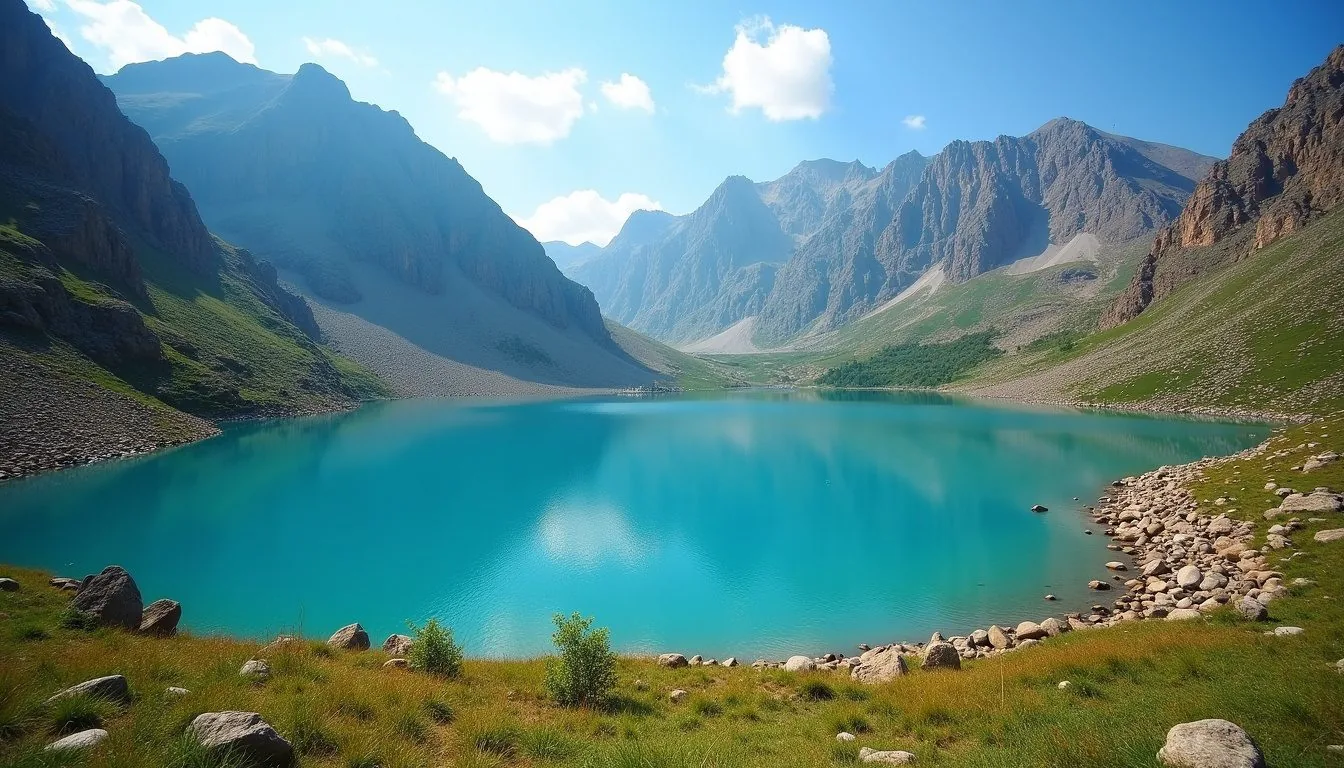
Kazakhstan has 14 national parks spread across a territory the size of Western Europe, protecting everything from glacier-carved Tian Shan valleys and Altai taiga forests to singing sand dunes and steppe lake systems. According to Kazakhstan’s Committee of Forestry and Wildlife, together with 10 state nature reserves (zapovedniks) and dozens of regional reserves, these parks cover roughly 8.6 million hectares, about 3.2% of the country’s landmass. For travelers, Kazakhstan’s national parks offer dramatic landscapes with almost no crowds: you can hike entire days in the Tian Shan without seeing another person, camp beside alpine lakes at 2,500 meters, and encounter wildlife (including snow leopards, ibex, and argali sheep) that has vanished from most of Eurasia.
This guide covers all 14 national parks with practical details on location, entry fees, best season, highlights, and how to get there.
Complete Table of All 14 National Parks
| Park | Region | Established | Area (ha) | Key Attraction |
|---|---|---|---|---|
| Ile-Alatau | Almaty | 1996 | 199,700 | Big Almaty Lake, Shymbulak |
| Altyn-Emel | Almaty | 1996 | 520,000 | Singing Dunes, Aktau Mountains |
| Charyn | Almaty | 2004 | 121,170 | Valley of Castles canyon |
| Kolsai Lakes | Almaty | 2007 | 167,000 | Three alpine lakes, Kaindy Lake |
| Burabay (Borovoe) | Akmola | 2000 | 129,935 | Pine forests, steppe lakes |
| Katon-Karagay | East Kazakhstan | 2001 | 1,637,700 | Altai wilderness, Belukha |
| Sayram-Ugam | Turkestan | 2006 | 149,053 | Sayram Lake, Ugam Range |
| Bayanaul | Pavlodar | 1985 | 68,052 | Granite outcrops, steppe oasis |
| Zhongar-Alatau | Almaty/Jetisu | 2010 | 356,022 | Dzungarian Alatau biodiversity |
| Tarbagatay | East Kazakhstan | 2018 | 143,550 | Tarbagatai Range, steppe eagles |
| Buiratau | Akmola/Karaganda | 2011 | 88,968 | Rocky steppe, argali sheep |
| Altyn-Emel Extension (Merke) | Zhambyl | 2007 | 34,000 | Merke River wetlands |
| Sairam-Ugam (western) | Turkestan | 2006 | — | Western Tian Shan corridors |
| Karkaraly | Karaganda | 2023 | 114,564 | Karkaraly Mountains, pine forests |
Note: Park boundaries and management have been reorganized several times since independence. The table reflects the most current protected-area registry.
Ile-Alatau National Park
Location: Almaty Region, directly above the city of Almaty Established: 1996 | Area: 199,700 hectares Entry fee: 943 KZT ($2) per person; additional vehicle fee at some checkpoints Best season: May–October (year-round access to lower trails)
Ile-Alatau is the most visited national park in Kazakhstan and the most convenient. The park wraps around the mountains directly behind Almaty, meaning every mountain day trip from the city passes through its boundaries. The Zailiyskiy Alatau range rises from 600 meters at the park entrance to over 4,900 meters at Talgar Peak, creating dramatic elevation changes within a short horizontal distance.
Highlights:
- Big Almaty Lake (2,510m): a turquoise high-altitude reservoir 15 km from central Almaty, surrounded by peaks reaching 4,000m+
- Shymbulak ski resort (2,500m): Kazakhstan’s premier ski area, accessible by gondola from Medeu skating rink
- Kok-Zhailau plateau (2,400m): vast alpine meadows with wildflowers in June, accessible as a moderate day hike
- Turgen Gorge: waterfalls, hot springs, and trout streams on the eastern side of the park
- Butakovka waterfall: a popular 3-hour round-trip hike from Almaty’s outskirts
Wildlife: Brown bear, Tian Shan ibex, roe deer, wolf, golden eagle. Snow leopards inhabit the upper valleys but sightings are exceptionally rare; the park is estimated to have 10–15 individuals.
How to get there: Buses, taxis, and ride-hailing apps from Almaty reach all major trailheads. The gondola to Shymbulak departs from Medeu (bus #12 from the city). No private vehicle needed for the most popular hikes.
Altyn-Emel National Park
Location: Almaty Region, 200 km northeast of Almaty Established: 1996 | Area: 520,000 hectares (Kazakhstan’s largest national park by original designation) Entry fee: 943 KZT ($2) per person + mandatory guide fees for some zones Best season: April–June and September–October (summers exceed 40°C in the desert zones)
Altyn-Emel is a park of desert extremes: singing sand dunes 150 meters high, white and red clay badlands that look like another planet, and Bronze Age burial mounds scattered across an arid steppe. The park was initially created to protect the reintroduced Przewalski’s horse (Equus ferus przewalskii), and today about 350–400 roam the reserve.
Highlights:
- Singing Dunes (Akkum-Kalkan): a 2 km crescent of pale sand that produces a deep, resonant humming sound when the wind blows across the surface. The “singing” is caused by electrostatic charge between sand grains and can be heard from several kilometers away
- Aktau Mountains: layered white, red, orange, and green clay badlands dating back 25–30 million years. Fossil beds contain remains of ancient rhinoceroses, crocodiles, and turtles from when this region was subtropical
- Katutau Mountains: volcanic rock formations eroded into surreal mushroom and tower shapes
- Besshatyr burial mounds: 31 Saka-era kurgans (burial mounds) dating to the 7th–3rd centuries BC, the largest royal necropolis in Central Asia
- Przewalski’s horses: genuinely wild horses grazing at dawn and dusk near the Singing Dunes area
Wildlife: Kulan (Asiatic wild ass), goitered gazelle, Przewalski’s horse, golden eagle, saker falcon, steppe tortoise. The park is one of the few places where you can reliably see kulan herds of 20–50 animals.
How to get there: Drive from Almaty via Kapshagay (3–4 hours) or join an organized tour. No public transport. A 4WD vehicle is required for the Aktau and Katutau sections. The park HQ is in the village of Basshi, where you register and hire mandatory guides for some zones.
Charyn National Park
Location: Almaty Region, 200 km east of Almaty Established: 2004 | Area: 121,170 hectares Entry fee: 943 KZT ($2) per person Best season: April–May and September–October (best light and temperatures)
Home to the Charyn Canyon, Kazakhstan’s single most photographed natural landmark. The canyon stretches 80 km along the Charyn River, reaching depths of 150–300 meters. The most visited section, the Valley of Castles, contains red and orange sandstone towers and columns sculpted by 12 million years of erosion.
Highlights:
- Valley of Castles: a 2 km walking trail through towering sandstone formations. The trail descends into the canyon and follows the river. Allow 2–3 hours for a comfortable walk with photography stops
- Charyn River gorge: deeper sections downstream where the river cuts through narrow slots. Rafting possible in spring (May)
- Ash Tree Grove (Sogdiana): a 5,000-tree relict forest of Sogdian ash (Fraxinus sogdiana), a species that survived the Ice Ages here. This is one of only two surviving natural stands worldwide
- Moon Canyon: a lesser-known section east of the Valley of Castles with yellow-grey formations resembling a lunar landscape
Wildlife: Maral deer, wolf, steppe fox, eagle owl, Egyptian vulture. The canyon walls host nesting colonies of rock pigeons, alpine swifts, and blue-cheeked bee-eaters.
How to get there: 2.5–3 hour drive from Almaty via the A351 highway. No public transport. Organized day trips from Almaty cost $30–60 per person including transport and lunch. A yurt camp at the canyon base offers overnight accommodation (around $25–40 per person including meals).
Kolsai Lakes National Park
Location: Almaty Region, 330 km southeast of Almaty, near the Kyrgyz border Established: 2007 | Area: 167,000 hectares Entry fee: 943 KZT ($2) per person Best season: June–September (trails to upper lakes snow-covered until mid-June)
Three alpine lakes stacked at increasing elevations in the Kungey Alatau range, often called the “Pearls of the Northern Tian Shan.” The lakes are surrounded by dense Tian Shan spruce forest and backed by snow-capped peaks, a combination that creates some of Kazakhstan’s most classically beautiful scenery.
Highlights:
- Kolsai 1 (1,818m): the most accessible lake, reachable by car. Guesthouses and yurt camps on the shore. Kayaking and horse riding available
- Kolsai 2 (2,252m): a 3-hour uphill hike from Kolsai 1 through spruce forest. Significantly more dramatic, with peaks reflected in perfectly still water on calm mornings
- Kolsai 3 (2,650m): serious mountain terrain requiring a full day’s hike or overnight camping. Guides strongly recommended
- Kaindy Lake: 20 km from Kolsai by unpaved road. Formed by an earthquake-triggered landslide in 1911 that dammed a valley and submerged a spruce forest. The bare tree trunks protruding from turquoise water create a surreal, ghostly landscape
Wildlife: Brown bear, Tian Shan ibex, lynx, marmot, golden eagle. The forests between the lakes are home to wild boar and roe deer.
How to get there: 5–6 hour drive from Almaty via Saty village. 4WD recommended for the last section and essential for Kaindy Lake. Organized 2–3 day tours from Almaty are the most practical option. Guesthouses in Saty village offer accommodation and meals.
Burabay (Borovoe) National Park
Location: Akmola Region, 240 km north of Astana Established: 2000 | Area: 129,935 hectares Entry fee: Free general access; some beach and recreation areas charge 500–1,000 KZT Best season: June–August for swimming; year-round for hiking and pine forest walks
Called the “Pearl of Kazakhstan” and sometimes the “Kazakhstan Switzerland” (though the second comparison is generous), the reality is genuinely appealing. A forested island of granite outcrops, pine trees, and clear lakes rising from the flat northern steppe. Burabay is the most popular domestic resort destination in Kazakhstan, especially for families from Astana.
Highlights:
- Burabay Lake: clear water surrounded by pine forest, with sandy swimming beaches and boat rentals
- Bolshoe Chebachye Lake: the park’s largest lake, popular for fishing (pike, perch, carp)
- Okzhetpes Rock: a dramatic 300-meter granite pinnacle with a lookout platform. The name means “no arrow can reach it,” from a legend about a captive woman placed on its summit
- Zhumbaktas Rock: a famous sphinx-shaped rock formation rising from the water, resembling a woman’s profile from certain angles
- Blue Bay (Goluboy Zaliv): a sheltered cove with the park’s clearest water, ideal for swimming
- Abylai Khan’s clearing: historical site where the 18th-century Kazakh khan held council meetings
Wildlife: Spotted deer, roe deer, elk, red squirrel, pine marten, lynx. Extensive birdlife including great crested grebes, whooper swans, and golden eagles.
How to get there: Train from Astana to Burabay station (4 hours, $5–10) or drive (2.5 hours). Developed resort infrastructure with hotels ranging from $20 backpacker guesthouses to $200+ resort sanatoriums. The area is extremely popular in July–August, so book accommodation in advance.
Katon-Karagay National Park
Location: East Kazakhstan Region, on the Russian-Kazakh border Established: 2001 | Area: 1,637,700 hectares (Kazakhstan’s largest protected area) Entry fee: 943 KZT ($2) per person Best season: June–September (heavy snow closes many routes October–May)
The wildest and most remote national park in Kazakhstan, a vast expanse of Altai taiga forest, alpine meadows, rushing rivers, and peaks reaching over 4,000 meters. Katon-Karagay shares a border with Russia’s Altai Republic and, according to UNESCO’s World Heritage listing, sits within the broader Golden Mountains of Altai, a transboundary World Heritage property. This is where Kazakhstan transitions from Central Asian steppe to Siberian forest.
Highlights:
- Mount Belukha viewpoint: the 4,506m peak (shared with Russia) is the highest in the Altai and visible from several vantage points within the park
- Berel Valley: traditional Kazakh summer pastures (jailau) with yurt camps and horseback routes
- Bukhtarma River: whitewater rafting (class II–IV) through forested gorges
- Rakhmanovsky Springs: natural hot springs at 1,760m elevation, historically used as a sanatorium
- Siberian taiga: old-growth forests of Siberian cedar, larch, and fir stretching for hundreds of unbroken kilometers
- Katon-Karagay village: the park’s gateway settlement, with a small ethnographic museum and traditional Kazakh wooden architecture
Wildlife: Brown bear, wolverine, elk (maral), Siberian ibex, snow leopard, sable, Altai snowcock. The park supports one of the densest populations of brown bears in Central Asia, with an estimated 200–250 individuals.
How to get there: Fly to Ust-Kamenogorsk (Oskemen), then drive 5–6 hours to Katon-Karagay village. Alternatively, 12–14 hours by car from Almaty. No public transport within the park. A 4WD vehicle and a local guide are essential. This park requires serious logistics and is not suitable for casual day trips.
Sayram-Ugam National Park
Location: Turkestan Region, southern Kazakhstan Established: 2006 | Area: 149,053 hectares Entry fee: 943 KZT ($2) per person Best season: May–September
A section of the Western Tian Shan on the border with Uzbekistan, protecting the Ugam and Karzhantau mountain ranges and the northern shore of Sayram Lake — the largest high-altitude lake in the Western Tian Shan at 1,980 meters.
Highlights:
- Sayram Lake: a deep, cold alpine lake at 1,980m with intense blue-green color. No permanent settlement on its shores
- Ugam Range: rugged mountain hiking with peaks exceeding 4,000m and dramatic river gorges
- Aksu Canyon: a narrow slot canyon with vertical walls reaching 500+ meters. One of the deepest canyons in Central Asia, favored by rock climbers
- Juniper forests: ancient stands of Turkestan juniper covering the middle-elevation slopes
- Petroglyphs: Bronze Age rock carvings scattered across the park’s lower valleys
Wildlife: Turkestan lynx, snow leopard, Menzbier’s marmot (endemic to the Western Tian Shan), bearded vulture (lammergeier), paradise flycatcher.
How to get there: Drive from Shymkent (1.5–2 hours to the park boundary). Some areas accessible from Tashkent (Uzbekistan) side via the Chernyaevka border crossing. Local guides available in Sayram village.
Bayanaul National Park
Location: Pavlodar Region, 100 km south of Ekibastuz Established: 1985 | Area: 68,052 hectares Entry fee: Free Best season: May–September
Kazakhstan’s very first national park, established in 1985 during the Soviet era. Bayanaul is a striking anomaly: a granite mountain oasis with pine and birch forests and clear lakes, rising from the surrounding flat steppe like an island. The park sits at a biogeographical crossroads where Siberian, Central Asian, and steppe ecosystems overlap.
Highlights:
- Sabyndykol Lake: the park’s largest lake, with sandy beaches and summer swimming
- Zhasybay Lake: a smaller, more secluded lake surrounded by granite boulders and forest
- Toraigyr Lake: the most remote of the three main lakes, reached by forest trails
- Granite formations: weathered into dramatic shapes including the “Baba Yaga” (witch) rock and the “Camel” rock
- Konyr-Aulie cave: a natural cave historically used as a pilgrimage site
Wildlife: Roe deer, wolf, badger, corsac fox, eagle owl. The park is a major birding destination with over 150 recorded species.
How to get there: Drive from Ekibastuz (1.5 hours) or Pavlodar (3 hours). Basic guesthouses and camping areas within the park. Limited public transport, so a car is essential.
Zhongar-Alatau National Park
Location: Almaty/Jetisu Region, near the Chinese border Established: 2010 | Area: 356,022 hectares Entry fee: 943 KZT ($2) per person Best season: June–September
Protecting the Dzungarian Alatau range, one of Central Asia’s most biodiverse mountain systems. This range served as a glacial refugium during the ice ages, preserving ancient plant species that disappeared from the rest of the continent. The park contains wild apple forests (Malus sieversii), the genetic ancestor of all cultivated apples worldwide.
Highlights:
- Wild apple forests: the original ancestor of the modern apple. Geneticists confirmed in 2010 that all domestic apples descend from Malus sieversii trees growing in these mountains
- Lepsinsk Valley: a scenic valley with traditional Kazakh villages, hot springs, and trailheads for multi-day treks
- Toksanbay waterfall: a 50-meter cascade in a forested gorge
- Glacial lakes: dozens of unnamed alpine lakes between 2,500m and 3,600m
Wildlife: Tian Shan brown bear, snow leopard, Dzungarian naked oat (rare endemic grass), blue Tian Shan poppy. Over 700 plant species recorded, many found nowhere else.
How to get there: Drive from Taldykorgan (2–3 hours to the park boundary). No organized tourism infrastructure; you need your own vehicle and supplies. Best suited for experienced hikers and naturalists.
Karkaraly National Park
Location: Karaganda Region, central Kazakhstan Established: 2023 (redesignated from earlier protection status) | Area: 114,564 hectares Entry fee: Free Best season: May–September
Another steppe mountain oasis similar to Bayanaul, with pine-forested granite mountains rising from the flat Kazakh steppe. The Karkaraly Mountains reach 1,403 meters and contain small lakes, caves, and mixed forests. The area has deep historical significance: Karkaralinsk was one of the major Kazakh administrative centers during the Tsarist era, and the mountains were a traditional summer retreat for Kazakh nomads.
Highlights:
- Karkaraly Mountains: moderate hiking through pine and birch forests with panoramic steppe views
- Bassein Lake: a small lake set among granite cliffs, popular for summer swimming
- Kent Mountains: a separate granite massif within the park featuring dramatic rock formations
- Shaitan-Kol (Devil’s Lake): a deep, dark lake in a granite bowl, surrounded by local legends
- Historical sites: the town of Karkaralinsk preserves 19th-century merchant architecture
Wildlife: Argali sheep (in the Kent Mountains), roe deer, corsac fox, long-eared hedgehog, demoiselle crane.
How to get there: Drive from Karaganda (200 km, 3 hours). Basic guesthouses in Karkaralinsk town. The park is relatively undeveloped for tourism.
Buiratau National Park
Location: Akmola/Karaganda Region, central Kazakhstan Established: 2011 | Area: 88,968 hectares Entry fee: Free Best season: April–October
A park created primarily to protect the argali (Marco Polo sheep) population of central Kazakhstan’s rocky steppe hills. Buiratau is not a conventional tourist destination (the landscape is rolling rocky steppe rather than dramatic mountains), but it fills a key conservation role and offers excellent birdwatching opportunities.
Highlights:
- Argali sheep viewing: one of the best places in Kazakhstan to see the Kazakh argali subspecies in the wild
- Rocky steppe terrain: weathered granite and sandstone formations in a vast grassland setting
- Steppe eagle nesting sites: the park protects important breeding habitat for steppe eagles, a globally threatened species
Wildlife: Argali sheep, steppe eagle, golden eagle, corsac fox, steppe pika, long-legged buzzard.
How to get there: Drive from Astana (3–4 hours) or Karaganda (2–3 hours). No tourist infrastructure; bring all supplies.
Tarbagatay National Park
Location: East Kazakhstan Region Established: 2018 | Area: 143,550 hectares Entry fee: 943 KZT ($2) per person Best season: May–September
Kazakhstan’s newest national park, protecting a section of the Tarbagatai Range near the Chinese border. The Tarbagatai is geologically distinct from both the Tian Shan and Altai systems: an ancient, weathered range with unique steppe-mountain ecosystems.
Highlights:
- Tarbagatai Ridge: moderate mountain hiking with wildflower meadows and panoramic views into China
- Natural springs: several mineral springs used by local people for centuries
- Transitional ecosystems: where Kazakh steppe meets mountain forest and semi-desert
Wildlife: Steppe eagle, golden eagle, Pallas’s cat, goitered gazelle, marbled polecat. The park was established partly to protect the Pallas’s cat (manul) population.
How to get there: Drive from Ayagoz (2–3 hours) or Ust-Kamenogorsk (4–5 hours). Very limited infrastructure.
Wildlife of Kazakhstan’s National Parks
Kazakhstan’s national parks protect habitats for several globally significant species. The country’s position at the crossroads of Central Asian, Siberian, and European ecosystems creates unusual biodiversity for a nation most people associate with flat grassland.
Snow leopard (Irbis): According to the IUCN Red List assessment, an estimated 130–150 snow leopards survive in Kazakhstan, primarily in the Tian Shan parks (Ile-Alatau, Kolsai, Sayram-Ugam) and the Altai (Katon-Karagay). Camera trap studies by the Snow Leopard Foundation Kazakhstan have documented individuals in Ile-Alatau as close as 40 km from downtown Almaty. You will almost certainly not see one (they are among the most elusive large cats on Earth), but knowing they are in the same mountains you are hiking adds a certain charge.
Tian Shan ibex (Capra sibirica): The most visible large mammal in the mountain parks. Herds of 10–30 ibex are regularly spotted on cliff faces in Ile-Alatau, Kolsai, and Sayram-Ugam. Males carry curved horns exceeding one meter.
Argali sheep (Ovis ammon): The world’s largest wild sheep, with rams weighing up to 180 kg and carrying massive spiral horns. Kazakhstan populations are concentrated in the central steppe parks (Buiratau, Karkaraly) and the western Tian Shan. Trophy hunting permits generate significant conservation revenue, controversial but effective at funding anti-poaching patrols.
Turkestan lynx: A subspecies of the Eurasian lynx found in the Western Tian Shan, primarily in Sayram-Ugam. Smaller and more spotted than the northern Eurasian lynx, with tufted ears and a bobbed tail. Estimated population in Kazakhstan: 800–1,200 individuals.
Brown bear: Present in Ile-Alatau and Katon-Karagay. The Katon-Karagay population of 200–250 bears is one of the largest in Central Asia. Standard bear country precautions apply: store food properly and make noise on the trail.
Camping Rules and Permits
Camping in Kazakhstan’s national parks follows a mix of official regulations and practical reality. The rules:
Official permits: All national parks technically require a park entry permit, purchased at the entrance checkpoint. Most parks charge 943 KZT (~$2) per person per day. Some parks charge additional vehicle fees (500–1,000 KZT).
Designated campsites: The major parks (Ile-Alatau, Charyn, Kolsai, Burabay) have designated camping areas with basic facilities: fire rings, pit toilets, sometimes water taps. Fees range from free to 2,000 KZT per tent per night.
Wild camping: Officially restricted in most parks but widely tolerated in practice, especially in remote areas of Katon-Karagay, Zhongar-Alatau, and Sayram-Ugam. The practical rule is simple: if you are more than 1 km from a road or ranger station, set up your tent discreetly, leave no trace, and you are unlikely to have any issues.
Fire regulations: Open fires are prohibited in most park zones during summer (June–September) due to wildfire risk. Use a camp stove instead. Fines for illegal fires can reach 50,000 KZT ($100).
Border zone permits: Several parks (Kolsai, Katon-Karagay, Zhongar-Alatau) are near international borders. Some areas within these parks require a separate border zone permit, issued at the local migration police office. Processing takes 1–5 days. Tour operators can arrange this in advance.
What to bring: Kazakhstan’s national parks have minimal infrastructure outside of Burabay and Ile-Alatau. Pack as if you are backcountry camping: water purification, all food, warm layers (temperatures drop sharply at altitude, even in July), sun protection, and a reliable map or GPS. Cell coverage is spotty in most parks beyond the entrance areas.
Best Time to Visit Kazakhstan’s National Parks
The best time to visit Kazakhstan for national parks is May through September, but the ideal window varies by park:
- April–May: Desert parks (Altyn-Emel, Charyn) at their best with wildflowers and moderate temperatures before summer heat. Mountain parks still snow-covered above 2,500m
- June–July: Mountain parks open fully. Alpine meadows bloom. Longest daylight hours. Kolsai and Katon-Karagay trails clear of snow
- August–September: Most stable weather in the mountains. Warmest lake temperatures. September brings golden autumn colors to the Altai parks
- October–November: Shoulder season. Lower parks still accessible, upper trails closing. Excellent photography light
- December–March: Only Ile-Alatau (ski season) and Burabay (cross-country skiing, ice fishing) are practically accessible. All other parks are snow-covered or road-inaccessible
How to Plan a National Parks Trip
For most international visitors, the practical starting point is Almaty. The former capital sits at the base of the Tian Shan and provides access to four of the best parks (Ile-Alatau, Charyn, Altyn-Emel, Kolsai Lakes) within a 3–6 hour drive. A well-planned 7–10 day itinerary from Almaty can cover all four.
Sample 10-day itinerary:
- Days 1–2: Almaty + Ile-Alatau (Big Almaty Lake, Shymbulak, Kok-Zhailau)
- Day 3: Charyn Canyon (day trip or overnight at yurt camp)
- Days 4–5: Altyn-Emel (Singing Dunes, Aktau Mountains, Besshatyr)
- Days 6–8: Kolsai Lakes + Kaindy Lake (2 nights in Saty village)
- Days 9–10: Return to Almaty, city exploration
For Burabay, pair it with a visit to Astana. It’s an easy 2.5-hour drive or 4-hour train from the capital. Katon-Karagay requires a separate dedicated trip of at least 5–7 days from Ust-Kamenogorsk.
All parks can be visited independently with a rental car, but organized tours remove the logistics headache of border permits, park registration, and navigating unpaved roads. Expect to pay $50–80 per person per day for a guided group tour, or $150–300 per day for a private vehicle with driver and guide.
For more ideas on what to see across the country, check out our guides to places to visit in Kazakhstan and things to do in Kazakhstan.
Frequently Asked Questions
- How many national parks does Kazakhstan have?
- Kazakhstan has 14 national parks and 10 state nature reserves (zapovedniks). The largest is Katon-Karagay National Park at 1,637,700 hectares in the eastern Altai region. The most visited is Ile-Alatau National Park, which wraps around the mountains directly above Almaty. Together, Kazakhstan's protected areas cover approximately 8.6 million hectares — about 3.2% of the country's territory.
- What are the best national parks in Kazakhstan to visit?
- The top national parks for international visitors are: Ile-Alatau (easiest access, day trips from Almaty to Big Almaty Lake and Shymbulak), Charyn (dramatic Valley of Castles canyon, 3 hours from Almaty), Altyn-Emel (Singing Dunes, Aktau badlands, wild horses), Kolsai Lakes (three alpine lakes plus the submerged forest of Kaindy), and Burabay (steppe lakes and pine forests near Astana). For serious wilderness seekers, Katon-Karagay in the Altai is unmatched.
- How much does it cost to visit national parks in Kazakhstan?
- Most Kazakhstan national parks charge an entry fee of 943 KZT (approximately $2 USD) per person per day. Some parks like Burabay and Bayanaul offer free general access. Additional fees may apply for vehicles (500–1,000 KZT), designated camping areas (up to 2,000 KZT per tent), and mandatory guide services in restricted zones of Altyn-Emel. Overall, national park visits in Kazakhstan are extremely affordable by international standards.
- Do I need a guide for Kazakhstan national parks?
- For popular, well-marked areas — Charyn Canyon Valley of Castles trail, Burabay lake walks, or the main Ile-Alatau trails — a guide is not necessary. For Altyn-Emel (mandatory guide for some zones), upper Kolsai Lakes trails, Katon-Karagay wilderness, Zhongar-Alatau, or any serious mountain trekking above 3,000m, a guide is strongly recommended. Park entrance offices and local tour operators can arrange guides, typically costing $20–50 per day.
- Can you camp in Kazakhstan national parks?
- Yes. The major parks (Ile-Alatau, Charyn, Kolsai, Burabay) have designated camping areas with basic facilities. Wild camping is officially restricted but widely tolerated in remote areas if you leave no trace. Open fires are prohibited in most parks during summer — bring a camp stove. Near-border parks like Kolsai and Katon-Karagay may require a separate border zone permit.
- What wildlife can you see in Kazakhstan national parks?
- Kazakhstan's parks are home to snow leopards (130–150 in the country, extremely rare to see), Tian Shan ibex (commonly spotted on cliff faces), argali sheep (world's largest wild sheep), brown bears (especially in Katon-Karagay), Turkestan lynx, wolves, golden eagles, and Przewalski's horses (reintroduced in Altyn-Emel). The most reliably seen large mammals are ibex in the mountain parks and Przewalski's horses in Altyn-Emel.
More Stories
nature
Kazakh Steppe: World's Largest Grassland — Complete Guide
The Kazakh steppe covers 800,000+ km² — larger than France and Germany combined. History, wildlife, nomadic culture, and how to experience it today.

facts
Is Kazakhstan in Europe or Asia? The Definitive Answer
Is Kazakhstan in Europe? No — it's in Central Asia. A tiny western sliver crosses into Europe geographically, but 95%+ of the country is in Asia.
facts
Interesting Facts About Kazakhstan: 25+ Surprising Truths
Interesting facts about Kazakhstan — the largest landlocked nation, Baikonur space launches, origin of the apple, and 25+ surprising truths.