Kazakhstan Women: Culture, Rights, Careers & Real Life (2026)
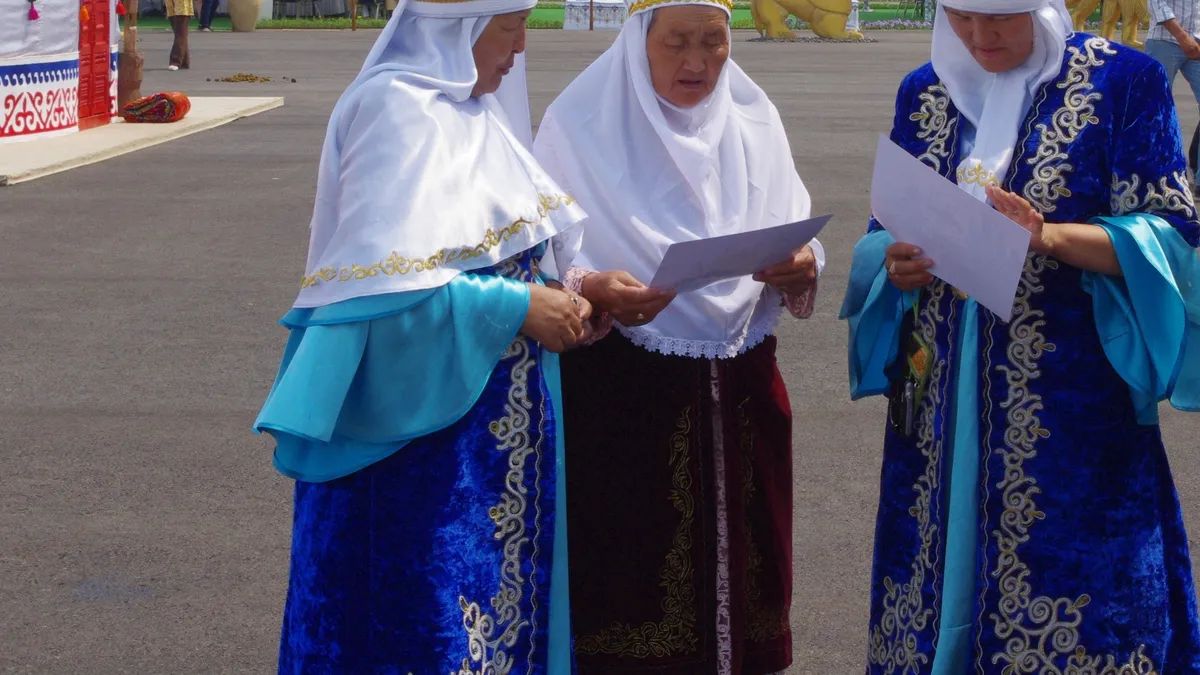
My mother managed the finances in our house. My grandmother rode horses into her 60s. My aunt ran a small business in Aktobe while raising three kids and somehow still had time to yell at my uncle for not helping enough. None of this was considered unusual in our family or in Kazakhstan generally. The Western image of Central Asian women as oppressed and hidden does not match the reality I grew up with.
That said, Kazakhstan is not a feminist paradise either. The picture is complicated. Let me give you the honest version, not the Wikipedia summary.
The Nomadic Foundation
Here is something most articles about Kazakh women miss: the starting point was not oppression.
According to research by Dr. Sarah Cameron at the University of Maryland (published in “The Hungry Steppe”) and Wikipedia’s overview of Kazakh society, Kazakh nomadic society gave women more freedoms than most sedentary cultures in the region. The reasons were practical:
- Survival required it. On the steppe, women had to ride horses, manage livestock, set up and tear down yurts, and defend the camp when men were away. A society that restricted women to domestic spaces would not have survived the Kazakh winter.
- Property rights existed. According to traditional Kazakh customary law (adat), women could own livestock and personal property independently.
- No seclusion. Unlike some neighboring cultures, Kazakh women were not veiled or confined. European travelers to the steppe in the 18th and 19th centuries consistently noted this in their accounts.
- Senior women held authority. The apa (grandmother/elder woman) was a respected decision-maker in family and even clan matters.
This heritage shapes modern Kazakh women’s self-image. Most Kazakh women I know would bristle at the suggestion they need permission from men to do anything. That attitude comes directly from the steppe.
Education: The Numbers Are Clear
If you want one data point that defines women’s status in Kazakhstan, it is this: according to UNESCO’s 2024 education statistics, 58% of university students in Kazakhstan are women.
| Metric | Women | Men | Source |
|---|---|---|---|
| University enrollment | 58% | 42% | UNESCO 2024 |
| Master’s degree students | 60% | 40% | Ministry of Education KZ |
| Literacy rate | 99.8% | 99.8% | World Bank |
| Bolashak scholarship recipients | ~45% | ~55% | Bolashak Center |
According to the Bolashak International Scholarship program data, over 5,000 Kazakh women have studied at top global universities including Harvard, Oxford, Cambridge, MIT, and the Sorbonne on full government funding. Many return to Kazakhstan and hold senior positions in government, banking, and business.
The education pipeline is strong. What happens after graduation is where it gets complicated.
Work and Career
According to the World Bank’s 2024 gender data for Kazakhstan, Kazakhstan’s female labor force participation rate is approximately 65%. For context:
| Country | Female labor participation | Source |
|---|---|---|
| Kazakhstan | 65% | World Bank 2024 |
| Russia | 55% | World Bank 2024 |
| Turkey | 34% | World Bank 2024 |
| Uzbekistan | 53% | World Bank 2024 |
| South Korea | 53% | World Bank 2024 |
| Germany | 57% | World Bank 2024 |
Kazakhstan outperforms most of its neighbors and several developed countries. Women are visible in:
- Banking and finance - walk into any Kazakh bank and most mid-level managers are women
- Education - teaching is heavily female-dominated
- Healthcare - most doctors and nearly all nurses are women
- Government - according to the Mazhilis (parliament), women hold about 27% of seats
- Business ownership - growing, especially in services, retail, and tech startups
Where women are underrepresented: CEO-level positions in large companies, oil and gas industry leadership, and senior government roles. According to the World Economic Forum’s 2024 Global Gender Gap Report, Kazakhstan ranks in the top 50 for women’s educational attainment but drops to around 80th for economic opportunity at the top level.
The Marriage Question
If you are a Kazakh woman in your late 20s and single, you will hear about it. From your aunts. From your grandmother. From random women at the bazaar who think your reproductive timeline is their business.
The traditional framework:
According to the Kazakh Bureau of Statistics, the average age of first marriage for women in Kazakhstan is:
- Urban areas: 25-27
- Rural areas: 22-24
- Rising steadily since 2000
Traditional marriage customs still exist in modified form. According to ethnographer Dr. Alima Bissenova (Nazarbayev University):
- Quda tusu (matchmaking) still happens, but today it usually means families being introduced after the couple has already decided to marry
- Qalym (bride price) is still practiced but increasingly symbolic - token amounts or gifts rather than livestock
- Wedding celebrations remain enormous - 200-500 guests is normal, sometimes exceeding 1,000
- Betashar ceremony (lifting the bride’s veil) is performed at most traditional weddings
The modern reality:
In Almaty and Astana, dating culture looks similar to any European city. According to App Annie data, Tinder and Badoo are among the top downloaded apps in Kazakhstan. Interethnic couples are common. Cohabitation before marriage, while not openly discussed with parents, happens.
The tension between traditional family expectations and modern individual choice is real and ongoing. It is the most common source of generational conflict in Kazakh families I know.
Bride Kidnapping: Facts, Not Sensationalism
This gets attention in Western media, so let me be direct.
Ala kachuu (bride kidnapping) does exist in Kazakhstan. According to Human Rights Watch, it occurs primarily in rural southern regions. It is:
- Illegal under Article 125 of the Criminal Code of Kazakhstan
- Penalized more harshly since 2019 when sentences were increased
- Declining according to NGO data from the Kazakh Women’s Rights Association
- Overwhelmingly condemned by urban Kazakhs and the educated population
- Not representative of Kazakh culture as a whole
Do not make the mistake of defining Kazakhstan’s people by this practice. It is criminal behavior, prosecuted by law, condemned by mainstream society. It would be like defining American culture by school shootings.
What Do Kazakhstan Women Look Like?
This question gets thousands of monthly searches, so I will answer it respectfully and factually.
Kazakhstan is one of the most ethnically diverse countries in the world. According to genetic studies published in Human Genetics, ethnic Kazakhs carry a mix of East Eurasian and West Eurasian ancestry. This means:
- Most ethnic Kazakh women have dark hair and brown eyes, with facial features ranging from distinctly East Asian to more Mediterranean
- Ethnic Russian women in Kazakhstan look no different from women in Moscow
- Korean, Tatar, Uyghur, and German communities each have their own characteristic appearances
- Mixed heritage is increasingly common, especially in cities
Fashion and clothing: Women in Almaty dress in global fashion brands - Zara, H&M, local designers. You will see more designer handbags per capita in Almaty than in most European cities. According to the National Chamber of Entrepreneurs, Kazakhstan’s fashion retail market exceeds $3 billion annually.
Hijab: The vast majority of Kazakh women do not wear head coverings. According to the Pew Research Center, Kazakhstan is one of the least religiously observant Muslim-majority countries. You will see more hijab in a London shopping mall than in Almaty.
Women in Kazakh History and Art
The historical record of Kazakh women is richer than most outsiders realize, and it shapes how Kazakh women see themselves today.
The most famous woman in Kazakh history is arguably Tomyris, the queen of the Massagetae (a steppe people closely related to early Kazakhs) who, according to Herodotus, defeated and killed the Persian emperor Cyrus the Great in battle around 530 BCE. Tomyris is not a peripheral figure in Kazakh national identity: she appears on postage stamps, has universities named after her, and is the subject of Kazakhstan’s biggest-budget historical film (released in 2019, directed by Akan Satayev). The story told is of a ruler who led her army personally, outmaneuvered a superpower, and avenged her son’s death. It is a foundational myth of capable, decisive female leadership.
In more recent history, the figure of Ainur (a common Kazakh female name meaning “moon light”) represents the archetype of the educated, cultured Kazakh woman in literature. According to literary scholars at Nazarbayev University, 19th-century Kazakh oral tradition (zhyrau poetry) features numerous female characters who argue with khans, refuse unwanted marriages, and outwit opponents through intelligence rather than submission. These oral epics were the stories Kazakh children grew up hearing.
Contemporary Kazakh women in public life include Roza Rymbaeva, considered the greatest Kazakh pop singer, who has performed for decades and is a cultural institution. Dimash Kudaibergen’s mother, Svetlana Akhmetova, a classically trained singer, is another example of women prominent in the arts. In government, Dariga Nazarbayeva (eldest daughter of former president Nazarbayev) has held senior positions including Speaker of the Senate, demonstrating the presence of women at the highest political levels, though critics note that nepotism rather than pure merit drove her career.
According to the Ministry of Culture and Sports of Kazakhstan, women make up the majority of workers in Kazakhstan’s cultural institutions, including museums, theatres, libraries, and philharmonic organizations. The arts are a domain where Kazakh women have long operated with full professional equality.
The Urban-Rural Divide
The most important dividing line in understanding Kazakh women’s lives is not religion or ethnicity, but geography.
Women in Almaty and Astana live lives that look similar in many practical ways to women in Warsaw or Tbilisi. They hold professional jobs, use ride-hailing apps, date on Tinder, manage their own finances, and delay marriage. According to the Bureau of National Statistics, in Almaty, women own approximately 42% of registered small businesses, a figure that has grown consistently over the past decade.
Women in rural areas, particularly in the southern oblasts (Turkestan, Kyzylorda, Zhambyl), face a substantially different reality. According to UN Women’s country assessment for Kazakhstan, rural women have less access to formal employment, depend more heavily on subsistence agriculture, and face stronger social pressure to conform to traditional marriage and family roles. School completion rates remain high, but post-secondary education is less accessible due to distance and cost.
This urban-rural gap means that generalizations about “Kazakh women” as a single category miss the complexity. A 28-year-old female investment banker in Almaty and a 24-year-old woman in a village in Turkestan Oblast share a nationality and many cultural touchpoints, but their day-to-day freedoms and constraints differ significantly.
The government has acknowledged this gap. The National Plan for Gender Equality 2022-2027 includes specific targets for increasing rural women’s access to microcredit, vocational training, and healthcare. According to official reports, rural women’s participation in the formal labor market increased by approximately 8 percentage points between 2015 and 2023, though it remains well below urban levels.
Safety for Female Travelers
According to travel advisories and our own safety guide, Kazakhstan is generally safe for solo female travelers:
- Almaty and Astana are safe to walk day and night in central areas
- Public transport is used routinely by women
- No dress code requirements
- Street harassment exists but is less common than in Turkey, Egypt, India, or Southeast Asia
- Taxis are safe, especially app-based (Yandex Go, inDrive)
Standard precautions apply: avoid walking alone in poorly lit areas at night, keep valuables secure, use licensed taxis.
Rights and Challenges: The Honest Picture
Where Kazakhstan does well:
- Near-universal female education (99.8% literacy, 58% of university students)
- High workforce participation (65%)
- 126 days paid maternity leave at 100% salary for formal workers
- Legal equality in property and inheritance
- Active women’s organizations
Where challenges remain:
According to UN Women’s 2024 country report on Kazakhstan:
- Domestic violence is a significant issue. Comprehensive legislation was passed in 2017, but according to the UN Special Rapporteur on Violence Against Women, enforcement remains inconsistent, particularly in rural areas
- Wage gap - women earn approximately 75% of what men earn in comparable roles
- Rural-urban divide - women in rural southern Kazakhstan have significantly fewer economic opportunities than those in cities
- Political glass ceiling - 27% in parliament, but fewer in top executive positions
- Social pressure - expectation to marry young and prioritize family, especially from older generations
Kazakhstan is not Scandinavia. But it is also not the oppressed Central Asian society some Western media portrays. It is somewhere in the middle, moving in the right direction, with real women navigating complex choices between tradition and modernity every day.
Frequently Asked Questions
- What rights do women have in Kazakhstan?
- According to the World Bank, Kazakhstan guarantees gender equality in its constitution. Women have full legal rights to education, work, property, and political participation. Female labor force participation is about 65%, and 58% of university students are women. Challenges remain in domestic violence enforcement and the wage gap (75% of male earnings).
- Do women in Kazakhstan wear hijab?
- According to the Pew Research Center, Kazakhstan is one of the least religiously observant Muslim-majority countries. The vast majority of Kazakh women do not wear hijab. Women dress in contemporary global fashion. A small minority in southern rural areas may choose head coverings, but this is not the norm.
- Is bride kidnapping real in Kazakhstan?
- According to Human Rights Watch, bride kidnapping does occur primarily in rural southern regions. It is illegal under Article 125 of the Criminal Code, with penalties increased in 2019. The practice is declining and is overwhelmingly condemned by urban Kazakhs and mainstream society.
- Is Kazakhstan safe for women traveling alone?
- According to the Global Peace Index, Kazakhstan ranks 70th globally, safer than France and the US. Cities are safe for walking, public transport is routinely used by women, and there is no dress code. Standard travel precautions apply. Kazakhstan ranks safer than many popular tourist destinations.
- What is the average marriage age for women in Kazakhstan?
- According to the Bureau of National Statistics, the average age of first marriage for women is 25-27 in urban areas and 22-24 in rural regions. The age is rising steadily. Most marriages today are by personal choice, though family input remains culturally important.
- Can women work in Kazakhstan?
- According to World Bank data, about 65% of working-age women participate in the labor force, higher than Russia (55%), Turkey (34%), and most Central Asian neighbors. Women are prominent in banking, education, healthcare, and increasingly in business ownership and technology.
Last verified: March 2026
More Stories
travel
20 Must-Do Things in Kazakhstan: Adventure, Culture & Nature (2026)
From eagle hunting to overnight steppe trains: 20 best things to do in Kazakhstan with costs, locations, and insider tips. Most under $50.
travel
Almaty, Kazakhstan: 3-Day Itinerary, Top Sights & Real Costs (2026)
Almaty travel guide: top attractions, neighborhoods, restaurants from $3, hotels from $25, Shymbulak ski resort, Charyn Canyon day trips. Real local costs.
travel
Is Kazakhstan Safe in 2026? Crime Data, Safe Areas & Real Risks
Kazakhstan is safer than Turkey and Argentina (73rd Global Peace Index). Real crime stats, taxi scams to avoid, solo female safety tips, emergency numbers.