Digital Nomad in Kazakhstan: Visas, Costs & Tax (2026)

Kazakhstan launched two digital nomad visa programs in 2025: the Neo Nomad Visa (B12-1) for all remote workers earning $3,000+/month, and the Digital Nomad Residency (B9-1) for IT professionals with no income requirement and a path to 10-year residence. According to Astana Hub, 270+ applications arrived in the first two months from 20+ countries. A single person can live comfortably in Almaty for $1,000-1,500/month including rent in a decent area, food, fast fiber internet, and coworking. Families of four spend $2,000-3,500/month with kindergarten or school included. Kazakhstan offers Kaspi (the most advanced mobile payment system in Central Asia), 30-day visa-free entry for 77 countries, and Astana Hub’s 0% corporate tax for IT companies.
Kazakhstan is not on most digital nomads’ radar yet. That is exactly why it works. While Bali, Lisbon, and Tbilisi are saturated with nomad communities and rising prices, Kazakhstan offers fast internet, extremely low costs, mountain scenery 30 minutes from downtown Almaty, and government programs specifically designed to attract remote tech workers. The country invested heavily in digital infrastructure: Kaspi Bank handles everything from utility payments to marketplace shopping in one app, 4G covers 95% of populated areas, and fiber internet reaches most urban apartments. This guide covers both visa options, real monthly costs, coworking spaces, tax implications, banking setup, and practical tips from someone who actually lives here.
Two Digital Nomad Visas: Which One Fits You?
Kazakhstan offers two distinct digital nomad visa programs: the Neo Nomad Visa (B12-1) for any remote worker earning $3,000/month, and the Digital Nomad Residency (B9-1) exclusively for IT professionals with no income requirement and up to 10 years of residency.
Most nomad destinations offer a single visa. Kazakhstan created two programs targeting different audiences, which causes confusion. Here is what actually matters:
| Feature | Neo Nomad (B12-1) | Digital Nomad Residency (B9-1) |
|---|---|---|
| For | All remote workers | IT professionals only |
| Income requirement | $3,000/month minimum | None |
| Duration | 1 year, renewable once (2 years max) | Up to 10 years via residence permit |
| Work for KZ companies? | No (foreign employers only) | Yes |
| Application | Online, 5 business days | Online, ~22 business days total |
| Family | Yes, same visa | Yes |
| Launched | February 2025 | March 2025 (pilot, ends Dec 2025) |
Choose the Neo Nomad (B12-1) if you work remotely for a foreign company, earn $3,000+/month, and want a quick 1-year visa without proving IT credentials.
Choose the B9-1 if you are a software developer, designer, DevOps engineer, or cybersecurity specialist who wants long-term residency and the option to work for Kazakh companies.
Sources: iWorld Neo Nomad guide, Relokatz B9-1 breakdown, Fragomen legal analysis
Neo Nomad Visa (B12-1): Step-by-Step
According to Kursiv Media, the Neo Nomad Visa requires:
- Proof of remote income $3,000+/month (employment contract or freelance invoices)
- Valid health insurance covering Kazakhstan
- Criminal background check (apostilled)
- Apply online through the e-visa portal
- Approval in 5 business days
- Valid for 1 year, renewable once (maximum 2 years total)
Important: this visa does not allow you to work for Kazakh companies. You must earn from foreign sources only.
Digital Nomad Residency (B9-1): Step-by-Step
According to Astana Hub and ACSOUR legal:
- Apply online through Astana Hub portal (no need to be in Kazakhstan)
- Document verification and interview: ~5 business days
- IT specialization accreditation: ~10 business days
- Invitation letter issued: ~7 business days after petition
- Receive 1-year e-visa (single entry)
- After arrival: convert to B9-1 paper visa (1 year, multiple entry)
- Then apply for residence permit: up to 10 years
Warning: This is a pilot program running until December 31, 2025. It may or may not be extended. Apply early if interested.
Free Option: 30-Day Visa-Free Entry
Citizens of 77 countries (EU, US, UK, Canada, Australia, Japan, South Korea) can enter Kazakhstan for 30 days without any visa. Many digital nomads start with this to test the waters before committing to a longer visa.
Monthly Costs: $850-1,500 in Almaty
A single digital nomad can live comfortably in Almaty for $1,000-1,500/month, or $1,500-2,500 for a couple. This includes rent in a decent area ($500-650 for a 1-bedroom with good renovation), food ($250-350), coworking ($50-100), internet ($10-20), transport ($40-60), and entertainment. According to Numbeo, Almaty’s cost of living is 62% lower than Berlin and 71% lower than London. Families of four spend $2,000-3,500/month including school or kindergarten.
Real prices from Krisha.kz (Kazakhstan’s largest rental platform) and local sources, March 2026. Important: the cheapest listings ($200-250/month) are typically on the outskirts with poor renovation. The prices below reflect apartments in decent neighborhoods with acceptable condition, where a remote worker would actually want to live.
| Category | Budget | Mid-Range | Comfortable |
|---|---|---|---|
| Rent (1-bedroom, decent area) | $350-450 | $500-650 | $700-1,000 |
| Rent (2-bedroom, decent area) | $500-700 | $700-1,000 | $1,000-1,500 |
| Food (cooking + eating out) | $150-200 | $250-350 | $400-600 |
| Coworking | $15-50 | $50-100 | $100-200 |
| Internet (home fiber) | $10-15 | $15 | $20 |
| Mobile (data) | $5-10 | $10-15 | $15-20 |
| Transport | $20-30 | $40-60 | $80-150 |
| Entertainment | $30-50 | $80-150 | $200-400 |
| Health insurance | $45 | $45-80 | $100-200 |
| TOTAL (single) | $625-850 | $1,000-1,500 | $1,600-3,000 |
Rent reality check: Almaty is a big city with enormous price variation. The “Golden Square” (Abay, Dostyk, Satpayev, Furmanov) and Dostyk corridor are the most expensive areas. Much of central Almaty consists of Soviet-era buildings (25% of housing stock) that may look cheap on listings but have outdated plumbing, wiring, and insulation. Newer buildings with good renovation cost 30-50% more but are worth it for long-term stays. Always view apartments in person before signing.
Food tip: Stolovaya canteens serve full lunches (soup + main + bread + tea) for 1,500-2,500 KZT ($3-5). Green Bazaar in Almaty has the freshest produce. Popular Kazakh food is hearty and cheap.
Almaty vs Astana for Digital Nomads
| Factor | Almaty | Astana |
|---|---|---|
| Rent (1-bed, good area) | $500-650 | $350-500 |
| Housing quality | Mixed: 25% Soviet-era, renovation varies | 82% modern buildings, mostly post-2000 |
| Apartment selection | Older stock dominates center, new builds on outskirts | New developments dominate, better layouts |
| Coworking scene | Larger, more options | Smaller but growing |
| Social life | Vibrant nightlife, cafes, restaurants | Quieter, more corporate |
| Nature access | Mountains 30 min away | Steppe, no mountains |
| Winter | Milder (-5 to -15C) | Harsh (-20 to -35C) |
| Summer | Hot (30-38C) | Comfortable (25-30C) |
| International flights | More routes | Fewer routes |
| IT community | Larger freelance scene | Government IT, Astana Hub HQ |
| Best for | Solo nomads, social life, mountains | Families, newer housing, lower costs |
Housing matters. This is the biggest practical difference. Astana was built mostly after 2000, so apartments are newer with modern layouts, good insulation, elevators, and planned infrastructure (schools, parks, playgrounds nearby). Almaty’s center is dominated by Soviet-era buildings from the 1960s-1980s that range from well-renovated to deteriorating. Finding a quality apartment in Almaty takes more effort and costs more. In Astana, newer buildings with good condition are the default, not the exception.
Most solo digital nomads still choose Almaty for the lifestyle: mountains, cafes, nightlife, and a larger expat community. But families and those who prioritize housing quality increasingly prefer Astana, especially in new districts like Saryarka and Yesil.
Internet: Fast Fiber at Low Prices
Kazakhstan’s urban internet is fast and reliable. Fiber-optic connections deliver 100-500 Mbps in most Almaty and Astana apartments. Prices range from 4,000-8,000 KZT ($9-19)/month depending on speed and provider. Mobile 4G covers 95% of populated areas. According to Digital Business Kazakhstan, average download speeds reach 91 Mbps nationally, though real-world speeds in newer buildings typically exceed this.
| Provider | Typical Speed | Price/Month | Notes |
|---|---|---|---|
| Beeline | 100-500 Mbps | 4,000-8,000 KZT ($9-19) | Most popular, reliable coverage |
| Meganet | 200-800 Mbps | 5,000-10,000 KZT ($12-23) | Fastest residential, Almaty focused |
| Kazakhtelecom | 100-200 Mbps | 4,000-6,000 KZT ($9-14) | State provider, widest national coverage |
| Alma-TV | 100-300 Mbps | 4,500-7,000 KZT ($10-16) | Almaty focused |
Practical note: Newer buildings (common in Astana, newer districts of Almaty) usually have fiber pre-installed and get the best speeds. Older Soviet-era buildings in Almaty may have lower speeds or require installation, which takes 1-3 business days. Always check with the landlord what provider is available before signing a lease.
Mobile data: Beeline, Kcell, and Tele2 offer unlimited 4G plans for 3,000-5,000 KZT ($6-10)/month. Buy a SIM at any branded store with your passport (takes 5 minutes).
eSIM option: If you want data before arriving, get an eSIM and activate it on your flight in.
Coworking Spaces in Almaty and Astana
Almaty has 10+ coworking spaces ranging from $1/hour to $100/month for a dedicated desk. Astana coworking starts even cheaper at $15/month. Most spaces offer fast Wi-Fi, meeting rooms, coffee, and 24/7 access.
Almaty Coworking
| Space | Price | Highlights |
|---|---|---|
| SmArt.Point | From 500 KZT/hour ($1) | Central location, events |
| FIFTY FOUR | 4,000 KZT/day ($8) | Modern, good community |
| City Hub | ~40,000 KZT/month ($80) | Professional, meeting rooms |
| 28/8 Work | From 500 KZT/hour ($1) | Multiple locations |
| Jas Coworking | Flexible pricing | Startup-friendly |
Astana Coworking
| Space | Price | Highlights |
|---|---|---|
| Bagyt | 1,500 KZT/hr, 50,000/month ($100) | Central, daily options |
| DC Lab | From 7,500 KZT/month ($15) | Cheapest monthly |
| Praktik Office | Premium | 360-degree city views |
| IQ Coworking | Mid-range | Freelancer focused |
| Spaces | Premium | 24/7 access, international chain |
Most Almaty cafes also work well for remote work. Specialty coffee shops like Coffeedelia, Coffee Boom, and Jas have reliable Wi-Fi and stay open until 22:00-23:00.
Astana Hub: 0% Tax for IT Companies
Astana Hub International Technopark offers 0% corporate income tax, 0% VAT, and reduced individual income tax for registered IT companies until 2029. According to FExpert tax analysis, 1,700+ companies (350+ foreign) are already registered, generating $1.6 billion in collective revenue.
| Tax | Standard Rate | Astana Hub Rate |
|---|---|---|
| Corporate income tax | 20% | 0% |
| VAT | 12% | 0% |
| Individual income tax | 10% | Reduced |
| Social tax | 9.5% | 0% for foreign employees |
Who Can Join
Astana Hub accepts companies whose revenue comes at least 90% from priority IT activities: software development, AI, big data, cybersecurity, automation, fintech, edtech, and other digital services. Registration is free, online, and takes 5 business days for moderation plus 10 business days for commission review.
Important clarifications:
- You do NOT need to be physically in Kazakhstan (extraterritorial registration available)
- Foreign companies from any country can register
- The state share must be less than 50%
- Tax benefits expire January 1, 2029 (plan accordingly)
- Source: Astana Hub 2026 tax guide
How Astana Hub Compares
| Hub | Corporate Tax | Cost of Living | Visa |
|---|---|---|---|
| Astana Hub (Kazakhstan) | 0% | $1,000/month | 5 years (C3) |
| Dubai Internet City (UAE) | 0% (free zone) | $4,400/month | 2 years |
| Georgia (IT visa) | 5% (or 1% small biz) | $1,000-1,200 | 1 year |
| Estonia (e-Residency) | 20% CIT | $1,800 | Schengen |
| Uzbekistan (IT Park) | 0% (until 2040) | $800 | Weaker visa |
Kazakhstan saves an estimated $220,000 over 5 years versus Dubai while offering the same 0% corporate tax, according to cost of living comparisons via Numbeo.
Freelancer Tax Without Astana Hub
Digital nomads on the Neo Nomad Visa (B12-1) working for foreign companies are generally not considered tax residents if they stay under 183 days. Those on the B9-1 who become tax residents pay 10% individual income tax on Kazakhstan-sourced income.
Critical: Individual entrepreneurs (IP/ИП) registration is only available to citizens of EAEU countries (Russia, Belarus, Kyrgyzstan, Armenia) and Tajikistan. All other foreigners must register a TOO (LLP) to do business locally, according to Alatau City Bank’s business guide.
Banking: Kaspi and How to Set Up
Kaspi Bank is Kazakhstan’s super-app: banking, marketplace, payments, and QR codes accepted at 99% of businesses. Since February 3, 2025, foreigners can get a Kaspi Gold card by visiting any branch in person with their passport and a Kazakh phone number. The card is valid for 1 year.
Steps to Get Kaspi Gold
- Buy a Kazakh SIM card (Beeline, Kcell, or Tele2 at the airport, $2-3)
- Visit any Kaspi Bank branch with your passport
- Staff will help you get an IIN (Individual Identification Number) if you do not have one
- Receive Kaspi Gold card on the spot
- Download Kaspi.kz app and activate
IIN (Individual Identification Number): Required for banking, contracts, and many services. Get it at any TSON (public service center) in 1 business day for free. Since February 2024, it can also be obtained remotely through Kazakh embassies abroad.
EDS (Electronic Digital Signature): Needed for government services and online business registration. Requires IIN first. Must be obtained in person at TSON or through an embassy. Valid for 1 year.
Moving with Family: Schools, Kindergartens, and Childcare
A family of four (two adults, two children) can live in Kazakhstan for $2,000-3,500/month including a 2-3 bedroom apartment, kindergarten or school, food, and all utilities. State kindergartens cost $40-50/month. Private kindergartens range from $150-500/month. International schools (Haileybury, Miras, QSI) charge $7,000-35,000/year depending on grade level.
Kazakhstan is increasingly attractive for families relocating from more expensive countries. Both visa programs (Neo Nomad and B9-1) allow family members. Astana is particularly appealing for families because of newer housing stock with family-friendly infrastructure.
Kindergartens (Ages 2-6)
| Type | Almaty | Astana | Notes |
|---|---|---|---|
| State kindergarten | 25,000 KZT/month ($58) | 19,700-20,800 KZT ($46-48) | Very affordable, waitlists possible |
| Private (budget) | 70,000-90,000 KZT ($163-209) | Similar range | Basic facilities, Kazakh/Russian |
| Private (mid-range) | 150,000-250,000 KZT ($349-581) | 150,000-210,000 KZT ($349-488) | Better facilities, meals included |
| Private (premium) | 300,000-500,000+ KZT ($698-1,163) | Up to 210,000 KZT/month (Miras) | International curriculum |
State kindergarten fees were frozen in 2026 in Almaty and Astana after the VAT increase to 16%, making them the most affordable childcare option.
Schools (Ages 6-18)
| School | Type | Location | Annual Cost (KZT) | Annual Cost (USD) |
|---|---|---|---|---|
| State school | Public | Both cities | Free | $0 |
| Nova School | Private (Kazakh/Russian) | Almaty | ~2,040,000 | ~$4,700 |
| TAMOS Education | Private (Physics/Math) | Almaty | ~2,900,000 | ~$6,700 |
| QSI International | American curriculum | Almaty | 3,100,000-3,550,000 | $7,200-8,250 |
| Miras International | IB programs | Both cities | 3,000,000-7,650,000 (CIS) | $7,000-17,800 |
| Miras (non-CIS citizens) | IB programs | Both cities | $9,485-28,160 | $9,500-28,200 |
| Haileybury | British curriculum | Almaty | 7,750,000-16,988,000 | $18,000-39,500 |
Sources: Haileybury Almaty, Miras International, School official 2025-2026 fee schedules
Practical advice for families:
- State schools are free but instruction is in Kazakh or Russian. Good option if children speak Russian or are young enough to learn
- International schools (Haileybury, QSI, Miras) teach in English with IB or British/American curricula. Best for temporary stays or families wanting international diplomas
- Private Kazakh/Russian schools ($4,000-7,000/year) are a middle ground: better facilities than state schools, Russian instruction, at a fraction of international school costs
- Most international schools are in Almaty. Miras operates in both cities
Family Budget Comparison
| Expense | Almaty | Astana |
|---|---|---|
| 2-bed apartment (good area) | $700-1,000/month | $530-800/month |
| 3-bed apartment (good area) | $800-1,400/month | $600-1,000/month |
| State kindergarten (1 child) | $58/month | $46/month |
| Private kindergarten (1 child) | $163-581/month | $163-488/month |
| International school (1 child) | $600-3,300/month | Limited options |
| Groceries (family of 4) | $400-600/month | $350-500/month |
| TOTAL (2 kids, state school + state kindergarten) | $1,600-2,600 | $1,300-2,100 |
| TOTAL (2 kids, international school + private kindergarten) | $3,500-6,500 | $2,800-4,500 |
Why Astana wins for families: Newer buildings designed with families in mind (82% of housing stock is modern versus 75% in Almaty), lower rents for equivalent quality, planned neighborhoods with schools and parks within walking distance, and cheaper kindergartens. The main tradeoff is Astana’s harsh winter and smaller social scene.
Safety, Healthcare, and Language
Kazakhstan is safe for travelers with crime rates lower than most of Eastern Europe. The Global Peace Index ranks it above Turkey, Brazil, and Mexico. English is limited outside tourist areas of Almaty and Astana, but Russian is widely understood and Google Translate handles daily situations.
Healthcare
Emergency medical care is free for everyone, including foreigners. For non-emergency care, digital nomads should get private health insurance. SafetyWing and World Nomads both cover Kazakhstan. Private clinics in Almaty (SOS International, IMC) have English-speaking doctors but charge $50-100+ per visit.
Language
- Kazakh is the state language (Turkic family)
- Russian is widely spoken in cities (learn basic phrases)
- English is growing among young professionals in Almaty/Astana
- Download 2GIS app (offline maps and navigation, works better than Google Maps in KZ)
- Yandex Translate handles Kazakh and Russian better than Google Translate
Weather
Kazakhstan weather is continental with extreme ranges. Almaty winters (-5 to -15C) are manageable. Astana winters (-20 to -35C) are not for everyone. Summers (June-August) are hot everywhere. The best time to visit for nomads: April-June or September-October.
Getting Started: First Week Checklist
Your first week in Kazakhstan as a digital nomad involves landing, getting a SIM card, finding an apartment, opening Kaspi, and joining the local community. Most nomads are fully set up within 3-5 days.
- Day 1: Land at Almaty Airport (ALA). Get a Beeline SIM ($3) at the airport. Take Yandex Taxi to your Airbnb/hotel ($8-12 to city center)
- Day 2: Visit TSON (public service center) to get IIN. Visit Kaspi Bank branch with passport + Kazakh SIM to get Kaspi Gold card
- Day 3: Search apartments on Krisha.kz (Kazakhstan’s Zillow). View 3-5 places. Typical process: view, agree, pay 1-month deposit + 1 month rent
- Day 4: Set up home internet (Beeline or Meganet, installation within 1-2 days). Visit a coworking space to test your workflow
- Day 5: Explore your neighborhood. Download 2GIS for navigation. Find your regular stolovaya (canteen) and coffee shop. Join Telegram groups for expats in Almaty
Useful Apps
| App | Purpose |
|---|---|
| Kaspi.kz | Banking, payments, marketplace, QR payments |
| 2GIS | Offline maps, navigation, business directory |
| Yandex Go | Taxi (cheaper than Uber, which does not operate in KZ) |
| Krisha.kz | Apartment search |
| InDrive | Budget taxi alternative |
Where to Connect: Communities and Events
The digital nomad community in Kazakhstan is small but growing. Key connections:
- Telegram groups: Search “expats Almaty” or “IT Almaty” for active channels
- Coworking events: SmArt.Point and City Hub host regular networking events
- Astana Hub events: Regular meetups, hackathons, and startup events
- Facebook groups: “Almaty Expats”, “Foreigners in Kazakhstan”
- GO DIGITAL EURASIA conference (July 2026): Major IT event
For travel inspiration while based in Kazakhstan: explore Charyn Canyon on weekends, take day trips from Almaty, visit Kolsai Lakes, or plan a 7-day itinerary across the country.
Frequently Asked Questions
- Do I need a visa to work remotely from Kazakhstan?
- Citizens of 77 countries can enter visa-free for 30 days. For longer stays, apply for the Neo Nomad Visa (B12-1, requires $3,000/month income, up to 2 years) or the Digital Nomad Residency (B9-1, IT professionals only, up to 10 years). Both can be applied for online.
- How fast is the internet in Kazakhstan?
- Urban internet in Almaty and Astana delivers 100-800 Mbps via fiber optic for about $10/month. Mobile 4G covers 95% of populated areas. Average national speed is 91 Mbps. Multiple providers (Beeline, Meganet, Kazakhtelecom) compete on speed and price.
- Can I open a bank account in Kazakhstan as a foreigner?
- Yes. Since February 2025, foreigners can get a Kaspi Gold card by visiting any Kaspi Bank branch with their passport and a Kazakh phone number. The card is valid for 1 year. You will need an IIN (Individual Identification Number), which can be obtained at any public service center in 1 business day for free.
- How much does it cost to live in Almaty as a digital nomad?
- A single digital nomad can live comfortably in Almaty for $1,000-1,500/month. This includes rent ($500-650 for a 1-bedroom in a decent area with good renovation), food ($250-350), coworking ($50-100), home internet ($10-20), and transport ($40-60). Cheaper options exist on the outskirts, but central apartments with acceptable condition start around $350-450.
- What is Astana Hub and how does it help digital nomads?
- Astana Hub is Kazakhstan government-backed international technopark offering 0% corporate income tax, 0% VAT, and reduced individual income tax for IT companies until 2029. It has 1,700+ member companies including 350+ foreign ones. Foreign companies can register extraterritorially without being physically present in Kazakhstan.
- Is Kazakhstan safe for digital nomads?
- Yes. Kazakhstan has lower crime rates than most of Eastern Europe. The Global Peace Index ranks it above Turkey, Brazil, and Mexico. Almaty and Astana are modern cities with reliable infrastructure. Emergency medical care is free for everyone including foreigners. Private health insurance is recommended for non-emergency care.
- What language do I need in Kazakhstan?
- Russian is widely spoken in cities and will handle 90% of daily situations. English is growing among young professionals in Almaty and Astana but limited elsewhere. Kazakh is the state language. Download 2GIS for navigation (works offline) and Yandex Translate for Russian/Kazakh translation.
- Can I register a business in Kazakhstan as a foreigner?
- Individual entrepreneur (IP) registration is only available to EAEU citizens (Russia, Belarus, Kyrgyzstan, Armenia) and Tajikistan. All other foreigners must register a TOO (LLP equivalent). Alternatively, register your foreign company at Astana Hub for 0% tax without needing a Kazakh legal entity.
- Can I move to Kazakhstan with my family and children?
- Yes. Both visa programs allow family members. State kindergartens cost $40-60/month. Private kindergartens range from $150-500/month. International schools (Haileybury, Miras, QSI) charge $7,000-35,000/year. A family of four can live on $2,000-3,500/month. Astana is recommended for families because 82% of housing is modern (post-2000 construction) with better infrastructure for children, and rents are 15-25% lower than Almaty for equivalent quality.
Last verified: March 2026. Visa requirements and tax rates may change. Check Astana Hub and eGov.kz for the latest information.
More Stories
travel
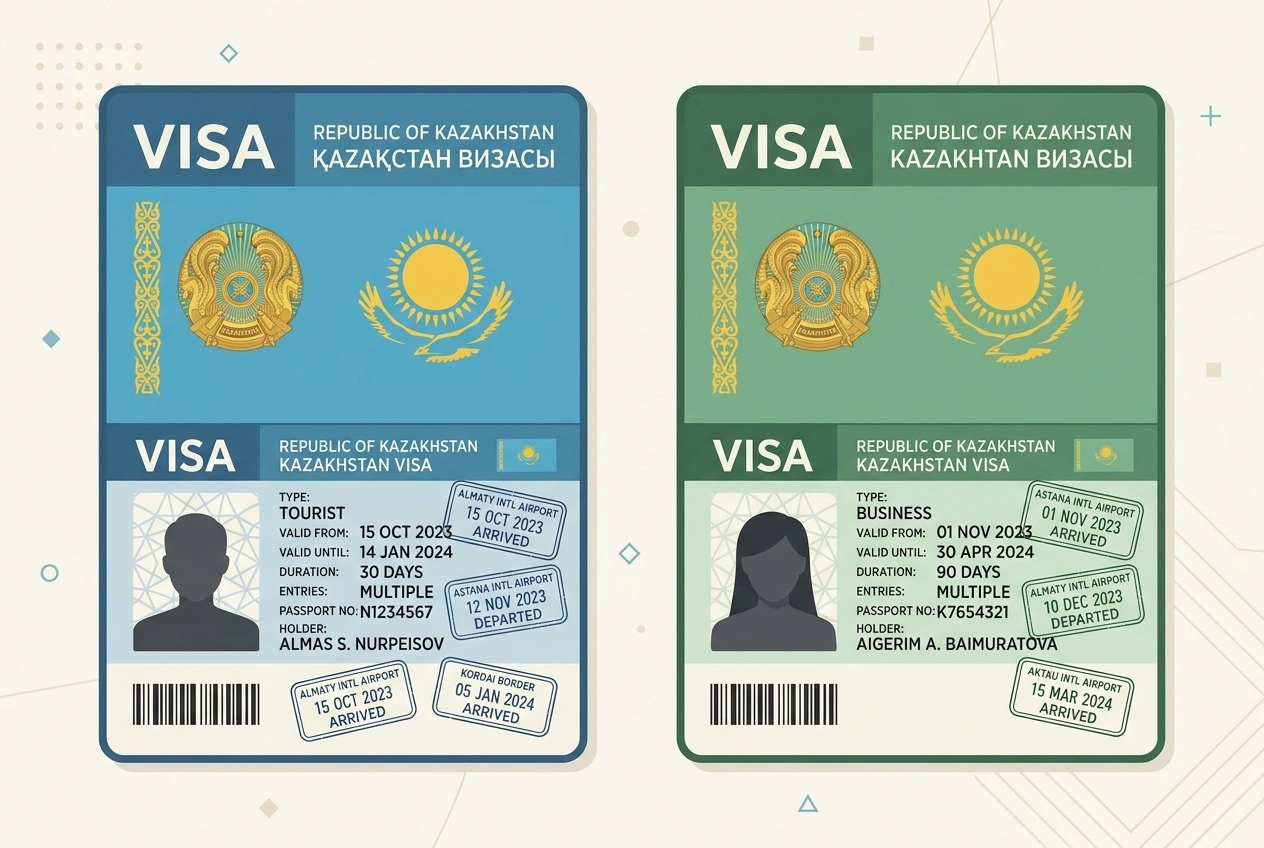
Kazakhstan Digital Nomad Visa: B9-1 vs B12-1 Compared
Two Kazakhstan digital nomad visas compared: Neo Nomad B12-1 ($3K income, 2 years) vs B9-1 IT residency (no income req, 10 years). Requirements and process.
facts
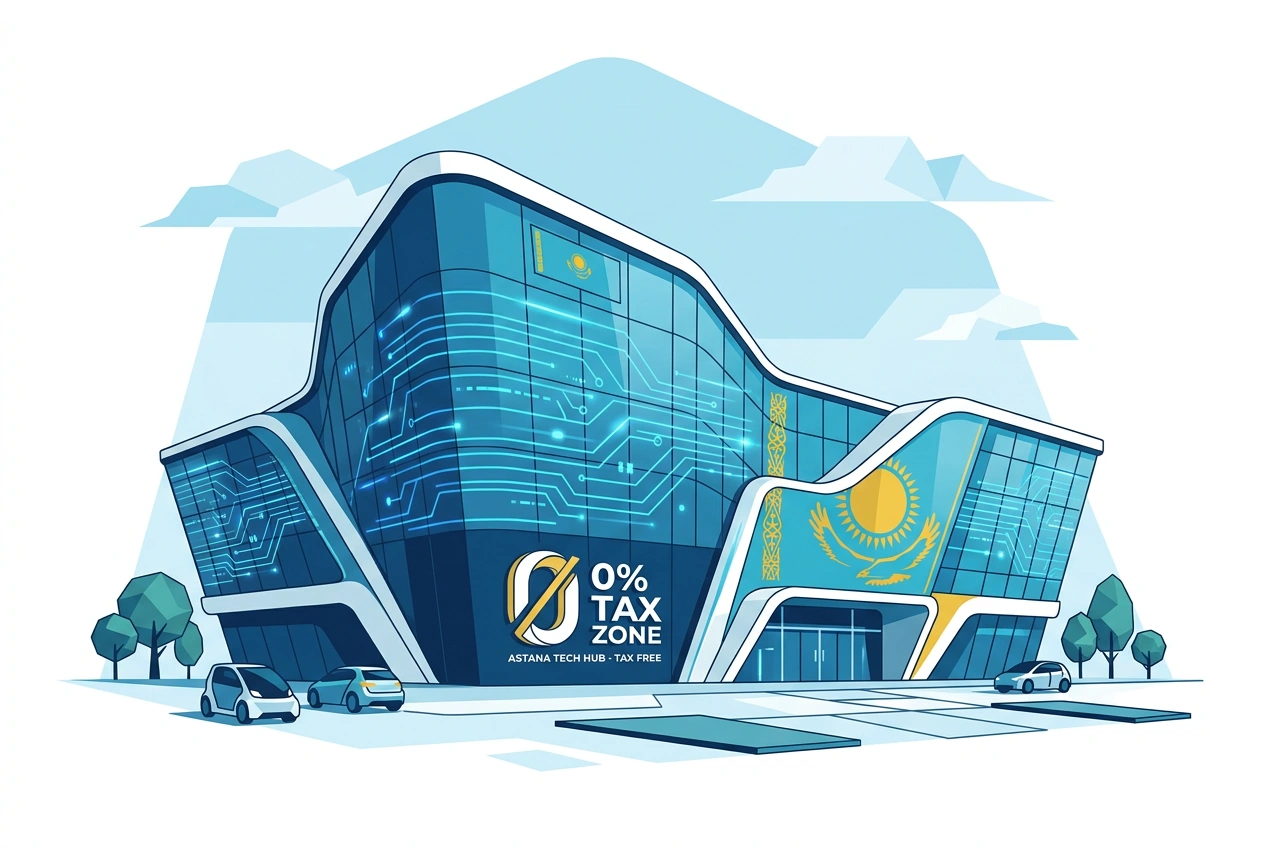
Astana Hub: 0% Tax for IT Companies in Kazakhstan (2026)
Astana Hub: 0% corporate tax, 0% VAT for IT companies until 2029. Registration, requirements, 1,700+ members, comparison with Dubai and Estonia.

travel
Best Coworking Spaces in Almaty and Astana (2026)
10+ coworking spaces in Almaty and Astana with real prices. From $1/hour to $100/month. Includes Wi-Fi speed, hours, location, and nomad recommendations.