Interesting Facts About Kazakhstan: 25+ Surprising Truths
Kazakhstan is the world’s 9th largest country, the largest landlocked nation, and home to the first man in space launch site. It stretches from the Caspian Sea to the Altai Mountains, operates on a single time zone (UTC+5 since March 2024), and holds secrets that surprise even seasoned travelers. Below are 25+ interesting facts about Kazakhstan organized by category: geography, history, culture, nature, modern life, food, and sports.
Quick Facts Summary
| Category | Fact | Key Detail |
|---|---|---|
| Geography | Largest landlocked country | 2,724,900 km² (9th largest in the world) |
| Geography | Longest land border | 7,644 km shared with Russia |
| History | Nuclear disarmament | Gave up ~1,400 warheads by 1995 |
| History | Soviet nuclear tests | 456 tests at Semipalatinsk (1949–1989) |
| Nature | Origin of the apple | Malus sieversii, ancestor of all cultivated apples |
| Nature | Saiga antelope recovery | From 48,000 to 1.3+ million |
| Culture | Ethnic diversity | 130+ ethnic groups |
| Culture | Eagle hunting tradition | 4,000 years old, UNESCO-listed |
| Economy | Largest uranium producer | 43% of global supply |
| Space | Baikonur Cosmodrome | First human spaceflight, 1961 |
| Food | National dish | Beshbarmak (“five fingers”) |
| Sports | Traditional sport | Kokpar (horseback goat polo) |
Most people know almost nothing about Kazakhstan beyond its enormous size. That is a mistake. This country gave the world the apple, voluntarily surrendered the fourth-largest nuclear arsenal in history, and still launches astronauts into orbit from its steppe. Whether you are planning a trip or simply curious, these facts will change how you think about Central Asia’s largest nation. For a geographic overview, start with our guide on where Kazakhstan is located.
Geography Facts About Kazakhstan
Kazakhstan is the world’s largest landlocked country. At 2,724,900 square kilometers, it is the 9th largest country on Earth and larger than all of Western Europe combined. You could fit France, Germany, Spain, Italy, and Poland inside Kazakhstan and still have room to spare. Despite its enormous size, Kazakhstan has no coastline on any ocean.
Kazakhstan shares the world’s longest continuous land border. The border between Kazakhstan and Russia stretches 7,644 kilometers, making it the longest uninterrupted land border between any two countries on the planet. Despite this proximity, Kazakhstan and Russia are entirely separate nations with different languages, religions, and cultures — see is Kazakhstan in Russia for the full explanation. Kazakhstan also shares a 1,783-kilometer border with China to the east. It is one of seven countries ending in “-stan”, a suffix meaning “land of” in Persian.
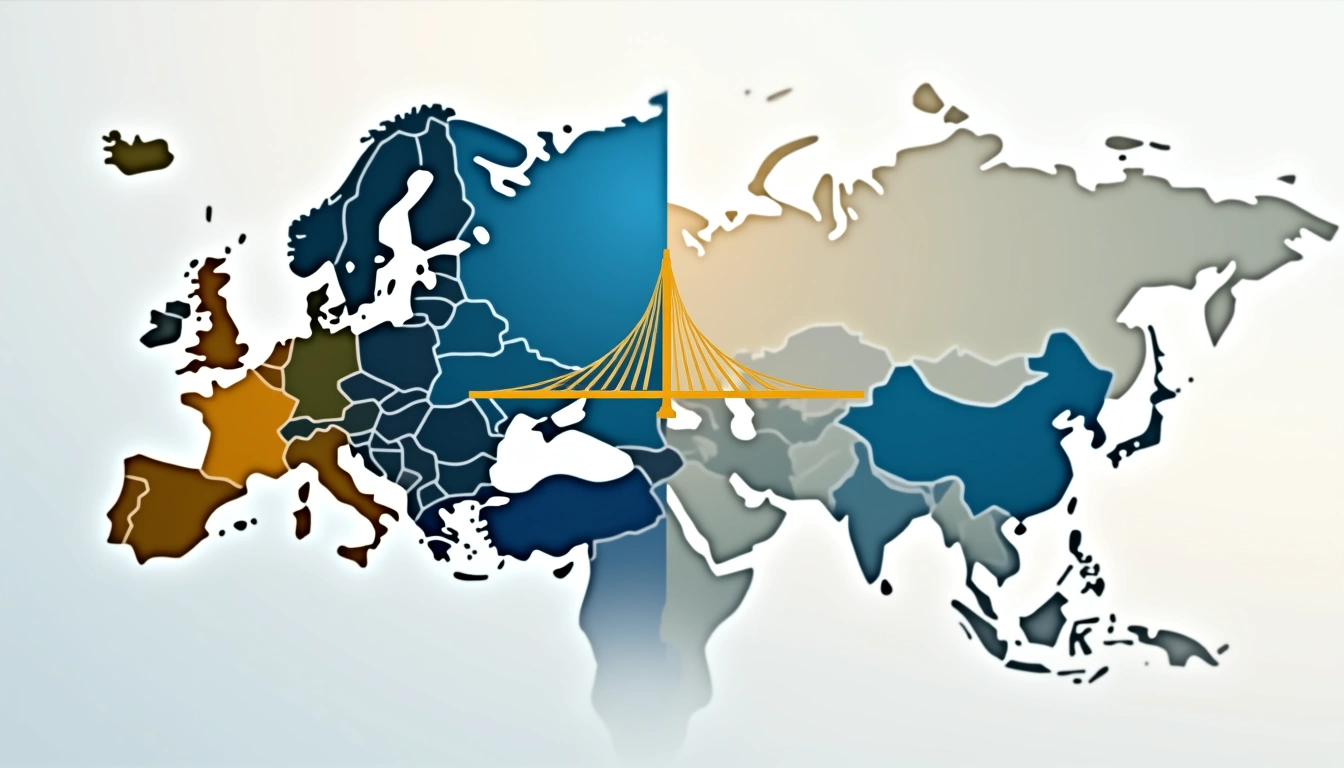
Part of Kazakhstan is technically in Europe. The Ural River, which flows through the western city of Atyrau, is traditionally considered the boundary between Europe and Asia. Everything west of that river is geographically European. The city of Atyrau literally straddles two continents. Read more about this in our article on whether Kazakhstan is in Europe.
The Caspian Sea forms Kazakhstan’s western shoreline. The Caspian Sea is the world’s largest enclosed body of water, and Kazakhstan claims 1,894 kilometers of its coastline. The Caspian basin is also where most of Kazakhstan’s oil wealth lies, with fields like Tengiz and Kashagan ranking among the world’s largest.
Kazakhstan spans 3,000 kilometers but uses a single time zone. Since March 2024, the entire country operates on UTC+5 (Alma-Ata Time), despite the sheer distance meaning sunrise in the western city of Aktau occurs nearly two hours later than in the eastern city of Oskemen.
History Facts About Kazakhstan
Kazakhstan voluntarily gave up the world’s fourth-largest nuclear arsenal. When the Soviet Union collapsed in 1991, Kazakhstan inherited approximately 1,400 nuclear warheads, more than China, France, or the UK possessed. By 1995, every warhead had been transferred to Russia. This remains one of the most significant acts of voluntary nuclear disarmament in human history.
The Soviet Union conducted 456 nuclear tests in Kazakhstan. The Semipalatinsk Test Site (known as “The Polygon”) in northeastern Kazakhstan was the primary Soviet nuclear testing ground from 1949 to 1989. Nearly 1.5 million people were exposed to fallout radiation. The site was closed in 1991 as one of independent Kazakhstan’s first acts, and the health consequences persist today.
The Aral Sea catastrophe unfolded in Kazakhstan. Once the world’s fourth-largest lake, the Aral Sea shrank to roughly 10% of its original size after Soviet irrigation projects diverted its feeder rivers to grow cotton. It is considered one of the worst environmental disasters in history. Kazakhstan has partially reversed the damage with the Kokaral Dam, completed in 2005, which restored the northern portion of the lake.
Kazakhstan was the last Soviet republic to declare independence. On December 16, 1991, Kazakhstan became the final Soviet republic to declare independence, just nine days before the USSR formally dissolved. December 16 is now celebrated as Independence Day. The Kazakhstan flag, adopted six months later, replaced Soviet red with sky blue — a deliberate break with the past.
The Silk Road ran through Kazakhstan for over a thousand years. Ancient trade routes connecting China with Persia, Arabia, and the Mediterranean crossed through cities like Turkestan, Taraz, and Otrar. Otrar was one of the wealthiest cities on the Silk Road until Genghis Khan destroyed it in 1219. Its ruins are still visible in the Turkestan Region today.
Culture and People Facts
Kazakhstan is home to over 130 ethnic groups. Ethnic Kazakhs make up about 70% of the population, but the country also includes Russians (15%), Uzbeks, Ukrainians, Uighurs, ethnic Germans (descendants of World War II deportees), and Koreans (descendants of Stalin’s 1937 forced deportations from the Soviet Far East). This extraordinary diversity shapes daily life, language, and cuisine across the country. Explore more in our guide to Kazakh culture.
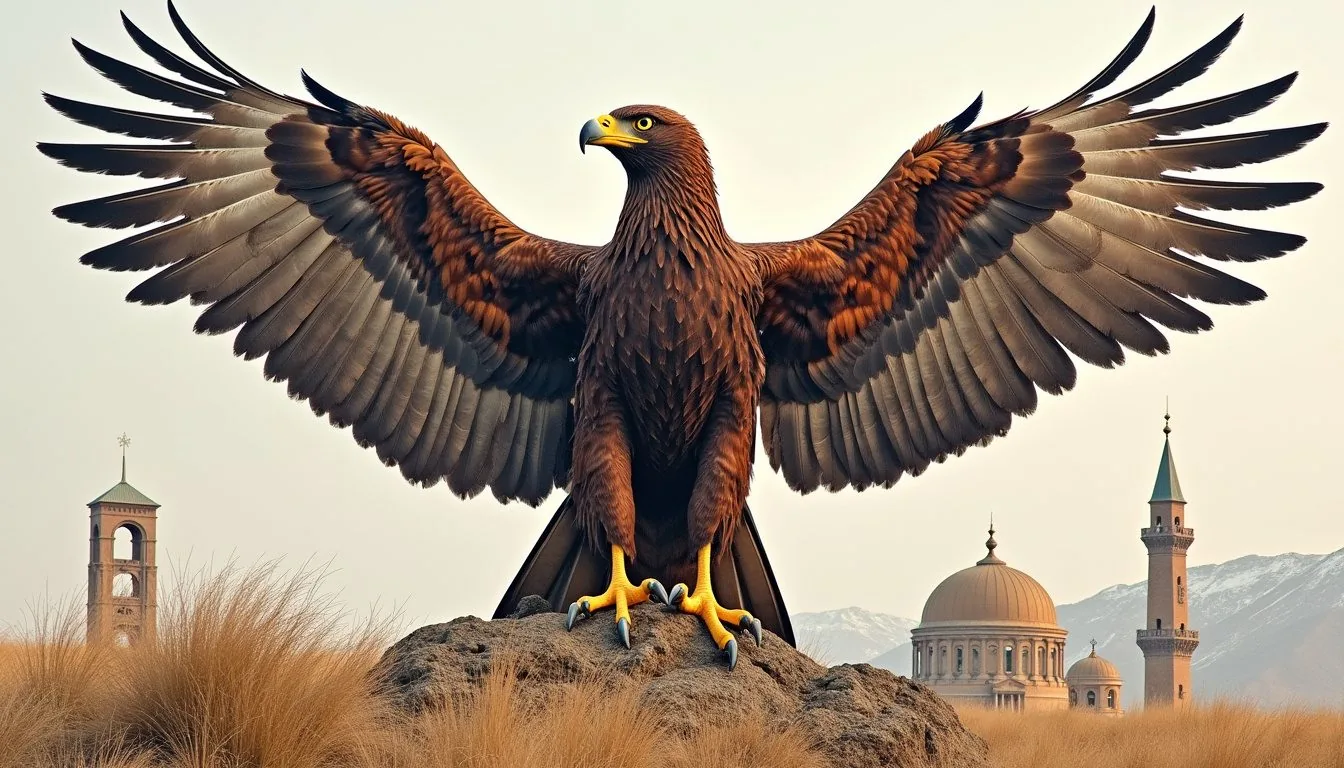
Kazakh eagle hunters have practiced their craft for 4,000 years. Berkutchi (eagle hunting) is one of the oldest hunting traditions on Earth. Kazakh hunters in the Altai Mountains train golden eagles to hunt foxes and rabbits across the frozen steppe. UNESCO inscribed falconry on its Intangible Cultural Heritage list in 2010. The annual Golden Eagle Festival draws visitors from around the world.
The yurt can be assembled in 30 minutes. The Kazakh yurt (kiyiz uy, meaning “felt house”) is a portable, insulated dwelling made from a collapsible wooden lattice frame covered in thick felt. Three or four people can assemble one in half an hour. The yurt is still used by herders on the Kazakh steppe and has become a popular tourist accommodation.
Borat made Kazakhstan accidentally famous. Sacha Baron Cohen’s 2006 film “Borat” depicted a wildly inaccurate version of Kazakhstan, initially angering the government. However, Kazakhstan eventually embraced the publicity. Tourism interest spiked after the film, and in 2020 Kazakhstan’s tourism board officially adopted Borat’s catchphrase “Very nice!” for a marketing campaign. The sequel in 2020 generated another wave of global attention.
Kazakhstan is switching its alphabet from Cyrillic to Latin. The Kazakh language has been written in Arabic script, Latin script (1929-1940), and Cyrillic script (1940-present). In 2017, President Nazarbayev signed a decree to transition Kazakh back to a Latin-based alphabet. The changeover is scheduled for completion by 2031 and affects everything from street signs to school textbooks.
Nature and Wildlife Facts
Apples originated in Kazakhstan. The wild apple species Malus sieversii, native to the Tian Shan forests of southeastern Kazakhstan, is the genetic ancestor of every cultivated apple eaten worldwide. DNA analysis confirmed this in 2019. The city of Almaty takes its name from the Kazakh word “alma,” meaning apple. Wild apple forests still grow in the mountains above the city.
Kazakhstan saved the saiga antelope from extinction. The saiga, a bizarre-looking, bulbous-nosed antelope that walked alongside woolly mammoths, crashed from over one million animals to just 48,000 by the early 2000s due to poaching. Aggressive conservation efforts reversed the decline dramatically: the 2023 aerial census counted over 1.3 million saiga in Kazakhstan, making it one of the greatest wildlife recovery stories in modern history.
Snow leopards roam Kazakhstan’s mountains. An estimated 180 to 200 snow leopards live in the Tian Shan and Altai ranges of Kazakhstan. Known locally as the irbis, the snow leopard is the symbol of Almaty and features on Kazakh national imagery. The mountains they inhabit are among the most spectacular landscapes in Central Asia.
Lake Balkhash is half freshwater, half saltwater. Lake Balkhash in southeastern Kazakhstan (approximately 16,400 square kilometers) is divided by a narrow strait. The western half, fed by the Ili River from China, is freshwater. The eastern half is saltwater. It is one of the only lakes on Earth with two different water compositions in a single body.
Wild tulips originated in the Kazakh steppe. Most cultivated tulip varieties trace their ancestry to wild tulips native to Central Asia, particularly Kazakhstan. The Dutch tulip industry, worth billions of euros, is built on genetic heritage from the Kazakh steppe and mountains. In spring, the steppe erupts with wild tulips in reds, yellows, and purples.
Modern Life and Economy Facts
Kazakhstan is the world’s largest uranium producer. Kazakhstan has held the top position since 2009, producing roughly 43% of global uranium supply. The state company Kazatomprom is a dominant force in nuclear fuel markets worldwide. Kazakhstan also holds approximately 12% of the world’s total uranium reserves.
Yuri Gagarin launched into space from Kazakhstan. On April 12, 1961, Vostok 1, carrying the first human being ever to reach space, launched from the Baikonur Cosmodrome on the Kazakh steppe. Baikonur remains an active spaceport today. Russia leases it from Kazakhstan until 2050 for approximately $115 million per year. Every crewed Soyuz mission to the International Space Station launched from this site.
Kazakhstan moved its capital 1,200 kilometers for strategic reasons. In 1997, President Nazarbayev relocated the capital from Almaty in the earthquake-prone southeast to Astana (now Astana again, after briefly being renamed Nur-Sultan) in the center-north of the country. The move was strategic: it placed the government closer to the Russian-speaking northern regions and away from the Chinese border. Astana has grown from 270,000 people in 1997 to over 1.3 million today, with futuristic architecture that includes the Norman Foster-designed Khan Shatyr mall. Explore the capital and other cities in Kazakhstan.
Dimash Kudaibergen has a six-octave vocal range. Kazakh singer Dimash Kudaibergen went viral in 2017 after appearing on a Chinese talent show, stunning audiences with a vocal range spanning six octaves (D2 to D8). He has since become one of the most popular male vocalists in Asia and has a massive global fanbase, particularly in China, Southeast Asia, and Latin America. Dimash is just one of many notable Kazakhs — see our full list of famous people from Kazakhstan.
Kazakhstan has the richest economy in Central Asia. With a GDP per capita (PPP) of approximately $32,000, Kazakhstan’s economy is more than double that of any Central Asian neighbor. Oil, gas, uranium, and minerals drive this wealth. The country is classified as upper-middle-income by the World Bank, though significant inequality persists between major cities and rural areas.
Food Facts About Kazakhstan
Beshbarmak is the national dish, and it means “five fingers.” The name literally translates to “five fingers” because the dish is traditionally eaten with the hands. Beshbarmak consists of boiled horse meat or lamb served over flat noodles with onion broth. It is served at every significant celebration and is the centerpiece of Kazakh hospitality. Refusing it would be considered deeply impolite.
Kumis (fermented mare’s milk) is Kazakhstan’s national drink. Kumis has been produced by Kazakh nomads for thousands of years. It is slightly alcoholic (around 2% ABV), fizzy, sour, and rich in vitamins. Kazakhs believe it has medicinal properties. In summer, fresh kumis is available at roadside stands across the country and is central to festive gatherings on the steppe.
Horse meat is a staple, not a novelty. Unlike most Western countries, Kazakhstan considers horse meat a premium protein. Kazy (smoked horse sausage), zhaya (salted horse hip meat), and karta (horse intestine) are delicacies served at weddings and holidays. Horse meat is more expensive than beef in Kazakh markets.
Sports Facts About Kazakhstan
Kazakhstan competes in both European and Asian sports competitions. Kazakhstan’s football team plays in UEFA European qualifiers, while its Olympic committee is affiliated with the Olympic Council of Asia. This dual membership reflects the country’s geographic and cultural position bridging two continents.
Kazakhstan is a powerhouse in boxing and weightlifting. Kazakh athletes have won Olympic medals in boxing (Gennady Golovkin trained in the Kazakh system), weightlifting, and wrestling. The country consistently punches above its weight at the Olympics relative to its population. Weightlifter Ilya Ilyin won gold at Beijing 2008 and London 2012, though both medals were later stripped after failed doping retests in 2016.
Kokpar is Kazakhstan’s wildest traditional sport. Kokpar (also called buzkashi in other Central Asian countries) involves two teams of horseback riders competing to grab a headless goat carcass and carry it into a goal. The game can last hours and involves dozens of riders at full gallop. Modern versions use standardized rules, but traditional kokpar on the open steppe remains fiercely physical.
If these facts have sparked your curiosity, find out what Kazakhstan is famous for or check our guide to things to do in Kazakhstan for practical trip planning.
Frequently Asked Questions
- What is Kazakhstan most famous for?
- Kazakhstan is most famous for being the world's largest landlocked country, the Baikonur Cosmodrome (where Yuri Gagarin launched into space in 1961), vast oil and uranium reserves, being the birthplace of the apple (Malus sieversii), the Kazakh steppe, and the Tian Shan mountains near Almaty.
- What are 5 interesting facts about Kazakhstan?
- 1) Kazakhstan is the world's largest landlocked country at 2.7 million km². 2) Apples originated here — the wild ancestor Malus sieversii grows in Kazakhstan's Tian Shan forests. 3) Yuri Gagarin's first human spaceflight launched from Baikonur in Kazakhstan in 1961. 4) Kazakhstan voluntarily gave up the world's fourth-largest nuclear arsenal after independence. 5) The saiga antelope recovered from near-extinction to over 1.3 million animals (2023 aerial census) thanks to Kazakh conservation efforts.
- Is Kazakhstan a rich or poor country?
- Kazakhstan is the richest country in Central Asia with a GDP per capita (PPP) of approximately $32,000. It is classified as upper-middle-income by the World Bank. Oil, gas, and uranium exports drive its economy. However, wealth is unevenly distributed, with significant gaps between major cities like Almaty and Astana and rural regions.
- What language do they speak in Kazakhstan?
- Kazakh (a Turkic language) is the state language and Russian is the official language of inter-ethnic communication. Most urban Kazakhstanis are bilingual. The government is transitioning Kazakh from the Cyrillic to a Latin-based alphabet, with full adoption planned by 2031.
- Is Kazakhstan safe to visit?
- Yes, Kazakhstan is generally safe for tourists. Violent crime against visitors is rare, and the country has well-developed infrastructure in major cities like Almaty and Astana. Standard travel precautions apply: watch for pickpockets in crowded areas and avoid poorly lit streets at night. The U.S. State Department classifies Kazakhstan at Level 1 (Exercise Normal Precautions).
- Did apples really originate in Kazakhstan?
- Yes. DNA analysis published in 2019 confirmed that the wild apple species Malus sieversii, native to the Tian Shan mountains of southeastern Kazakhstan, is the primary ancestor of all cultivated apples worldwide. The city of Almaty takes its name from "alma," the Kazakh word for apple. Wild apple forests still grow in the mountains above the city.
More Stories
facts
Is Kazakhstan in Europe or Asia? The Definitive Answer
Is Kazakhstan in Europe? No — it's in Central Asia. A tiny western sliver crosses into Europe geographically, but 95%+ of the country is in Asia.
facts
Countries Ending in Stan: All 7 Explained
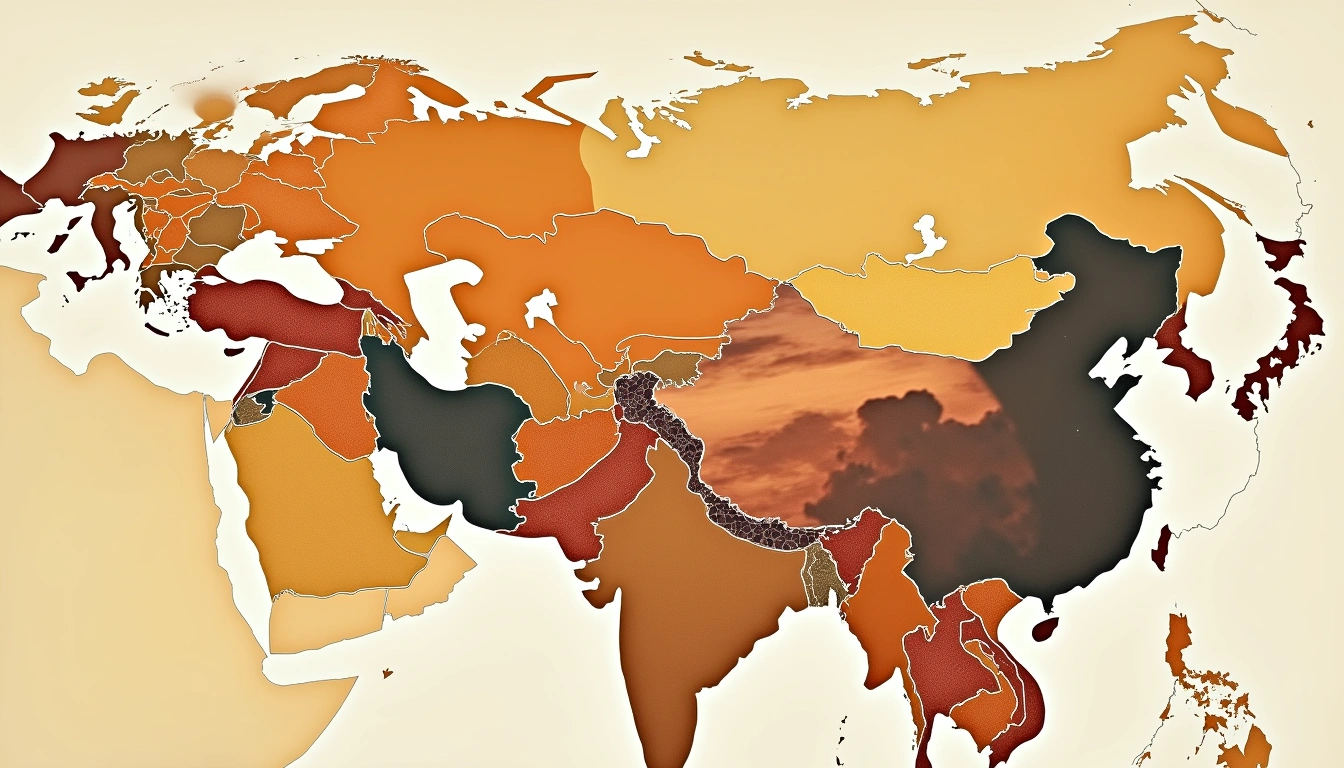
Countries ending in stan: all 7 nations explained — Kazakhstan to Pakistan. Population, GDP, area, maps and a detailed side-by-side comparison table.

facts
How to Send Money to Kazakhstan: Best Methods Compared 2026
Compare the best ways to send money to Kazakhstan — Wise, Western Union, Remitly, bank wire. Fees, rates, speed, and step-by-step guide.