Kazakhstan Flag: Official Meaning, Colors, Eagle & Sun
Reported from the ground: Tugelbay Konabayev is a Kazakh native (born in Aktobe) who has lived 7 years in Almaty and 4 in Astana. About the author.
In this article12 sections
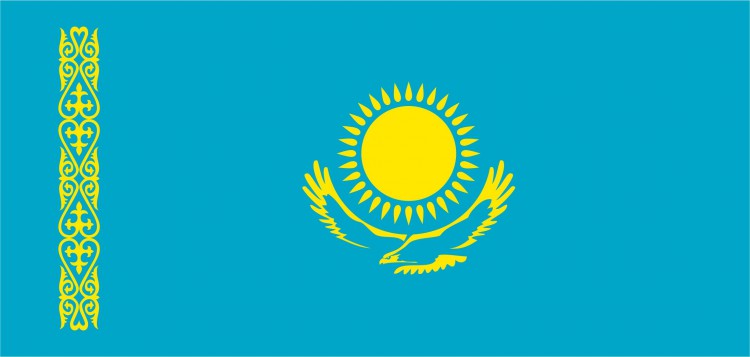
Kazakhstan’s flag is a 1:2 sky-blue rectangle with a gold sun and soaring eagle in the center and a vertical gold national ornament beside the hoist. The blue field officially represents pure sky, peace, prosperity and national unity. The sun represents life, energy, wealth and abundance; its rays are shaped like grain. The eagle represents state power, sovereignty, independence and high goals. The ornament represents the culture and traditions of Kazakhstan’s people.
This guide separates those official meanings from popular claims about ray counts, ornament names and color codes. It uses the current Akorda state-symbols page, Kazakhstan’s constitutional law on state symbols and the Central Election Commission’s English explanation.
| Flag element | Official description or meaning |
|---|---|
| Sky-blue field | Pure sky, peace and prosperity; the solid background represents the country’s unity. |
| Sun | Wealth and abundance, life and energy. |
| Grain-shaped rays | Welfare and prosperity; the official explanation describes their shape without assigning a hidden number. |
| Soaring eagle | State power, sovereignty, independence and high goals. |
| Vertical national ornament | The culture and traditions of the people of Kazakhstan. |
| Proportion | 1:2, width to length. |
What the Kazakhstan flag looks like
The legal design has four visible parts: a blue field, a gold sun, a gold soaring eagle and a gold ornament at the hoist. Article 1 of Kazakhstan’s Constitutional Law on State Symbols gives that composition and fixes the width-to-length ratio at 1:2. Article 3 approves the reference image attached to the law.
The law describes the field as blue; Akorda’s explanatory page is more specific and calls it sky blue. Both sources agree that the sun, rays, eagle and ornament are gold in color.
This distinction matters for reproductions. The prose description establishes the components and ratio; the approved reference image and current national standard govern the exact artwork. A decorative illustration that drops the ornament, changes the eagle’s color or places a different bird over the sun is not an accurate Kazakhstan flag.
In practical terms, the 1:2 ratio means that a flag one metre high is two metres long. The ratio alone does not define the placement or shape of every motif, so stretching a square graphic into a rectangle is not a reliable production method. Official reproduction still depends on the approved reference artwork and applicable national standard.
The image above is the official flag image published in Akorda’s page metadata, not a reconstructed illustration.
How to identify an accurate Kazakhstan flag
A complete Kazakhstan flag keeps the legal 1:2 shape and all four design elements in their correct roles. Look for a solid sky-blue field, a gold sun in the center, a gold soaring eagle directly below it and a vertical gold national ornament beside the hoist. The shanyrak belongs to Kazakhstan’s state emblem, not the flag.
A crop or small icon may omit fine detail because of its display size, but it should not be presented as the complete official design. For print, manufacture or formal display, compare the artwork with the approved reference instead of redrawing the eagle, rays or ornament from a simplified web thumbnail.
What does the blue color mean?
Officially, sky blue represents pure sky, peace and prosperity, while the single-color background represents Kazakhstan’s unity. Akorda also gives the color a broader heraldic association with honesty, fidelity and integrity.
The official explanation connects sky blue to Turkic culture and ancient reverence for the sky. That is a narrower and safer claim than saying the modern flag is a direct religious symbol of Tengri or a verified copy of a medieval banner. Akorda provides cultural context; it does not establish an unbroken flag design running from a specific khanate to 1992.
The landscape association is easy to understand when traveling across the country, but “the blue is the endless Kazakh steppe sky” is poetic interpretation rather than the full official definition. For geographic context, see where Kazakhstan is and our guide to the Kazakh steppe.
What do the sun and grain-shaped rays mean?
The gold sun represents wealth and abundance, life and energy; its rays are shaped like grain as a sign of welfare and prosperity. That is the meaning Akorda states.
The current Akorda explanation and constitutional law do not assign a separate symbolic meaning to the number of rays. Claims that it represents tribes, virtues, regions or stages of history therefore need evidence that these official sources do not provide.
The grain shape does not turn the flag into an economic infographic about wheat exports. Akorda treats grain as a heraldic symbol of prosperity; it does not connect this motif to Soviet “breadbasket” history or modern export rankings.
What does the eagle symbolize?
The soaring eagle represents the power of the state, sovereignty, independence and high goals. Akorda also lists wider associations with freedom, fidelity, dignity, courage, strength and purity of thought.
The official Russian page uses orel (berkut); the Central Election Commission’s official English explanation calls it a steppe eagle. The image is a stylized heraldic bird, so the article does not turn it into a zoological field identification or infer anatomy from the drawing.
The eagle’s importance also does not prove every eagle-hunting claim sometimes attached to the flag. The official symbolism pages do not say that the bird represents a 4,000-year-old hunting practice, that a specific number of eagle hunters remains, or that the direction of flight encodes a political future. Those ideas may belong in a separately sourced article on eagle hunting in Kazakhstan, not in the flag’s official meaning.
Is the ornament called koshkar-muiz?
The official law and Akorda call it a national or Kazakh ornament; neither source names the pattern koshkar-muiz. Akorda says the vertical band represents the culture and traditions of the people of Kazakhstan.
Many secondary flag descriptions label the motif qoshqar müiiz or koshkar-muiz, meaning “ram’s horns.” The resemblance explains why the term is popular, but it should not be presented as the name used in the current legal description. If you need the exact motif for official production, use the approved reference artwork rather than rebuilding it from a generic ram-horn pattern.
The ornament sits beside the hoist, the edge attached to the flagpole. The retained official sources do not say that the designer first placed it on the opposite edge or that a jury moved it during approval.
For a wider introduction to ornament, felt, clothing and visual traditions, read the culture of Kazakhstan and traditional Kazakh clothing.
When was the flag adopted, and who designed it?
Kazakhstan adopted its independent state flag in 1992, and its designer was the artist Shaken Niyazbekov. Akorda confirms the year and designer. The current Constitutional Law on State Symbols dates from 2007, while the flag’s adoption belongs to 1992.
The retained official sources do not establish the selection jury’s membership, a debate over one cerulean shade or a quoted explanation from Niyazbekov about moving the ornament. Those details should not be treated as part of the verified adoption record.
What are the official proportions and colors?
The official proportion is 1:2, and the field is sky blue while all four motifs are gold. That is the level of technical detail established by the accessible constitutional law and Akorda page.
The law says Kazakhstan’s technical-regulation authority develops and approves the national standards for the flag and emblem. It does not publish a Pantone value, hex code or RGB triplet in the article text captured for this review. Values such as #00AFCA and #FFC72C may be useful web approximations, but they are not legally specified in that text.
Article 14 also says that manufacturing Kazakhstan’s State Flag or State Emblem requires the corresponding licence issued under Kazakhstan law. This requirement is specifically about manufacturing. It does not turn sampled web colors into production specifications; a producer still needs the approved artwork and applicable national standard.
For a website mockup, color sampling may be adequate. For a manufactured flag, official document, government interface or brand system, a sampled hex value is not a substitute for the current approved artwork and national standard. Use the official image or obtain the applicable standard through Kazakhstan’s authorized standards channel.
Where and how is the flag used?
Kazakhstan’s state-symbols law requires the flag at specified government, judicial, diplomatic and educational settings and sets rules for display with other flags. Article 4 lists mandatory official display settings. Article 5 says Kazakhstan’s flag must not be smaller when displayed with other flags and that organizational flags cannot be identical to it.
The same law says people in Kazakhstan must respect the state symbols and that violations are subject to responsibility established elsewhere in law. It does not justify inventing one universal fine or prison term without checking the current offense provision and circumstances.
Practical display rules can also be updated through implementing regulations. Anyone arranging an official ceremony, producing flags commercially or using the image in advertising should consult the current Adilet legal text and the applicable rules, not rely on a travel article’s abbreviated etiquette list.
Common flag claims: verified, narrowed or removed
A good explanation separates the official meanings from later interpretation. Here is the current evidence boundary.
| Claim | Evidence status |
|---|---|
| Blue means peace, prosperity and unity. | Verified by Akorda and the official Election Commission page. |
| The sun’s rays are grain-shaped. | Verified by Akorda. |
| The number of rays has a special symbolic meaning. | No such meaning is stated by Akorda, the Election Commission or the current law. |
| The gold represents Kazakhstan’s mineral deposits. | Not stated by Akorda; removed. |
| The eagle is flying toward a political future. | Directional interpretation, not official meaning; removed. |
| The ornament’s legal name is koshkar-muiz. | The law says “national ornament”; popular secondary label disclosed but not promoted as official. |
| Modern blue directly reproduces Kazakh Khanate banners. | Not established by the retained official sources; removed. |
| Pantone 299 C and 116 C are written in the flag law. | False for the captured law text; removed. |
How the flag fits Kazakhstan’s other state symbols
The flag is one of three state symbols, together with the state emblem and state anthem. Article 1 of the constitutional law names all three and says the reference flag and emblem are kept at the President’s residence.
The emblem’s symbolism belongs to its own legal description and should not be borrowed to explain the flag’s ornament unless a source makes that connection.
If you are building a broader historical picture, continue with the Kazakhstan history timeline and our introduction to Kazakhstan’s people and identity.
For publication or design work, separate interpretation from reproduction. Use an official reference image, preserve the legal 1:2 proportion and do not rebuild the ornament from memory. A simplified icon may be recognizable while still being unsuitable for a page that claims to show the state flag accurately. Keep enough resolution for the hoist ornament, sun rays and eagle to remain legible at the intended display size.
Captions should identify the image as Kazakhstan’s national flag without adding meanings that the official sources do not state. If a secondary source calls the ornament koshkar-muiz or assigns a special meaning to the number of rays, label that as a popular interpretation unless an exact official source supports it. This distinction lets readers appreciate the design without turning an attractive explanation into a legal fact.
Sources and image provenance
- Akorda: Flag of the Republic of Kazakhstan for the designer, 1992 adoption year, composition, 1:2 ratio and official meanings.
- Adilet: Constitutional Law on State Symbols for the legal description, approved reference image, use provisions and standards authority.
- Central Election Commission: National Flag of Kazakhstan for an official English version of the symbolism.
The hero is Akorda’s official flag_mediumThumb.jpg, copied into this project without redrawing the state symbol. It shows the complete hoist ornament and the official gold composition.
Frequently Asked Questions
What does the Kazakhstan flag mean?
The blue field represents pure sky, peace, prosperity and unity. The sun represents life, energy, wealth and abundance; its grain-shaped rays represent welfare. The soaring eagle represents state power, sovereignty, independence and high goals. The hoist ornament represents Kazakhstan's culture and traditions.
What do the sun rays on Kazakhstan's flag mean?
Akorda says the rays are shaped like grain as a symbol of welfare and prosperity. The current official explanation and constitutional law do not assign a separate hidden meaning to the number of rays.
What bird is on the flag of Kazakhstan?
Official sources describe a soaring eagle. Akorda's Russian text says orel (berkut), while the Election Commission's English version says steppe eagle. It symbolizes state power, sovereignty, independence and high goals rather than serving as a zoologically exact bird illustration.
Is the Kazakhstan flag ornament koshkar-muiz?
Secondary descriptions often call it koshkar-muiz or qoshqar müiiz, but the current law and Akorda call it a national or Kazakh ornament. Officially, it represents the culture and traditions of Kazakhstan's people.
Who designed the Kazakhstan flag?
Kazakh artist Shaken Niyazbekov designed the flag. Akorda says the flag was officially adopted in 1992.
What are the official Kazakhstan flag color codes?
The accessible constitutional law specifies a blue field and gold motifs but does not give Pantone, hex or RGB values in its text. For official reproduction, use the approved reference artwork and current national standard rather than a sampled web color.
Last reviewed: August 31, 2026. The legal description, official symbolism, adoption record and Akorda image were rechecked against the sources listed above.
Google Preferred Sources
See more Kazakhstan stories in Google
Add About Kazakhstan as a preferred source to find more of our fresh, relevant stories in Google Search.
More Stories
facts
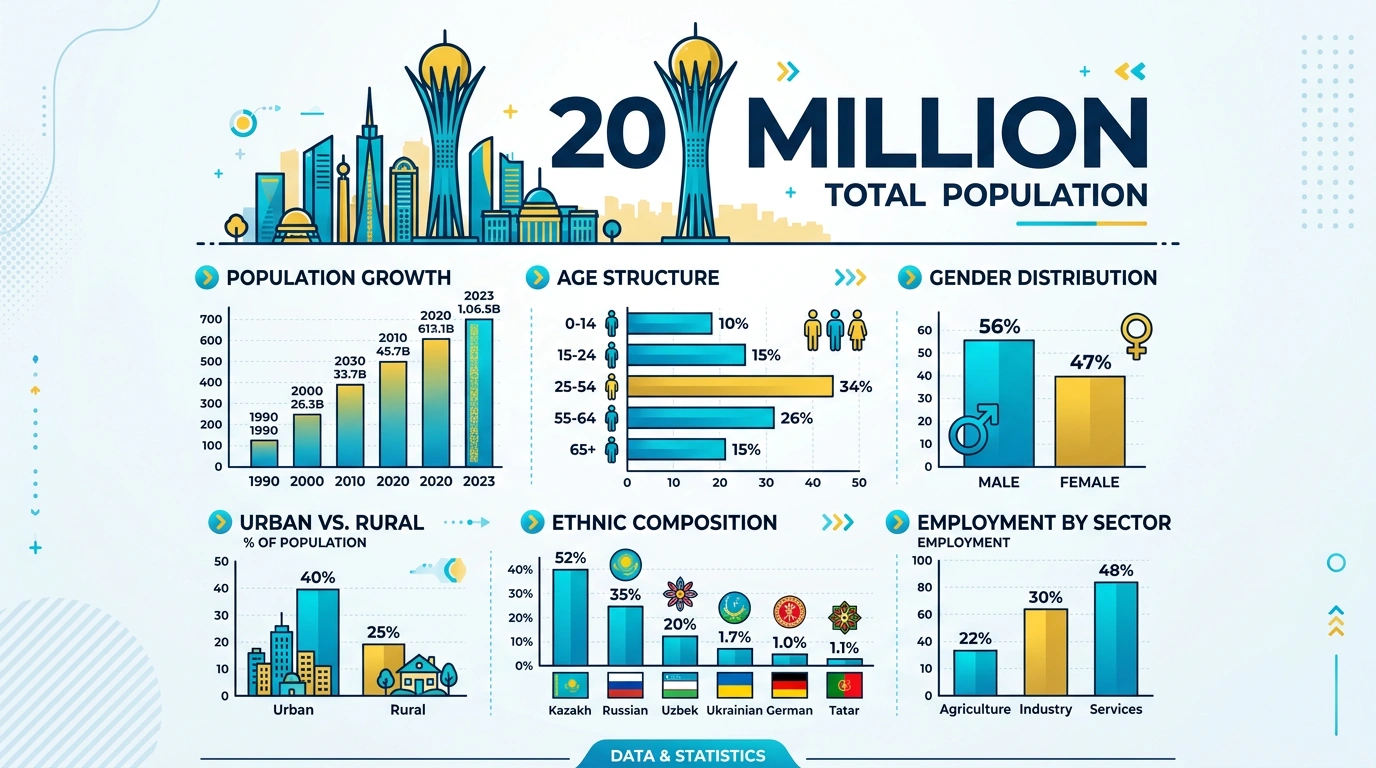
Kazakhstan Population 2026: Official Data & Regional Guide
Kazakhstan had 20,590,589 residents on July 1, 2026. See the official regional totals, major cities, ethnicity data dates and measurement notes.
facts
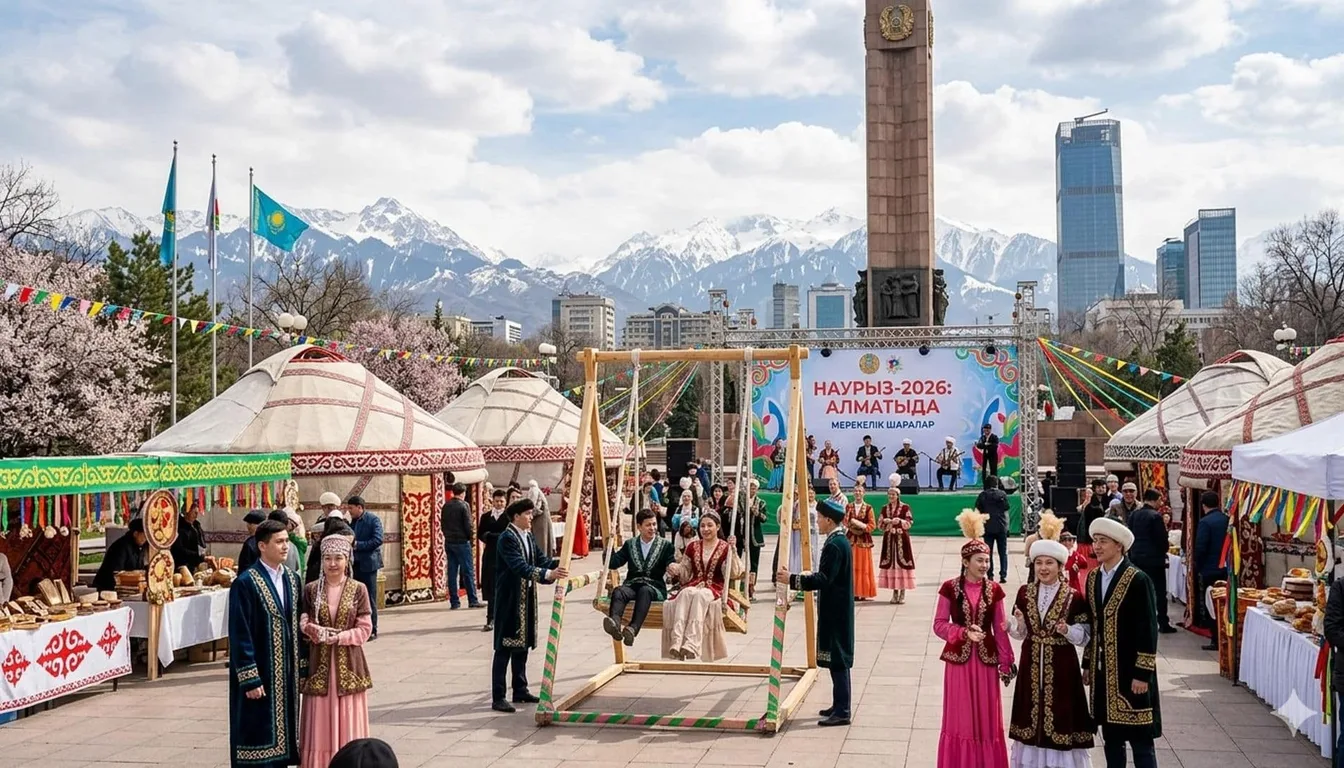
Kazakhstan Public Holidays 2026–2027: Dates & CSV
Kazakhstan holiday dates under current law, including Constitution Day on 15 March. Download the CSV; compare archived calendars and preliminary 2027 dates.
facts
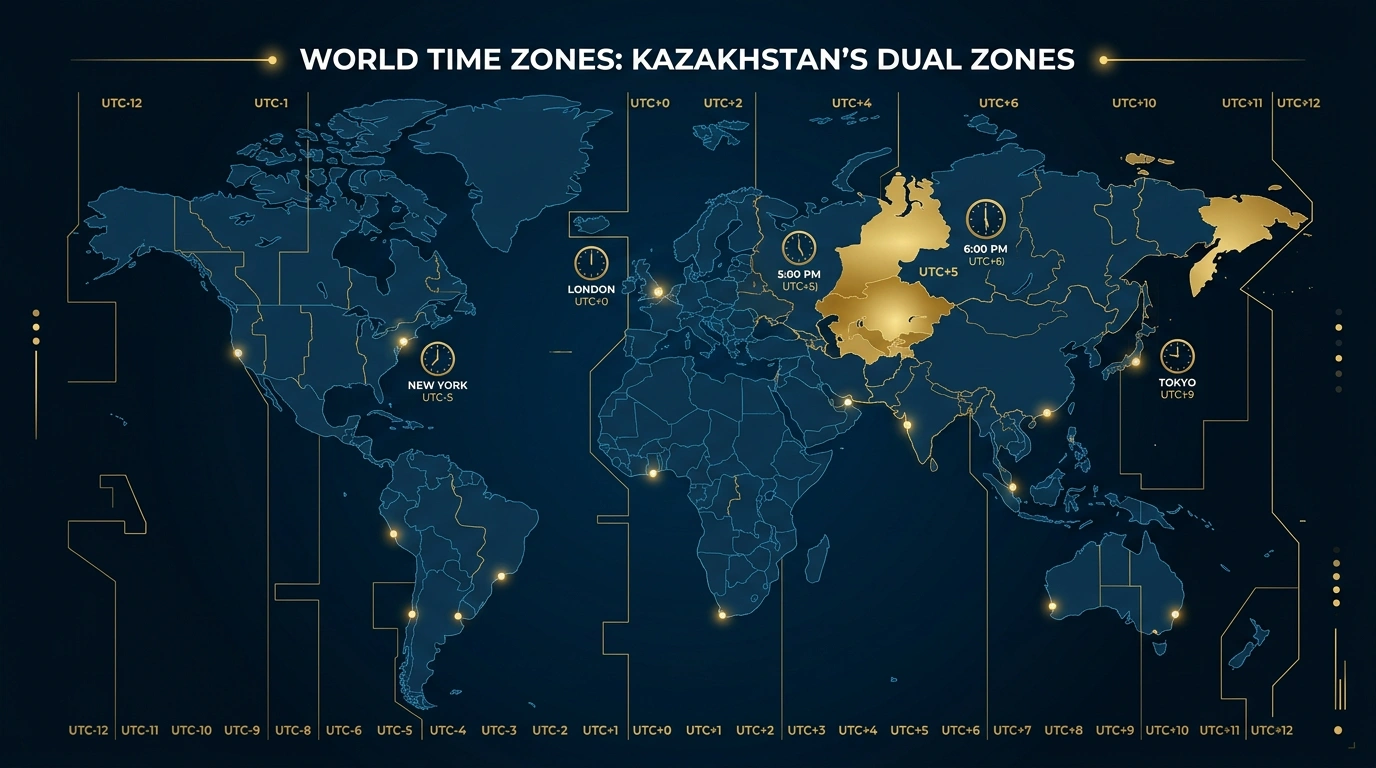
Kazakhstan Time Now: UTC+5 Time Zone & Date Converter
Check the current time in Kazakhstan and convert an Almaty or Astana date to London, New York, Dubai and more. UTC+5 nationwide, with no seasonal clock change.

facts
Astana Hub: 0% Tax for IT Companies in Kazakhstan (2026)
Astana Hub: 0% corporate tax, 0% VAT for IT companies until 2029. Registration, requirements, 1,700+ members, comparison with Dubai and Estonia.
Plan the Next Step
travel
Kazakhstan Tourist Attractions: Choose the Right First-Trip Route
Compare Kazakhstan tourist attractions by base and logistics: Almaty nature, Turkestan heritage, Mangystau, Astana, Baikonur, and more.
food
Beshbarmak Recipe: How Kazakh Et Is Served
A source-checked guide to Kazakh et, widely called beshbarmak: what is on the platter, a practical home recipe, regional differences, and guest etiquette.
culture
Women in Kazakhstan: Rights, Work and Daily Life in 2026
Source-checked guide to women in Kazakhstan: current legal rights, dated work and wage data, marriage statistics, safety, and respectful language.
facts
Kazakhstan Economy in 2026: GDP, Trade, Oil and Growth
Kazakhstan's economy in 2026: 2025 GDP, sector shares, oil and uranium exports, trade partners, inflation, agriculture and the IMF outlook.
facts
Silk Road Kazakhstan: Cities, Routes & Sites
Explore Kazakhstan Silk Road sites: Turkistan, Otyrar, Sauran, Taraz, UNESCO distinctions, route planning, and responsible visits.
food
Popular Food in Kazakhstan: 15 Foods and Drinks to Try
Popular food in Kazakhstan explained: 15 Kazakh dishes and drinks, what each contains, how meals are served, and what to ask before ordering.

Travel Writer & Local Expert · Almaty, Kazakhstan
Tugelbay Konabayev is a Kazakhstan-based travel writer who has lived in Almaty for 7+ years and Astana for 4+ years. He grew up in Aktobe, Kazakhstan and has covered Kazakh travel, food, culture, and visa policy with first-hand reporting since 2023.