Taraz, Kazakhstan: A Practical Silk Road City Guide
Published by About Kazakhstan. Read about our sources, author, and corrections. About the author.
In this article8 sections
Taraz is a worthwhile Silk Road stop in southern Kazakhstan if you want medieval architecture and archaeology. Use a city day first, then add an outskirts excursion if your time and confirmed transport allow. Choose the Aisha Bibi mausoleum pair or Akyrtas according to your interest; 2GIS lists these as different stops.
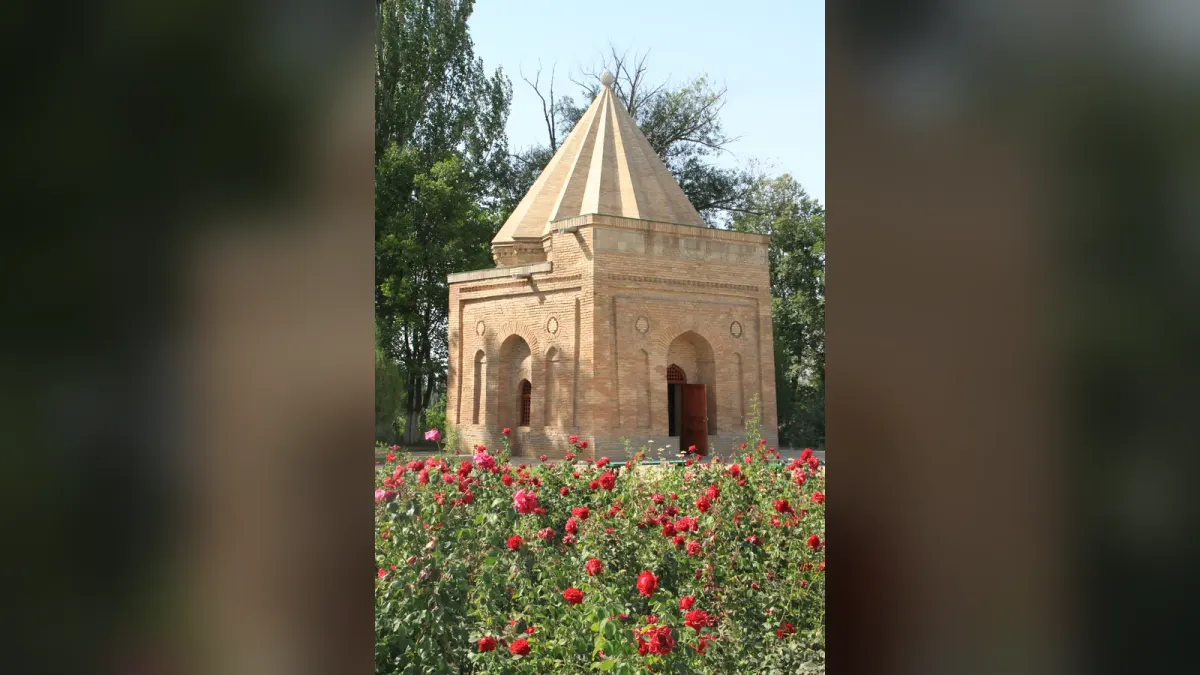
Cover: Babaji Khatun Mausoleum near Taraz, photographed by Stomac, CC BY 3.0. Adapted for this page: resized and set in a wide frame with blurred extensions from the same photograph.

| If you have… | Best use of the time | What to leave out |
|---|---|---|
| Half a day | Ancient Taraz archaeological complex, Karahan Mausoleum and a walk on Tole Bi Avenue | Akyrtas and a rushed circuit of rural sites |
| One full day | An unhurried city circuit; add an outskirts stop only if confirmed timing allows | Treating both outskirts trips as city-centre stops |
| Two days | City circuit on day one; either the Aisha Bibi pair or Akyrtas as a separate excursion on day two | Assuming both excursions fit without a timed transport plan |
Names to copy into a local map: Тараз (Taraz), «Древний Тараз» (Ancient Taraz), «Карахан» (Karahan), «Айша-биби» (Aisha Bibi), «Бабаджа-хатун» (Babaji Khatun), «Акыр-Тас» (Akyrtas). These spellings appear in the local regional guide and may differ from English transliterations.
What makes Taraz different?
Taraz rewards visitors who want specific Silk Road and mausoleum sites inside a working modern city. Its value is the set of documented monuments, not an imaginary intact medieval quarter.
Taraz sits in the Talas valley of Zhambyl Region and belongs to the history of the Silk Road in Kazakhstan. Local reporting describes the medieval city as a centre of trade and craft; its heritage survives as archaeological remains, mausoleums and regional sites rather than a completely preserved old town. El.kz’s account of Zhambyl Region names Karahan, Tekturmas, Aisha Bibi, Babaji Khatun and Akyrtas among the main heritage stops.
That distinction matters on arrival. The main streets are those of a working modern city. Go for the contrast between present-day Taraz and specific historical places, not for the expectation of an uninterrupted medieval bazaar.
A walkable city-centre plan
Start at Ancient Taraz, then use the central streets and Karahan Mausoleum as a compact circuit. Save the more distant sites for a separate vehicle trip.
Start at Ancient Taraz
The Ancient Taraz archaeological complex makes the best starting point because it gives context for the other monuments. 2GIS’s local one-day guide places the archaeological site along Tole Bi Avenue, near the city’s other central stops. Check the entrance and current opening status on a live map before setting out; an outdoor-looking site can still have controlled access.
Walk along Tole Bi Avenue and the pedestrian Arbat afterward. Both appear in the 2GIS local city guide, which you can use to check current pins and opening information.
Continue to Karahan Mausoleum
Karahan Mausoleum is one of Taraz’s central heritage landmarks and an active place of respect. The regional El.kz guide says it was partly destroyed and restored on the same site in 1906. Treat it as a restored monument, visit quietly and follow any posted photography rules.
If time and access allow, add the Tekturmas area as a separate stop by taxi. It is better treated as a viewpoint and monument visit than folded into the central pedestrian loop. Confirm the exact access point locally before going.
Aisha Bibi and Babaji Khatun: one outskirts excursion
Visit both mausoleums on one planned return ride. They are separate monuments outside the city centre, and their different details make the paired stop worthwhile.
The two mausoleums form a natural pairing near the settlement of Aisha Bibi. Kazinform places Aisha Bibi about 18 km from Taraz; the road distance from your hotel will vary. Its carved terracotta decoration is the reason to slow down and inspect the building. El.kz describes more than 62 types of decorative tile and identifies nearby Babaji Khatun Mausoleum as a separate monument. See both rather than treating Babaji Khatun as another name for Aisha Bibi. Kazinform recounts a love legend; treat it as tradition, not a documented biography.
Arrange both the outward and return ride. A driver who waits, a pre-agreed pickup or your own vehicle makes this a predictable half-day excursion. Do not assume an easy return taxi outside the city. Check both mausoleums’ current access before departure, particularly around religious dates or restoration work.
Akyrtas: give the archaeology its own time
Akyrtas is not another building in central Taraz. It is a substantial archaeological complex east of the city, best visited by car with time to walk and read the site. Regional coverage describes it as an unfinished medieval complex with many rooms. UNESCO lists Akyrtas as component 1442-016 of the transnational Silk Roads: Chang’an–Tianshan Corridor. The same official component list does not list the modern city of Taraz or its central archaeological park as a World Heritage component.
Our Kazakhstan UNESCO guide compares this Silk Roads component with the country’s other World Heritage sites. The designation applies to the specified Akyrtas site, not to a whole-city Taraz itinerary.
The point of the visit is the scale and unresolved history of the complex, not a fully reconstructed palace interior. A guide or a little reading before departure helps make sense of stone foundations. Confirm the route, weather, access and return driver before leaving Taraz. If you only have one usable day, choose Akyrtas or the Aisha Bibi pair according to your interest; forcing both can reduce the time you spend at each.
How to get to Taraz and move around
Taraz works as a southern-Kazakhstan stop between larger route anchors such as Almaty and Shymkent. Plan around a rail or road connection and verify the service on your travel date. If flying, check an airline’s current service to Taraz before booking. Compare arrival hour and onward departure before booking accommodation. A late arrival followed by an early departure is not a full sightseeing day.
Within the city, combine walking with short taxis. For Aisha Bibi or Akyrtas, agree on the return arrangement before you leave. Use the copyable local names above when checking map pins. Carry water and sun protection for the exposed archaeological sites, and check the official forecast for your travel date.
When is Taraz worth adding to an itinerary?
Add Taraz if medieval Central Asian history is one of the reasons you are travelling through southern Kazakhstan. It is particularly logical when your route already passes between Almaty, Shymkent and Turkestan. With only a short first trip focused on mountains around Almaty, the long detour may be harder to justify. For the broader decision, use our Kazakhstan tourism guide and cities comparison.
If your schedule allows only one outskirts visit, choose Aisha Bibi for decorative architecture or Akyrtas for a larger archaeological landscape.
For dates and weather across a longer route, compare our best time to visit Kazakhstan guide before booking southern stops.
Turn the sights into a bookable day
Use the Taraz map collection to find Ancient Taraz / Древний Тараз, Karahan Mausoleum / Мавзолей Карахана and the central walking area before choosing a hotel. Check the individual listing for the current entrance and contact; a collection is a discovery aid, not an opening-hours guarantee.
One city day: start with Ancient Taraz while you have time for its interpretation, continue to Karahan, then use the central pedestrian area for a meal and a slower walk. This leaves room for a closed exhibition or a late train without losing the whole visit.
Two days: keep that first day, and request a separate return transfer for Aisha Bibi and Babaji Khatun on the second. If Akyrtas is the main reason for travelling, replace that excursion with Akyrtas rather than automatically adding all three distant stops. Send the driver each destination by name and agree waiting time, return point and what happens if the museum visit is unavailable. This is an editorial sequence based on the documented sites, not a timed operator tour.
Sources checked
- El.kz: Zhambyl Region heritage sites
- 2GIS: one-day Taraz city guide
- Kazinform: Aisha Bibi monument and legend
- UNESCO: Silk Roads, Chang’an–Tianshan Corridor
- UNESCO: official component map, including Akyrtas
- Kazhydromet: current weather forecast
Frequently Asked Questions
Is Taraz worth visiting?
Yes if Silk Road history, mausoleums and archaeology are central to your trip. It is a modern working city with specific heritage stops, not a fully preserved medieval old town.
How many days do you need in Taraz?
Use one full day for the city circuit. With two days, give the second to either the Aisha Bibi pair or Akyrtas with confirmed return transport. Seeing both outskirts areas needs a separately timed plan or more time; this guide does not guarantee both fit into two days.
Is Akyrtas in Taraz city centre?
No. Akyrtas is an archaeological complex outside Taraz. Plan transport in both directions and allow time on site rather than adding it to a short city walk.
What should I see first in Taraz?
Start at Ancient Taraz for context, continue to Karahan Mausoleum and walk the central Tole Bi Avenue area. Then choose an outskirts trip according to your time and interests.
Last reviewed: 2 October 2026. Map links are searches, not field-verified access pins. Opening hours, access, transport and weather should be checked for the actual travel date.
Google Preferred Sources
See more Kazakhstan stories in Google
Add About Kazakhstan as a preferred source to find more of our fresh, relevant stories in Google Search.
More Stories
travel
Cities in Kazakhstan: 90 Cities and Major City Guide
Cities in Kazakhstan ranked by size and travel value: Almaty, Astana, Shymkent, Karaganda and more, with May 2026 stat.gov.kz population data.
travel
Karaganda, Kazakhstan: City Guide & Dolinka Planning
Plan a thoughtful Karaganda visit around the modern city, industrial history, live logistics and a separate respectful trip to the Karlag museum.
travel
Kostanay, Kazakhstan: City Guide & Naurzum Planning
Plan Kostanay around the Tobol, active local museums and live logistics, while treating Naurzum Nature Reserve as a separate confirmed journey.
travel
Is Kazakhstan Safe to Travel in 2026? Practical Risk Guide
Is Kazakhstan safe to visit in 2026? Current official advice, emergency numbers, road and taxi risks, documents, health, and a practical checklist.
Plan the Next Step
travel
Kazakhstan Tourist Attractions: Choose the Right First-Trip Route
Compare Kazakhstan tourist attractions by base and logistics: Almaty nature, Turkestan heritage, Mangystau, Astana, Baikonur, and more.
food
Beshbarmak Recipe: How Kazakh Et Is Served
A source-checked guide to Kazakh et, widely called beshbarmak: what is on the platter, a practical home recipe, regional differences, and guest etiquette.
food
Popular Food in Kazakhstan: 15 Foods and Drinks to Try
Popular food in Kazakhstan explained: 15 Kazakh dishes and drinks, what each contains, how meals are served, and what to ask before ordering.
travel
Things to Do in Kazakhstan: 13 Places Worth Your Time
Choose the best things to do in Kazakhstan by trip length: Almaty, Charyn, Kolsai, Astana, Turkestan, Tamgaly, Altyn-Emel, food, and Nauryz.
travel
12 Best Day Trips from Almaty: Complete Guide 2026
Best Almaty day trips — Charyn Canyon, Big Almaty Lake, Kolsai Lakes, Tamgaly petroglyphs, Altyn-Emel. Distances, costs, and how to get there.
travel
Kazakhstan Travel Cost Index 2026: Prices in 20 Cities
Compare official 2026 hotel, bus, cinema, fuel and grocery prices across 20 Kazakhstan cities. Use the city comparison tool and download the CSV/JSON dataset.

Creator of About Kazakhstan
Tugelbay Konabayev is a digital marketer and content strategist from Aktobe, Kazakhstan, and the creator of About Kazakhstan. The site's research guides bring together local-language and primary sources for English-speaking readers. Sources and review dates identify what each article can support.