Aksu-Zhabagly Nature Reserve: Guided Visit Planning
Reported from the ground: Tugelbay Konabayev is a Kazakh native (born in Aktobe) who has lived 7 years in Almaty and 4 in Astana. About the author.
In this article4 sections
Aksu-Zhabagly is a protected nature reserve, not an open-access national park. Arrange a permitted route and reserve guide before arrival. Its Western Tien-Shan landscapes, wildflowers and wildlife are compelling, but access is deliberately limited to protect them.
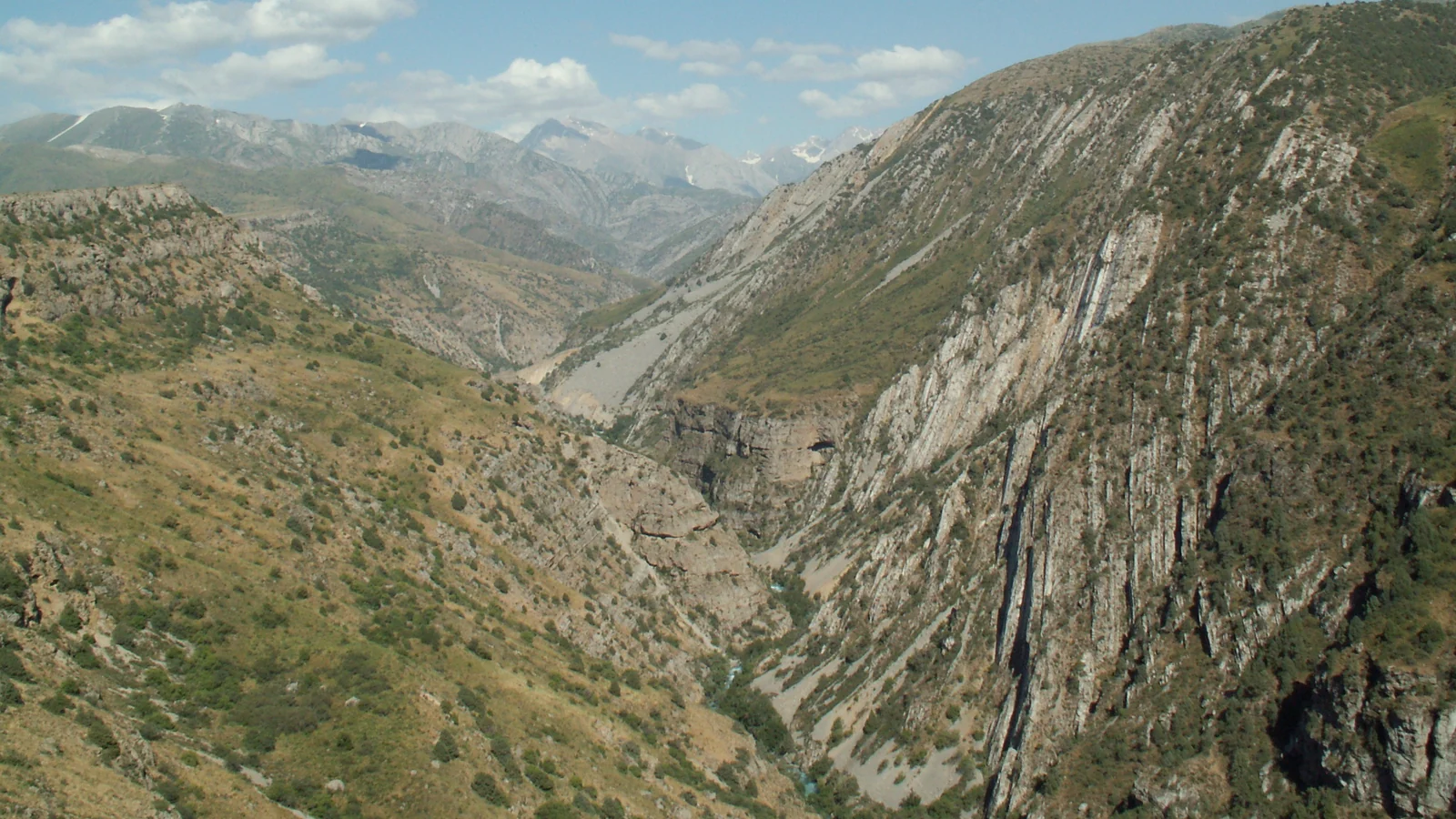
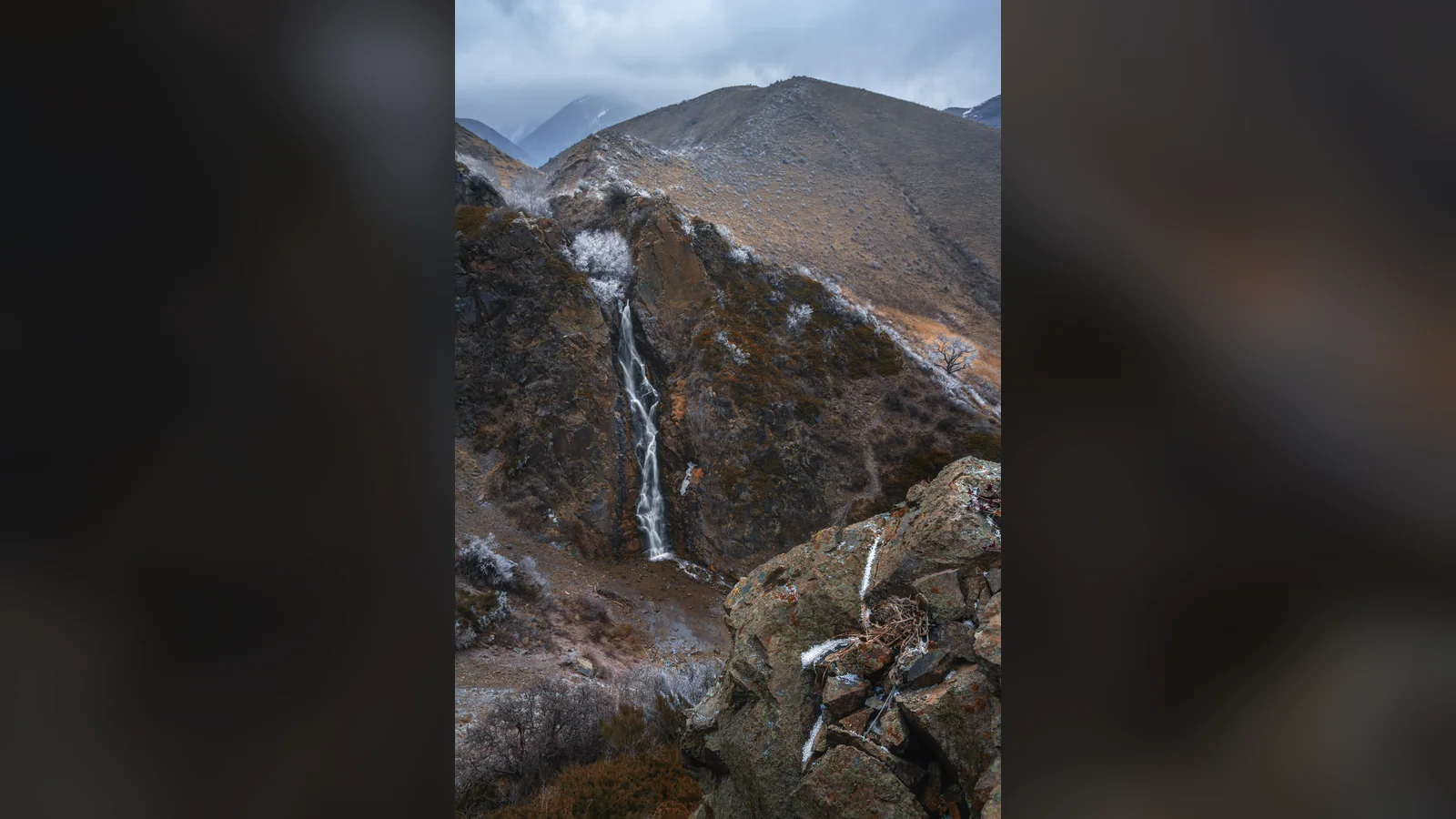
Cover: Aksu-Zhabagly landscape, photographed by Tomiris, CC BY-SA 3.0. Cropped and contrast adjusted for this page; derivative shared under the same license.

| Before you commit | Confirm with the reserve or an authorized local operator |
|---|---|
| Route | Which ecological trail is open on your date and its difficulty |
| Permission | Visitor application, identity details and current fee |
| Guide | Who accompanies the group and where you meet |
| Transport | Transfer to trailhead and return to lodging |
| Conditions | Weather, closures and appropriate clothing |
Map names: Ақсу-Жабағылы қорығы / Аксу-Жабаглинский заповедник, Жабағылы / Жабаглы (Zhabagly village), Ақсу шатқалы / ущелье Аксу (Aksu Canyon). A canyon photo is not a promise that its viewpoint is included in every tour.
Why access is controlled
UNDP Kazakhstan’s 2024 report from inside the reserve describes a visitor centre, professional guides and ecological routes. It says visitors are prohibited from walking the reserve trails without those guides and that group numbers are limited. The article reports a typical tourism season from June to November, but flower timing and individual route availability may differ. Treat the season as background, then request a date-specific answer.
This has a practical consequence for booking: first ask the visitor centre which ecological route is available for your date and group, and only then arrange the transfer and accommodation. A general offer for a village guesthouse or canyon photo does not include authorization to enter a protected trail. Ask whether the quoted price covers the reserve admission, assigned guide and transport to the actual route start.
Sources disagree on the founding year: UNDP says 1926; the Kazakh-language QazaqGeography profile says 1927. We leave the discrepancy visible rather than choosing one without a reserve record. QazaqGeography describes the Talas Alatau landscape, rivers, deep gorges and varied habitats. The area is connected to the wider Western Tien-Shan UNESCO World Heritage site; World Heritage status is not a substitute for the reserve’s visitor rules.
Plan a worthwhile visit
Start with Zhabagly village as the logistics base. UNDP describes the reserve’s visitor centre there, with staff who distribute visitors among ecological trails and guides. Contact the reserve or a local operator before you book accommodation: ask for the visitor application, available trail, guide, meeting point, group size and transfer from your arrival station or city. A naturalist-led walk can be more valuable than racing for a distant viewpoint: flowers, birds and geology are easiest to appreciate at a measured pace. Wildlife sightings, especially rare mammals, cannot be guaranteed. Follow photography and waste rules, stay on the approved trail and do not collect plants.
This reserve fits a broader southern route through Shymkent and Taraz, but it is not a quick city-centre stop from either. If you are visiting for spring wildflowers, ask which routes operate earlier than the usual tourism season cited by UNDP; do not assume that June–November is the only possible visit window.
Build in some flexibility for weather. Mountain routes can close, and a booked guide does not make unsafe conditions safe. Check Kazhydromet and reconfirm with the operator before departure. If you want self-directed hiking instead, compare the relevant national parks while checking their own current rules; a reserve and a park are different kinds of protected area.
Decide what you want to observe
A guided walk is the core experience; a wildlife sighting is a possibility, never a product guarantee. The QazaqGeography reserve profile describes the Talas Alatau landscape, gorges, rivers and habitat diversity. UNDP discusses ecological tourism alongside conservation. If you are interested in flowers, tell the guide and ask what is in bloom on your dates; if you are interested in birds or geology, ask which open route best suits that interest. This produces a more honest itinerary than selecting a stock photo of a rare animal and expecting to reproduce it.
The QazaqGeography profile names the Aksu, Zhabagly, Irisu, Baldyberek and Bala-Baldyberek rivers in the reserve landscape. A route that follows one river or gorge will not show every habitat named in a general reserve description; use the visitor centre’s available trail list to choose a realistic focus. Keep to the permitted route and the guide’s instructions. Do not collect plants or approach wildlife. The UNESCO Western Tien-Shan listing explains the international significance of the wider landscape, but World Heritage status does not override local access controls.
Sources checked
- QazaqGeography: Aksu-Zhabagly reserve in Kazakh
- UNDP Kazakhstan: reserve visitor centre, guides and routes
- UNESCO: Western Tien-Shan
- Kazhydromet: current forecast
Frequently Asked Questions
Can I hike Aksu-Zhabagly independently?
UNDP's account says reserve trails require professional guides. Confirm today's permission, route and guide arrangement directly with the reserve or an authorized operator.
Is Aksu-Zhabagly a national park?
No. It is a nature reserve with more controlled visitor access than a typical national park.
When should I visit Aksu-Zhabagly?
UNDP describes June to November as the usual tourism season. Ask which trails and natural features are available on your specific dates.
Last reviewed: September 2026. Permission and route availability must be reconfirmed.
Google Preferred Sources
See more Kazakhstan stories in Google
Add About Kazakhstan as a preferred source to find more of our fresh, relevant stories in Google Search.
More Stories
nature
Bayanaul National Park: Four Lakes and Named Routes
Choose between Jasybay and the other Bayanaul lakes, plan a realistic trip from Pavlodar Region, and check park access using local official sources.
nature
Karkaraly National Park: Planning a Visit from Town
Use Karkaraly town as a base for the forested Karkaraly and Kent massifs. Confirm the park zone, route and return transport before your visit.
nature
Lake Zaysan, Kazakhstan: Shore Access and Trip Planning
Plan a visit to Lake Zaysan in eastern Kazakhstan: distinguish the lake from Zaysan town, choose a shore, and verify roads, weather and local services.
nature
Turgen Gorge from Almaty: Bear Falls, Kairak and Road Guide
Plan Turgen Gorge from Almaty: choose the short Bear Falls walk or the long Kairak hike, and check park access, transport and weather.
Plan the Next Step
travel
Kazakhstan Tourist Attractions: Choose the Right First-Trip Route
Compare Kazakhstan tourist attractions by base and logistics: Almaty nature, Turkestan heritage, Mangystau, Astana, Baikonur, and more.
food
Beshbarmak Recipe: How Kazakh Et Is Served
A source-checked guide to Kazakh et, widely called beshbarmak: what is on the platter, a practical home recipe, regional differences, and guest etiquette.
food
Popular Food in Kazakhstan: 15 Foods and Drinks to Try
Popular food in Kazakhstan explained: 15 Kazakh dishes and drinks, what each contains, how meals are served, and what to ask before ordering.
nature
Lake Balkhash Travel Guide: Two Waters, One Lake
A source-checked Lake Balkhash guide: why west and east differ, Kazakhstan's 2026 water update, a realistic trip plan, and swimming and fishing boundaries.
nature
Mangystau, Kazakhstan: Routes, Seasons and Trip Costs
Plan a Mangystau expedition from Aktau with current route, season, operator, sacred-site, safety and quote-check guidance for 2026.
nature
Kazakh Steppe: Landscape, Wildlife and How to Visit
Source-checked guide to the Kazakh steppe: its extent, Saryarka, Korgalzhyn, 2025 saiga data, seasons, and responsible access.

Travel Writer & Local Expert · Almaty, Kazakhstan
Tugelbay Konabayev is a Kazakhstan-based travel writer who has lived in Almaty for 7+ years and Astana for 4+ years. He grew up in Aktobe, Kazakhstan and has covered Kazakh travel, food, culture, and visa policy with first-hand reporting since 2023.