10 Interesting Facts About Kazakhstan (2026)
Reported from the ground: Tugelbay Konabayev is a Kazakh native (born in Aktobe) who has lived 7 years in Almaty and 4 in Astana. About the author.
In this article15 sections
Kazakhstan is the world’s ninth-largest country, had 20,590,589 residents on July 1, 2026, and contains the launch site of both the first artificial satellite and the first human spaceflight. Those are only the headline numbers. These ten interesting facts about Kazakhstan connect the country’s scale to its cities, wildlife, science, energy and changing constitutional system.
This is a dated factbook, not a collection of unsourced superlatives. Every changing figure below includes its reference date; older numbers should not be silently presented as “current.”
10 interesting facts about Kazakhstan in one table
The table separates stable facts from figures that need a date. Area and historic launch firsts change little; population, production, wildlife counts and UNESCO totals must be tied to the edition of the source.
| # | Fact | Reference point |
|---|---|---|
| 1 | Kazakhstan covers 2,724,900 km² and ranks ninth in the world by area | Akorda country profile |
| 2 | The population was 20,590,589 | July 1, 2026, BNS |
| 3 | Almaty had about 2.37 million residents; Astana about 1.68 million | July 1, 2026, BNS |
| 4 | Sputnik 1 and Yuri Gagarin launched from Baikonur | 1957 and 1961, ESA |
| 5 | Kazakhstan produced about 39% of global uranium output | 2024, Kazatomprom review citing UxC |
| 6 | The national saiga count reached 3.9 million | 2025 count, Ecology Ministry |
| 7 | Kazakhstan has seven UNESCO World Heritage properties | UNESCO list, 2026 |
| 8 | Malus sieversii is a primary progenitor of domesticated apples | Genetics and conservation literature |
| 9 | The 2021 census recorded 69.3% Islam and 17.2% Christianity | BNS census release |
| 10 | A new Constitution took effect on July 1, 2026 | Akorda presidential address |
How this factbook was built
A fact made the list only if it helps explain the country and can be traced to a primary or scientific source. Akorda supports national geography, BNS supports population and census figures, a ministry supports the saiga count, UNESCO supports World Heritage status, ESA supports the Baikonur firsts, and peer-reviewed literature supports the apple account.
That source matching is important. A tourism list is not the right authority for population. A company can report its own attributable uranium production, but national output needs a separate denominator. A viral apple story cannot replace genetic research. The source should be close to the thing being measured.
The list also avoids false precision. “About 39%” remains approximate because that is how the operating review presents the national share. The population figure is exact only for the BNS estimate on July 1, 2026, not for every day afterward. Seven UNESCO properties is correct for the 2026 list and may change after a future committee session.
Finally, these facts were selected for range. They cover physical scale, present population, urban structure, space history, energy, wildlife, heritage, plant genetics, religion and constitutional change. Ten versions of “Kazakhstan is big” would be technically easy and editorially useless.
1. Kazakhstan is the ninth-largest country
The official Akorda country profile gives Kazakhstan’s territory as 2,724,900 square kilometres and places it ninth in the world by area. It borders Russia, China, Kyrgyzstan, Uzbekistan and Turkmenistan, with a coastline on the Caspian Sea.
Scale changes the practical meaning of “travel around Kazakhstan.” Almaty, Astana, Turkestan and the Mangystau landscapes do not form a compact circuit. If you are planning rather than collecting trivia, start with where Kazakhstan is and then build a route in the Kazakhstan tourism guide.
The official profile is preferable to a crowd-edited ranking because it provides both the area and the country’s own geographic context. The ninth-place rank refers to sovereign-state area. It does not mean most of that territory can be covered on one holiday, nor does it describe population density in a particular region.
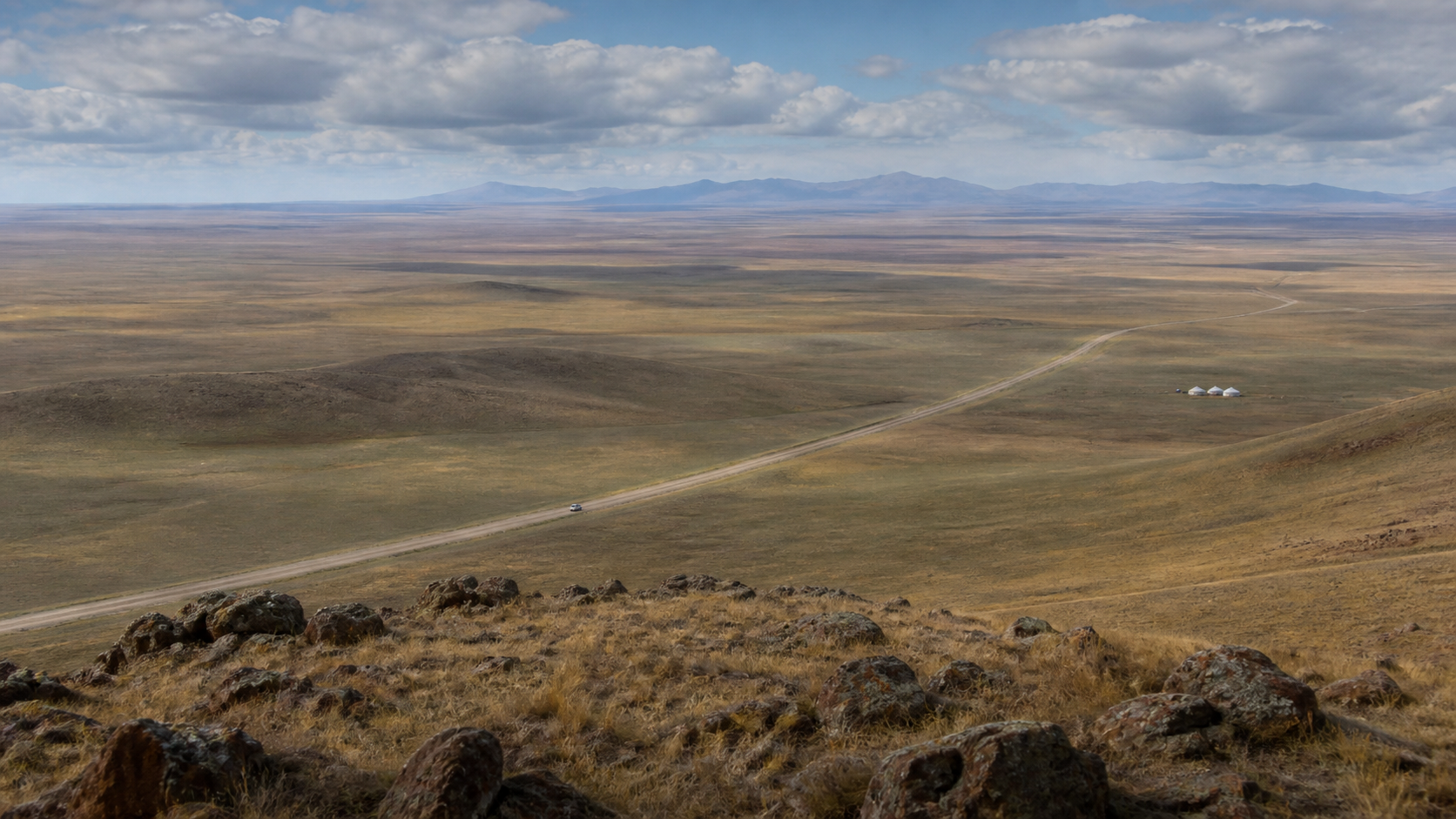
Editorial illustration: the small road and camp show why Kazakhstan’s area is a planning constraint, not merely a ranking.
2. The population passed 20.5 million
Kazakhstan’s Bureau of National Statistics reported 20,590,589 residents on July 1, 2026. This is a dated official estimate rather than a live counter or a new census result.
The date belongs with the number. A page that says only “Kazakhstan has 20 million people” may be directionally useful, but it cannot be checked or compared properly.
The BNS regional statistics page displays the reference date beside the national and city totals. That is the right way to quote the figure: number, date and source together.
3. Almaty is larger than the capital
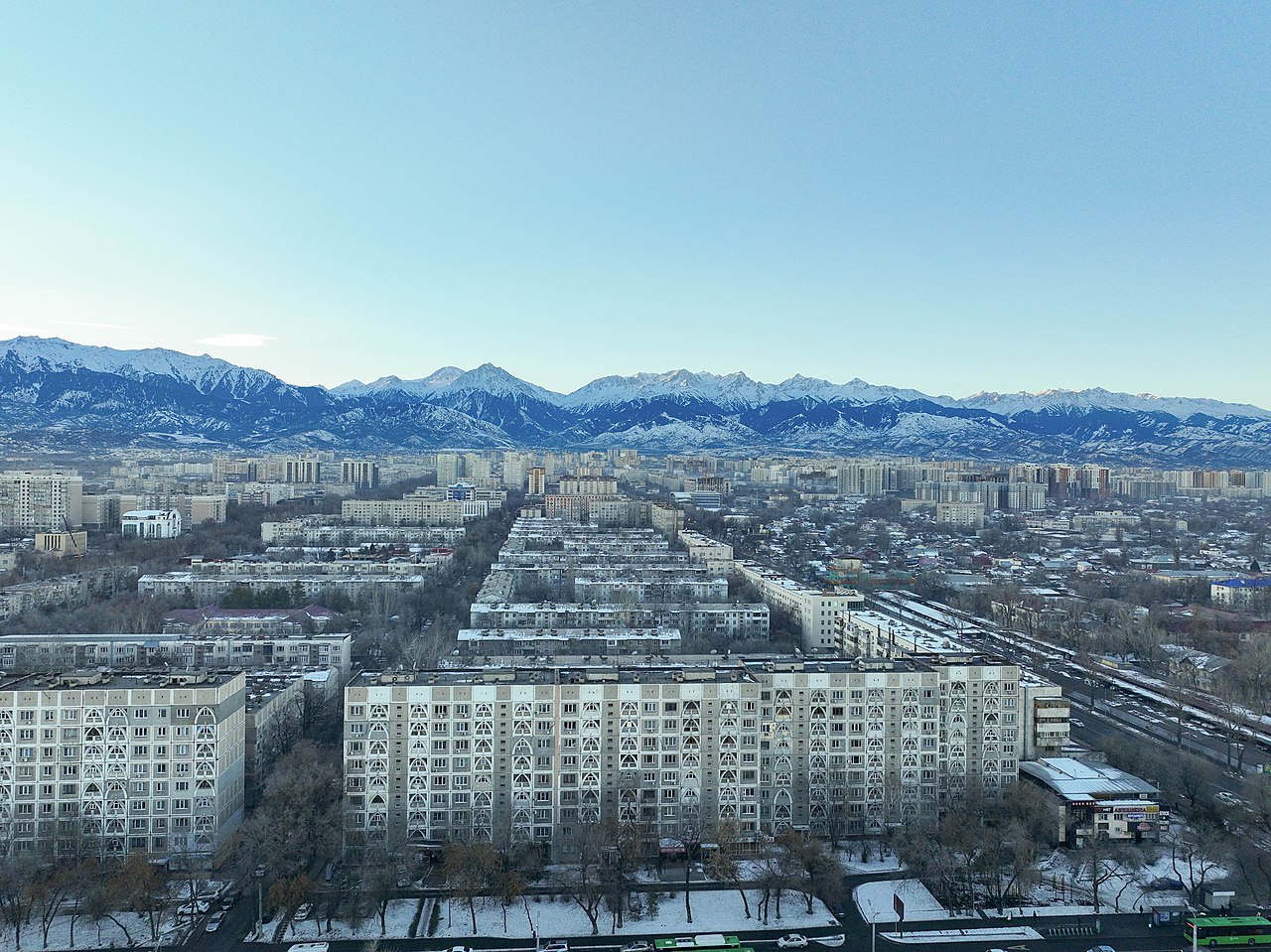
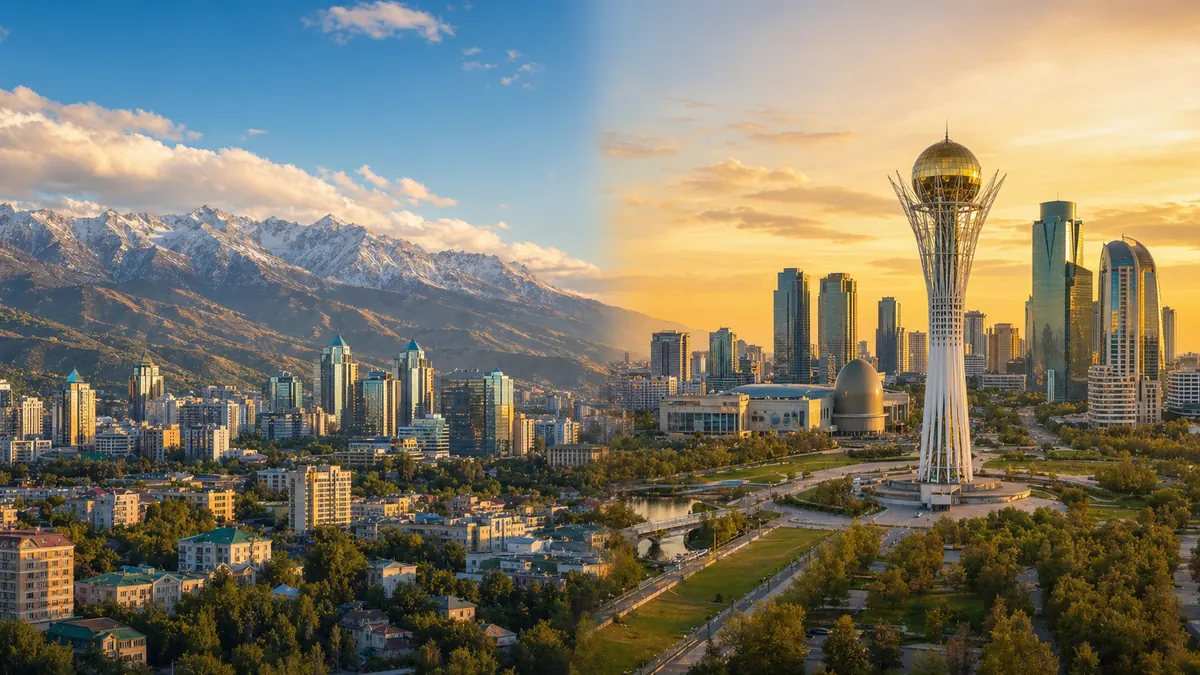
In the same July 1, 2026 regional data, Almaty had 2,373,772 residents, while Astana had 1,682,721. Astana is the capital; Almaty is the larger city.
That difference explains why both cities matter to visitors. Astana concentrates national institutions and monumental contemporary architecture. Almaty remains the country’s biggest urban centre and its main base for the Trans-Ili Alatau. Compare the Almaty guide with the Astana guide rather than treating one as a substitute for the other.
City totals also prevent a common naming mistake. “Capital” describes Astana’s political role, not a claim that it is the largest city. “Largest city” describes Almaty’s population in the cited estimate, not its present constitutional status.
4. Two spaceflight firsts began at Baikonur
The European Space Agency records that the first artificial satellite, Sputnik 1, launched from Baikonur in 1957, and the first human in space, Yuri Gagarin, launched from there in 1961.
Baikonur is not simply a Soviet-history footnote placed on a modern map. The cosmodrome is physically in Kazakhstan, and its history made the Kazakh steppe central to the opening of the space age.
The two firsts should be stated separately. Sputnik 1 was the first artificial Earth satellite; Gagarin was the first human in space. Combining them into “the first space launch” loses the dates and the distinct achievement of each mission.
5. Kazakhstan supplied about 39% of mined uranium in 2024
Kazatomprom’s half-year 2025 operating review, citing UxC data, says production from Kazakhstan represented about 39% of global uranium production in 2024. Kazatomprom’s attributable production represented about 21% of global primary supply in 2024.
Those are different denominators: national production is not the same figure as Kazatomprom’s attributable share. Keeping them separate avoids the common error of assigning the entire country’s output to one corporate ownership measure.
The national share also describes mined primary uranium, not the country’s share of every stage of the nuclear fuel cycle. Mining, conversion, enrichment, fuel fabrication and electricity generation are different activities. The fact here is large enough without stretching it into claims the source does not make.
6. The 2025 saiga count reached 3.9 million
Kazakhstan’s Ministry of Ecology reported that the national saiga population reached 3.9 million in the 2025 count. This replaces the older 2023 figure of roughly 1.3 million that still appears in many fact lists.
The recovery is real, but it is not a simple “saved forever” story. A rapidly growing population creates land-use and management disputes, and official policy now discusses both conservation and population management. The honest fact is a dated count, not a claim that the ecological problem is finished.
This is a useful example of why old fact pages decay. The 2023 count was not fabricated, but it became stale quickly during a period of rapid population growth. A current article should preserve the year with the figure and revisit it after the next official count.
7. Kazakhstan has seven UNESCO World Heritage properties
UNESCO’s Kazakhstan page lists seven inscribed World Heritage properties in 2026. The total changed when the Rock Mosques and Associated Sacred Sites of Mangystau were inscribed in 2026, which is why older pages may still say six.
The list spans archaeology, architecture and natural systems, including the Mausoleum of Khoja Ahmed Yasawi, Tamgaly petroglyphs, Saryarka, the Western Tien-Shan and transnational Silk Roads and desert properties. It is not a list of every important place in the country; it is a specific UNESCO designation.
Some properties are transnational, so “Kazakhstan has seven” does not mean every property lies only inside Kazakhstan. The count treats each UNESCO property once, including serial or shared inscriptions. The country page is the safest place to check the current total and the status of each entry.
8. Kazakhstan is central to the story of the domesticated apple
The careful version of the apple fact is better than the viral one. The wild apple Malus sieversii, found across Central Asia including southeastern Kazakhstan, is a primary progenitor of the domesticated apple. A genomic study of 117 apple accessions found that cultivated apples likely originated from M. sieversii in Kazakhstan and later received substantial genetic input from the European crabapple, M. sylvestris.
That makes “every apple came from one tree in Kazakhstan” inaccurate. The scientific story is about a genetically diverse wild progenitor and a long domestication route, not a single fruit or a single modern border. Almaty’s apple identity is still meaningful: wild-apple research and the Aport cultivar are closely connected to the mountains around the city.
The conservation part of the research matters as much as the origin story. Wild populations preserve genetic diversity that can help researchers study disease resistance and climate adaptation. Turning that into a one-line national myth hides the reason the forests are scientifically valuable now.
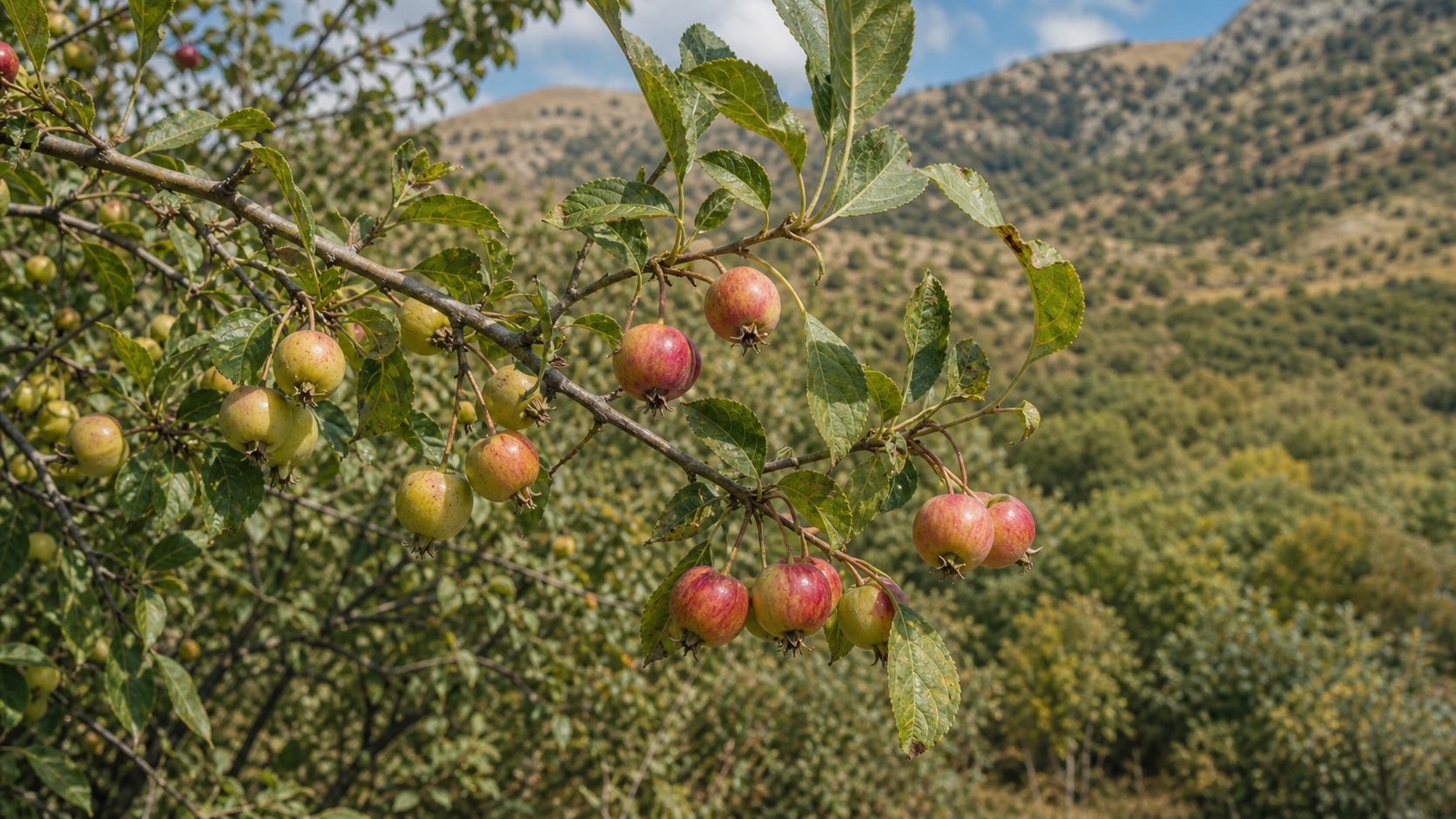
Editorial botanical illustration of Malus sieversii. The varied fruit reflects a wild population, not a uniform commercial cultivar.
9. Muslim-majority does not mean religious state
The 2021 census recorded 69.3% identifying with Islam and 17.2% with Christianity; 11% declined to state a religious affiliation. The census measures self-identification, not how frequently people pray or follow religious rules.
Kazakhstan is constitutionally secular. For the full distinction between census categories, individual practice and visitor etiquette, see religion in Kazakhstan.
The 11% who declined to state an affiliation must remain a separate category. It should not be relabeled as atheist or redistributed among religions. Census affiliation, ethnic identity and personal observance are three different variables.
10. Kazakhstan’s current Constitution is new in 2026
A new Constitution was adopted by referendum on March 15, 2026 and took effect on July 1, 2026, according to the presidential address marking its entry into force. The official country profile describes Kazakhstan as a democratic, secular, legal and social state.
This is not a cosmetic citation update. Any explainer that still presents the 1995 Constitution as the current constitutional text is now using superseded law.
The new text is a timely fact because it changes the correct source for legal descriptions throughout the site. Historic discussion of the 1995 Constitution can remain valid when clearly dated, but present-tense claims must point to the Constitution now in force.
What these facts do not prove
A sourced number still needs a narrow interpretation. Evidence quality is not permission to generalize beyond what the source measured.
The same rule applies to national identity: the Kazakhstan flag guide separates meanings stated by official sources from later interpretations of the colors, eagle, sun and ornament.
- A national percentage does not describe every individual.
- A country-wide production total is not the same as one company’s attributable production.
- A UNESCO inscription is not a ranking of the country’s “best” attractions.
- A climate, population or wildlife number without a date should not be treated as live.
- A geographic fact is not an itinerary; Kazakhstan’s distances still need route planning.
Turn the facts into a route
The facts become useful when they change a travel decision. Use the country guide for scale, city guides for the population centres and specialist pages for mountain or cultural routes.
| If this fact interests you | Use it to plan |
|---|---|
| Country size and five borders | Choose one region or a flight-connected route rather than a rushed cross-country loop |
| Almaty larger than Astana | Give each city a role instead of assuming the capital replaces the commercial centre |
| Baikonur space history | Research access requirements and logistics before treating it as a casual day trip |
| Seven UNESCO properties | Check whether an inscription is a single monument, a serial property or a transnational landscape |
| Saiga recovery | Look for conservation-aware wildlife guidance rather than promises of guaranteed sightings |
| Apple genetics | Explore Almaty’s landscape and food history without repeating the single-tree myth |
For a first visit, a practical sequence is usually to pick Almaty, Astana or a southern Silk Road route as the anchor, then add one landscape region that fits the season. The things to do in Kazakhstan guide turns that choice into concrete stops.
Baikonur deserves a special warning: historic importance does not make access simple. Verify current rules with an authorized operator before building flights or hotels around it. The same principle applies to remote Mangystau and wildlife trips, where distance and permissions matter more than a listicle’s excitement.
Frequently Asked Questions
What are five important facts about Kazakhstan?
Kazakhstan is the ninth-largest country; its population was 20,590,589 on July 1, 2026; Sputnik 1 and Yuri Gagarin launched from Baikonur; Kazakhstan produced about 39% of global uranium output in 2024; and its 2025 saiga count reached 3.9 million.
What is Kazakhstan most famous for?
Internationally, Kazakhstan is known for its vast steppe, Baikonur Cosmodrome, uranium production, the mountains near Almaty and its position between Russia, China and the rest of Central Asia.
How many people live in Kazakhstan?
The Bureau of National Statistics estimated 20,590,589 residents on July 1, 2026. Population figures change, so the date should always be included.
Did apples originate in Kazakhstan?
Kazakhstan is central to the apple's domestication story because Malus sieversii from Central Asia is a primary progenitor of cultivated apples. Modern apples also reflect later hybridization, so claims that every apple descends from one Kazakh tree are too simple.
How many UNESCO World Heritage sites does Kazakhstan have?
UNESCO lists seven properties for Kazakhstan in 2026, after the Rock Mosques and Associated Sacred Sites of Mangystau were added that year.
Is Kazakhstan in Europe or Asia?
Kazakhstan is generally described as a Central Asian country, with a small portion west of the conventional Europe–Asia boundary. Its political and cultural connections extend in both directions.
Primary sources
The links below are the evidence trail for the ten facts, not a generic further-reading list. Dates in the article refer to the corresponding source edition or observation.
- Akorda: official country profile
- Bureau of National Statistics: national and regional population on July 1, 2026
- European Space Agency: Baikonur Cosmodrome
- Kazatomprom: 6M 2025 operating and financial review, reporting 2024 market shares
- Kazakhstan Ministry of Ecology: 2025 saiga count
- UNESCO: Kazakhstan World Heritage list
- Nature Communications genomic study of apple domestication
- Bureau of National Statistics: 2021 census religion release
- Akorda: address on the Constitution taking effect July 1, 2026
Last verified: August 31, 2026
Google Preferred Sources
See more Kazakhstan stories in Google
Add About Kazakhstan as a preferred source to find more of our fresh, relevant stories in Google Search.
More Stories
travel
Almaty Travel Guide 2026: Things to Do & 3-Day Plan
Plan Almaty with a practical 3-day route through central sights, food and the mountains, plus live checks for airport, metro, weather and day trips.
travel
Best Time to Visit Kazakhstan: Month-by-Month Guide (2026)
Choose when to visit Kazakhstan with a 12-month route planner, regional season advice, mountain-access checks, and sourced public holiday dates.
travel
Kazakhstan Weather by Month: Cities, Regions & Packing
Month-by-month Kazakhstan weather for Almaty, Astana, the south, west, and mountains, with climate context, hazards, and a practical packing matrix.
facts
Kazakhstan by the Numbers 2026: 50+ Statistics & Facts
Kazakhstan by the Numbers 2026: 50+ sourced statistics on population, economy, tourism, visas, cities, costs, and culture with a CSV.
Plan the Next Step
travel
Kazakhstan Tourist Attractions: Choose the Right First-Trip Route
Compare Kazakhstan tourist attractions by base and logistics: Almaty nature, Turkestan heritage, Mangystau, Astana, Baikonur, and more.
food
Beshbarmak Recipe: How Kazakh Et Is Served
A source-checked guide to Kazakh et, widely called beshbarmak: what is on the platter, a practical home recipe, regional differences, and guest etiquette.
culture
Women in Kazakhstan: Rights, Work and Daily Life in 2026
Source-checked guide to women in Kazakhstan: current legal rights, dated work and wage data, marriage statistics, safety, and respectful language.
facts
Kazakhstan Economy in 2026: GDP, Trade, Oil and Growth
Kazakhstan's economy in 2026: 2025 GDP, sector shares, oil and uranium exports, trade partners, inflation, agriculture and the IMF outlook.
facts
Silk Road Kazakhstan: Cities, Routes & Sites
Explore Kazakhstan Silk Road sites: Turkistan, Otyrar, Sauran, Taraz, UNESCO distinctions, route planning, and responsible visits.
food
Popular Food in Kazakhstan: 15 Foods and Drinks to Try
Popular food in Kazakhstan explained: 15 Kazakh dishes and drinks, what each contains, how meals are served, and what to ask before ordering.

Travel Writer & Local Expert · Almaty, Kazakhstan
Tugelbay Konabayev is a Kazakhstan-based travel writer who has lived in Almaty for 7+ years and Astana for 4+ years. He grew up in Aktobe, Kazakhstan and has covered Kazakh travel, food, culture, and visa policy with first-hand reporting since 2023.